RV Lifestyle Tips: RVing Costs, Repairs, Living Off the Grid, Workamping & More!

This page contains links to all the articles we’ve written about the RV lifestyle, from what it costs to live in an RV to finding jobs, working and work camping on the road, to living off the grid and boondocking in an RV, to dealing with crises and major repairs while traveling, to the logistics and planning necessary to become a full-time RVer, to interviews with long-term full-time travelers we’ve met along the way, to choosing an RV, to describing what it’s like to RV full-time, to our discovery of what it actually means — and what it really takes — to “live the dream.”

RV Lifestyle Tips - Costs, Workamping, RV Living, Boondocking, RV Repairs

From the costs of RVing to handling major repairs on the road, to living off the grid, to making money, to discovering what it really means to “live the dream,” all of our RV lifestyle tips articles are here on this page.

You can find this page again under “RVing Lifestyle” in the menu.
Companion index pages are: RV Tech Tips: Upgrades & Maintenance and Product Reviews
.

MONEY and FINANCES in the RV LIFESTYLE

GOING FULL-TIME

CHOOSING AN RV and INTERESTING RVs WE’VE SEEN

RV LIFESTYLE TIPS and ANECDOTES

REPAIRS and CRISES ON THE ROAD

BOONDOCKING and LIVING OFF THE GRID in an RV

LIVING the DREAM

JOBS and WORKAMPING in the RV LIFESTYLE

UNUSUAL FULL-TIME TRAVELERS WE HAVE MET

  • Kay Peterson – Full-time RV Pioneer and Founder of Escapees RV Club – What an inspiration!
  • Phil and Ann Botnick – Reliving their 30 years as full-time RVers reveals not only personal growth and but immense creativity
  • Bernice Ende – A Lady Long Rider who has traveled on horseback for 12 years plus a pair of long distance cyclists
  • Around the World in an RV – A French family and German couple travel the world in their RVs

RV FACTORY TOURS

REFLECTIONS ON OUR LIVES as FULL-TIME TRAVELERS

We’ve written about our impressions of the full-time RV and cruising lifestyles at various stages during our adventure since we started this crazy life in back in 2007. Here they are:

PUBLIC LAND

Spending most of our nights camping on America’s beautiful public land, we have become much more aware of its precious nature and the complexities involved in satisfying all the stakeholders who have an agenda for how it is best used and managed.

MORE GOODIES

Are these articles helpful to you? Please help us keep our site going by dropping a little something in the “Donate” button below or by clicking this link before shopping online.

Subscribe
Never miss a post -- it's free!

Our most recent posts:

Our most recent posts:

More of our Latest Posts are in the MENU.   New to this site? Visit RVers Start Here to find where we keep all the good stuff. Also check out our COOL NEW GEAR STORE!! *** CLICK HERE *** to see it!

Sand Hollow State Park, Utah – An Oasis in the Desert!

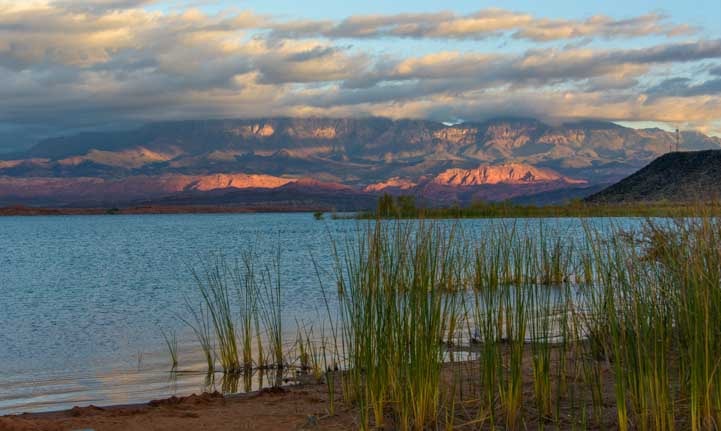
November 2017 – Sand Hollow State Park is another jewel in southwestern Utah‘s stunningly beautiful crown of red rock scenery. Situated just 30 miles from Zion National Park, it is a newer state park that opened in 2003, and it boasts a beautiful blue reservoir, vivid orange beaches and a spectacular mountain backdrop.

RV camping Sand Hollow State Park Utah-min

Sand Hollow State Park in Utah

Just like nearby Coral Pink Sand Dunes State Park, Sand Hollow is a lesser known gem in an area that is overflowing with beautiful National Parks.

As we noted in our post about Kanab, Utah, with Zion, Bryce and the Grand Canyon so close by, many RVers and other travelers have no idea there is even more to see in the area.

Boating at Sand Hollow State Park Utah-min

A beautiful reservoir is at the heart of Sand Hollow State Park.

The man-made lake is bordered at one end by a dam which captures the flow of the Virgin River. At the other end there’s an inviting collection of red rocks. The beaches surrounding the reservoir are filled with vivid orange sand. The overall effect of blue sky, blue water, red rocks and sand is very dramatic and makes for a fun time wandering around with a camera.

Photography at Sand Hollow State Park Utah-min

Bright orange beaches and rocks – a great spot for photography!

The lake at Sand Hollow State Park Utah-min

.

The reservoir at Sand Hollow State Park is beloved by people who like to play outside in nature. Out on the water in the distance, we saw some folks in a canoe making their way from shore to shore. The mountains rose behind them in awesome colors as the sun played hide and seek, casting shadows across the hilly contours.

Kayaking Sand Hollow State Park Utah-min

What a backdrop for canoeing!

We no longer have our inflatable Hobie kayak, but being here on the water’s edge watching kayakers out on the reservoir got our minds turning. It sure looked like fun out there!

Kayaking Sand Hollow State Park Utah-min

.

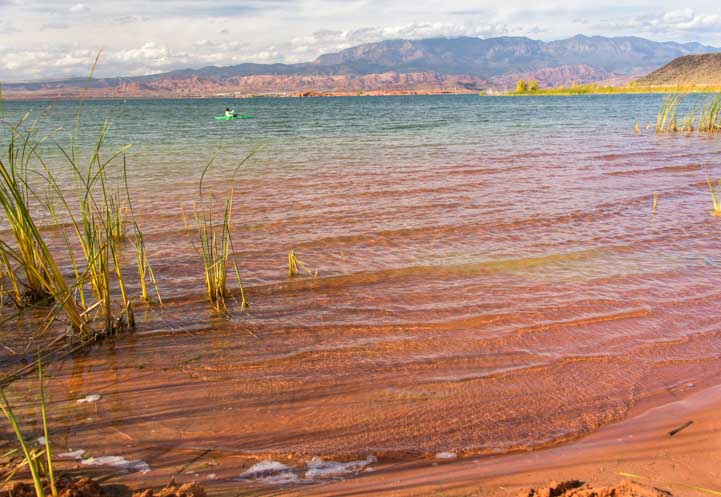
Down at our feet, the water was extremely clear. Tiny wavelets lapped the shore, and we could see every detail of the rocks under the water.

Clear water Sand Hollow State Park Utah-min

The water is extremely clear.

Sunlight in water Sand Hollow State Park Utah-min

.

There are several RV campgrounds and camping options within Sand Hollow State Park. Westside Campground has full hookups, paved loops, big sites and wonderful views.

RV camping Westside Campground Sand Hollow State Park Utah-min

Westside Campground.

RV camping Westside Campground Sand Hollow State Park Utah-min

.

What we loved, though, was being down by the water where the reeds grow thick and tall.

Dramatic light Sand Hollow State Park Utah-min

Tall reeds hug the lake along the shore.

Wonderfully dark storm clouds hung over the mountains late one afternoon, but just as the sun started its final descent into the horizon behind us, it lit up the red rocks on the far shore as if pointing them out with a spot light.

Reeds and light at dusk Sand Hollow State Park Utah-min

.

Light and shadow Sand Hollow State Park Utah-min

.

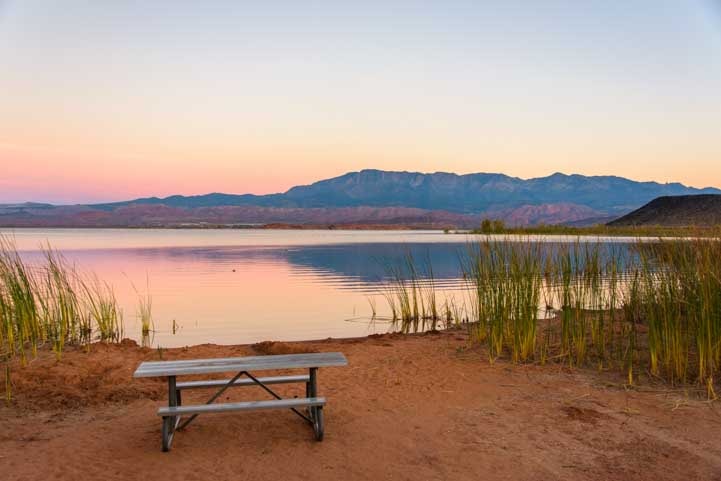
At dawn pastel pinks filled the sky and water.

Pink reflections Sand Hollow State Park Utah-min

Soft light at dawn.

The orange sand beaches set aside for day use and picnics are endless. Deep soft sand dunes run down to the lake, and big groups of seagulls pierce the air with their haunting calls.

In one spot I caught a reflection of the distant mountains in a mirror-like pool in front of me.

Dramatic Light Sand Hollow State Park Utah-min

Reflections.

We were blessed to have been able to live on the water in our sailboat for a few years, and I’ve been lucky enough to live on the water in other boats and in a beach house for a few years in previous lives before that.

There is something about a large expanse of water filling a landscape that makes it come alive. It is ever changing, going from placid to fierce, from white to dark blue, and at Sand Hollow it even turns shades of pink, red and orange by the shore.

Rippling waves at RV campsite Sand Hollow State Park Utah-min

Small waves ripple across the reservoir’s red sand bottom.

Sand Hollow State Park has a second campground with paved loops, gravel campsites and hookup options ranging from dry camping to water/electric. There’s also a spiffy toilet and shower building. It’s called Sand Pit Campground, which is a little unfair, because it isn’t a pit and it isn’t any sandier than anywhere else in the park.

I mean, if you go to Sand Hollow, you go to play in the sand and on the beach, right?!

There is also open boondocking (“primitive camping”) too, but you’ve got to scout it out very carefully and evaluate whether your RV can make it down and back on the soft sand trails that lead there. We gave it a shot with our buggy and were glad we have our new truck with its limited slip differential and rock solid four wheel drive.

RV campsite Sand Hollow State Park Utah-min

Home Sweet Home.

The view out our door was breathtaking. And what we loved was the way the view was constantly changing.

View out RV door Sand Hollow State Park Utah-min

A beautiful sunny view right out our door.

View out RV door Sand Hollow State Park Utah-min

A beautiful cloudy view right out the door!

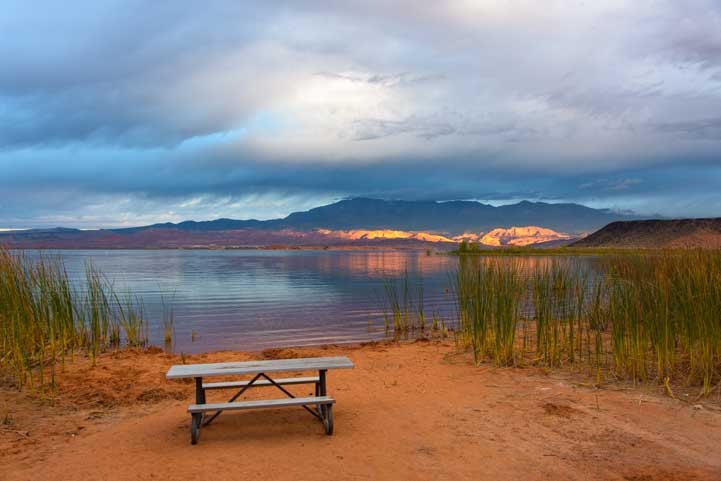
Claude Monet is famous for his series of impressionist paintings of haystacks. Each painting is unique, and the series shows how the light playing on the haystacks totally changed their look and feel, morning, noon and night.

For the same reasons, we became enraptured by the picnic table at our campsite.

Following Monet’s infinite simplicity in choosing the name “Haystacks,” we call our series of photos “Picnic Table.”

RV campsite Sand Hollow State Park Utah-min

A photo series called “Picnic Table” 🙂

RV campsite Sand Hollow State Park Utah-min

.

RV campsite Sand Hollow State Park Utah-min

.

RV campsite Sand Hollow State Park Utah-min

.

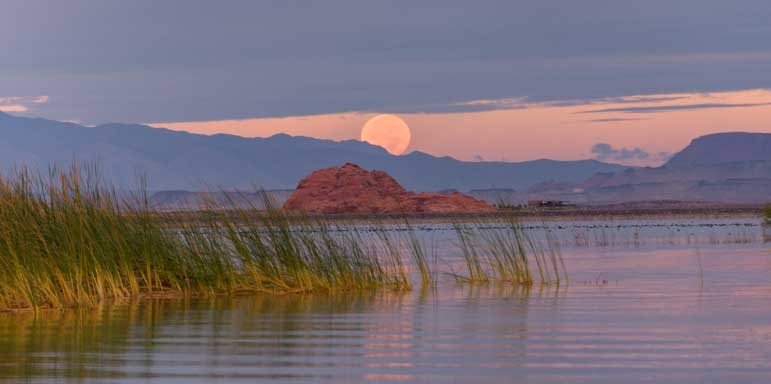
During our stay, not only did the sun and clouds chase each other around the sky, leaving a continuous trail of beautiful artwork behind, but the moon played her part too. During sunset one evening, we caught her silent ascent as she peeked between the clouds and winked at us over the mountains.

Full moon rising Sand Hollow State Park Utah-min

A rising full moon smiles down on Sand Hollow State Park.

If your RV travels take you to the southwestern part of Utah, drop by Sand Hollow State Park and dig your toes in the sand!

Subscribe
Never miss a post — it’s free!

More info about Sand Hollow State Park:

The beach and sand are wonderful to play in at Sand Hollow, but we did see notices posted about what to do if you go swimming and end up with “Swimmer’s Itch.” Read up a bit on this before you jump in for a dip!

Other blog posts from Utah’s Red Rock Country:

Other special campgrounds we’ve enjoyed:

Our most recent posts:

More of our Latest Posts are in the MENU.   New to this site? Visit RVers Start Here to find where we keep all the good stuff. Also check out our COOL NEW GEAR STORE!! *** CLICK HERE *** to see it!

<-Previous || Next->

RV Tech Tips: RV Upgrades, RV Maintenance + BUYING an RV!

This page contains links to all our articles describing our favorite RV tech tips, including the many RV upgrades and modifications we’ve done to our rigs as well as the RV maintenance tips we’ve found essential. In addition, we offer many pointers for choosing and buying an RV.

RV Tech Tips Upgrades for Motorhome and 5th Wheel Trailer owners - Maintain and upgrade your RV

From little RV maintenance tech tips to big RV upgrades, the article links are all on this page!

Ever since we began this website back in 2008 (after being on the road RVing full-time for a year), we have written lots of articles that are chock full of the many RV tech tips we’ve learned along the way.

Below you’ll find all the article links, grouped by subject, to make it easy for you to peruse our online library of RV tech tips, RV maintenance tips, modification ideas and RV upgrades.

To see the RVs we’ve traveled and lived in, check out the various rigs we’ve owned, both for vacation purposes (before we started full-timing) and then for living in 24/7/365 once we went full-time and then for seasonal journeys after we’d completed 13 years of full-timing.


The Reese Goose Box was a GAME CHANGER for us. We got the bed of our truck back (yay!) and hitching/unhitching is easy.

Check out our review: HERE!


RV TOOL KIT

  • Basic RV Tool Kit – What tools do RVers need? Here’s a list of essentials, from tire changing to electricity & plumbing

CHOOSING and BUYING AN RV

CHOOSING and BUYING a TRUCK

  • Buying a Truck – Things to consider: Which Make & Model? Single Rear Wheel or Dually? Long Bed or Short Bed?
  • More on Choosing a Truck – With a link to the article Trailer Life Magazine asked us to write

RV UPGRADES & MODIFICATIONS (except SOLAR and BATTERIES…see below)

TRUCK – UPGRADES and MAINTENANCE

RV MAINTENANCE, CLEANING and DRIVING

SOLAR POWER – INTRO and OVERVIEW of SOLAR POWER SYSTEMS

SOLAR POWER – TUTORIAL SERIES


We used two of these solar panels to upgrade our toy hauler's factory-installed 200 watt system to a 600 watt system.

See our DIY installation here:
RV Solar Power Upgrade

BATTERY UPGRADE – ALL ABOUT BATTERIES and BATTERY CHARGING

INVERTER UPGRADE – ALL ABOUT INVERTERS

GENERATORS


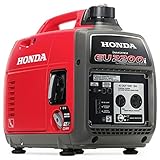
The Honda EU2200i portable generator is light and reliable and can be paired with a 2nd unit to double the power. We love ours and reviewed it here:
Honda EU2200i Generator Review.

REPAIRS and CRISES ON THE ROAD

Companion indexes of other RV Tips articles:

You can find this page again by clicking on the “Tech Tips” item in the menu.

Happy Reading!

RV Tech Tips for Motorhome and 5th Wheel Trailer owners - Maintain and upgrade your RV

RVing is easy and fun!

Subscribe
Never miss a post — it’s free!

Our most recent posts:

More of our Latest Posts are in the MENU.   New to this site? Visit RVers Start Here to find where we keep all the good stuff. Also check out our COOL NEW GEAR STORE!! *** CLICK HERE *** to see it!

Kanab – Hub for the National Parks + Gorgeous Canyons Nearby!

November 2017 – Southern Utah is loaded with eye-popping scenic drives. From the stunning and famous Scenic Highway 12 to the little known Burr Trail to the dramatic Bicentennial Highway (Utah Route 95) and Scenic Byway 24 through Capitol Reef Country, almost every road in southern Utah is impossible to drive without stopping every few miles to take a photo!

RV trip to Zion National Park Utah-min

There are loads of gorgeous scenic drives in southern Utah!

Driving through the red rocks near Kanab Utah-min

Whether it’s a freeway or a back country byway, almost every road in southern Utah is a stunner!

Scenic drive on the way to Zion National Park Utah-min

Typical southern Utah scenery at dusk.

Scenic road near Kanab Utah-min

Southern Utah inspires us every time we visit!

We’ve loved our travels in southern Utah so much that I’ve had to split our Utah travel page to list southwestern Utah and southeastern Utah blog posts separately. Looking them over, it’s impossible to say which area we love most!

But our travels this year focused on the area around Kanab, a little town that is within easy striking distance of the Grand Canyon, Zion Canyon and Bryce Canyon, three of America’s most popular and awe-inspiring National Parks.

Like many western towns, a hillside on the edge of town sports Kanab’s first initial.

Red rock mountain in Kanab Utah-min

The letter “K” for “Kanab” on a nearby hillside.

Kanab, Utah, has a long history of hosting Hollywood movie crews whenever they descended on the area to film scenes set in the dramatic landscapes nearby.

Not only are there movie sets to visit, both renovated and dilapidated, but there’s a historic motel in the center of town that has lots of photos of the various celebrities who have used their facilities as a home base while making their films.

Sign at Historic Parry Lodge in Kanab Utah-min

Historic Parry Lodge was the motel of choice for visiting Hollywood stars.

But our favorite aspect of Kanab is getting out into those landscapes and exploring. The amazing thing is that simply driving towards the big name destinations automatically becomes a trip through gorgeous scenery.

Taking Route 89 a few miles north of town in the direction of Best Friends Animal Sanctuary and Red Canyon and Bryce Canyon, we found a stunning red rock wall that was throwing fabulous reflections across the water.

We’ve driven this road dozens of times and barely noticed this gem passing by at 60 mph. This time we stopped to take photos!

Red rock reflections Kanab Utah RV trip-min

Just north of town on Route 89 thousands of people zip past this beautiful spot!

Red rock reflections Kanab Utah RV trip-min

.

Heading east of Kanab we drove into Johnson Canyon where, again, the views were breathtaking.

Johnson Canyon scenery Kanab Utah RV trip-min

Johnson Canyon offers some gorgeous views.

We spotted an exotic looking rig camping among the towering rocks. At first we thought it was an EarthRoamer, a very expensive go-anywhere type of ultra rugged motorhome. But it turned out to be a work truck front end with a small travel trailer perched in the bed! Now there’s a creative way to go…!!

Unusual RV near Kanab Utah-min

An EarthRoamer? No, a utility truck with a travel trailer on the back!

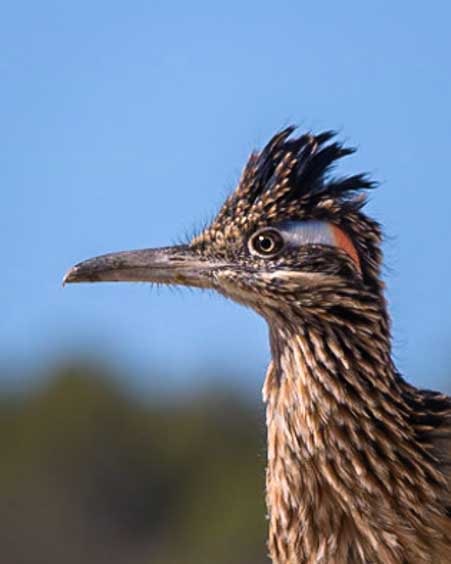
Johnson Canyon Road veers off onto various dirt roads that can take you on a very long back country adventure through Grand Staircase Escalante before returning you to one of the distant highways. There isn’t a whole lot back there, but we were thrilled when we spotted a roadrunner that wasn’t sprinting away as they usually do.

Roadrunner Kanab Utah-min

This roadrunner stopped running just long enough for a portrait.

This little guy wasn’t in a hurry to go anywhere.

Roadrunner Kanab Utah-min

He wasn’t too worried about ut.

He sat on his perch and looked this way and that, letting us get incredibly close.

Roadrunner in Kanab Utah_-2-min

“Here’s my better side.”

Roadrunner in Kanab Utah-min

Did you know roadrunners have that cool patch of bright orange behind their eyes?

Then he hopped to face the other way, and after showing off his tail, he took off.

Roadrunner's tail Kanab Utah-min

A final tail shot gave us a view of the color patches almost meeting in the back of his head.

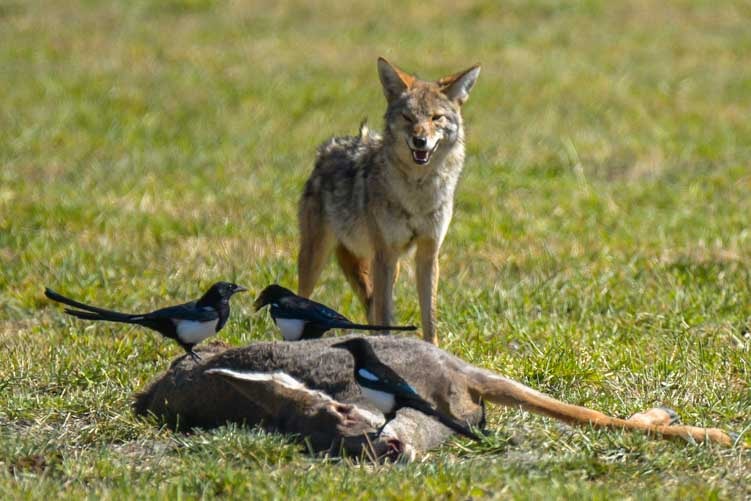
This is ranching country, and cattle grazed peacefully in the fields. We noticed a crowd of cows and a huge flock of mockingbirds were grouped in one spot. We slowed to get a closer look and were floored to see a lone coyote standing over a dead deer in the middle of them all.

As we approached, all but a few mockingbirds (which look like flying saddle shoes) scattered to the winds. The cows swayed and turned their attention to us. But the coyote didn’t budge. He stood over his kill and even licked his chops.

Coyote protects deer kill Kanab Utah-min

Dinner.

We often hear coyotes yipping at night. They hunt in groups and let out a whoop and holler of excitement when they get a kill. But this guy appeared to have taken down the deer by himself, as there were no other coyotes around. It is astonishing that a coyote could take down a deer, but we did a little research later and found that it is not that unusual, although several friends think he was just an opportunist who came along at the right moment!

It was strange, though, to look at the big herd of cows standing around and realize that they had witnessed the whole thing. What did they think as they watched the coyote chasing that deer down?

Coyote and cow Kanab Utah RV trip-min

What did the cows think of the grisly slaughter that became a banquet feast for dozens of creatures?
Five days later we drove by again and only a few bare bones were left.

There are some red rock walls in Johnson Canyon that sport petroglyphs left by the ancients. Not far from the familiar rock art images of hundreds of years ago there are also some scratchings that were left more recently.

Kids from the class of 1941 made a few etchings, and a “Store and Garage” owned by Jensen and a partner which sold Eastman Kodak film had something of an advertisement pecked out on one rock wall.

We saw this funny kind of antique advertising at Montezuma’s Well in Arizona too. Those wily proprietors knew that tourists were out searching the landscape for petroglyphs. What better way to lure them to your store back in town than to put an ad right alongside?!

Old sign on red rocks near Kanab Utah-min

Petroglyphs from 1941

Kanab is quite a hub for RV travelers, especially international travelers, and rental RVs are as common as privately owned rigs. One year we saw several rental RVs with flags from the tourists’ home countries, and another year, while we were waiting to use the RV dump station in town, we met a couple from Germany who had taken their rig around the world.

South of town lie the mysterious sand dunes of Coral Pink Sand Dunes State Park.

Coral Pink Sand Dunes State Park Utah-min

Coral Pink Sand Dunes State Park.

But without doubt, the most popular destination for folks that swing through Kanab is Zion National Park. Before reaching the incredible scenery that lies in the main canyon or the stunning vistas that lie in the western section of the Park at Kolob Canyon, tourists coming into Zion from the east end up driving one of the most dramatic roads we’ve ever seen.

Welcome to Zion National Park Utah-min

Entering Zion National Park, a world of wonder!

Route 9 between Zion’s hometown of Springdale, Utah, and the intersection with Route 89 travels through a kaleidescope of color and a series of switchbacks that are mind boggling. I will never forget our first trip on this road with a minivan years ago. Unfortunately, part of the road goes through a low and narrow tunnel, and dually trucks and larger vehicles can’t go through the tunnel without paying a fee for a pilot because traffic must be shut down in the opposite direction.

Old truck Zion National Park east entrance Utah RV trip-min

Right next to the entrance sign there’s an old truck. Maybe the owner is waiting for the tunnel to be widened!

We weren’t traveling to the main part of Zion this year, so we didn’t go through the tunnel to the dramatic switchbacks on the other side, but we still enjoyed a glorious few hours exploring the scenic drive east of there.

Driving Route 9 to Zion National Park on Utah RV trip-min

It’s hard to keep your eyes on the road!

Airstream trailer drives scenic road to Zion National Park Utah-min

RVs drive this road but must pay a fee at the tunnel.

Since we had plenty of time and just a few miles of distance to cover, we made a point to get out of the truck a bunch of times and wander way back into the exotic landscape, far from the road.

This little excursion was well worth doing because everyone on the road was whipping past at high speeds on their way to the main part of the park, but there was nobody out in the red rocks.

Scenic route 9 to Zion National Park Utah-min

Just a few steps from Route 9 we were enveloped by some of Mother Nature’s best handiwork.

Exotic rock formations Route 9 Zion National Park Utah-min

Exotic swirling patterns in the rocks.

The Fall foliage season was in full swing, and quite a few trees were bursting with yellow, orange and red colors.

Fall foliage Zion National Park scenic drive Route 9-min

Fall color comes to Zion.

The peace and tranquility out on these unique rocks was delicious, and we just soaked it all in.

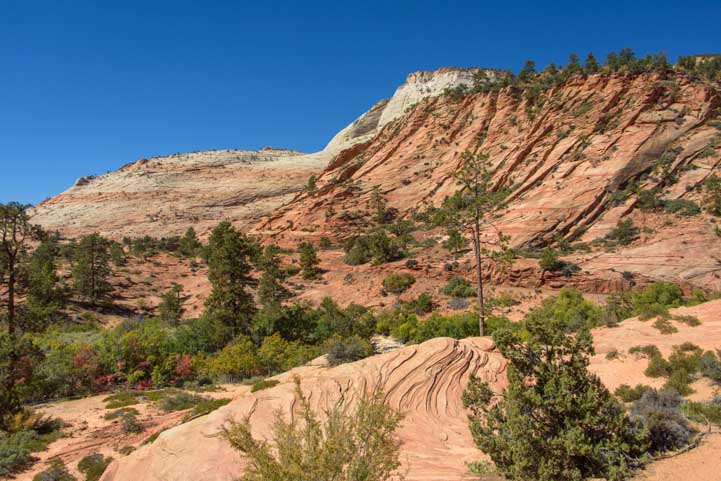
It was fascinating to run our hands on the exotic swirls of rock and imagine the days eons ago when these exotic mounds were sand dunes. The sand at Coral Pink Sand Dunes flies so freely in the wind…

Enjoying the view at Zion National Park-min

Back here, 100 yards from the road, you’d never know there was a road!

Stone dunes Zion National Park RV trip-min

These colorful, striated mounds were once sand dunes, not unlike the ones over at Coral Pink Sand Dunes State Park a few miles away.

Star burst and stone sand dunes Zion National Park Utah RV trip-min

Wow!

Looking at the rock patterns up close, it seemed very similar to wood grain. I love the way the different grains intersect and criss-cross each other.

Red rock veins look like wood-min

Up close the rock looks an awful lot like wood!

We made our way back to the road and the traffic had intensified. Zion National Park is extremely popular, and the road leading to it from the east was becoming non-stop cars and RVs.

RV on scenic Route 9 Zion National Park Utah-min

Scenic Route 9 heading into Zion.

if your RV travels take you through Kanab, there are wonders to see in all directions. But some of the greatest beauty and quietest spots can be found along the roads leading to the big name destinations, so take your time getting there!

RV camping under the Milky Way near Kanab Utah-min

I couldn’t resist posting another awesome Milky Way shot with our rig… 🙂

Subscribe
Never miss a post — it’s free!

More info:

Fun destinations we’ve visited that are closest to Kanab:

Our most recent posts:

More of our Latest Posts are in the MENU.   New to this site? Visit RVers Start Here to find where we keep all the good stuff. Also check out our COOL NEW GEAR STORE!! *** CLICK HERE *** to see it!

<-Previous || Next->

Coral Pink Sand Dunes State Park – Shape Shifting in the Sand!

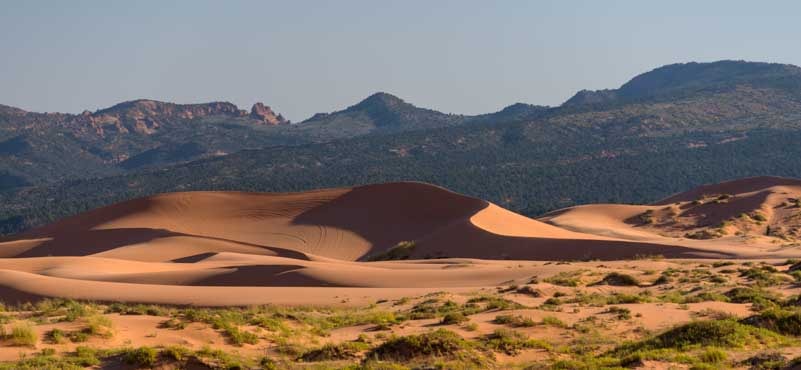
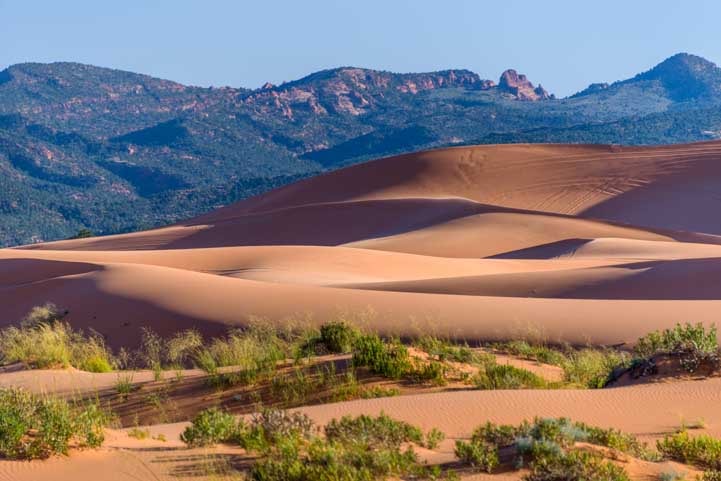
October, 2017 – During our stay in the area around Kanab, Utah, we took a day trip to Coral Pink Sand Dunes State Park. Just like the name of the park, this is an area that is filled with sand dunes that are vibrant hues of orange, pink and coral, depending on the light.

Shadows on Coral Pink Sand Dunes State Park Utah RV trip-min

Coral Pink Sand Dunes State Park in Utah

In the distance there were soft, gentle mounds of sand that caught the late afternoon shadows in their grasp.

Rolling dunes Coral Pink Sand Dunes State Park Utah RV trip-min

Rolling dunes.

On the edges of the dunes lots of determined vegetation clung to life in the arid land.

Sand patterns Coral Pink Sand Dunes State Park Utah RV trip-min

Ragged plants eek out a life in the sand.

Weed Coral Pink Sand Dunes State Park Utah RV trip-min

A tiny plant is half buried by sand.

We even spotted a beautiful yellow wildflower that was blooming on a scraggly bush. The wind was whipping and the flower was dancing all around, but for a split second the wind stopped and we got a photo of this one lone flower.

Wildflowers Coral Pink Sand Dunes State Park Utah RV trip-min

.

As we looked down at the orange sand, we saw footprints from all kinds of creatures.

Bird tracks Coral Pink Sand Dunes State Park Utah RV trip-min

Who went there?

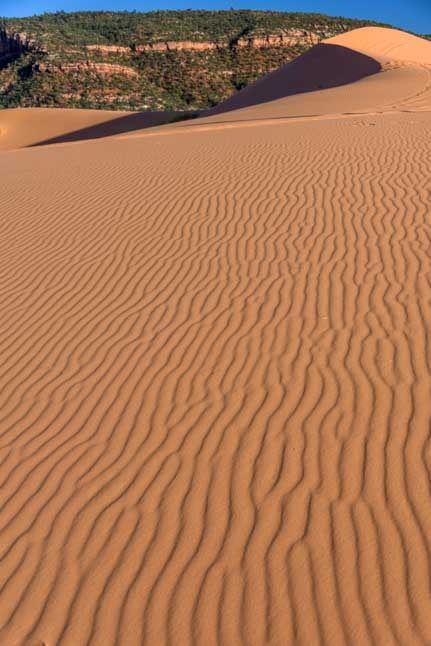
Then the dunes opened up before us and they were virgin and pure, showing only the traces of the wind that had left the sand rippled.

Ripples in sand Coral Pink Sand Dunes State Park Utah RV trip-min

Virgin sand.

This is dune buggy and side-by-side heaven, and the tracks from these machines were visible here and there.

Wheel tracks Coral Pink Sand Dunes State Park Utah RV trip-min

Lots of folks come here to ride their buggies in the dunes.

But it was the naturally patterned sand that caught our eyes. We felt like we were the first explorers on the moon as we looked back and saw our tracks in the wind kissed sand.

Footprints Coral Pink Sand Dunes State Park Utah RV trip-min

First footprints.

Walking into the dunes Coral Pink Sand Dunes State Park Utah RV trip-min

Big wide dunes.

If you enjoy photography, Coral Pink Sand Dunes State Park is a great place to roam around and take pics!

Photography Coral Pink Sand Dunes State Park Utah RV trip-min

Capturing the scene on camera.

Waves of sand Coral Pink Sand Dunes State Park Utah RV trip-min-min

Waves of sand.

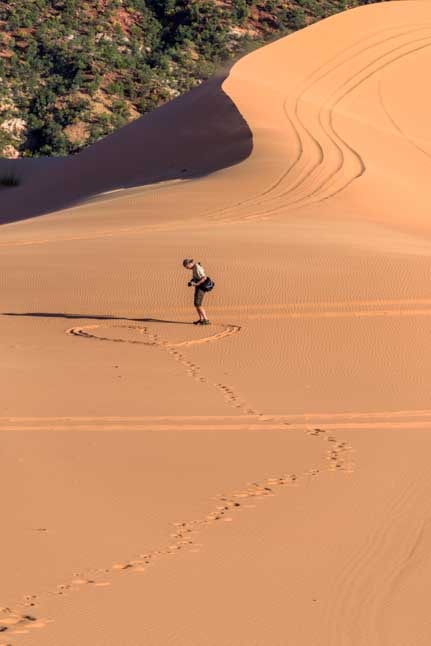
There’s something about a huge open expanse of sand that just begs for a personal imprint. This sand is very light and airy, so the best way to draw was with our feet. I looked up, and Mark was busy drawing something in the distance.

Drawing a heart Coral Pink Sand Dunes State Park Utah RV trip-min

Mark creates a picture…

Drawing a heart in the sand Coral Pink Sand Dunes State Park Utah RV trip-min

…and then walks on.

As I got closer I saw what it was…

Heart in the sand Coral Pink Sand Dunes State Park Utah RV trip-min

A heart. How sweet!

The amazing thing about these dunes is that the wind never quits and the canvas landscape is forever being erased and made virgin once again.

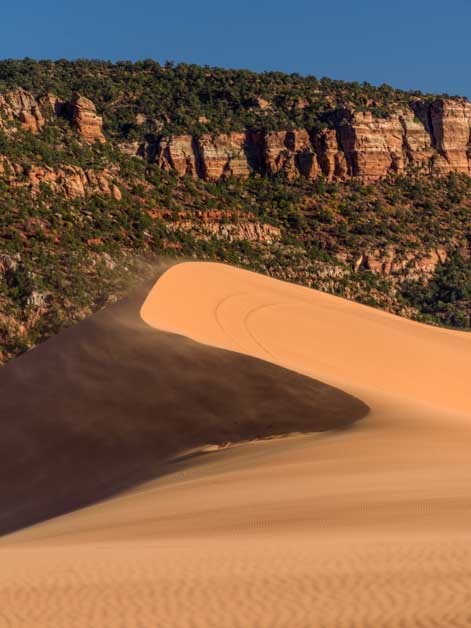
One particular sweeping crest in the dunes had been attracting us since we first looked out on the vast sandscape.

Coral Pink Sand Dunes State Park Utah RV trip-min

Light and shadow on rolling hills of soft sand.

As we approached we could see that the wind was continually blowing its top off.

Blowing sand Coral Pink Sand Dunes State Park Utah RV trip-min

The wind blows the sand off the top of the dune’s crest.

The Coral Pink Sand Dunes are continually shifting and moving as the wind pushes them, grain by grain, this way and that. The end result is persistent soft mounds and curves that can be tread by feet and wheels every day without ever bearing a permanent mark.

Blowing sand Coral Pink Sand Dunes State Park Utah RV trip-min

A gust of wind blows a veil of sand off the dune.

Even as we walked back out of the dunes, we saw our own footprints had already begun to disappear. One grain at a time, the entire playground of dunes was shape shifting.

Soft sand dunes Coral Pink Sand Dunes State Park Utah RV trip-min

Ever-changing dunes.

There is a ton to see and do near this part of Utah, including stunning Zion National Park, the North Rim of the Grand Canyon, Bryce Canyon National Park, Cedar Breaks National Park, Red Canyon, the slot canyon at Wire Pass Trail, Best Friends Animal Sanctuary, Old Western Movie Sets and even watching the release of a golden eagle back into the wild.

Sand blows at Coral Pink Sand Dunes State Park Utah RV trip-min

.

So when you see the sign for Coral Pink Sand Dunes State Park whip by on the freeway, it can be all too easy to keep going and skip it, as we have many times. But if you are planning an RV trip to southern Utah, it’s very worthwhile to make the turn and go romp around in the dunes for a while!

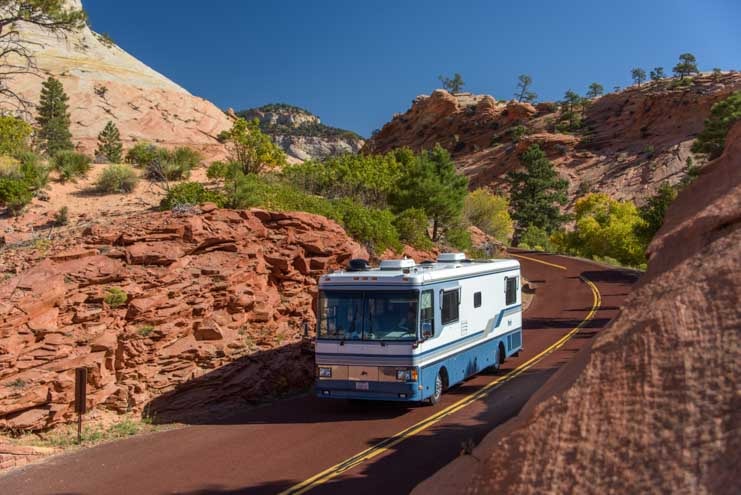
RV motorhome drives through red rock scenery near Coral Pink Sand Dunes State Park in Utah

When RVing in Southern Utah, don’t miss Coral Pink Sand Dunes State Park!

Subscribe
Never miss a post — it’s free!

More info about Coral Pink Sand Dunes State Park:

Related Posts:

Our most recent posts:

More of our Latest Posts are in the MENU.   New to this site? Visit RVers Start Here to find where we keep all the good stuff. Also check out our COOL NEW GEAR STORE!! *** CLICK HERE *** to see it!

<-Previous || Next->

Johnson Canyon Movie Set – A Spooky Ghost Town – Happy Halloween!

October 2017 – We never know what we’ll see when we poke our head out of our trailer in the boondocks at night, especially near a ghost town out west. Around the end of October, things can get a little spooky!

Happy Halloween witch flies over the moon on a broomstick-min

Who’s that flying by?
(Our friend Bob spotted her – thank you!)

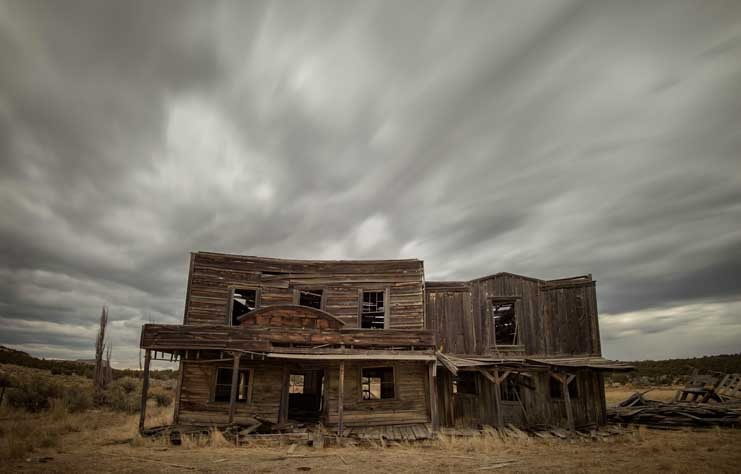
We were camping near Kanab, Utah, a place that was once known as “Little Hollywood” because so many western movies were shot there. Quite a few movie sets still remain in the area, and we explored the Johnson Canyon movie set.

Johnson Canyon movie set ghost town Kanab Utah-min

Visiting the movie set at Johnson Canyon made for a fun little adventure.

Johnson Canyon movie set ghost town Kanab UT-min

Episodes of the TV show Gunsmoke were shot on this set!

Camermen and casts from TV’s Gunsmoke and many other TV shows worked on this set for years. It’s hard to imagine the commotion and excitement of those glamorous days. Now the buildings are falling apart.

Movie set ghost town Johnson Canyon Kanab Utah-min

.

Inside movie set ghost town Johnson Canyon Kanab Utah-min

.

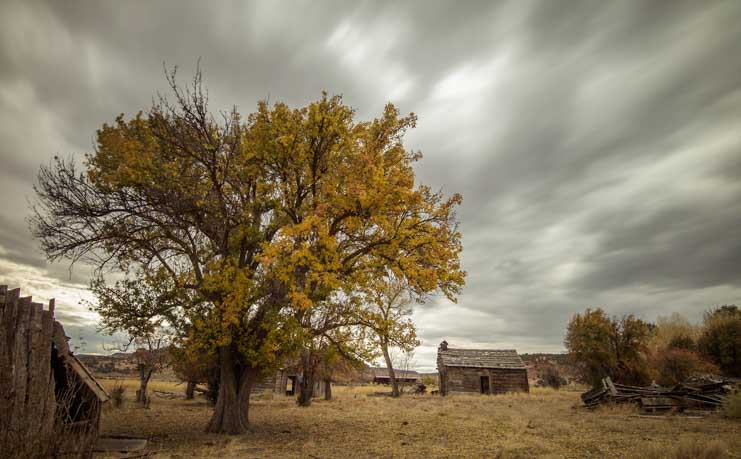
Many of the buildings have been removed since its heyday as a movie set, and the few that remain are very dilapidated.

Johnson Canyon movie set ghost town Kanab Utah-min

.

Stormy skies ghost town at Johnson Canyon movie set Kanab Utah-min

Stormy skies and fast moving clouds added to the mysterious air of this abandoned ghost town.

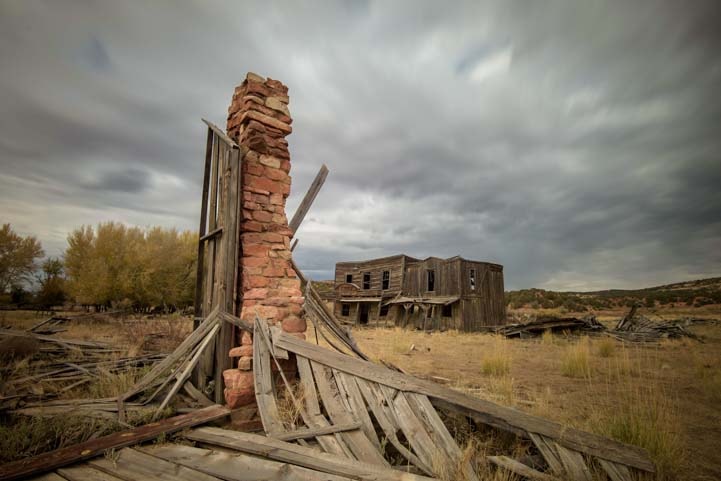
What’s odd about this place is that even though it was never a real town, it is very much a ghost town today. A rusty old stove stands forlorn among the tall grasses and fallen walls lie against a brick chimney.

Johnson Canyon movie set ghost town Kanab Utah-min

Some scenes were shot inside, so there’s an old stove from the movie days rusting away in a field.

Chimney at Johnson Canyon movie set ghost town in Kanab Utah-min

Dilapidated walls lean against a lone brick chimney.

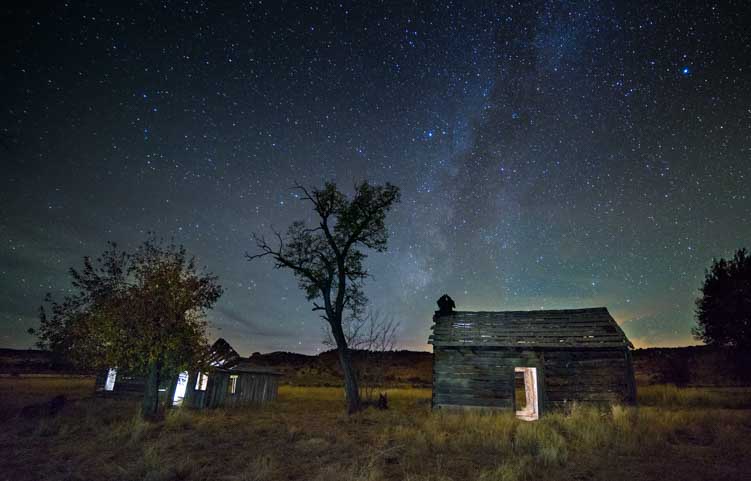
During our stay in the area, the nights were clear and crisp, and the full moon faded away. The bright stars of the Milky Way glittered in the sky all night long.

One night Mark announced that he was going to take his camera out to the movie set ghost town and see if he could get some cool and spooky pics. Sure enough, while I was snuggled under the blankets in the wee hours of the morning, he got some real winners!

Milky Way over Johnson Canyon movie set ghost town Kanab Utah-min

Mark braved the very cold night air to experience the ghouls and goblins of this ghost town under the stars.

Milky Way over Johnson Canyon movie set ghost town Kanab Utah-min

If the ghost town was alluring by day, it was even more so by night.

Using a small flashlight to “light paint” the buildings in the dark and a big one so he could get from building to building without tripping in the pitch dark, he captured the ghost town buildings at their most mysterious!

Ghost town at night Johnson Canyon movie set Kanab Utah-min

Haunted house.

Stars over ghost town Johnson Canyon movie set Kanab Utah-min

Very mysterious!

It was cold, and a light wind raised the hair on the back of his neck. Coyotes yelped in the distance. As he looked around, he saw pairs of eyes staring at him in the dark. A twig snapped in a tree next to him and he jumped!

Stars over ghost town at Johnson Canyon movie set near Kanab Utah-min

.

Despite being a little unnerved, Mark’s camera captured one great image after another. The photo above won him “Photo of the Day” at Steve’s Digicam today! Check it out here!!

Milky Way over old cabin Johnson Canyon Utah-8

What ghouls and goblins are living there?

Milky Way over ghost town Johnson Canyon Kanab Utah-min

This is a spooky place at night!

It turned out the eyes belonged to cows that were milling around, but he still got the creeps. When he burst in the trailer door a few hours later, a rush of cold air followed him. He was grinning, but his teeth were chattering too. It’s scary out there!!

Fifth Wheel trailer RV under the milky way black and white-min

Happy Halloween!!

Subscribe
Never miss a post — it’s free!

More info about the Johnson Canyon Movie Sets:

Other ghost towns we’ve seen in our travels:

Utah is a gorgeous state. Here’s a link to all of our Utah blog posts:

RV travels in Utah

Here’s a few posts from southwestern Utah in particular:

Photography is an ideal complement to RV travel. Here are some tips:

Photography Gear, Resources and Learning Tools

Our most recent posts:

More of our Latest Posts are in the MENU.
New to this site? Visit RVers Start Here to find where we keep all the good stuff!!

<-Previous || Next->

Picturesque Medieval Charm an Hour from Paris – Moret sur Loing

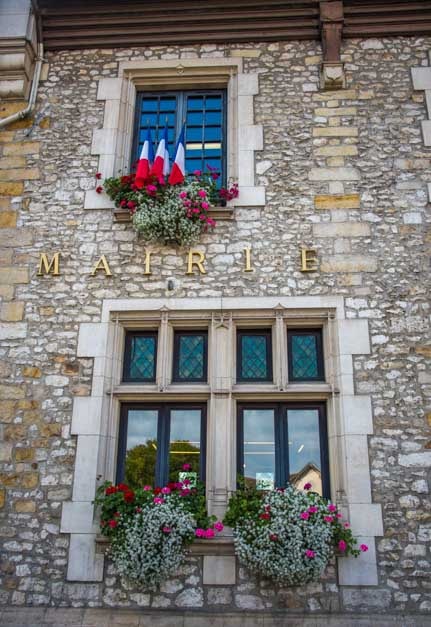
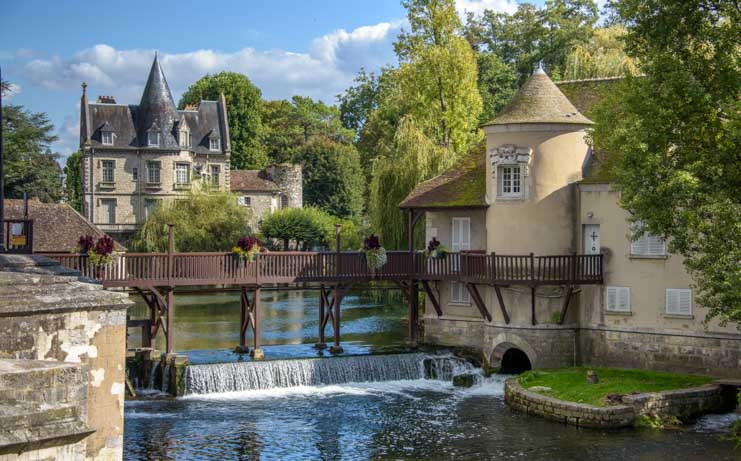
September 2017 – While visiting Paris we took an easy train ride out to the beautiful town of Moret sur Loing. With architecture dating back to the Middle Ages, complete with arches and town gates, it is utterly charming and makes for a very fun excursion and change of pace from the big city.

Roman gate at Moret sur Loing France-min

Moret sur Loing is a very cool Medieval town.

Small towns are my favorite places to visit, and English woman Annabel Simms has written two books describing the many pretty towns a short train ride from Paris that are worthy of a day trip.

Moret sur Loing (officially renamed Moret-Loing-et-Orvanne in 2016) is filled with tiny streets. The homes and businesses are built right to the edge of the sidewalk.

Village street Moret sur Loing France-min

Cute streets.

We strolled the streets of town, marveling at the many antique buildings that are centuries old.

Medieval buildings Moret sur Loing France-min

Architecture from a fairy tale!

The detail in their decorations is wonderful. Doorways aren’t just an opening to get through a wall. Instead they are elaborately decorated. One doorway featured ornately carved wooden scenes and scroll work.

Carved wooden doorway Moret sur Loing France-min

An ornate doorway…

Wooden carving Moret sur Loing France-min

A closer look at the wood carvings above the door.

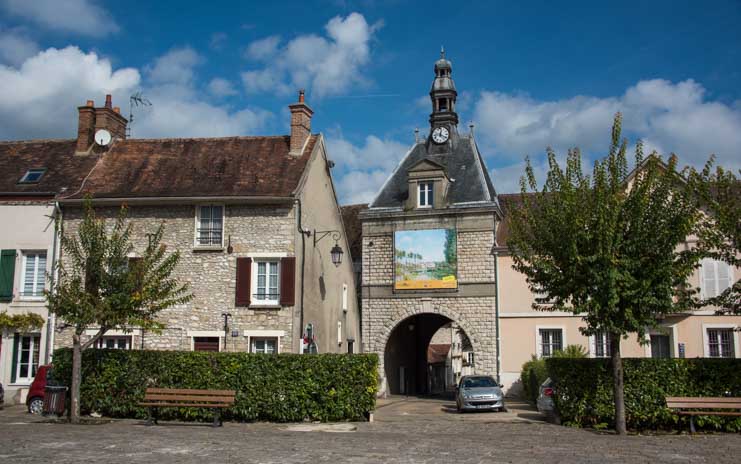
There were arches through buildings on several streets. They were barely wide enough for a car, although I did see a bus squeeze through the taller ones!

Medieval arch and buildings in Moret sur Loing France-min

An arch under a clock tower!

The early fall air was warm and clear. Flowers in window boxes gave the stone architecture a colorful flair.

Stone building and windows Moret sur Loing France-min

.

We had gone to the town to enjoy the intimacy, tranquility and history of an antique village, but this place isn’t just a museum piece, and even though the architecture is old, that doesn’t mean it can’t still be used. I had to smile when a fellow rode up on a bike to use a modern day ATM built into the wall of a very old building.

ATM in antique building Moret sur Loing France-min

A modern ATM in an antique building.

A tall archway leads to a bridge over the Loing River. Looking back at the arch, I half expected to see a row of knights on horseback coming through, their lances raised and colors flying!

Medieval entrance gate Moret sur Loing France-min

Looking back at the arch tower from the cobblestone bridge.

Next to the tower was a very cute restaurant overlooking the river. It was the ideal spot for lunch.

Medieval gate and restaurant on the river Moret sur Loing France-min

.

The seats on the deck were all full, so we thought we’d walk around for an hour and try again later. Unfortunately, the restaurant is open strictly for lunch, so when we returned it was closed!

Restaurant on the river Moret sur Loing France-min

Lunch with a view. How fun. But don’t be late or they’ll be closed!

Our walk down to the river’s edge was well worth missing a fancy lunch, however. We just grabbed a baguette sandwich at a boulangerie and had a picnic by the water watching the ducks and geese playing in the currents.

Medieval stone arch Moret sur Loing France-min

A cobblestone path under a stone arch leads to the riverbank.

Moret sur Loing France-min

OMG! Is this right out of a picture book, or what?!

A small walking path goes along the edge of the river, and we walked along it to the next village. Rivers and canals connect all of Europe, and we passed lots of barges tied up along the shore that looked like they could really go the distance.

Loing River scene Moret sur Loing France-min

A picturesque mirrored view of homes and barges along the river.

Barge and riverside buildings Moret sur Loing France-min

.

A barge can make a spacious and fun floating home, and many of them looked very inviting to live in!

River barge Moret sur Loing France-min

What a cool lifestyle!

One thing that is really apparent in France, and especially Paris, is how well people dress. The men are dapper and the women are chic. There is a love of tailored fashion we just don’t see in our travels elsewhere, and as we would wait for the Metro or walk the city streets it was a true delight to see one handsome and impeccably dressed Parisian after another going past.

Well, Parisian chic extends into the countryside too, and French people aren’t the only ones in France who have a true sense of style.

As we strolled along the banks of the Loing River, I looked down to see the most unusual and smartly dressed cat I’ve ever seen. What a coat!

Exotic cat Moret sur Loing France-min

Feline Parisian chic.

Rivers and canals don’t all have the same water level as each other, so they are often joined together by lock systems where boats can be raised or lowered, allowing them to float from one canal to another.

As we crossed a bridge, we saw a barge coming towards us and noticed that there was a lock system on one side of the bridge right below our feet.

Barge approaches locks Moret sur Loing France-min

A barge chugs up to the lock.

The captain of the barge brought the boat into the lock and quickly tied the boat to the big cleats on the concrete walls of the lock.

Captain ties up barge at locks Moret sur Loing France-min

The captain secured the barge inside the lock.

He hopped off the barge and greeted the woman controlling the locks with the traditional French kiss on both cheeks. He obviously came through this lock on a regular basis!

As the doors closed behind the barge it was amazing what a tight fit the boat was inside the lock.

Barge in the locks Moret sur Loing France-min

The gates closed behind the barge. It was now in its own little bathtub and could be raised to the level of the next canal.

For the next few minutes the lock filled with water while the captain chatted with the lady controlling the lock and then with another fellow who rode up on a bike to say hello. Then he climbed back aboard, the lock gates swung open, and he sailed the barge out of the lock.

There was something very heartwarming about the whole thing. There are thousands of locks worldwide, and we’ve read many accounts of sailors taking their boats through the Panama Canal and we’ve watched the huge barges going through the Soo Locks in Michigan.

But this was a little lock in a scenic small French town, and there was something quite delightful about the simple traditions and conventions of moving a barge through the lock that were all in a day’s work for these people.

Barge leaves the locks Moret sur Loing France-min

After being raised to the water level in the next canal, the barge sails onward.
It might be really fun to be the captain of a barge in these waterways!

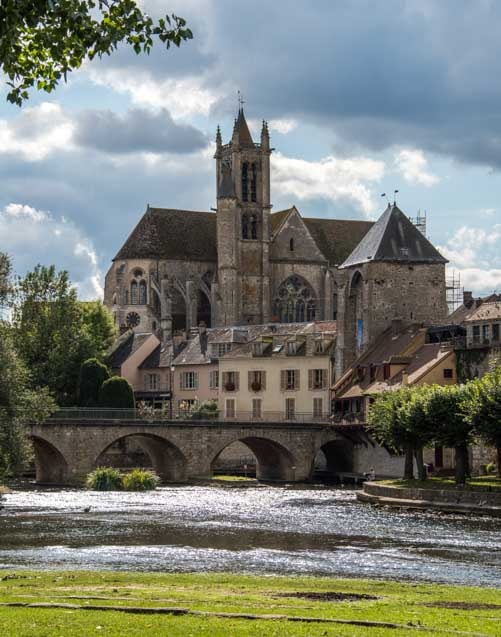
As we walked along the opposite shore back to town, the Medieval glory of Moret-sur-Loing came into view once again.

Moret sur Loing cathedral view from river France_-min

Moret sur Loing.

In between taking photos, I came across a plaque that told the town’s history. The first date on the plaque describing the earliest recorded events in this place was 1045. Wow!!

That predates many of the ancient Indian ruins and rock art we see in the American West, and it is fairly close to the timeframe that the Mayans were building Palenque in Mexico and the Khmer at Ankor Wat in Cambodia were erecting their massive stone temples.

Cathedral Moret sur Loing France-min

The cathedral in Moret sur Loing.

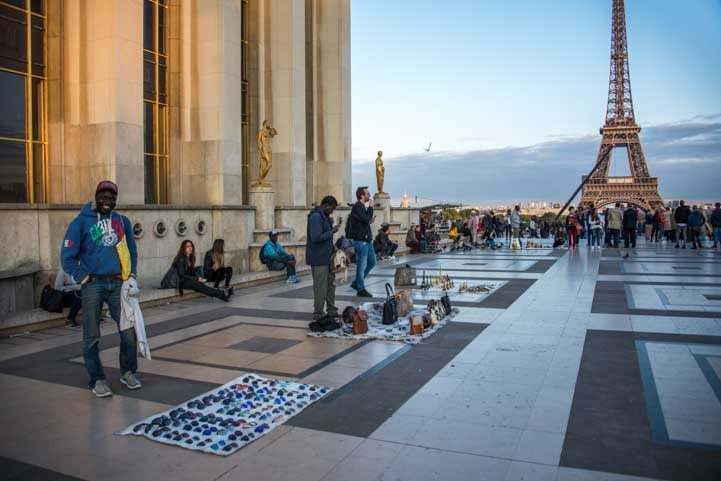
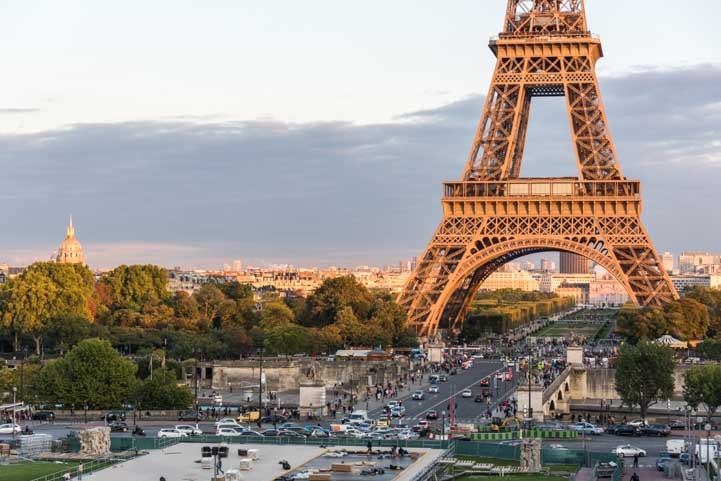
We made our way back to Paris and decided to catch sunset at the Eiffel Tower. There is a huge plaza overlooking the Eiffel Tower where vendors sell all kinds of trinkets on blankets spread out in front of them.

Vendors at the Eiffel Tower Paris France-min

Vendors sell trinkets at the plaza overlooking the Eiffel Tower.

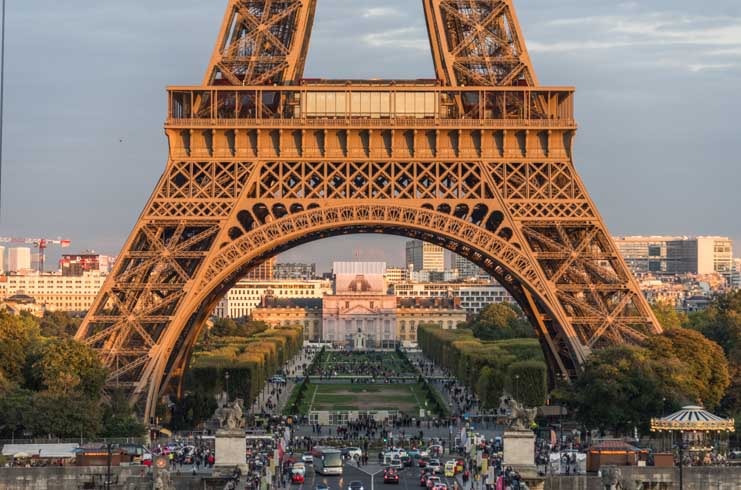
When the Eiffel Tower was built for the 1889 World’s Fair it was the tallest building in the world. The base of the tower is enormous!

Eiffel Tower Paris France-min

.

Base of the Eiffel Tower in Paris France-min 2

The Eiffel Tower has a huge base.

As the golden hour just before sunset came, the gold leaf dome of Les Invalides where Napoleon is entombed glinted in the setting sun.

Sunset on Les Invalides Paris France-min

The golden dome of Les Invalides (site of Napoleon’s tomb) glows at sunset.

And then, as darkness fell, the Eiffel Tower lit up. How magical!!

Eiffel Tower lit up at night Paris France-min

.

Paris is as enchanting by night as it is by day, and we walked around town late into the evening.

Hotel de Ville at night Paris France-min

Hotel de Ville and all the antique buildings of Paris are lit up beautifully at night.

The Seine River in Paris France at Night-min

The Seine River.

The banks of the Seine River are as full of people at night as they are during the daytime. What a fun surprise it was to come across a group of people dancing Argentine Tango right on the riverbanks.

Talk about romantic!!

Dancing on the Seine River Paris France-min

What could be more romantic that dancing under the stars on the banks of the Seine?

As we made our way back to the Metro, we passed Notre Dame cathedral. She was aglow with lights.

Notre Dame Cathedral at night Paris France-min

Notre Dame Cathedral.

And the river boats on the Seine kept plying the water long after dark.

Notre Dame Cathedral and river boats on the Seine River Paris France-min

Boats take tourists along the Seine past Notre Dame well into the night.

My visit to Paris was capped off in the most charming way I could possibly imagine. On our last ride on the Paris Metro, while standing in the aisle hanging onto a strap, I suddenly heard the sound of an accordion. I looked up to see a young man coming through the doors connecting the train cars. He stared right at me and smiled as he played a classic tune.

Oh my!

I grabbed my camera and threw it into video mode as fast as I could. What an absolutely perfect way to bid goodbye to an elegant and inviting city.

So, here it is — a 30 second video from an accordion player on the Metro along with the glittering lights of the Eiffel Tower shimmering in the dark and dancers on the Seine:

Subscribe
Never miss a post — it’s free!

More info about Moret sur Loing and other Paris excursions:

Other blog posts from France and from special small towns we’ve visited:

Our most recent posts:

More of our Latest Posts are in the MENU.
New to this site? Visit RVers Start Here to find where we keep all the good stuff!!

<-Previous || Next->

What are the Most Important Features in a Full-time Fifth Wheel Trailer?!

What features are most important in a fifth wheel trailer you’ll be living in full-time? That’s a big and interesting question, and Trailer Life Magazine recently assigned me the very fun task of surveying the fifth wheels on the market today and selecting twelve models that would make a good home on the road.

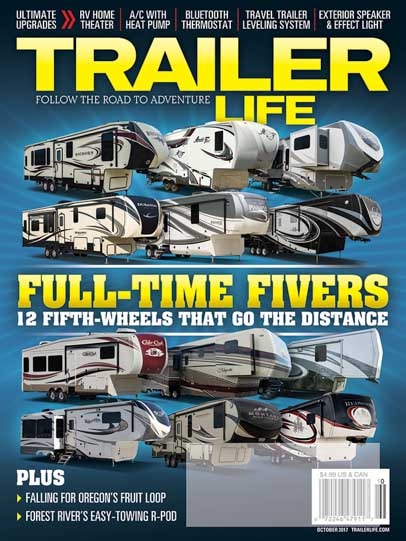
The results of my review are featured as the cover story of the October 2017 edition of Trailer Life Magazine.

Full-time Fifth Wheels Trailer Life Magazine October 2017

Trailer Life Magazine, October, 2017. Article by Emily Fagan

As I mentioned in my blog post about what to look for in a full-time RV, whether it’s a trailer or a motorhome, choosing a rolling home is an incredibly personal decision. There is no ideal rig for all RVers. The most important thing is that you walk inside, look around, and say, “Ahhh, this is home!”

But you’ve also gotta look at the nuts and bolts underneath the rig, and that’s what this blog post is about.

Whatever fifth wheel you buy, there is no need to break the bank. Obviously, higher quality trailers cost a lot more than lower quality trailers do, but life on the road is a thrill no matter what kind of rig you live in, and if you can’t afford the top of the line, you’ll still have just as much fun as those who can.

Also, sometimes going with a used trailer, especially at the outset, beats buying new. There are lots of used fifth wheels of all ages for sale all over the country.

A great resource for viewing a variety of rigs and comparing prices of specific models is RVTrader.com. Another excellent resource, especially for Canadians, is RVDealers.ca.

We have met a couple and a single fellow living full-time in older fifth wheel trailers that cost them less than $5,000. They were very happy with their rolling homes and were thrilled to have the freedom of a life on the road.

Likewise, we met a couple who had lived in a popup tent trailer for four years, a couple who had lived in a tiny half-ton pickup camper for two years and we met a young pair of mountain bikers who had just moved out of their tent home of the last 18 months and into a 17′ travel trailer a few weeks before we camped near them.

If you can’t afford the latest and greatest, it is still very possible to be a full-time RVer and live a champagne lifestyle on a beer budget!

However, my Trailer Life assignment was to look over the many brand new fifth wheels on the market, find twelve models that spoke to me, and highlight some of the things that I think are important when shopping for an RV that will be lived in 24/7/365.

You can read the article here: Full-timing Fifth Wheel Trailers in Trailer Life Magazine

For reference, we have pics and specs and a description of the fifth wheel trailer we live in at this link.

LEARN BY DOING

If you haven’t done much RVing yet and you are planning to move out of your current home and set off on a life of adventure on the road, the best way to figure out what features you need and want in your full-time fifth wheel is to get some practice RVing first.

I can’t state strongly enough the value of buying a cheap little RV and going and having some fun on weekends and vacations before jumping into the full-time RV lifestyle. This is especially true if you’ve got a year or more to go before you will actually start full-timing.

Nothing is better than hands-on experience, and you can use the little rig as a trade-in on your full-time RV. The minimal amount of depreciation is a great investment in your own personal education in the RV lifestyle! Here is a blog post about that.

So what DO you look for in an RV when you are replacing your sticks-and-bricks house? After all, the the most important factor is no longer Location, Location Location! Different folks look for different things, but here’s what we look for whenever we check out a new fifth wheel at a dealership (which we do frequently!).
Full-time Fifth Wheels Trailer Life Magazine October 2017-min

A survey of fifth wheels for full-timing by Emily Fagan
Trailer Life Magazine Cover – October 2017

CARGO CARRYING CAPACITY

The first thing we look at is the trailer’s Cargo Carrying Capacity. This is the amount of weight the trailer is designed to carry safely and legally. Trailer manufacturers are required to post a sticker on the exterior of the front end of the trailer on the driver’s side that indicates what the CCC is.

Surprisingly, there is a lot of confusion about exactly how the CCC is calculated and whether or not the fresh water or the propane in the tanks is considered cargo or part of the Unloaded Vehicle Weight (UVW). The official definition, according to certain RV standards groups and the National Highway Traffic Safety Administration is:

CCC = GVWR – (UVW + propane weight)

That is, the Cargo Carrying Capacity is the Gross Vehicle Weight Rating less the sum of the Unloaded Vehicle Weight and the propane weight.

However, it is much more common for manufacturers to calculate CCC as simply the GVWR less UVW and not count the propane weight as part of the equation. This is also known as the NCC (Net Carrying Capacity).

NCC = GVWR – UVW

The propane weight is only 40, 60 or 80 lbs, depending on whether the two propane tanks are 20 lb., 30 lb., or 40 lb. tanks, so it is not that important whether it is included in the calculation of CCC or not, and it is easy to see why the terms CCC and NCC are often confused and used interchangeably.

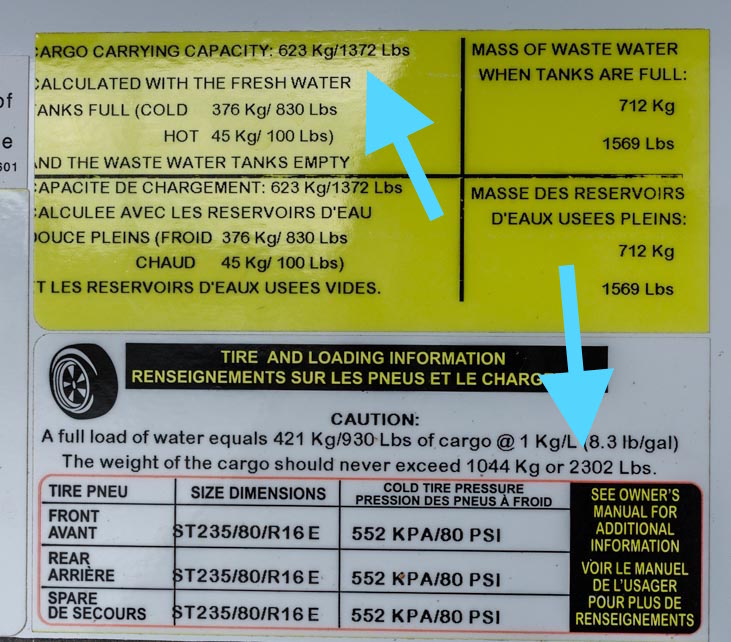
In addition to stating the CCC on a sticker on the trailer, the manufacturers are also required to have a sticker indicating how much the fresh water in the trailer weighs when the fresh water tanks are full. One gallon of water weighs about 8.35 lbs. or 3.785 kg.

Fresh water is officially considered to be cargo, so if the trailer is towed with its tanks full, then the CCC available for everything else (food, clothes, tools, barbecue, bikes etc.) is reduced by the weight of the fresh water weight as stated on the sticker.
Cyclone Toy Hauler Fifth Wheel RV cargo carrying capacity 2

This detailed sticker shows the weight of the fresh water tanks when full (830 lbs in the fresh water tanks and 100 lbs in the hot water tank) PLUS it shows the weight of the Black and Gray waste tanks (1,569 lbs.) AND it shows the cargo carrying capacity of the trailer with water tanks both full (1,372 lbs) and empty (2,302 lbs).

If the trailer doesn’t have the official CCC stated on a sticker, it’s usually possible to find the GVWR and UVW values on a spec sheet and simply subtract UVW from GVWR. This simple calculation of GVWR – UVW is the easiest way to compare the carrying capacity from one trailer to the next, so that is what we like to go by when we are making a direct comparison.

So how much should the Cargo Carrying Capacity be for a fifth wheel trailer that’s used as a full-time home? In our experience, the nearly 3,500 lbs. of CCC on our trailer is barely enough. Because we boondock all the time, we travel with our fresh water tank and hot water tank full and our gray and black tanks empty so we can stay a maximum length of time at our next destination.

Other folks may find they can get away with less, but to us, if you are shopping for a big trailer to live in full-time, a CCC of less than 3,000 lbs. is going to be insufficient in the long run. If you are shopping for a fifth wheel toy hauler, then you’ll need 3,500 lbs. for your stuff plus more for the weight of your toy(s).

Interestingly, the manufacturers often provide a lot more storage space in their fifth wheel trailers than the CCC of their trailer can reasonably support. Our cabinets and shelves aren’t even full, and we are still at the maximum limit for CCC in our trailer.

Redwood Fifth Wheel Cargo Carrying Capacity 1

A much simpler sticker on another trailer shows a Cargo Carrying Capacity of 1,876 lbs.
By implication this does not include any water weights because all liquids in the tanks are cargo.

So, just because a trailer you are looking at has voluminous shelving, a big pantry, and two huge closets, you won’t necessarily be able to fill all that space and still remain at or below the CCC of the trailer.

Another surprise is that smaller trailers frequently have larger carrying capacities. This can be seen in a single product line when a manufacturer uses the same frame for several models. The smallest and lightest model built on that frame will obviously have more carrying capacity than the largest and heaviest one.

We also saw it in dramatic fashion when we compared a tear drop trailer and a toy hauler on a dealership lot once (blog post here).

One caveat to keep in mind if you overload your trailer is that you risk being found liable if you are in an accident with a fatality and it is discovered your rig was over its weight limit. This is true both if the truck is too small for the trailer and/or if the trailer itself is loaded beyond its capacity.

FOUNDATION – FRAME, AXLES, TIRES. SUSPENSION, LANDING JACKS & BRAKES

The foundation underlying a fifth wheel trailer consists of the frame, axles, tires, suspension, landing jacks and brakes, and although this is not the glamorous part of the trailer, it is arguably the most important.

It is possible to upgrade some of these components to improve the overall unofficial GVWR and CCC of a trailer and to improve its stopping power as well. The axles, tires and suspension can all be replaced with beefier parts, and if the trailer has electric drum brakes, these can be upgraded to electric over hydraulic disc brakes (described in detail here).

RVers are encouraged to weigh their rigs on a regular basis to ensure that they are staying within the official GVWR for their unit. We weigh ours every year or two. Escapees offers the very thorough SmartWeigh program at several of their RV parks across the country, and we describe our experience with that program at this link: “Making Weight” With Your RV.

Weighing a fifth wheel trailer with Escapees SmartWeigh program

Weighing a fifth wheel trailer with the Escapees SmartWeigh program

It is important to note, however, that just because you’ve got bigger axles, better rated tires and beefier suspension, you won’t “officially” have a new GVWR. The trailer will support its payload better, but in the case of a horrific accident, if the GVWR value is referenced and your trailer is somehow found to have been over that weight, you may be considered liable.

Frame

The next thing we look at in a trailer is the frame and axles. Almost all trailers are assembled on frames built by Lippert Components. A few manufacturers build their own frames in-house.

Axles

Most fifth wheels are also built on Lippert axles. The highest end fifth wheels are built with axles made by Dexter. They advertise the fact and consider it to be a premium feature. In some cases Dexter axles are an option, and some buyers simply replace their axles after making their purchase.

Both of our Lippert axles have failed. The first time was in Nova Scotia. We could tell because our tires began wearing very strangely and very very fast. We limped to Maine to have the rear axle replaced with another Lippert axle.

New RV axle installed on fifth wheel trailer-min

We replaced one of our trailer axles in Bangor Maine.

Fortunately, our extended RV warranty saved the day financially, but the time lost and overall frustration of having a big failure on the road was not fun. (Blog post about that experience here).

The second time was when our front axle failed in Arizona, and again, the tell-tale sign was bizarre tire wear on the trailer tires. This time we decided to replace both axles with the Dexter brand. Unfortunately, our extended RV warranty did not bail us out on this occasion, but the $3,000 expense of having both axles replaced and correctly aligned with Dexter axles was well worth it, as our tires have been wearing very evenly ever since.

Suspension

In addition to axle failures, our fifth wheel trailer’s suspension failed upon our approach to Arizona from New Mexico. We had the entire suspension overhauled, and fortunately our extended trailer warranty covered the repair (blog post about that experience here). This experience made us realize just how important the suspension is on a trailer.

New fifth wheel trailer suspension installation-min

We replaced our failed fifth wheel suspension system in Arizona.

Most fifth wheel trailers come with a conventional leaf spring and gas shock suspension system. However, some fifth wheels come with an axle-less rubber suspension system from Mor/Ryde. Many people love and swear by the soft ride of this suspension. Over time, however the rubber does wear out and needs to be replaced (as do conventional shocks).

Tires

The weight rating on the tires is an important aspect of the overall GVWR rating of a trailer, and upgrading the tires is an easy way to boost the GVWR and increase the CCC. Of course, the legal rating for the trailer will always depend on how the trailer was built at the factory, but by upgrading the tires you can quickly give the trailer much needed support if you are approaching the limit.

Tire ratings vary on most fifth wheels between E-rated (10 ply) tires for lighter trailer to G-rated (14-ply) for the heavier ones. Some of the heaviest trailers have H-rated (16-ply) tires but those require wheels that can handle higher air pressure.

Check the tire ratings on a prospective full-time fifth wheel as well as the axle brand and axle weight ratings. If they are already big and beefy, you will save yourself needing to upgrade them later. On the other hand, if you love the trailer but those things are a little skimpy, budget in an upgrade when you contemplate the purchase price and its impact on your bank account.

We upgraded the E-rated (10-ply) tires that came on our trailer with G-rated (14-ply) tires. When we swapped axle brands, we stayed with the 7,000 lb. axle rating because we had upgraded our trailer’s electric hub brakes to electric over hydraulic disk brakes, and the bigger 8,000 lb. axles required different brakes.

Brakes

Most fifth wheel trailers come with electric drum brakes. The stopping power is so-so. More expensive brands of fifth wheels offer electric over hydraulic disk brakes as an option. You can also replace the electric drum brakes with electric over hydraulic disk brakes at a later date.

We upgraded our electric drum brakes with electric over hydraulic disk brakes, and what a massive difference in stopping power! The upgrade costs about $3,000 or so, but we felt it was worth every penny. Our blog post about that upgrade is here.

Fifth wheel electric over hydraulic disk brake conversion-min

We upgraded our standard electric trailer drum brakes to electric over hydraulic disc brakes in Texas

If you think you might upgrade the entire under carriage of your trailer — axles, brakes and tires — because you are at the outer limit of its CCC, you might consider going to the next size axle. We did our upgrades piece-meal as things broke or ore out, but if we’d done it all at once we might have gone with 8,000 lb. axles and corresponding brakes.

Landing Jacks

Conventional electric landing jacks on the front of the trailer are less expensive than hydraulic self-leveling jacks, and they are more commonly found on the more affordable brands of fifth wheel trailers. Hydraulic leveling jacks appear on higher end fifth wheels as standard features or as an option.

We have been happy with our electric landing jacks over the years, and even though we did have to replace them at one time, it was a relatively easy DIY job that Mark was able to do while boondocking in the desert!
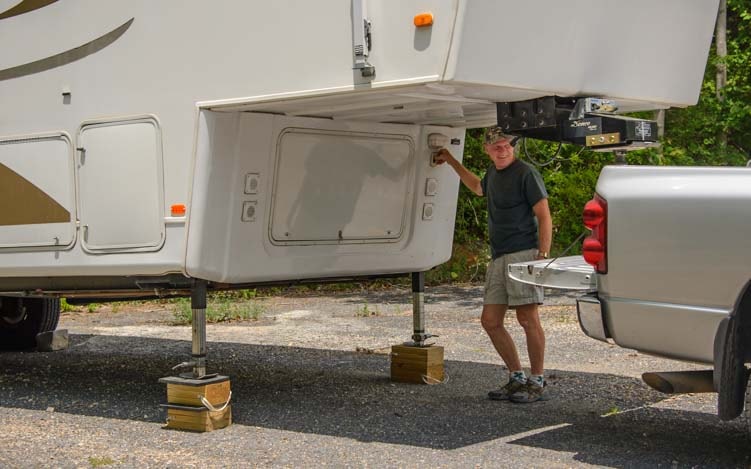
Operating the electric landing jacks on a fifth wheel trailer-min

Without a hydraulic leveling system, on extremely unlevel ground we put blocks under the landing legs.

The disadvantage of electric landing jacks is that the side-to-side leveling of the trailer has to be done by sliding something under the wheels to prop up one side of the trailer, and sometimes we have to prop up the front end of the trailer too. We carry 5′ x 1′ x 1″ strips of a sliced up heavy duty rubber mat for this purpose. We used to carry 5′ long 1×8 pine boards. Lots of folks carry the plastic leveling platforms.

Hydraulic leveling jacks can do most or all of the leveling without the need for anything being placed under the tires. Just hit the button and watch the trailer level itself. In the most off-level situations it may still be necessary to prop up one side of the trailer with something under the wheels.

Leveling boards under a fifth wheel trailer-min

Usually all we need is one or two mats under our wheels. In rare cases we have to stack higher!

Another great benefit of hydraulic leveling jacks is that if you need to jack up one side of the trailer to work on the tires, wheels or suspension, you can use the hydraulic leveling jacks instead of a portable jack placed under an axle. It’s safer and easier.

The only disadvantage of hydraulic leveling jacks is simply that they are complex and might fail. Occasionally (though extremely rarely) the legs have been known to fall down while the trailer is being towed. Of course, technology improves with every year, so these kinds of problems are less and less common.

“FOUR SEASON” – INSULATION and R-FACTORS

Lots of trailers are billed as “Four Season,” but in reality, you can’t compare living in an elevated box with 2″ to 3.5″ walls with living in a house that stands on a foundation and whose thick walls are built with layers of drywall, Tyvek, plywood and siding.

That being said, “Four Season” coaches are generally better insulated than others. Just don’t expect to be totally warm and cozy and free of condensation when there’s a blizzard and temps stay below 0 F for a few days!

Fifth wheel trailer RV in snow blizzard-min

We have experienced several blizzards in our trailer,
but RVs are not really made to be “four season” the way that houses are.

RV Insulation

Some folks have toughed it out in an RV through real winters in the northern states, but the majority of full-time RVers spend their winters in mild climates where overnight temps in the teens are a rare and cold exception. We have tips for keeping a rig warm during the winter months and keeping it cool during the summer months in these blog posts:

Winter RVing tips – Staying Warm!

More Winter RVing tips – How to heat an RV in Winter Weather

Installing a vent-free propane heater in an RV

Summer RVing tips – How to Beat the Heat and Stay Cool When It’s HOT!

There are various ways to insulate an RV and there are pros and cons to the different types of insulation that RV manufacturers use.

Some higher end fifth wheels are built with conventional wooden studs and fiberglass insulation as this may provide greater insulation.

Wooden studs are less apt to conduct warm air to the outside than aluminum framing is. On a cold winter morning it is easy to see where the aluminum framing is on an RV if you go outside because you can see the outline of the aluminum framing on the trailer wall.
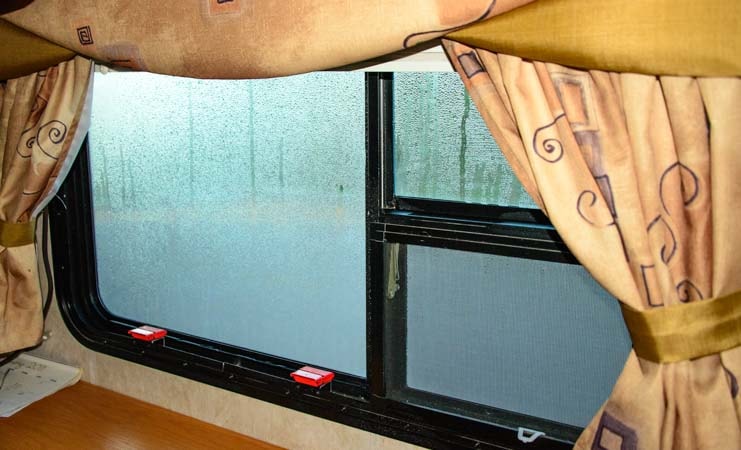
RV windows dripping with condensation in winter-min

Condensation forms inside our windows on a particularly moist and freezing winter day.

However, fiberglass insulation has been known to fall down off the studs over the years, leaving the tops of the walls uninsulated. Usually, the front and end cap and the areas between the roof trusses are all insulated with fiberglass insulation as well.

Most fifth wheels are insulated with styrofoam, and the styrofoam used varies in quality. The use of “blue board” polystyrene styrofoam made by Dow Chemical was one of the big selling points in the NuWa Hitchhiker brand of fifth wheels like ours (NuWa no longer builds trailers). We’ve also heard this product referred to as “Blue Dow” foam.

When we did a factory tour at NuWa before we bought our trailer, we were told that the folks there had tested the strength of the blue board by driving a truck over a piece that was suspended by its two sides, and it didn’t break. We were also each handed a piece and challenged to break it. We couldn’t.

Interestingly, it may be this very strong styrofoam in the walls that kept a Hitchhiker fifth wheel intact recently when it rolled over at 60 mph on the interstate (blog post about that here).

Besides providing strength to the fifth wheel frame, Dow blue board foam has a very high R-factor.

A few high end fifth wheels are built with this kind of insulation nowadays. Most, however, are built with a weaker and less insulating kind of styrofoam.

R-Factors

When looking at the insulation R-factors that are advertised by the RV manufacturers for the walls and roof of a fifth wheel, it’s worthwhile to keep in mind that the number may be for the most heavily insulated part of the wall or roof. RV windows, doors and roof hatch vents have very low R-factors for insulation, and that is where most of the heat is lost.

How much heat is lost through RV windows? Just look at what percentage of a fifth wheel wall is actually windows!

Also, some fifth wheel slide-outs are built with thinner walls and less insulated roofs than the main body of the fifth wheel. Ours is. Again, what percentage of the fifth wheel’s walls and roof are part of the main structure and what percentage are slide-outs?

EXTERIOR WALL and ROOF MATERIAL and MAINTENANCE

Exterior Walls

Fifth wheel trailers are built with various materials as the exterior surface of the walls and roof. Lower end trailers have an exterior fiberglass finish of filon. This is what was on our first full-time travel trailer. It doesn’t shine and is a little harder to keep looking spiffy.

Waxing a fifth wheel trailer front cap-min

Maintenance, like washing and waxing the massive exterior of a big RV, is just part of the lifestyle.

The next level up is a fiberglass gelcoat exterior. This is shiny and can be maintained to a glossy finish by waxing the trailer twice a year. Unfortunately, the pretty swirly stickers that give fifth wheel trailers their colorful look will begin peeling off after about 4-5 years.

The highest level finish for a fifth wheel trailer is automotive paint. This is an extremely durable finish and the swirling paint patterns will never peel off. It is also very expensive (figure on about $10k) and is found only on the highest end fifth wheel trailers.

Roofs

Most fifth wheel roofs are “rubber” roofs. These usually come with a ten year warranty, and they are pretty much ready for replacement at the end of ten years! Fiberglass roofs are more durable. If you are going to install solar panels on the roof, you may need to be a little more careful with a fiberglass roof to be sure you don’t crack it when you drill into it.

Rubber roofs can be made of EPDM or TPO. As EPDM roofs begin to age, they start shedding a lot of dust, and every time it rains this creates streaks down the sides of the trailer. Cleaning the roof often helps reduce the streaking, but it’s very hard to eliminate the problem all together once the roof begins to deteriorate a few years into its lifespan. TPO roofs do not have this problem.

CAMPING STYLE

Other than these basic structural features, the rest of the decision is pure fun fluff stuff. The most important thing to ponder when you’re shopping for your new rolling home is how you anticipate living and traveling in it. What is your camping style? That is, how do you want to camp and where will you travel?

Roads are bigger and straighter in the western states than in the eastern states, so bigger rigs are easier to travel in out west.

Many privately owned RV parks accommodate “big rigs” across the whole country. However if you are more into “camping” in natural settings, the sizes of campsites in government run campgrounds vary a lot.
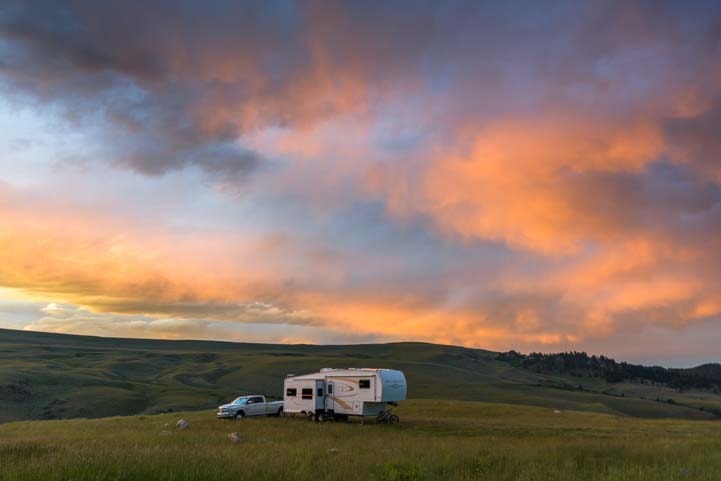
Boondocking in an RV-min

Some RVers love boondocking. Others don’t.
Knowing your own personal camping style helps a lot when it comes to buying a full-time rig.

States Park campsites are often quite large and frequently come with hookups, but they can be pricey too and there are rarely discounts for seniors or for long stays. Campsites in the National Parks and National Forests are often very small, often have no hookups, and may therefore be slightly cheaper, especially for holders of the Federal Lands Senior Pass.

Holding Tank Capacities

So, will you be dry camping a lot or will you get hookups most of the time? This makes a difference in what kinds of holding tank capacities you’ll need.

If you’ll be getting hookups most of the time, then there is no need for big holding tanks. However, if you’ll be dry camping a lot, then big holding tanks will mean you can stay put a little longer before you have to go to an RV dump station .

Our fresh water tanks and hot water heater are 70 gallons combined, our two gray water tanks are 78 gallons combined, and our black tank is 50 gallons. This has worked well for us dry camping every night for the better part of ten years.

We do carry 25 gallons of fresh water in the back of our truck in jerry jugs, but we don’t often need to use that water since we typically stay in places for less than two weeks before moving on, which is about how long our holding tanks last.

One nice feature if you are going to boondock a lot is to have an easy way to refill the fresh water tanks. We have a gravity fed fresh water intake that we can fill from a fresh water hose or from our jerry jugs.
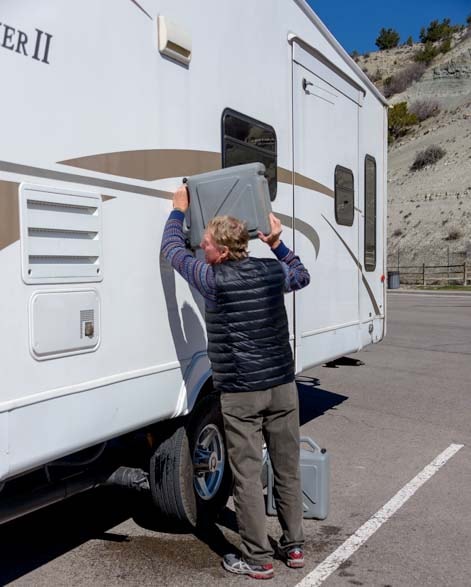
Refilling RV fresh water tanks-min

We have a gravity based fresh water intake on the side of our trailer.
Unfortunately, it is rather high up (and it doesn’t need to be!).

The handy thing about this is that with our trailer the ratio of fresh water capacity to gray and black capacity means that we run out of fresh water before we fill up the gray or black water tanks. Being able to top off the fresh water lets us camp in one spot a little longer before we have to pack it up to go to an RV dump station.

“SOLAR READY” and SOLAR POWER

If you are going to be dry camping a lot, you may want to consider installing a solar power system, and there are a few things to keep in mind about that as you shop for a full-time fifth wheel.

We have a ton of info about solar power on this website. An index of links to our many articles is here:

Solar Power for RVs and Boats

Solar power doesn’t have to be a big, expensive and difficult thing to add to an RV (here’s an article summarizing several types of RV solar power systems).

A portable solar power suitcase that includes a pair of solar panels and a solar charge controller and cables to connect to the batteries all in one package is a nifty way to have solar power available without installing a permanent system on the roof and in the RV basement.

Simply set up the panels on the ground and connect them to the trailer batteries whenever you need to charge the batteries up. The “suitcase” feature makes it easy to stow the system when not in use.

However, most folks who live in their RV full-time and also boondock frequently prefer to install solar panels on the roof permanently and install a solar charge controller near the batteries and install a big pure sine wave inverter too.

Solar panels on a fifth wheel roof-min

Full-time RVers who dry camp a lot usually end up installing solar panels on the roof.

If this is in the back of your mind, you might get excited when you see a fifth wheel (or other RV) advertised as “solar ready.” Unfortunately, in many cases this is a very misleading term. A solar power system that will let you live without electric hookups for days on end will be at least 200 watts and more likely 500 watts or more. The cabling necessary to carry the currents these panels produce is generally 8 or 10 gauge wire.

If a rig is billed as “solar ready,” find out how many watts the prospective solar system could support and check out the size of the cable that goes to the roof. “Solar ready” may simply mean that a skinny cable has been run from the batteries to the roof to support a 50 watt panel. This is great if the batteries are fully charged and you are leaving the rig in storage outdoors for a few months. However, it is not sufficient to live on comfortably.

Also, if you plan to install a full-timer solar power system, check the battery compartment. How many batteries are there? What size are they (Group 24? Group 27?)? How many batteries can you add in the compartment?

Fifth wheel battery compartment-min

We had the battery compartment customized to support four golf-cart sized batteries.

A good sized battery bank for boondocking for long periods is four 6-volt golf cart sized batteries (Group GC2). If the battery box in the fifth wheel you are looking at can’t hold that many batteries, think about where else you might put them and whether there is ample support (they are heavy) and venting (wet cell batteries need to be vented).

Of course, a basement compartment can be beefed up with a piece of angle iron welded onto the frame and/or vents and conduit going to the battery boxes.

We have a series of articles explaining how RV batteries work, how to charge them, different battery types on the market and more at this link:

RV Battery Charging Systems

ACCESS TO SYSTEMS THAT MIGHT NEED REPAIR

While you are crawling around the basements of prospective new rolling homes, try to find all the major components that might fail and might need to be replaced.

If you are a DIY RVer, this is critically important. However, even if you are going to hire out the repair jobs to various RV shops around the country, their jobs will be much easier and cheaper if the systems are easy to access.

Easy access water pump under sink of fifth wheel trailer RV-min

It isn’t “pretty” but it sure is nice to have easy access when it’s time to replace the water pump!
Mark replaced it so fast he’d finished the job before I got pics of his work!

For instance, see if you can find the water pump, hot water heater, power converter, inverter (if there is one), etc.

We once met a fellow with a beautiful brand new travel trailer, and Mark spent an hour with the guy trying to find the power converter. It was hidden behind a fixed wall somewhere and they never did find it!

CREATURE COMFORTS and LIVABILITY

When you give up the luxuries of hearth and home in a stick-built house to wander around the country in an RV, you want to be comfortable. Even though you may be just fine with “roughing it” when you go camping on week-long vacations, it is different when you don’t have a “real” home to go home to.

For us, the move up from our vacation-purposed popup tent trailer to our full-time 27′ travel trailer was such a big step that the travel trailer looked truly luxurious. It had a sofa, dinette and bed in the living area, all of which were good places for relaxing. It seemed just dandy. However, after spending many long hours in it during our first winter, we realized that we wished we had true recliners to relax in. That simple desire is what spurred us to hunt for (and find) our fifth wheel trailer!

Beds

If you have been sleeping in a king size bed at home, switching to a queen bed on the road may be a big challenge. It was for us! It’s a shock to find out the love of your life has so many arms and legs!

Beds in RVs are often slightly smaller in one dimension or another than their residential counterparts, and those lost inches do count. For your reference, here are the standard residential bed sizes, width by length, in inches:

Queen: 60″ x 80″
King: 76″ x 80″

Here are some of the sizes that we’ve seen in fifth wheel trailers, width by length:

Queen: 60″ x 74.5″ (shorter than residential)
King: 70″ x 80″ or 72″ x 80″ (narrower than residential)

We have never seen a full width king size bed in a fifth wheel trailer except in a custom design. This is something to keep in mind if you think you might upgrade your trailer’s factory installed king mattress sometime down the road. Will the new residential king mattress, which is wider than the old mattress that came with the rig, fit on the platform without being squished?

Floorplan and Functionality with Slide-outs Closed

One of the things that we tend to think about when we stand in a beautiful, spacious fifth wheel trailer on a dealership lot is how functional the rig will be when all the slide-outs are closed. Some folks never go in their trailers without opening the slide-outs, but we do it all the time at rest stops and at the grocery store.

Ask the salesman to close the slide-outs on your prospective new full-time fifth wheel and find out which things in the kitchen, living room and bedroom you can no longer access.
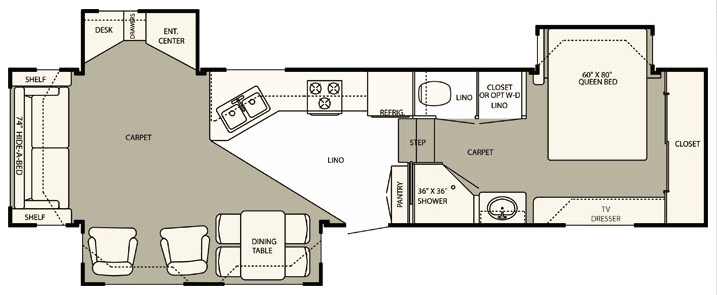
NuWa Hitchhiker II LS 34.5 RLTG Fifth Wheel Trailer Flooplan-min

The open floorplan of our ’07 NuWa Hitchhiker II LS 34.5 RLTG Fifth Wheel trailer.

Can you get into the fridge for a beer? Can you access the pantry for goodies to make a sandwich? Can you microwave something or boil water in a teapot on the stove? Can you wash the dishes after lunch? Can you use the bathroom? Can you get into the bed? Can you sit on a chair in the living room or at your dinette?

These may sound like goofy questions, but when you live in an RV full-time it is surprising how often you may want to use the rig without having to open the slide-outs.

If you roll a shopping cart loaded with groceries up to your front door at the supermarket, can you put them all away without opening the slide-outs? If you visit a friend and park your rig in front of their house for a few days, can you access your clothes and bed so you don’t have to stay in their spare bedroom?
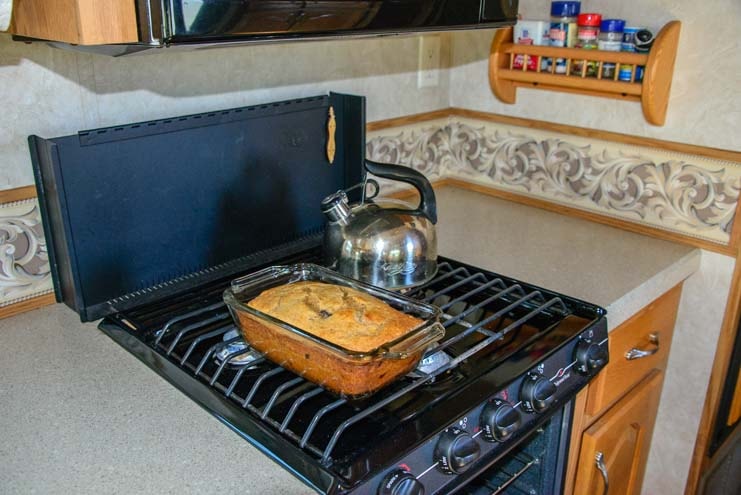
Fresh bread baked in an RV oven-min

We can bake bread when the slides are closed.
Not crucial, but it’s nice to have access to the entire kitchen.

We are fortunate with our fifth wheel’s floorplan because we can access almost everything without opening any of the slide-outs. The only things we can’t get to are the two recliners in the back of the rig and our dresser drawers (opening the bedroom slide 6 inches is enough to get into those drawers). We have actually lived in our trailer with the slide-outs closed for several weeks at a time. It’s skinny, but it’s doable.

Unfortunately, the super popular island kitchen floorplan designs generally don’t allow for full use of the kitchen when the slide-outs are closed. However, there are loads of open floorplan designs that were popular a decade ago, like ours, that the RV designers may eventually revive. After all, there are only so many possible floorplans for a fifth wheel trailer!

Residential Refrigerator vs. RV Fridge

RV refrigerators that run on both 120 volt AC power and propane gas are being replaced in many fifth wheel trailers with residential refrigerators that run exclusively on 120 volt AC power. With some fifth wheel brands you can order the rig with either type of refrigerator. In other cases you can only order it one way and you would need to do the replacement yourself after you’ve bought the rig.

RV refrigerators are wonderful because you can dry camp in your RV for months or years on end and have refrigerated food the whole time. All you need to do is keep the propane tanks filled. Our 8 cubic foot RV refrigerator uses about 30 lbs (or 7 gallons) of propane every three weeks.

RV refrigerators have a few negatives, however.

One downside to RV refrigerators is that they are not self-defrosting. You need to defrost them. After decades of living with a frost-free refrigerator, it is a shock to go back to the olden days (if you were around then) of having to defrost the RV fridge every month or so.

However, my amazing hubby Mark has perfected the art of defrosting and he can now pull it off in about 20 minutes. So, it’s not that bad a chore if you stay on top of it (and if you have a wonderful partner who is willing to do it for you!). See the blog post about quickie fridge defrosting here.

Defrosting an RV refrigerator-min

Mark has simplified the refrigerator defrosting process so much it takes him only 20 minutes. Lucky me!

Another disadvantage is that they don’t modulate the temperature in the fridge with much precision and they aren’t particularly well insulated or energy efficient. We keep a small thermometer in the fridge so we have a feeling for what’s going on. The temp inside varies greatly depending on whether the wall behind the fridge is in the sun or shade and whether the temp inside our rig is 40 degrees, as it is on some winter mornings, or 90 degrees as it is on some summer afternoons.

Our fridge is usually on level 4 or 5 (the coldest two settings) because we like our beer to be ice cold. However I do sometimes find my yogurt has frozen a bit on the edges.

RV refrigerators also have a shelf life. It is about 8 years!

We found that out the hard way when our RV refrigerator died and we had to get it replaced. Luckily the replacement was straight forward and was covered by our extended RV warranty (blog post about it here).
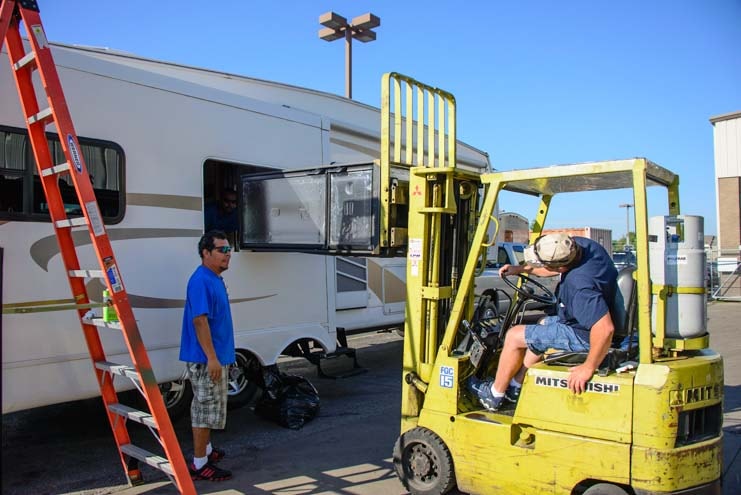
New RV refrigerator is fork lifter through the trailer window-min

Our new RV refrigerator is slid through our dining room window on a fork lift.

The biggest surprise when we got our RV fridge replaced was we found out the warranty companies expect those fridges to last only 8 years. Of course, they figure that into the cost of the warranty, as they should. So, even though we were shocked that ours died, our warranty company wasn’t surprised at all.

Perhaps the most damning thing about RV refrigerators is that they run on propane and they have been known to catch fire and torch entire RVs. A burning RV burns to the ground in seconds because of the propane tanks and manufacturing materials. There was a rash of RV refrigerator fires about a decade or so ago which is part of what pushed the industry towards building RVs with residential electric refrigerators instead.

However, RV life isn’t totally rosy with residential refrigerators either, especially if you want to boondock or dry camp for extended periods of time.

While a residential refrigerator may be a highly efficient Energy Star appliance, it may not have a solid locking mechanism to keep the doors closed in transit or rails to keep the food on the shelves while in transit (check on that). And it will require a lot of power to run while the rig is not plugged into a power pedestal.

A 12 to 14 cubic foot residential refrigerator requires a little over 300 kwh per year to run. This is about 0.8 kwh per day, or, very roughly, about 80 amp-hours per day.

In the winter months when the sun rides low in the sky and is up for a short period of time, an RV will need about 400 to 500 watts of solar panels and 450 amp-hours of batteries just to run the refrigerator. This is about what it takes to run everything else in the RV! An 18 to 22 cubic foot refrigerator will require even more.

This is not to say that it is impossible to install a big enough solar power system to run a residential refrigerator — we’ve had readers contact us to say that they have done it and they’re loving it! — but the expense and weight of the batteries and of the solar panels is something to consider before signing on the dotted line for that beautiful new fifth wheel trailer with its residential fridge.

Also, even if boondocking is not your style, be sure that the battery bank and the inverter that support the residential refrigerator when not hooked up to electrical power are sufficiently big enough to keep the fridge running as you drive. We have heard of 1,500 watt inverters just not making the grade with a big residential fridge (2,000 watts was needed). Or, just turn the fridge off and keep it closed until you get where you are going. Of course, residential refrigerators are not designed to be turned on and off frequently.

Lastly, the fabulous thing about a big, shiny, 22 cubic foot stainless steel residential refrigerator is that it can hold a ton of food. There will be no more turf wars between the beer and the veggies (gosh, would we ever love that!).

However, all that food weighs a lot, and big fridges often become storage places for old containers of food you’ll never eat. If you are buying a full-time fifth wheel that is skinny on its Cargo Carrying Capacity, then a huge refrigerator that can hold lots of food may push you into possession wars between food, tools and clothes in the closet.

On the bright side, a residential refrigerator is much less prone to failure than an RV fridge, and in the rare event that you have to replace one, it could easily cost thousands less than an RV fridge.

I Like the Fifth Wheel But I Don’t Really Like That Couch!

While it’s ideal to find a rig that has furniture you totally love, a fifth wheel trailer is just a box — floor, walls and ceiling — and any residential furniture can be put in that box. We have replaced both our dinette chairs and our recliners in the course of living in our fifth wheel all these years, and last week we replaced the couch!
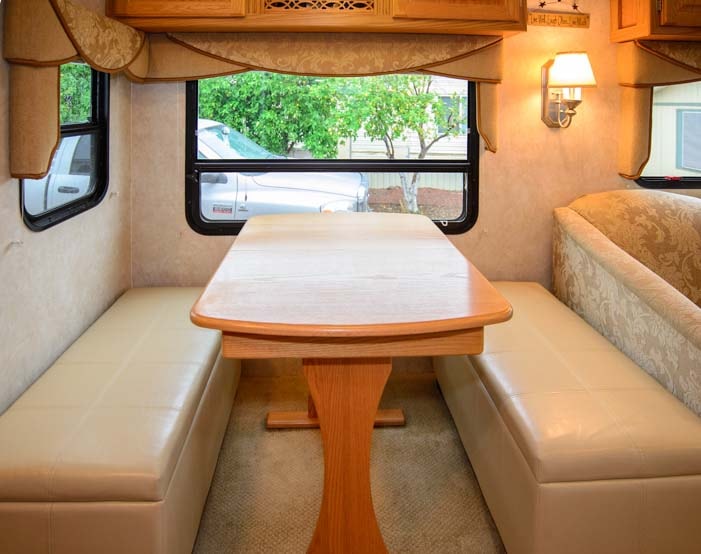
Storage benches in RV dinette add comfort and storage space-min

The old chairs were elegant, but these cushy benches are much more comfortable.
Plus they give us more storage space!

Here are blog posts about some of the changes we’ve made to our furnishings:

Add Storage and Seating Capacity at your RV Dinette!

Can You Sell Old Stuff on Craigslist in the RV Lifestyle? Replacing our Recliners!

We also replaced our mattress with a fancy Simmons Beautyrest mattress.

RV DEPRECIATION

After all this discussion of what to look for in a fifth wheel trailer for full-time living, it is important to remember that the brand new fifth wheel you buy today will be worth about half of what you paid for it ten years from now. If it is well maintained it might be worth a smidge more. If it isn’t, it may be worth less.

What’s worse, the fact that it was lived in full-time rather than kept in a garage and never touched will turn many prospective buyers away or make them hit you up with a low offer.

RV Depreciation over time

Hmmm…. An RV’s value declines with time.

On the flip side, going RVing full-time is a dream, and it’s hard and maybe even unfair to put a price on your dreams.

If you have the funds and you can spend a lot on a rapidly depreciating fifth wheel trailer without crippling your finances later in life, definitely go for it.

What could be better than casting off on a dreamy new lifestyle in a dreamy new RV?

No matter what you buy, negotiate hard. You are in the driver’s seat — until you are in the driver’s seat! Many mass-market manufacturers anticipate selling for about 70% of MSRP. Others are closer to 80%.

If you go custom, well, you’re be paying for the very finest of the finest. So, the focus will be on getting exactly what you want rather than haggling over the price. With a custom rig you get what you ask for… so be knowledgeable and smart about what you ask for!

If you aren’t sure of you future finances, and you aren’t sure if you’ll like the full-time RV lifestyle, and/or you aren’t sure if you’d prefer a fifth wheel or a Class A motorhome as your house on wheels, consider getting a cheaper model or a used trailer to start.

We understand this dilemma well. We would LOVE to have a new trailer now. After all, ours is ten years old and shows a lot of wear. But…

WHERE DO YOU WANT TO TRAVEL?

The rig you live in is just part of the equation of putting together that champagne lifestyle of full-time RV travel. The real reason most folks run away in an RV is because they want to get out and see something of this continent, get to know the different regions of our country and of our neighbors’ countries, and knock a few travel destinations off their bucket list.

Appalachian Mountains RV Trip Coast to Coast Magazine Summer 2017-min

Our cover photo for our Coast to Coast magazine article about the Appalachian Mountains
Summer 2017 issue

The options of places to visit are limitless, and we’ve got 10 years worth of travel tales on this website that tell the stories of what we’ve seen and where we’ve been since 2007.

I’ve also written a lot of articles for Trailer Life Magazine showcasing different parts of the country that make for an enjoyable RV destination.
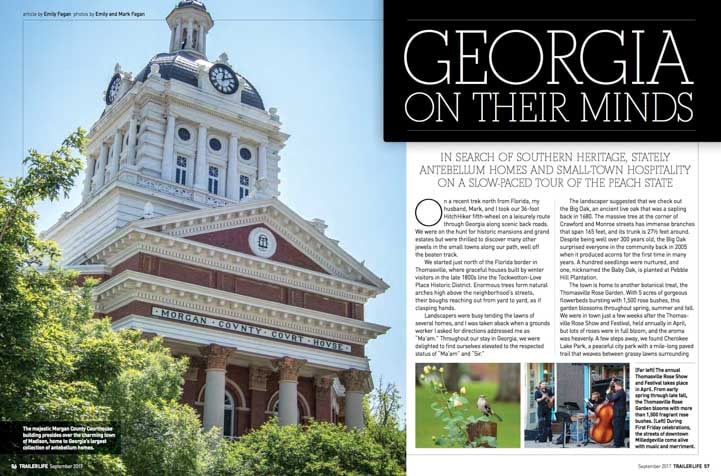
Georgia On Their Minds Trailer Life Magazine September 2017-min

The Antebellum Trail in Georgia is a terrific RV route for folks heading north/south through Georgia.
Trailer Life Magazine – September 2017. Article by Emily & Mark Fagan

A few of these feature articles have turned up in Trailer Life over the past few months and can be read at these links: Georgia on Their Minds, The Quaint Side of Canada, and Downeast Maine. Images of the first two pages of each article are below.

I also have a bi-monthly column on the back page of Trailer Life that showcases a beautiful photo of a gorgeous spot along with a few words about what makes that place special. My most recent columns have focused on: The Rocky Mountain Beach Town of McCall Idaho and a Forest on Fire – Fall Colors in Colorado.

Trailer Life Magazine is a monthly national magazine and it offers not only mouth-watering photos and stories of places to take your trailer, but it also devotes a lot of pages to technical issues that trailer owners face.
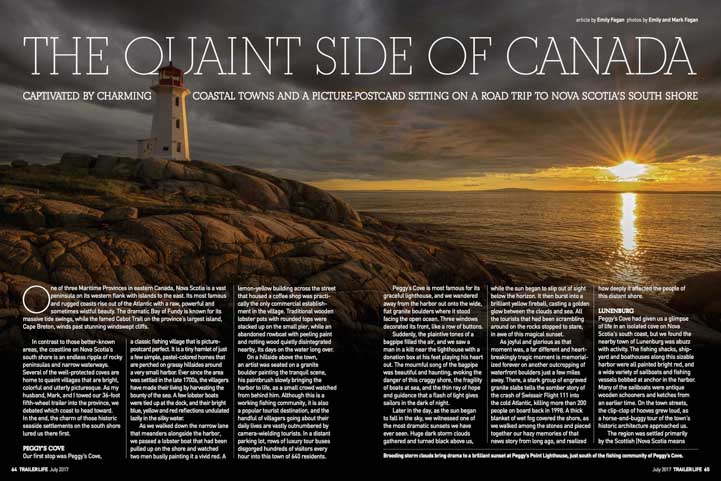
Nova Scotia RV Trip Trailer Life Magazine July 2017-min

Nova Scotia’s Cape Breton Island is tops on many RVers’ lists
Trailer Life Magazine – July 2017, Article by Emily & Mark Fagan

The technical editorial staff at Trailer Life is both very knowledgeable and very meticulous about ensuring what they discuss and review is accurate.

I have written a lot of technical articles for Trailer Life, from discussing RV roof maintenance to RV dump station tips to an article about the 2016 Dodge Ram 3500 dually truck and one about the new puck based OEM fifth wheel hitch from B&W Trailer Hitches.

Downeast Maine RV Trip Trailer Life Magazine June 2017-min

Downeast Maine is a hidden jewel north and east of famous Acadia National Park
Trailer Life Magazine – June 2017, Article by Emily & Mark Fagan

I have always been amazed at the extensive review process and discussion process that each of these technical article has undergone. Every little minute detail is reviewed for accuracy, sometimes spawning some lively debates.

There are a gazillion RV blogs out there that make for super fun reading and research and learning, but there is something to be said for a magazine that has been in print for over 75 years. Some people on the team have been with the magazine nearly half that time!

Trailer Life is hard to find on newsstands these days. New Camping World members receive a few issues as part of their membership (or they can get Motorhome Magazine if driveable RVs are more to their liking). If you get an annual subscription at the link below, you’ll see the article I’m working on about “first-timer” fifth wheels when it comes out!

Subscribe to Trailer Life Magazine

Have you been shopping for a full-timing fifth wheel? We’d love to hear your thoughts!

Boondocking in an RV-min

There are loads of fifth wheels on the market that would make a fine full-time home. Enjoy the search!

Subscribe
Never miss a post — it’s free!

If you found this article useful, please help support us by making a contribution using the Donate button below or by using any of our links to Amazon the next time you shop for anything online!

Here are index pages with links to more articles on this blog and in Trailer Life Magazine:

Here is a video with tips for choosing an RV dealership and an RV salesman:

Below are some of our most POPULAR POSTS (also in the MENUS above)

Buddy - A Journey in Spirit - The story of an event that changed our lives forever.

ARTICLE INDEXES
  • RV Tech Tips Articles - A one page index of links to all our RV Tech Tips, RV Upgrades & RV Maintenance articles.
  • RV Lifestyle Tip Articles - An index of links to all our RV Lifestyle Tips (finances, boondocking, major repairs, work/jobs, etc.)
  • Solar Power Articles - Overview and tutorial articles for how to design and install solar power on an RV or boat
  • Product Reviews - An index of links to all of our Product Reviews
RV UPGRADES, SYSTEMS & TIPS MONEY FULL-TIME RV LIFESTYLE GEAR STORE
  • Gear Store - A list of the goodies, equipment and gear we've found useful in our RV lifestyle!
 

Our most recent posts:

More of our Latest Posts are in the MENU.   New to this site? Visit RVers Start Here to find where we keep all the good stuff. Also check out our COOL NEW GEAR STORE!! *** CLICK HERE *** to see it!

Boondocking (“free camping”) – How to find free RV campsites

There is nothing like the feeling of freedom of setting up camp in an ideal, secluded, picturesque RV campsite out in the hinterlands somewhere, and that’s why many RVers love to go boondocking and why we’ve done it almost every night for over ten years.

Rather than camping in a campground or an RV park, finding an RV campsite somewhere on the gorgeous public lands that have been set aside by the government for recreational purposes can make for a thrilling and fulfilling getaway.

Boondocking in an RV in Utah-min

Boondocking in Utah

Boondocking” refers to this kind of camping which is also more officially known as “dispersed camping” or “primitive camping.” Many RVers also call it “free camping” or even “wild camping” because it usually doesn’t cost anything and many sites are far out in nature somewhere.

Whatever name you give it, it falls under the category of “dry camping” because you are living in your RV without hooking it up to city water, sewer or electricity.

RV boondocking camping in a trailer in Idaho

Boondocking in Idaho

This post describes the different kinds of boondocking spots that are available and how to locate them.

If you are interested in tips for how to live off the grid in an RV (i.e., tips for how to save electricity, how to conserve water & propane, how to boondock safely, etc.), see this page: RV Boondocking – Tips for Living Off the Grid in an RV

WHAT IS RV BOONDOCKING ALL ABOUT?

Generally, boondocking is a very different way of traveling than staying in RV parks and campgrounds, because it is very free spirited and spontaneous. Nothing can be reserved in advance, and often you have no idea what kind of site you might find.

Boondocking in an RV in Montana-min

Boondocking in Montana

Many days we have no idea where we will be staying until late in the afternoon. Learning to be this flexible takes time, especially after years spent in structured, workaday routines, and not everyone ends up liking it.

We find the freedom from rules and restrictions and the beauty of the public lands is intoxicating, and we wouldn’t travel in our RV any other way.

We have been camping this way every night since we started full-timing in 2007, and as of June 2019, we have boondocked in our RV for a total of nearly 3,200 nights.

Boondocking in an RV-min

Boondocking in Wyoming.

PUBLIC LAND

The US Forest Service (USFS) and Bureau of Land Management (BLM) and other government agencies (Army Corps of Engineers among others) all manage vast tracts of public land.

The USFS (National Forests) is part of the Department of Agriculture, while the BLM (Bureau of Land Management) is part of the Department of the Interior (as is the National Park Service).

Both the USFS and BLM have a mission “to sustain the health, diversity, and productivity of America’s public lands for the use and enjoyment of present and future generations.”

As a result, both of these entities manage two kinds of activities on their land: recreational use (camping, hunting, fishing, hiking, biking) and productive use (cattle grazing, mining, logging, etc.).

For this reason, the USFS and BLM generally allow “dispersed camping” on their land. That is, you can camp wherever you find a spot that seems suitable and is accessible.

In stark contrast to the USFS and BLM, the mission of the National Park Service, which manages both America’s National Parks and National Monuments, is to preserve America’s natural and historical treasures. For this reason, the whole notion of dispersed camping runs contrary to their charter, which is preservation (i.e., “don’t touch”). Therefore:

America’s National Parks do not allow dispersed camping in an RV (boondocking)

Some ranger districts and specific locations within the USFS and BLM lands do not allow dispersed camping either. If overnight camping is not allowed, a “No Overnight Camping” sign will be posted at the site or in an otherwise obvious place.

The idea behind dispersed camping is to allow people to enjoy the beauty of nature without the ordinary restrictions of a campground. However, campers have a responsibility not to harm the site and to leave it in good condition for the next person.

That is why there are rules for boondocking about packing trash out, burying human waste deeply, and not making new campfire rings.

In general, the rules for boondocking are very simple:

  • Stay in a site that already has a campfire ring or other evidence of being a campsite, and don’t build a new one
  • Observe fire restrictions (sometimes fires are not allowed due to the ease of starting a wildfire)
  • Pack out the trash you create (and don’t leave it in the fire ring)
  • Bury any human waste under at least 6″ of dirt
  • Enjoy a stay of 14 days or less (sometimes 16 days) and then move on
Fifth wheel trailer camping in Oregon

Sunset in Oregon

The reason behind the 14 day stay limit for dispersed camping is that the government agencies don’t want people moving onto public land and making it their home. The idea is: get in, enjoy the place, and get out. The idea is not to turn public land into little RV homesteads.

In some places the rangers will monitor the campers on their land and will ensure campers leave when their 14 days are up. Even when no one is monitoring how long campers stay, it is important to respect the rules and leave when you’ve reached the time limit.

There is a ranger’s office for each district within each of these agencies, and a stop at the ranger’s office is often worthwhile to pick up maps and to ask about dispersed camping opportunities, local rules and regulations.

Camping in a fifth wheel RV in utah

Lakeside in Utah

Note added May, 2017: A reader recently emailed me to express her distress that when I discussed “our” public land, I referred to it as “their” land, meaning land “belonging to” the federal agencies that manage it (USFS, BLM, etc.). For anyone that is puzzled or put off by this reference, please read my post Copper Mining, Not Camping, In Tonto National Forest which explains in detail one way (of many) that land management agencies control public land.

It takes just a few hours for any land management agency to erect a permanent “Road Closed” sign on any tract of public land to keep the public out — indefinitely — until the road grows over with weeds and fades into oblivion. We’ve seen it happen many times. Public land is “our” land in many ways, but our access to it and the things we can do on it are tightly controlled (and have been tightly controlled for as much as a century in some places).

RV boondocking dispersed camping in Arizona

Arizona

As noted above, the USFS and BLM generally allow boondocking while the National Park Service (NPS) does not.

This means that famous places like Grand Canyon, Yosemite, Yellowstone, etc., are off limits to boondocking.

The one exception for boondocking in the National Park system is at Big Bend National Park in Texas where a very controlled kind of boondocking is possible, as explained here: Boondocking at Big Bend National Park – Tips & Tricks.

Many National Parks are located near National Forests. If you don’t mind a 10 mile or more drive to get to the National Park you are visiting, you can boondock in the National Forest and drive in.

If you are interested in boondocking, or simply camping in National Forest and BLM campgrounds, you’ll soon become aware of the complexities and political issues surrounding the management of America’s public land.

In every western state public land campgrounds and dispersed camping areas are closing at an alarming rate.

Some shocking public land changes we have seen in our years of RVing full-time are described in these two blog posts:

  • Copper Mining (NOT CAMPING!) at Tonto National Forest
    – The 2015 Defense Bill under Obama gave away the world’s largest copper vein (in Arizona) to British/Australian mining interests. Surprisingly, after 50 years of national debate about this land (including a decree by President Eisenhower that it never be mined), it was given away to foreigners rather than sold to an American corporation at a massive profit — with huge royalties on extraction — as it could have been.
  • What is Happening to our Public Land? – Changes at the Grand Canyon
    – Private Italian owned commercial developments have taken place in the National Forest just outside Grand Canyon National Park. Is that an appropriate use of National Forest “public” land?

While there has been a huge outcry recently about reducing the size of several National Monuments, in our experience, RV boondocking is generally not allowed on National Monument property. Also, the creation of a National Monument brings a deluge of tourists and requires building visitors centers, roads, parking lots and other tourist oriented features.

Much of the land in those National Monuments was already managed by federal land agencies prior to becoming a National Monument, and it is slated to return to BLM and USFS control now. The National Monument designation not only restricted how the public could enjoy the land (like boondocking) but dramatically increased the tourist traffic as well.

During a very long conversation with a ranger at Grand Staircase Escalante National Monument, we learned that he and another ranger had spent an arduous 14 hour day the previous day cleaning up human poop and toilet paper from a popular spot on the National Monument that is too remote for toilet facilities. In the past, that place was not known to the public and saw very little visitation, but because it is now in all the tourist literature for the National Monument, lots of folks go there.

Sign in Grand Staircase Escalante National Monument-min

Increased tourism with “National Monument” designation has its downside.
We saw this sign in Grand Staircase Escalante National Monument.

We were also very surprised on a long back road trip to find that much of Grand Staircase Escalante was, in our opinion, very nondescript and featureless land — nothing like the truly stunning and dramatic canyon that was bisected by busy US-89 highway north of Kanab decades ago!

Perhaps the most disturbing development is the deliberate blocking of public land by wealthy people with a political agenda. In the past, ranchers generally allowed the public to have easement access to inaccessible public land next door to their property. Now, as old ranch land is sold, folks are buying it to block access to neighboring public land.

We met a fellow who told us with glee about his recent land acquisition. “When I close the gate to my property I block public access to 88,000 acres of public land!” he said with sheer delight. Another way of looking at it is that he has taken 137 square miles of public land away from the public and made it his own.

In several cases, private landowners who continued to allow public access across their property were murdered by their neighbors who wanted to shut down access to the public land all together: Class War in the American West.

We are not hunters or fishermen, but hunters and anglers are much better organized around the public land debate than RVers are, and they have gathered resources to ensure they retain access to hunting and fishing grounds: SportsmensAccess.org.

The bottom line is that the public land debate has been ongoing for over a century and it is complex. It’s worth noting that beloved photographer Ansel Adams vehemently opposed the National Park Service nearly a century ago. He discussed his opinions and actions at length in his terrific autobiography here.

BOONDOCKING ETIQUETTE

Respect The Neighbors – Give Them Space!

Boondocking campsites vary a lot in size. Some are large enough for several big rigs and some can fit only a single van or truck camper.

If you arrive at a campsite and find someone is already set up there, move on to another site unless you can set up your rig in such a way that you won’t be intruding on their space.

Even though rigs can easily park in very close proximity in RV parks, people who are boondocking on their own generally don’t want to have neighbors move in close by.

There’s no hard and fast rule on “how close is too close,” but for us, if we can’t give the campers a few rig lengths of privacy, we leave them in peace and continue our search for a different site.

Respect The Neighbors – Keep The Noise Down!

Most people boondock to get away from it all, and if you do end up within sight of neighbors, respecting their quest for peace and quiet is simply common courtesy.

Whether it’s loud music or a loud generator, nature is not nearly as tranquil when a neighbor is making a lot of noise.

Respect The Neighbors – Don’t Search For Campsites After Dark!

It is very difficult to find your way around in the boonies on small dirt roads in the pitch dark, but there are folks out there who do their campsite scouting after sunset.

This is most common with people in small driveable RVs without a car who spent the day sightseeing and are now looking for a place to crash.

Just because you have GPS coordinates or directions to a campsite in hand doesn’t mean it will be vacant and available for you when you arrive. There may be sleeping people in RVs there, and they may be surrounded by large obstacles like bushes, rocks, trees and fire pits.

It is quite a jolt to be woken up at midnight by someone driving over small bushes and boulders with their headlights flashing in all directions as they circle around your bedroom trying to find a place to camp for the night!

If you have a small RV without a car, try to finish your sightseeing before sunset so you can find a campsite and set up camp in the boonies without waking up the neighbors. Or, if you want to be out at night, stay in a campground in a well marked site that you can find easily when you return in the dark.

View from RV window in Utah

View from our window in Utah

Leave Your Campsite Cleaner Than You Found It!

In the olden days of 50 years ago, this motto — “Leave your campsite cleaner than you found it” — was drilled into camping kids by their parents. Lots of older campers today remember hearing that refrain from stern parents when they were young. Even if it is not commonly heard any more, it is still great advice that is well worth following.

– Pick Up Other People’s Trash

The land management agencies ask that campers “pack it in and pack it out.” This means: don’t leave the place a mess. Generally an RV won’t leave a footprint behind, but sometimes we arrive at a site and end up filling several grocery bags with trash.

I’d rather pack out someone else’s trash than leave that legacy for our grandchildren to find when they go camping with their RVs decades from now. Sadly, there is LOTS of trash on our public land, and we pack out bags of other people’s trash all the time.

Our feeling is that if we can stay for free for two weeks on a gorgeous piece of property, surrounded by hundreds of acres of natural beauty, with a multi-million dollar view out our windows, the least we can do is to pick up a little trash.

This makes the campsite nice for the next visitor!

We also want to keep the USFS, BLM and other land management agencies happy with RVers so they continue to allow boondocking on their land.

So the first thing we do when we set up camp anywhere (both on public land AND in commercial parking lots) is to grab a grocery bag and fill it with whatever trash is strewn around our rig. There is ALWAYS some! I usually throw on a pair of rubber gloves.

In Arizona, many Tonto National Forest boondocking areas have been closed because it was too expensive for the USFS to clean up after winter RVers and others who trashed the places. What a shame that those thoughtless people ruined it for everyone else.

– Clean Out the Campfire Ring

Many campers like to leave some of their trash in the campfire ring, thinking that the next camper will burn it for them. They seem not to realize that the next camper may not want to sit down in front of their wonderful campfire on their first night out only to spend an hour burning someone else’s trash!

Also, lots of folks don’t do campfires. Who wants to see a pile of trash in the front yard while they’re camping?

Here’s a photo of the things I pulled out of a campfire ring in gorgeous Sedona Arizona one time:

campfire ring contents-min

We arrived to find all this piled up in the campfire ring.
Who wants to start their camping getaway by burning the junk left by the previous camper?

– More about Poop on our Public Land

Many conservation oriented people who plan to do a lot of boondocking ask us if they should get a composting toilet for their RV. Keeping campsite cleanliness etiquette in mind, and remembering the public land managers’ important and common sense rule about burying human waste under at least 6″ of dirt, we’ve summarized our thoughts at this link: Is a composting toilet a good idea in an RV?

HOW TO LOCATE BOONDOCKING SITES

The Delorme State Atlas Books and the Benchmark Atlas Books show where the public lands are in each state, and we have one for every state we travel in (and for a few states we have two, one from each publisher!).

These atlases also have a section in the front that describes the various outings, scenic drives, historic spots and unusual natural landmarks that can be found within the state. With those attractions in mind, we have an idea of where we want to go and which secondary roads will get us there.

boondocking with a fifth wheel trailer in Idaho

Camping under a big open sky in Idaho

Each state also produces a free paper road map, and visitors centers usually stock them for all the states in the region, so it’s easy to get your hands on a road map when you arrive (and sometimes even before you arrive) in a new state. Note that the big state visitors centers are generally located on the interstates, so if you are crossing into a new state and want a map, arriving via an interstate highway is a good idea.

RV camping in the Oregon woods

Tucked into the woods in Oregon

We like these paper road maps because they give an overview of the layout of the state and they usually show where the scenic drives are too. You see, where there are scenic roads, there are beautiful things to see, and sometimes there are nice places to boondock too!

That’s why, between the atlas map books and the road maps, we are always on the lookout for scenic areas.

Another super resource is the wonderfully detailed National Geographic maps of America’s public lands. These take the atlas books one step further, giving finer detail (but covering less area). We turn to these when we want to zero in on a particular national forest or BLM area. These maps are especially useful for:

The National Geographic maps are also excellent for these states:

Arizona, California, Colorado, Oregon, Montana, Nevada, South Dakota, Utah, Washington, Wyoming

We usually aim for a particular area, and once we arrive, we find a place to park the rig temporarily so we can get our bearings and do some scouting in person. Then we unhitch our truck or unload the bikes, and we go scouting to see if there are any good campsites.

Usually, the first night or two we are in a temporary spot that is okay but is not somewhere we’d want to spend a long time. If we like the area and want to stay longer, we then do an all out search to find a better place. Sometimes we get lucky and find a great campsite. Sometimes it’s impossible and we just move on.

Camping under a rainbow in Wyoming

A rainbow crosses the sky in Wyoming

We incorporate our search for boondocking spots into our overall travels and sightseeing in each area we visit. Because of this, unlike most RV campers, for us searching for boondocking locations is an integral part of our lives and is the very fabric of our RV lifestyle.

Our biggest concern in scouting out a boondocking campsite is whether or not our rig will fit, both on the road getting there, and also once we are in the campsite. Overhanging branches and insufficient room to turn around can make a great spot impossible for us to use.

Secondary concerns are the potential that the place will get really muddy if it rains or really dusty if it gets windy. We also debate how long a drive it is from the campsite to wherever we want to visit. Sometimes it’s not worth staying if we’re going to be driving excessively to see whatever we came to see. However, in popular places we do frequently boondock in places that are as much as 20 to 50 miles from wherever we plan to be sightseeing.

It may sound funny, but we frequently don’t unhitch our trailer when we stay somewhere, especially if we know we won’t be staying more than a few days. If the area is bike friendly, and we’re caught up on our chores (laundry and grocery shopping), we won’t be using the truck anyways. So, we save ourselves a few minutes while setting up and breaking down camp by keeping the truck and trailer attached.

Camping in an RV in Arizona

Full moon at dusk in Arizona

There are listings of boondocking sites on various websites and some folks sell books with boondocking locations in them.

However, in all our years of living off the grid and boondocking, we have found that going scouting in person is by far the best way to find places to stay.

Ultimately, RV boondocking is all about adventure, and for us, the true joy of boondocking is exploring the wonderful public lands in America and discovering special campsites that are relatively unknown.

Overnight at a scenic lookou at Washington Pass in the North Cascades

One of our earliest boondocking experiences in Washington

Besides the thrill of discovery, another reason we like to find our campsites on our own rather than relying on lists of boondocking locations given by other people is that, in general, the quality of the reports in those lists is unreliable.

If the person reporting the site is traveling in a van, or in a car with a tent, or small RV, and has never driven a big RV, their “fabulous” campsite that is “good for any size RV” may be totally inappropriate for a truly big rig.

In addition, not only is one person’s definition of a “good dirt road” different than another’s, the site may have become unusable since the report was made.

RV camping in the boondocks in Oregon

Exotic skies in Oregon

Boondocking locations are being closed all the time.

Unfortunately, the places that allow RVers to boondock are shrinking in number all the time.

As communities grow in areas next to tracts of public land, residents don’t want to look out the windows of their new home to see RVs camping, and they get the public land management agencies to close the sites. Nearby RV parks and other fee based campgrounds also don’t like the competition from free campsites nearby, so they campaign to close dispersed camping sites to encourage RVers to stay in their campgrounds instead.

Also, the public land management agencies close roads to former boondocking sites every day for various reasons, frequently converting them to “Day Use Only.” All it takes to eliminate a stunning dispersed camping location is a “Road Closed” or “No Camping” sign on the road leading to it. These are becoming more and more common on America’s public lands.

Many places we stayed early in our travels are now off limits, and RVers who started out 10 or 20 years before us have told us of favorite campsites they lost before we even knew what boondocking was.

Day Use Only - No camping - sign for RV campers in the National Forest-min

There are over a dozen fantastic former boondocking campsites behind this sign in Colorado.

PARKING OVERNIGHT at COMMERCIAL PARKING LOTS, TRUCK STOPS and CASINOS

Walmart is famous for being very RV-friendly, and they sell a Rand McNally Atlas that lists all the addresses of every Walmart in the US as well as its interstate exit number, if it is near one. However Walmart is not always in control of their land, so staying overnight in their lot is not always legal.

Although most Walmarts would allow RV overnight parking if they could, when the building is on leased land with a landlord that forbids it, or when it is located within city limits that have an ordinance against overnight parking, then you can’t stay there.

Usually there are signs in the parking lot if overnight parking is not allowed. It is advisable to check with the store’s security department to find out whether or not they allow overnight parking, and if they do, where they want you to park.

Here is a list of No Overnight Parking Walmarts. Of course, sometimes rules are flagrantly ignored, and we have arrived at Walmarts where RVs and semi-tractor trailers were lined up between the signs prohibiting overnight parking!

Even more-so than on public land, the boondocking etiquette at a commercial parking lot like Walmart is really important.

We try to keep a low profile, usually remaining hitched to the truck and often not even putting the slides out. Obviously, camp chairs, patio mats, grills and other outdoor paraphernalia is strictly forbidden.

5th wheel trailer Boondocking in Colorado

Surrounded by gold in Colorado

We have seen people treat a Walmart parking lot like a campground, grilling steaks, enjoying cocktails in their camp chairs, and playing ball with their kids in the parking lot (and hitting car windshields with the ball!). No wonder city ordinances against overnight parking in commercial lots are on the rise!

How serious is this business of polite overnight parking etiquette?

Years ago, when we first started full-timing, we stayed at a casino that was very popular among snowbird RVers migrating down I-15 to Arizona for the winter.

While walking around the parking lot at sunset, we saw lots of of RVers setting up a big circle of camping chairs right in the parking lot. These more experienced RVers told us “it was fine” to have cocktail hour in the parking lot and that they did it whenever they came through on their north-south migration in spring and fall.

Free camping with a fifth wheel trailer in Wyoming

Camping on a lake in Wyoming

“The casino management doesn’t care if we do this…” these RVers told us. So we accepted their invitation to join them. It looked like fun! Well, apparently management did care, because now overnight parking is prohibited, not only in that particular casino parking lot but at most of the others in town too.

Along with this casino, we have seen quite a few other commercial parking lots that were once popular overnight spots close their lots to RVers. So again, be respectful of the special places that still allow it so others can enjoy it in the future!

Fifth wheel trailer RV boondocking in Arizona

Camping amid the cactus in Arizona

Cracker Barrel allows overnight parking at many locations, and they have a map that lists the addresses of their stores. However, we have yet to see a Cracker Barrel with a parking space big enough for our rig!

Camping World allows overnight parking in some of their lots. They list their store locations online and you can give them a call to find out which ones allow it.

Casino Camper gives descriptions of casinos that offer overnight RV parking, either in RV parks for a fee, or in a back lot for free.

Truck stops are another option in a pinch, although that rarely makes for a good night’s sleep.

Small businesses will sometimes allow an RV to stay in a back lot if you patronize them and ask permission. Some visitors centers allow it too, but generally only the ones in less busy areas.

GETTING A GOOD NIGHT’S SLEEP in a COMMERCIAL LOT

Most commercial lots are very well lit, so it’s almost impossible to find a spot in the parking lot where the street lights won’t be shining in the windows or down the bedroom hatch.

Using a vent hatch insulator in the bedroom roof hatch and putting Reflectix in the windows will block the light and make it easier to sleep. Choosing a spot that is far away from any trucks is important too, as they tend to come and go all night long. Refrigerated trucks run loud generators to keep their contents cold. Parking next to one overnight is no fun at all!

Camping by a brook in Idaho

Our own private Idaho

REST AREAS and PULL-OUTS

Some Interstate rest areas allow overnighting and some don’t. Generally, if it is not allowed, then there are signs that say so. Like truck stops, finding a spot away from the trucks is vital.

Vermont doesn’t allow sleeping in their rest areas between 7 pm and 7 am (apparently “resting” at a rest stop is a very short duration activity in Vermont), while at one time Texas offered free wifi at all of theirs! One rest area in Mississippi is set up like a campground with individual campsites and a water spigot at each site!

Many secondary roads have large pull-outs where you can be far off the highway and get a good night’s sleep.

ASK AROUND

The best boondocking resources are often fellow RVers and other people we meet in our travels. However, as with the online and printed reports of campsites, it helps to verify that the person has actually been there and done it.

Many forest rangers will say there is dispersed camping in their district, yet despite being “legal,” it is totally impractical. Find out if the ranger you are talking to is an RVer with a rig your size.

RV boondocking in Arizona

Beach camping in Arizona

Also, whoever you talk to, find out what kind of rig they actually took to the campsite they are describing and when they last went. They may own a big rig now, but if they took a Jeep and a tent to this site twenty years ago, it doesn’t count.

Lastly, size up the person and their thirst for adventure as compared to your own. We have several RVing friends who happily take their big motorhomes to places we’d hesitate to go.

Most of all — have fun with it. For us, half of the excitement of boondocking is in the searching. We always have an eye out for prospective camping sites as we drive around, and when we find a really good one it’s a total thrill.

RV camping and boondocking in Arizona

Red rock camping in Utah

WHY DON’T WE SHARE OUR BOONDOCKING LOCATIONS?

Many people ask us why we don’t give GPS coordinates or directions to the boondocking locations we find. Very simply, boondocking is all about adventure — not knowing what might lie around the corner or where you might sleep tonight. We don’t want to spoil that adventure for you!

More importantly, the essence of boondocking is being able to experience true independence, freedom and self-reliance, things that are rare in today’s world.

One of the greatest thrills of boondocking is suddenly coming across a campsite that is ideal for you, somewhere you would just LOVE to stay for a few days. If you simply drive to the GPS coordinates somebody else has given you, you are missing out on the most exciting aspects of boondocking: exploration and discovery.

Our boondocking locations work well for us, but they might not work for you. Our trailer sports a lot of pin stripes along its sides from scraping against tree branches when we’ve squeezed down a narrow road, and our truck already has a dent in the side from a tree branch falling on it when we shoe-horned ourselves into a tight spot.

We are willing to commute as much as 50 miles between our campsite and the areas where we sightsee. So, many of the stunning photos of our rig on this blog are not anywhere near the areas we were visiting at the time.

We also spend many hours each week searching for good campsites by driving our truck or riding our bikes down tiny dirt roads to see what’s there. This is an integral part of our daily lives and is not only a fundamental part of our travels but is something we really enjoy doing.

For those that are willing to make this kind of effort, all of the beautiful places you see in this blog are waiting for you to find. Relish the search — we do!

When we cruised in our sailboat, a popular cruising guide had just been published. It gave the GPS coordinates where the authors had anchored in every anchorage. Everywhere we went, boats were crammed around those coordinates. Even if the anchorage was a mile wide, 20 boats would be on top of each other where the authors of the book had dropped their anchor.

That kind of “paint-by-numbers” cruising (or boondocking) is easy, but I think all those sailors were missing out on something priceless: exploring and finding a little corner of their own that was away from it all and that was “theirs” for a few nights.

RV boondocking in a 5th wheel trailer

A classic sunset

Also, like everything on the Internet, this blog is read worldwide. I have seen our RV articles and our blog links being discussed on RVing forums from France to The Netherlands to Romania and have received emails from South American and Australian readers as well!

I love corresponding with American service people who are stationed overseas in the war-torn parts of the world, especially when they tell me that this blog is a source of inspiration for them as they begin to plan for a different life after their service is over.

However, there is little reason for people on the other side of the planet to get detailed directions to or GPS coordinates for priceless camping spots on America’s public land.

If boondocking and anchoring out all these years have taught us anything, it is that these places are precious. Anchorages are disappearing as they are turned into mooring fields and then get built up into marinas. Public land boondocking locations are also disappearing at an alarming rate, often because it’s much cheaper for the land management agencies to prohibit dispersed camping all together than to pay to pick up the trash that careless campers and partiers have left behind.

We love our life in an RV off the grid, and we hope others with a similar passion for the natural world will approach it with the same kind of adventurous spirit as we do, and will find it as thrilling and fulfilling as we have.

However, going out and having a thrilling adventure of your own is an exercise we leave up to the reader!!

Want to learn more about RV boondocking? We have loads of articles on this website:

Index pages with links to our many articles about RVing:

  • RV Tech Tips – RV Upgrades, Maintenance Tips, Buying an RV, Truck and Trailer Tips and more.
  • RV Lifestyle Tips – Full-time RVing tips, Off-grid living, RV Repairs, Workamping, How to Live the Dream and more.

Official websites of the Public Land Agencies and Bureaus:

  • US Forest Service – The USFS manages America’s many National Forests under the Department of Agriculture
  • Bureau of Land Management – The BLM manages vast tracts of land in the west under the Department of the Interior
  • US Army Corps of Engineers – Among many other things, manages America’s watershed areas, largely in the east
  • National Park Service – Oversees and protects America’s natural and historic treasures, under the Department of the Interior

Subscribe
Never miss a post — it’s free!

Below are some of our most POPULAR POSTS (also in the MENUS above)

Buddy - A Journey in Spirit - The story of an event that changed our lives forever.

ARTICLE INDEXES
  • RV Tech Tips Articles - A one page index of links to all our RV Tech Tips, RV Upgrades & RV Maintenance articles.
  • RV Lifestyle Tip Articles - An index of links to all our RV Lifestyle Tips (finances, boondocking, major repairs, work/jobs, etc.)
  • Solar Power Articles - Overview and tutorial articles for how to design and install solar power on an RV or boat
  • Product Reviews - An index of links to all of our Product Reviews
RV UPGRADES, SYSTEMS & TIPS MONEY FULL-TIME RV LIFESTYLE GEAR STORE
  • Gear Store - A list of the goodies, equipment and gear we've found useful in our RV lifestyle!
 

Our most recent posts:

More of our Latest Posts are in the MENU.   New to this site? Visit RVers Start Here to find where we keep all the good stuff. Also check out our COOL NEW GEAR STORE!! *** CLICK HERE *** to see it!

A Las Vegas Light Show — WOW!!

September 2017 – Just before I left on a whirlwind trip to Paris — the City of Light — we experienced one of the most dramatic light shows we have ever seen anywhere. It was put on by Mother Nature and staged in the valley north of Las Vegas, Nevada.

She used the city lights as a backdrop and spotlights mounted on a building in front of us as footlights!

Lightning in Las Vegas_

Bolts of lightning fill the night skies over Las Vegas

We were camped at the Clark County Shooting Complex RV park, a nice little RV park that sits up on a hill north of Las Vegas. We were there because we needed air conditioning in the 95 degree late summer heat during our stay.

RV at Clark County Shooting Range Las Vegas at sunset

Storm clouds light the sky in bright colors at Clark County Shooting Complex RV Park.

The high vantage point of the park gives RVers fabulous views of the city lights at night from every campsite. In the mornings we were woken by folks enjoying target practice.

As we stood outside, marveling at the majestic colors of sunset and watching thick and dark storm clouds swirl across the valley from the mountains on the distant horizon, we suddenly heard the wind pick up and felt some raindrops on our cheeks.

A lightning storm begins at sunset in Las Vegas

Rain falls from storm clouds at sunset.

Then we saw bolts of lightning flashing in the distance. Wow!!

Lightning over Las Vegas Nevada

.

Lightning bolts in Las Vegas Nevada

.

For the next half hour we stood and watched the most incredible lightning show either of us has ever seen. Huge bolts of lightning burst out of the sky and struck the ground in rapid fire succession.

Lightning storm over Las Vegas Nevada

.

Lightning bolts over Las Vegas Nevada

.

At first, as we stood there, we kept saying to each other, “We really should get out our cameras and try to capture this!” But lightning is hard to pin down in a photo, and we didn’t think the lightning show would go on much longer.

We have a fancy lightning trigger that attaches to a camera and automatically clicks the shutter button every time it senses lightning, and it works pretty well. But we had bought it for our old cameras and hadn’t upgraded its cable to match our new cameras.

Lightning in Las Vegas Nevada

A single bolt strikes from the heavens above.

Twin Lightning bolts in Las Vegas Nevada

.

So we stood there with our mouths gaping open and our feet rooted to the ground as massive lightning bolts flashed across the valley in front of us. To our amazement, the show kept going and going and going.

Lightning bolts over Las Vegas Nevada

.

Suddenly, Mark said something about how you could leave the camera shutter open for long periods and just let whatever lightning bolts fell stockpile themselves onto the image. That was all the hint I needed! I flew into the rig to grab my camera and tripod. As I dashed back out I bumped into Mark in the doorway. He was hot on my heels going to get his gear too!

Lightning bolts Las Vegas Nevada

.

We set up our tripods and left the shutters open for 30 seconds at a whack with the aperture stopped way down, at f/22, and base ISO.

We took our first shots and let out whoops and hollers of excitement when we saw the images on the backs of our cameras.

OMG!!

Lightning storm over city lights in Las Vegas Nevada

Studying our photos later, we noticed different colors in the lightning bolts.

Lightning in Las Vegas Nevada

.

The only hard part was guessing where the lightning would strike next, because it was all over the sky and all over the valley.

But we could see we were getting awesome images, and we just kept clicking the shutter buttons every thirty seconds for the next 10 or 15 minutes, jumping up and down and shrieking with excitement between shots.

Lightning storm over Las Vegas Nevada

.

Lightning bolts over city lights Las Vegas Nevada

.

Miraculously, after the first few drops of rain fell, Mother Nature pulled the curtain of dripping clouds away from the stage. We were able to stand in warm dry air — and blustery winds — and witness the stunning power of earth’s beautiful forces without getting wet.

Lightning storm Las Vegas Nevada

.

What a night this was — a night we’ll never forget! And thank goodness we grabbed our cameras when we did, because there wasn’t a single flash of lightning in Las Vegas for the remaining 16 days we kept our buggy there!!
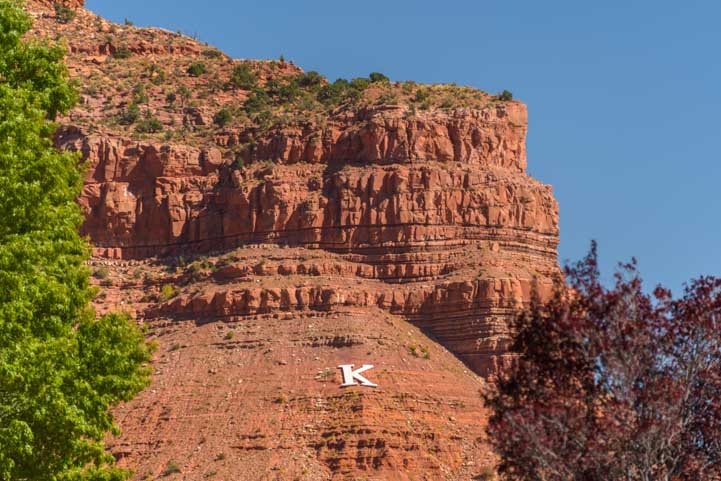
Lightning storm over city lights of Las Vegas Nevada

.

Lots of people come to Las Vegas to experience the bright lights of the big city. But these bright lights, thrown from God’s hand across the valley surrounding Las Vegas, dwarfed any light show that might have been happening downtown!!

Subscribe
Never miss a post — it’s free!

Other blog posts about photography and capturing the night sky on camera:
Photography – Our gear and the resources we have used to learn to take great pics

Our most recent posts:

More of our Latest Posts are in the MENU.
New to this site? Visit RVers Start Here to find where we keep all the good stuff!!

<-Previous || Next->