Living, Loving and Perfecting “The Dream”

Sailing Groovy

Happy days aboard Groovy!

June 2013 – We’ve been living the Good Life here at Paradise Village Marina in Puerto Vallarta for three months now. Wow!

This is a wonderful place to hang out, and lots of folks stay for years at a time. But the reason we have stayed here so long is actually because we’ve been doing a lot of soul-searching and thinking about our next move.

Bahia Concepcion, Sea of Cortez

Bahia Concepcion, Sea of Cortez


Heaven on earth at Las Palmas Resort in Huatulco

Heaven on earth at Las Palmas Resort in Huatulco

We’ve had an unbelievable run of good fortune and exciting times this past year.

Last summer in our trailer, and this past winter in our sailboat, we were gifted with one beautiful experience after another.
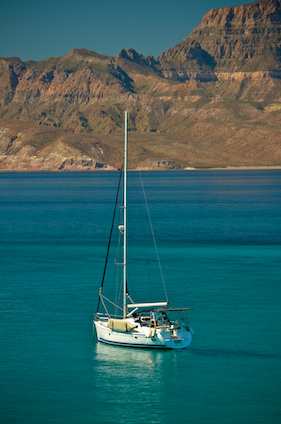
Groovy Isla Coyote, Sea of Cortez

Groovy at Isla Coyote, Sea of Cortez

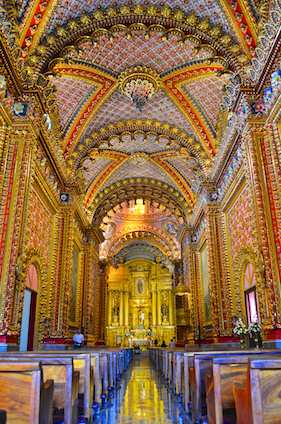
The jewel box interior of Morelia's Our Lady of Guadelupe church.

The jewel box interior of Morelia’s
Our Lady of Guadelupe church.

It seems that everywhere we went we met kind and caring people who quickly became friends.

All year long we have been pinching ourselves, saying, “Is this all possible? Are we really living this life?”

It may seem strange, but on that very high note we have decided to make a huge change in our lives and take Groovy back to California and gradually close the cruising chapter of our travels.

After sailing up and down Mexico’s west coast several times, we have fulfilled our cruising dreams completely — and then some.


Monte Alban - the first ancient pyramid ruins we ever saw

Monte Alban – How stirring it is to see these ancient pyramids.

Throughout our travels this past year, in the background, behind all our exhilarating escapades, we have been digging deep in our hearts and pondering all the different ways we could move forward with our cruising lifestyle.

Cruising is a unique way to travel. Even though you move from place to place, the focus is always ultimately on the boat and the process of boating rather than on the destinations you visit.

Groovy anchored at Isla Coronado in the Sea of Cortez

Groovy anchored at Isla Coronado in the Sea of Cortez

As one seasoned cruiser told me before we started our sailing adventure,

“The boat takes up the majority of our budget and the majority of our time.”

We have found that to be true!

When we started cruising we had already traveled full-time by RV for two-and-a-half years.

We thought that cruising would be much the same as RVing, just doing it on the water instead of land.
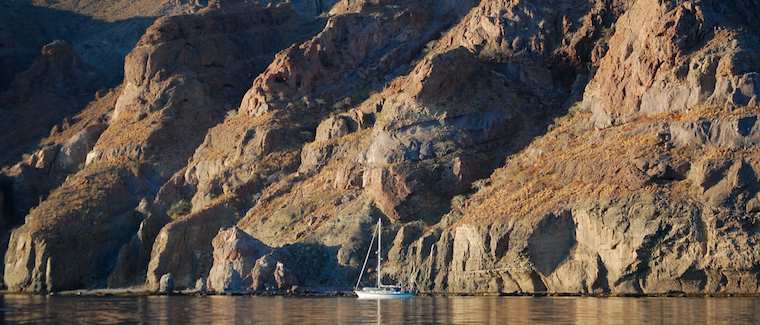
Sea of Cortez

Sea of Cortez – RVing on water?

Colorful Bahia Careyes on the Costalegre

Colorful Bahia Careyes on the Costalegre

But we have found that while RVing is all about the destinations we visit, cruising is largely about the boat.

Why is the boat such an important part of cruising while an RV is so much less important in RVing?

Because a cruising boat is a very complicated vehicle.

The boat’s Plumber, Electrician and Mechanic are all very busy people as they work to keep the boat’s power plant, water treatment plant, sewage plant, mechanical propulsion system and wind propulsion system all functioning.

Aboard Groovy, my sweet hubby Mark filled all these roles while I concentrated on navigation and sailing the boat.
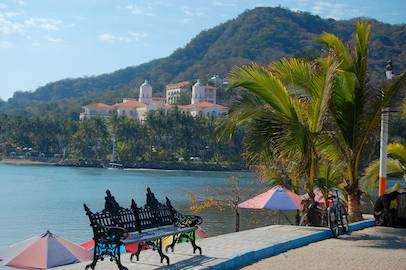
Barra de Navidad, a favorite cruiser hangout.

Barra de Navidad, a favorite cruiser hangout.

Needless to say, we were both very busy, but Mark bore the brunt of the responsibility of keeping us afloat, and it weighed heavily on his shoulders.

Unlike a sailboat, an RV, especially a trailer, has very simple systems that rarely require any maintenance or repair.

In addition to the boat itself being more complicated than an RV, living aboard a boat at anchor is infinitely more complex than living in an RV anywhere.

In the cruising life, simple day-to-day tasks like provisioning, doing laundry and getting around require forethought, planning and time.

A spotted eagle ray soars over the sand in Huatulco

A spotted eagle ray soars over the sand in Huatulco

They often involve dinghy rides, crazy beach landings, intense study of the weather forecasts and all-night travelJust showering is an adventure!!

And then there’s the simple maintenance of cleaning. After every sailing passage the entire boat would be covered with salt crystals, and although it was sometimes a fun adventure to swab the decks underway, it was still a chore that had to be done regularly!

Not only did the decks need swabbing, but barnacles needed to be scraped off the bottom of the boat every few days. Every time I jumped over the side to snorkel and enjoy the reef fish, I took a few tools too so I could to spend an hour cleaning the hull!

One huge surprise was the crazy noises at night. Nevermind the live bands that played at the resorts lining every beach in every anchorage, but the fish were surprisingly loud too! This often made sleeping a challenge, as the boat rolled relentlessly in almost every bay.

One of our favorite pastimes - swimming and playing on the back of the boat.

One of our favorite pastimes – swimming and playing
on the back of the boat.

In contrast, in the RV lifestyle you’ve always got wheels to get around, the weather plays a much less important role in travel planning, you can let a few weeks go between rig washings, and nighttime is for sleeping.

Therefore, out of necessity, Travel, in the traditional sense of sightseeing, mingling with the locals and becoming immersed in a new culture, is a secondary focus in the cruising lifestyle.

Sunrise in Santiago

Santiago – Land of Sunrises!

In our sailing travels we’ve found the happiest cruisers are those that have a deep and lasting passion for everything to do with boats and boating. Many are skilled handymen who love working in, on and around boats as well.

We love our boat Groovy. It is our dream boat in every sense: beautiful, sleek, well engineered, meticulously maintained, easy to sail, and as comfortable as a sailboat of its size could possibly be.

We have poured our hearts and souls into making it ultra-efficient for long-term life afloat at anchor.
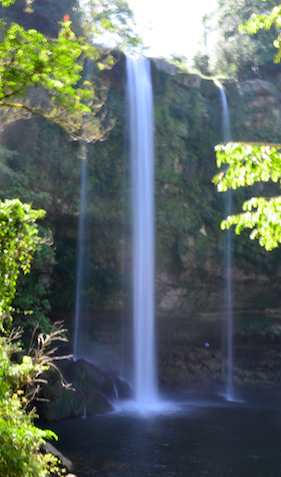
Misol-Ha waterfall in Chiapas

Misol-Ha waterfall in Chiapas

However, as we have cruised Mexico for the past three and a half years, we’ve discovered we are actually more passionate about Travel than we are about Boating.

We are drawn towards seeing the sights, spending time with the locals, taking photographs and writing about our adventures. Time spent working on the boat and on the logistics of our lifestyle afloat often feels like time away from what we really wanted to be doing: traveling.

Our recent phenomenal trip to Guanajuato was a peak experience we’d love to repeat over and over. We absolutely loved our visit there. But Guanajuato is nowhere near the coast and has nothing to do with sailing, the sea, boats or living aboard. How do you put all this together?

As we spread out our maps of Mexico and Central America and studied our options for cruising beyond Mexico’s border, we pinpointed the many fabulous destinations we wanted to go see and then thought long and hard about whether it would be best to travel there by sailboat or to go another way.
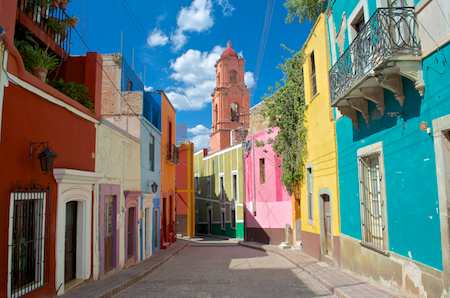
Guanajuato city street

Guanajuato, like no other!

It turned out that most of our bucket-list locations were well inland from the coast and not easily reached by boat. Cruising further south just doesn’t make sense for us.

If we could use the boat for just three months each winter and temporarily leave it behind inexpensively and with confidence that it would not deteriorate during the rest of the year and need loads of work upon our return, we might continue cruising.

Sailing Groovy

Sailing Groovy

Then we could enjoy all the things we do love about boating each winter. However, that’s not possible, at least not in the areas we’ve explored that are within a reasonable distance of Pacific Mexico.

We will miss the lively day-sailing we’ve had in Huatulco, Acapulco, Zihuatanejo and near Loreto. It will be really sad to give up swimming off the back of the boat and living in our tiny home in the middle of beautiful tropical bays.

However, we have lived that dream — and loved it — and we have three-and-a-half years of vibrant memories, tens of thousands of photos, and hundreds of stories that we bring away from the experience.


Palenque - an evocative and mystical place of the ancients

Palenque – An evocative and mystical place of the ancients that fascinated us.

So we have made the most of our time in Puerto Vallarta as we have waited for July to approach. The 1,100 miles between here and San Diego are a very difficult voyage.

Sailors call it the “Baja Bash” because it can be a very long, scary, miserable and dangerous slog directly into huge winds and waves. After making the trip last month, a cruiser said simply: “I thought I was going to die.”

The advice from experienced sailors that have made this trip many times is that the best months to go are July and November.
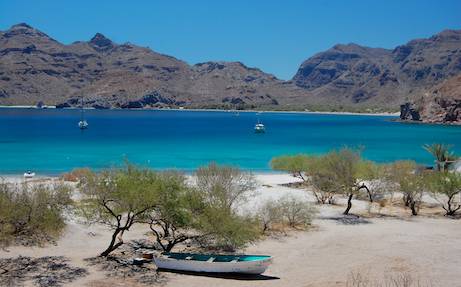
Agua Verde anchorage, Sea of Cortez

Agua Verde anchorage, Sea of Cortez

We are waiting for a weather window to make the first 280 mile (48 hour) jump across the Sea of Cortez to Cabo San Lucas. From there we will take it section by section, trying to catch the best conditions we can as we make our way up the 850-mile coast.

If this post has surprised you, or saddened you or just seems strange, because you thought we would be out cruising “forever” — or at least a lot longer than three and a half years — here are some parting thoughts:

In the end, going cruising is all about dream fulfillment. The most important thing is to HAVE a dream and then to make it come true.

Beach time at Playa San Agustin in Huatulco.

Beach time at Playa San Agustin in Huatulco.

The thrill of having a dream and making it come true is being able to live it, to live WITH it, and to find its true essence.

Only when you are actually living your dream, day in and day out, can you decide which parts of it are dreamy and which parts need a little adjustment.

Many people allow themselves to be scared away from pursuing their biggest dreams. The fear that pens them in is fear of the unknown.

However, if you don’t jump into your dream with both feet, you’ll never know what that dream might have become once you wrestled with its limitations and figured out how to make it even better.
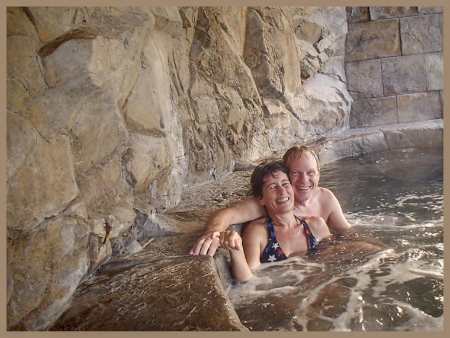
 

Enjoying some sweetie time in the romantic hot tub at Paradise Villaage resort.

Enjoying some sweetie time in the wonderfully romantic hot tub at Paradise Villaage resort.

It is said that cruising is about “The Journey,” and in our experience the most important journey you end up taking is one that goes within.

It is a journey where you learn a little more about who you are and what you truly want out of life.

As we have lived our cruising dream, we have learned that we are Travelers more than we are Cruisers. It took us a while to understand this.

While we love doing both, our preference is to spend our time seeing new sights and experiencing other cultures rather than taking care of and living on a boat. We can’t wait to see Mexico’s Caribbean side — by plane, bus and hotel!


The sun sets before our overnight passage.

The sun sets before an overnight passage.

Once we get settled in San Diego, we will be offering our beloved boat Groovy for sale so she can continue her own adventures with new hands on her helm.  She has been our “dream boat” in every way.

We so appreciate all of you who follow our travels. We have many many more adventures ahead, not least of which is this upcoming voyage (yikes!).  We should have internet in many locations along the Baja California coast, and we expect the trip to take about three weeks, so stay tuned for more stories from the sea and for many future land-based capers!

Note added later: Our Baja Bash trip had exciting moments but went very well in the end. Here’s the story:

Subscribe
Never miss a post — it’s free!

For more comparisons of the cruising and RVing lifestyles, see the two articles I wrote for Escapees Magazine, “RVing by Land and Sea” and “Life Afloat and On the Road” which are about 1/2 way down this page in the Other Articles section.

More thoughts on Living the Dream in a sailboat or RV:

Our most recent posts:

Escapees Features Our Article: Taking Your RV into the Mountains, Jul/Aug 2013

Taking Your RV into the Mountains Escapees Magazine July/August 2013

Taking Your RV into the Mountains
Escapees Magazine
July/August 2013

Posted June 27, 2013

Escapees Magazine is featuring our story Taking Your RV into the Mountains in their July/August 2013 issue.

The article describes some of the techniques we have found useful when driving our 36′ fifth wheel / one ton truck combo over the huge mountain passes in the west.

My favorite part of the story is Mark’s 2-page photo spread.  When we were at the Sheep Creek Overlook in Flaming Gorge National Recreation Area. he scrambled up the hill behind us and got a fabulous shot of the red cliffs, blue water, and our rig overlooking it all!

Some of the tips covered in the article (and that photo) can be found here:
Driving a Big Rig in the Mountains.

Escapees is the membership magazine for the Escapees RV Club, a wonderful organization for RVers that offers its members many things, from a bi-monthly magazine to low-cost RV parks to mail forwarding services to the biggest boondocking database in existence to an extended community of RVers traveling around the beautiful lands of the US and Canada.  If you are an RVer, join the fun!!

For more from us, see our other magazine articles and/or our most recent posts!!


Guanajuato – Full of Song and Spirit!

Guanjuato has colorful streets

We were captivated by Guanajuato’s beautiful streets.

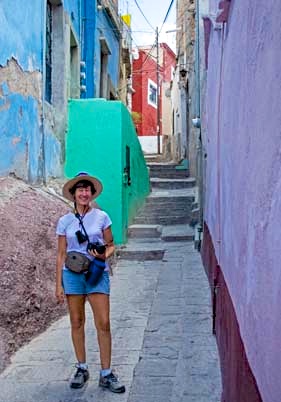
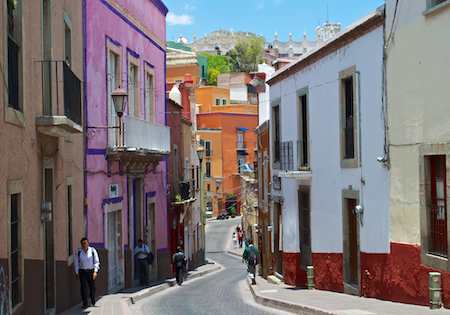
Early June, 2013 – Guanajuato continued to enchant us. The beautiful cobbled streets wound in and out and up and down, and all were lined with colorful buildings.

There was a cheerfulness about the place that was infectious.

As we were walking down a crowded street one afternoon, it seemed everyone we passed either gave us a nod, or a smile, or was laughing in conversation with a friend.

Incredulous, I said to Mark, “It’s just a happy city!” Behind me I heard a man’s voice say, “Si” I turned around and he grinned at me.


A colorful hillside in Guanajuato Mexico

Every time we looked across at Guanajuato’s hills,
we were amazed — again — by the colors.

We couldn’t walk ten steps without stopping to photograph something, and we both kept wandering off, attracted by some fantastic image that took us down an alleyway or up a staircase.

Guanajuato is truly photogenic, and we had beautiful sunny days to enjoy it.

Street photography in Guanajuato

Guanajuato is really fun for photography!


I think it is the colors of Guanajuato that will stay in our memories forever. Primary colors and pastel colors — they’re all there, making the hillsides look like they’ve been spattered from a rainbow paint can.

Plaza de la Paz Guanajuato

Even plaza de La Paz is colorful.

Everywhere we turned, the buildings were done up in vivid shades.

University of Guanajuato

Spiky roofline of the University of Guanajuato


But one building stood out against the crowd: the enormous and rather grand University of Guanajuato in the very heart of town. Imposing, yet ornate, it is bright white and has a series of spiky decorations around the top.

Nuestra Senora de Guanjuato

Inside the Nuestra Señora de Guanajuato basilica.

The city’s most impressive architecture dates back to the 18th century when the region was the world’s leading silver producer.

Since the indigenous silver miners were slaves, there was plenty of profit for the mine owners to spend in whatever way they liked, and the ornamentation in the churches, mansions and former government buildings reflect that immense wealth.

Teatro Juarez in Guanajuato

Teatro Juarez – a lavish theater at the center of it all.

Silver production continued to support sumptuous lifestyles in Guanajuato into the 20th century, and the stunning Teatro Juarez theater is a central landmark dating from that time. It was a thrill fto watch it light up in the early evening.

In front of the theater, the Jardín de la Union is the local hangout. Most Mexican cities have a town square, or “Zócalo,” where everyone can kick back with a beverage and a book or enjoy a conversation with a friend or just sit and people watch.

Jardin de la Union Guanajuato

Shade trees and shiny tiles surround the Jardín de la Union
— thetown square (or triangle!).

But this square is unique. For one thing, it’s not a square. It’s a triangle! Also, rather than cobblestone or paved paths, the wide walkways that encircle it are made of shiny, decorative tile laid in pretty patterns.

A stand of trees arches over this waking path. The trees are planted so close together and their foliage is so thick that they make an incredible shade cover for the whole place.

They looked like ficus trees to us. We’ve kept ficus trees as houseplants, but for us they haven’t done very well in a pot. Their leaves always seem to begin to yellow and then slowly drop off, one by one, until the tree is nearly bare.

Vegetable sellers in the street

Selling vegetables street-side.

Not these trees! Their vibrant green leaves are so tightly packed that in mid-day the whole area is dark under their shade, and it makes a great place to escape from the heat of the sun. We kept coming back and back and back again — as did everyone else in town!

But daily life is always humming in the streets beyond the Jardín. And in this town, you just never know what you’ll see.

Scooter carrying lilies

Delivering flowers…


Wandering around, we came across the many scenes we’ve become accustomed to: juice vendors selling fruit juices from rollable carts and people offering veggies for sale on makeshift tables and chairs they’ve assembled from shipping pallets and plastic buckets, or whatever is handy.

But it was the unexpected and whimsical sightings that kept us on our toes and laughing. We just never knew when we might glance up and see something unique, like a scooter rolling past. loaded with bouquets of yellow lilies. What a fun way to deliver flowers!

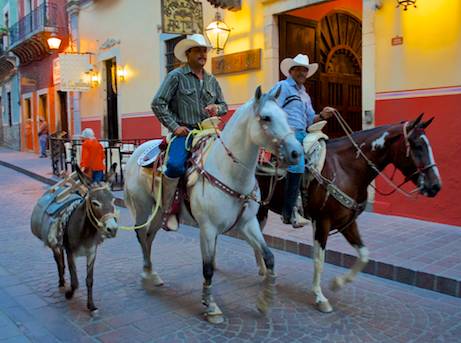
Horses and donkey in the street

We look up and see these guys coming down the street!

Traffic on the streets can be quite heavy, especially at rush hour, so we were astonished when we were out looking for a bite to eat and suddenly saw a pair of horseback riders and a donkey clip-clopping towards us on the cobbled streets. Was this for real? Yes!

We followed them back towards the town square but quickly lost track of them in the throng of activity. The crowds in the square had grown so jam-packed that when we stood on tip-toe and looked down the street, all we saw was a sea of heads, hats and the occasional waving hand.

Ballerina on Teatro Juarez railing

There’s a ballerina dancing on the theater railing!

Looking past all that, Mark’s jaw suddenly dropped and he pointed, “There’s a ballet dancer on the railing up there!’ I followed his gaze, and sure enough, a dancer in a leotard and toe shoes was posing on the stone railing in front of the majestic columns of Teatro Juarez.

Balloons released above Teatro Juarez

A group of people release a bunch of white balloons from the theater steps.

We made our way through the crowd and discovered she was in the middle of a photo shoot of some kind.

A photographer was nearby, and she assumed one graceful pose after another on the railing while he took a stream of photos.

As this gal was dancing on the side rail of the theater, a gathering of people holding white balloons had assembled on the front steps. What could this be? Who knows!

All of a sudden, they all let go of their balloons at the same time, and we tipped our heads back to watch the little white bubbles disappear into the sky. Then the group of people on the stairs broke up and everyone vanished into the river of humanity flowing around us.

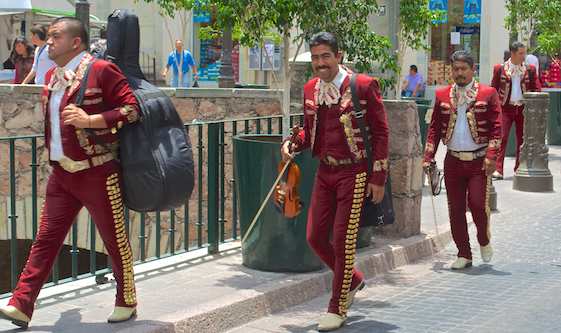
Mariachi band walking

Mariachis doing the Abbey Road walk.

Guanajuato is not just a visual delight. It’s soul is steeped in music too. Everywhere we went around town we heard music.

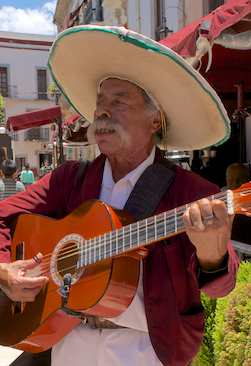
Mariachi trumpet player

Music is the heart and soul of Guanajuato.


At the Jardín, in the center of town, a myriad of outdoor cafes lines the square, and each boasts a mariachi band. These weren’t the little wandering three-piece bands we were used to seeing on the beach. These were full-on 8-member orchestras, complete with trumpets and violins in addition to the usual guitars.

The town square’s cafes are crammed together side by side, with no space in between. Music springs up from one cafe and then another, and frequently from a few of them at once. Periodically, a band takes a break, and the musicians take a load off and chat together under the shade of the trees.

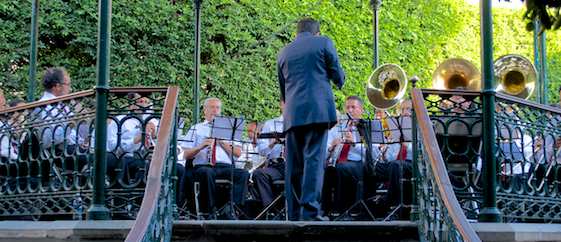
Jardin de la Union bandstand

A band does a lively rendition of ?Stars and Stripes Forever.”

There is a bandstand at the center of the square, and one afternoon we noticed the crisp white shirts of a band sitting up there as they tuned their instruments to a clarinet’s A-note. Oooh – fun!!!

We found seats on a park bench and were amazed when the conductor tapped his baton on his music stand and the cacophony from the mariachi bands around the square suddenly stopped.


Kid running at the bandstand

Weeeee – two kids zoomed round and round the bandstand.

The band began to play a string of familiar pop tunes, and I found myself transported to my childhood when our town band would play in the bandstand on balmy summer nights. I started telling Mark about how all of us kids would get so wound up at these things, running round and round the bandstand, skipping and leaping and doing cart-wheels.

Suddenly, just as the band started a rousing rendition of “Stars and Stripes Forever,” a little brother and sister began to tear around the band stand at top speed. They ran in opposite directions, and each time they met, they’d stop and high-five each other and then take off again, laughing giddily as they ran.

Street musician in Guanajuato

People make music in every corner of Guanajuato.

Out on the streets of Guanajuato the music continued to fill the air, day and night.

Street musician in Guanajuato

There were street musicians everywhere.

Street musicians of every variety strolled up and down, playing for themselves and playing for tips. It is hard to find a street corner in this city where you don’t hear music.

guitar player on the bus

We were even serenaded on the bus!

Even when we clamored onto a city bus, a guy suddenly broke into song behind us. We turned around to see him standing in the middle of the bus strumming his guitar.

Musician statue at Jardín de la Union

A sculpture depicting the famous Callejoneadas.

But the most famous musicians in Guanajuato aren’t the mariachi bands or the bandstand band or the street musicians. It is the Callejoneadas.

The what? When I first heard this word I had to have the person repeat it three times. “Cah-yay-hone-ay-ah-das.”

An alley is a “callejón” (cah-yay-hone), and although most cities in the world have lots of alleys, they are often kind of dark and scary places sandwiched between the good stuff. In Guanajuato, the alleys are celebrated, and they harbor the lively soul of the central neighborhoods.

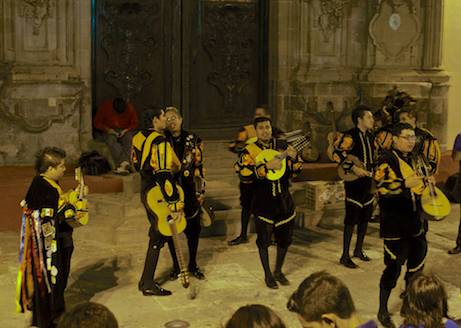
We watched in amazement our first night Guanajuato as a collection of men in renaissance garb gathered in front of the Juarez Theater. Carrying lutes and mandolins and stringed instruments of all kinds, the men mingled with the crowd, urging them to sit on the stairs and watch them perform.


Callejoneadas de Guanajuato

A wandering minstrel.

Suddenly they began to engage the crowd with crazy antics and songs. We couldn’t really understand what stories were being told, but when they persuaded two couples to come in front of the crowd to dance, we laughed with all the rest.

As the couples swung about, everyone around ua began to sing along. Everyone knew all the words to all the songs! Sadly, we didn’t know any, but we sure wished we did.

The callejoneadas start their nightly song-walk through the alleys.

The callejoneadas start their nightly song-walk through the alleys.

After a few songs and stunts, the medieval men in black began to walk out of the town square, strumming their instruments and singing as they went. The crowd of people on the stairs got up and began to follow behind, singing heartily in their wake. Then they disappeared into the alleys.

Donkey carrying wine for Callejoneadas

A donkey carries bottles of wine.

After a short while, the space that this throng had cleared was taken up by another group of musicians and the whole thing began again. The groups of singers gathered in several different areas around the town square, and it seemed there were dozens of these groups.

As they all made there way out into the streets in the early evening, we could hear their songs faintly wafting back to us from various corners of the city.

Donkey with wine on his back

His load will be completely empty in a few hours!

Now we understood why we had been seeing so many men in tights around town. These guys were the Callejoneadas!

We also discovered what all the donkeys we had been seeing in the streets were for.

Wandering through the alleyways on our way back to our B&B, we came across a group of minstrels and followers in front of a neighborhood church.

Callejoneadas de Guanajuato at night

The callejoneadas entertain a group in front of a church.

The minstrels were performing a skit, and every so often a roar of laughter would go up. A donkey stood off to one side, and the pack on his back was quickly becoming lighter as the singers grabbed bottles from the pack and poured wine into special little flasks that the followers were carrying with them!

What a hoot!! We found out later that this whole thing started back in the 1970’s, when a group of people from the university occasionally gathered in the alleys and wandered up and down the streets in the evenings singing songs. Someone would bring along drinks to share, and the participants would contribute a few pesos to whoever did the buying.

Juarez Theater Guanajuato

The Juarez Theater looks very grand at night.

Nowadays, this once impromptu event is a regular nightly party, hosted by university students and faculty.

The whole thing is very well organized, so it is not as spontaneous (and unruly) as it probably was when it first started forty years ago.

A ticket to participate in the festivities is 100 pesos ($8 USD), and along with great memories, you get a very cool souvenir wine flask.

What we loved about all this, though, was that the little B&B where we stayed was right on one of the most popular Callejoneadas routes.

Don Quijote statue

There are statues of Don Quijote
all over the place.

Every evening, if we were back in our room, we’d hear the troupes come by. I don’t know who was singing with more gusto, the wandering minstrels or their followers!

Fortunately, there must be some kind of agreement between the singers and the neighborhood residents, because all the noise and mayhem stopped before 10:00 each night!

Don Quijote statue

Don Quijote, like Mr. Magoo, stumbled in and out of trouble, quite oblivious to it all.

We soon discovered that Guanajuato has an affection for medieval things that goes beyond (or was inspired by?) this nightly music event.

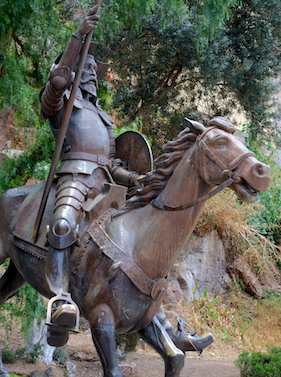
All around town we kept running into statues and references to the Spanish medieval author Cervantes and his famous hero, the rather misguided — and Mr. Magoo-like — Don Quijote (or as my little kid’s ears always heard it: Donkey Hotey).


Don Quijote impersonator

This Don Quijote impersonator mingled with the callejoneadas in the town square

Why Cervantes and Don Quijote? Well, around the time that the wandering minstrels started serenading folks in the alleys of Guanajuato in the 1970’s, another group of university students began doing spontaneous performances of Cervantes’ works in the same neighborhood squares and church steps.

This blossomed into an annual event, and now Guanajuato’s Festival Cervantino is known internationally and includes operas, drama productions, film showings and live music with invited guest luminaries from all over the world.

The festival wasn’t going on while we were there, but we did see a fellow dressed up as Don Quijjote who mixed it up every night with the callejoneadas singers.

We were loving the free spirit of Guanajuato, and our curiosity about its origins soon led us to the edge of town and down into the mines where the silver was — and still is — mined in abundance.


More adventures from our inland travels in Mexico:

Other musical happenings that we’ve loved:

<- Previous                                                                                                                                                                                       Next ->

Kyocera Solar Features Our Sailboat Groovy on their Website!!

Groovy Boat Solar Panel Installation

Groovy’s solar panel installation

Kyocera, the solar panel manufacturer, took notice of our sailboat Groovys solar power setup and has featured our story on the Kyocera Solar website.  We were very surprised and pleased when they contacted us (out of the blue) to say they wanted to feature us.

We’ve been using Kyocera solar panels since May, 2007, when we installed a single 130 watt solar panel on our first full-time RV, a 27′ Fleetwood Lynx travel trailer.  We have been living on solar power full-time in our moveable homes since then.

That first solar installation, like our first trailer, was a little small.  After a year of skinny solar living, we upgraded to 490 watts of solar power on a 36′ Hitchhiker fifth wheel trailer (which included some Mitsubishi panels because the store was out of Kyoceras in the size we wanted!), and we posted a page describing the two RV solar installations.  A few years later, with even more solar experience under our belts, we installed solar power on our sailboat Groovy.  And of course, we keep learning.  Our NEXT solar panel installation will be even snazzier!!

The gist of the story is the value of anticipating your needs before installing a system.  In general, from what we’ve learned over the years, more and bigger is always the best way to go!!

To learn more about solar power on RVs and boats, see our article, RV (and Marine) Solar Power Made Simple as well as our Solar Tutorial Series:

There are loads more solar power and battery charging articles on this site here:


Solar Power for RVs and Boats – Components, Design and Installation Tips

Subscribe
Never miss a post — it’s free!

Our most recent posts:

More of our Latest Posts are in the top MENU above.

It’s Not About the Hair!

Getting a haircut in Mexico

Lorena gives me a hairstyle called
“cola del pato” (tail of the duck)

June 16, 2013 – One of our favorite things about traveling is all the little encounters we have that make us stop in our tracks, scratch our heads, and say, “Wow, this is so different than home.”  After living strictly within our own comfort zone for so many years, focused on our workaday lives, we now find ourselves refreshed, over and over, as the folks we meet here in Mexico, so far from our backyard, show us that there are other ways to live.

I’ve been wanting to get a haircut for a while, and as a full-time traveler this is always a great opportunity to have a long conversation with someone from wherever we are visiting.  More important than finding a top quality salon, I’m always hoping to find someone that will tell us a little about the community we’re in or share something about themselves.

Yesterday, as we wandered the quiet, dusty streets of a small Costalegre coastal village between Tenacatita and Barra de Navidad taking photographs, we asked a few people where to get a haircut.  They all said to go to “Lorena” and they gave us directions. In our usual lazy way, we didn’t wind up on her street until dusk.  A group of people sitting on the sidewalk around a folding table with fruit laid out for sale pointed us towards her shop.

Unfortunately, it was now so late in the day that her shop was closed.  We shrugged.  Oh well.  Tomorrow!

“No, we’ll find her for you!”  One of the guys by the fruit stand said to us.  He asked his friends if they knew where she was and then yelled her name a few times.  A few minutes later, she appeared at the far end of the block, hustling towards us and waving.  The fruit guys grinned.

“Come in, come in.”  She said as she opened the door to her shop.  She began clearing some things from around her work area to make a place for me to sit down.  The room was about 9′ x 9′ and stacked with manicure equipment, brushes, combs, a few random cups, a chair and other stuff piled up.

After asking about my hair (I’ve learned my hair style is called “cola del pato” or “tail of the duck”), we began to have a lively conversation in Spanish about life in America and life in Mexico and the close similarities and vast differences between these two worlds.

She had grown up on a ranch far out in the countryside, one of twelve kids — ten girls and two boys — along with lots of horses, cows, burros and fruit trees.  Despite having no electricity, the family found plenty of diversions among themselves, always sitting around in the same configuration at night, mother here, father there, and kids circled around in between.  Outside, there were a bunch of tree stumps, and they would all sit together on the stumps and sing songs under the stars.

Her mother and grandmother had always worn traditional, colorful dresses, long sleeved and well below the knee, and her father was very strict with the kids.  He died when she was a teenager, and when he died her world changed forever.  The family moved to the city and she was shocked by the stress of urban life and the different interests of her peers at school.  She missed the fresh fruits from the garden and fresh meat and milk from the cows.

Lorena's hair salon in Mexico

Lorena shared her life experiences and cultural insights
with us as she gave us haircuts in her shop.

As I listened to her tale, I could just imagine the adjustments she had to make as she moved first to Mexico City then to Ensenada and Tijuana, and eventually to California.

“It was all wonderful.”  She said warmly.  “I learned so much.  About people.  About cultures…  And I learned what I liked.  In California I made a lot of money, I wore fancy clothes and makeup.  I had lots of beautiful shoes.  Now I just wear flip-flops.  I like to live in a small town where life is calm and quiet.”

By now Mark had decided to get a trim too, and her sheers snipped around his ears as she went on.  “America and Mexico are very different,” she said.  “In Mexico, out in the rural countryside, it is a man’s world.  The man is everything.  Girls are told they don’t need an education because their husband will provide.”

And then she said something about women and keeping a rifle in the corner of the house, and she laughed. Oh how I wished I understood better. She was on a roll, and I didn’t want to ask her to repeat. She had said either that women in the country kept a rifle in the corner so they could hold their own with the men, or that women who lived alone kept a rifle for protection. Gosh, I don’t know, and now I so wish I had had her explain further…

“But in America, In my neighborhood in California, I didn’t know my neighbors,” She continued.  “We waved and said “hello” every day but that was all.  We didn’t know each other like we do here. And in the US, when a store is closed, it’s closed!  Neighbors don’t go yelling for a shop owner to come open it up for customers after hours.”

So true.  Here we were in her shop because of the fruit sellers in the street.  Not so at Great Clips and Supercuts back home.  I usually end up reading a few magazine articles while I wait for a stylist to become available.  The stylists at home all commute to work, and who knows where any of them live. Certainly not in the rooms behind Great Clips!

As she finished Mark’s hair, she invited us to go camping in the mountains with her.  “I’ll show you some beautiful places.  We can sleep in tents close to nature.  We’ll make tortillas over a fire and you can meet my horses.” What a great invitation!

As she swept up all our locks on the floor, she said the haircuts were 40 pesos each (about $3.20 USD). For us, the experience was priceless.

See more about Life in Mexico and check out Our Most Recent Posts!!

Guanajuato – Colors, stairs, tunnels and characters!

Guanajuato Mexico Artits's pallet

Guanajuato is a true artist’s pallet of colors.

Early June, 2013 – We had been in Puerto Vallarta for over two months, loving the fancy shore-side resort life, but the beautiful colonial cities in the interior of Mexico beckoned. Back in Zihuatnanejo, our friend Francisco (1/3 down the page), who sells pretty painted plates from a folding table on the street, had told us he had lived all over Mexico. When we asked him which place was his favorite, he instantly said, “Guanajuato.”

Colorful houses of Guanajuato

No one is bashful here about using bright colors on their homes!

Where? He repeated the name and then spelled it for us (a rough pronunciation is “Whanna-Whatto” ).

Even though Francisco is usually quite a jokester, he went on very seriously to say this was a place we absolutely should not miss. He explained that the city was built on several hillsides and there were lots of colorful houses, old cobblestone streets and alleyways, and that there was a community of artists and musicians that gave the place a special spirit. It sounded wonderful. Even though we had never heard of it, Guanajuato zoomed to the top of our bucket list.

Guanajuato Pipila Overlook

The bright colors of Guanajajuato make an awesome backdrop at the Pípila Overlook.

Guanajuato Cathedral Domes

The domes of Guanajuato

The bus from Puerto Vallarta to Guanajuato is a very easy and comfortable 10 hour ride (it goes direct with just one stop), and we arrived in the late afternoon just in time to see the breathtaking views from the Pípila overlook. Wow! Francisco was right. This place was incredible.

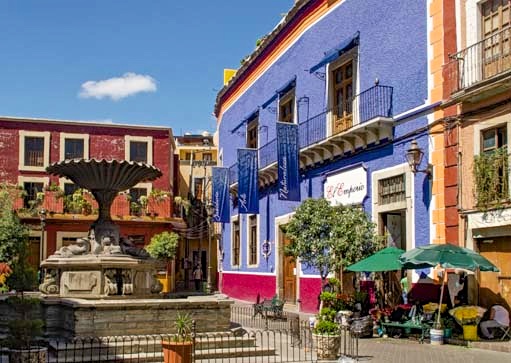
Every house was a different color, and no one was shy about painting their home lavender or turquoise or pink or emerald green. Several yellow and red church domes rose above the houses, and the grand University of Guanajuato building was a dazzling white in the center of it all.

We quickly discovered that Guanajuata is all about climbing up and down stairways. The heart of the city is in a valley on the ground floor, but the buildings rise up along the sides of hills, and the fantastic Carretera Panorámica (or Panoramic Road) encircles the entire city up above.

Funcular Cable Car Guanajuato

The funicular cable car makes it easy to get up and down.


After soaking in the magical view of the city from this overlook, we took the Funicular cable car ride down into the city center. How cool it was to creep down the mountain in this window-lined car and watch the buildings grow tall around us until we arrived in the throbbing heart of Guanajuato’s Centro.

Teatro Juarez Guanajuato Mexico

Artists’ paintings for sale outside the
stately Teatro Juarez


The main part of Guanajuato’s Centro is the Jardin de la Unión, a triangular city square that is lined with dense shade trees and park benches and has a bandstand at its center. A cacophony of music rises up from every corner of this park as costumed mariachi bands, sax players, classical guitar players and wandering minstrels serenade anyone and everyone within earshot.

One end of this park is anchored by the ornate Teatro Juarez, a stunning theater whose facade is defined by a row of elegant columns and a collection of sculptures on the roof. As we wandered closer to the theater, we noticed a street performer with a big clown nose entertaining a crowd on the steps.

Our cameras instantly sprang into action to capture his act and his audience, but this guy was even faster than we were. Suddenly turning his back to his audience, he wheeled around to face us and began to pose for us like a swimsuit model, contorting himself into all kinds of provocative poses. Everyone was laughing, but we suddenly noticed all eyes were now turned towards us!


Street performer mime at Teatro Juarez

A street performing mime with a clown nose plays games with us.

We played right along with him, encouraging him and shooting away, pretending to be high fashion photographers. The audience laughed and clapped — and then he rushed over to us with his hat out looking for a tip! The audience roared.

He’d pulled one over on us! Mark turned his pockets inside out in jest, but soon found a few pesos to reward his funny act.

The next day we saw him again. He instantly started miming and pretending to take photos of us! We responded by doing goofy poses for him. Suddenly, he rushed over to us, his wallet open as he fingered a dollar bill inside, as if to tip us.

Callejoneadas de Guanajuato

A Renaissance Man!

This was the spirit we found in Guanajuato. Fun-loving, free-wheeling and happy.

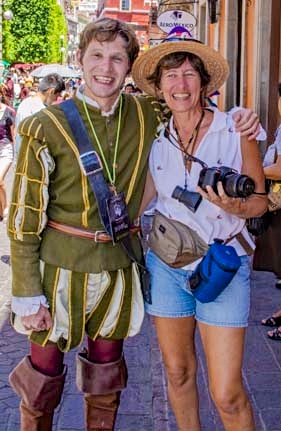
For the rest of our stay, all of our forays into town began and ended with Teatro Juarez as our main landmark, and the next day, just a few steps from the theater, we bumped into a man dressed in complete Medieval garb. What the heck? Out came the cameras!

Plaza de La Paz Basilica Guanjuato

Plaza de La Paz and the Basilica de Nuestro Senora de Guanajuato


We quickly learned that dressing up and wearing costumes is an integral part of Guanajuato street life. Wandering away from the city park a few paces, we came to Plaza de La Paz and the beautiful brilliant yellow Basilica de Nuestra Señora de Guanajuato. Talk about stunning! Not only did the vibrant yellow of this enormous building light up the whole plaza, but someone had decided to trim it in scarlet. What a combo – especially for a church!

Renaissance Man

Another man in tights!

I was just tipping my head back to admire this gorgeous cathedral when Mark nudged me and pointed. Right in front of me was another man in tights. What next? This guy was dressed a bit like Robin Hood. I whispered to Mark, “I bet he’s a drama student at the University.” Well, my whisper must have been just a little bit too loud, because the guy suddenly gave me a huge grin and a nod. “Yes!” he said in English. “We’re performing tonight at Teatro Principal. Come and watch!”

Plaza de La Paz Guanjuato

Plaza de La Paz

There’s nothing like a university town for action, energy, crazy stunts and the arts!


Mime in a fountain

A mime stays cool in a fountain.

Guanajuato has a whimsical soul, from performing clowns to men in Renaissance costumes to Crayola colored churches. So it was no surprise at all when we saw a man painted head to toe like a green copper statue rushing past us with a briefcase in hand. Whatever he was up to, we didn’t want to miss it! We quickly hustled along behind him to see where he was headed.

Bronze Mime

A bronze mime has a skull face under his sombrero

In no time at all, he had set himself up as a permanent looking water fountain statue. It was exceedingly hot in the sun, but he had a clever water pump setup where he perpetually poured a glass of water that dribbled into a pool at his feet.

The bronze statue a few doors down didn’t have it quite so good. He had baked in the sunshine so long that under his sombrero was a skeleton’s face with dark, sunken eyes. A little kid came over to him and giggled as he rolled his eyes at him.

Guanajuato's colorful streets

Beautiful colors on the streets of Guanajuato.


Guanajuato was rapidly capturing out hearts. There was an excitement in the air here that was palpable, and everywhere we looked people were smiling. Our trip to Oaxaca last year had been our favorite inland tour to date, but just like Francisco-the-plate-painter in Zihuatanejo had told us, Guanajuato was special.


Street of Guanajuato

There are no straight roads here.

The city is made up of a zillion little curvy streets and alleyways, and we soon got lost as one beautiful street after another drew us in. There are no straight roads in the entire town, and nothing runs in parallel either.

We just poked our heads around corners and were invariably smitten by what we saw. Then we’d head off down the alleyways to see what might lie around the next corner.

We passed many happy hours this way each day, zig-zagging from one end of the city to the other, and we fell into bed utterly exhausted with aching feet each night. It was so much fun!


Doorways of Guanajuato

Many doorways.

The thing was, we just never knew what we might find. Turning one corner, we both stopped short when we looked up and saw a donkey, burdened with heavy sacks, standing in front of an Oxxo store.

Donkey at Oxxo

A donkey at Oxxo?

These convenience stores are similar to Circle K or 7-Eleven — not the kind of place you’d expect to see a donkey tied up with a huge load of sacks on his back!

Colorful hillside of Guanajuato

Whatever your favorite color is, put it on your house!

But what really got us was the color. There are no inhibitions in this town. If your favorite color is purple, then paint your house purple!

We joked that the town council meetings where these colors get approved must be quite lively. But we later learned from a cab driver that this isn’t far from the truth. Building owners must get city approval for their color choices.


Casa de Pita Square

Our B&B was right off this square.

On the flip side, the municipality pays for all exterior painting and repairs. This is apparently true for all of Mexico’s “Magic Cities” (Pueblos Mágicos). And the type of paint is carefully specified — no gauche glossy finishes allowed!

One afternoon we looked between two buildings and saw a stairway that went straight up to heaven. This wasn’t just a one story or two story staircase. This was a set of stairs that went up and up and up.

Callejones de Guanajuato

The narrow alleys are called “Callejones”


We started up the stairs, just to see what was beyond the highest stairs we could see. When we got up that point, the staircase continued, with as many stairs above us as there had been below.

Guanajuato Callejones

We zig-zagged all over town on these fun little streets.

We walked up these stairs in the company of a few other people for a ways. But they stopped at various doorways, took out their keys, and disappeared inside. Their lives are lived entirely up and down, carrying groceries and everything else up six or eight flights of stairs to get home.

We continued trudging upwards, turning every so often to compare our height against the mountain on the far side of the city. A quarter of the way up, then halfway… it continued on and on.

Stairways up Guanajuato hillsides

The stairs head upwards with no end in sight on either side.

Looking down the unending staircase, we saw a man climbing towards us carrying a huge propane tank on his shoulder. He climbed slowly up towards us, balancing the tank on his shoulder no-handed.

Escalera de Guanajuato

A strong and well balanced man carries a huge propane tank up the stairs on his shoulder, no-handed.

As he neared us, Mark said something to him about the tank being heavy and the stairs being long and the work of carrying the tank being hard. He huffed and puffed once or twice, rebalanced the tank on his shoulder, smiled, and said, “Pan comido” (“piece of cake”). Then he climbed on past us and disappeared around a bend.

Wow. I wonder how many deliveries he has to make in a day?!

Living with your home on a staircase rather than a regular street is one very different way of living!! As we continued on, the view behind us became ever more sensational, but we wondered where the heck we would come out.

Dog on Guanajuato rooftop

Woof! Instead of living in the backyard, the dogs here have rooftop terraces.

We stopped to ask a group of older men that were chatting among themselves if we were actually going to come out somewhere or if we were wearing ourselves out for nothing and would find a dead end at the top. “Oh yes!” they said, “There’s a great view at the top. Keep going.” We took a deep breath and carried on, secretly wondering if the joke was going to be on us or if those men had been sincere.

Suddenly we heard a dog bark and we whipped around to see a cute little face peering at us from a roof terrace. Because the homes on this steep hill don’t have yards, all the dogs live on the roofs!

Finally, we came out at the top and were rewarded with an easy stroll along the Panoramic Road looking out over the entire city below. What a sight!

Colorful buildings of Guanajuato

We emerge at the top to see a spectacular view.


A few days earlier, when we were prowling along a different staircase, Mark had discovered a wonderful mural that depicted the story of heroism that put Guanajuato in the history books. Guanajuato was a town that was built by the immensely wealthy Spanish mine owners who set up shop in the mid-1500’s to extract silver, gold and other precious metals from the mountains.

Pipila Wall mural

Protected from musket fire by a stone on his back, Pípila torches
the front door of the stone granary, making way for the
first big defeat of the Spanish.

The Spanish enslaved the local indigenous people for over 200 years to do the miserably hard mining labor for them (mining slaves lived an average of just 5 to 10 years after they were put to work in the mines). When the miners and other indigenous people rose up against the Spanish in the Mexican War of Independence, the Spanish citizens and soldiers of Guanajuato barricaded themselves in the local granary that served very well as a fort because it had extremely thick stone walls.

A young indigenous miner, who’s nickname was El Pípila, strapped a flat stone onto his back for protection and took a torch to the wooden door of the stone granary, leading the way for a brutal indigenous attack on the Spanish inside. This was one of the first major defeats of the Spanish in the War of Independence, and Pípila became a hero.

Pipila Statue Guanajuato

A monument to the brave miner Pípila.

Universidad de Guanajuato - University of Guanajuato

The ladder of success at the University of Guanajuato.

Up on a hill in Guanajuato, there is a huge statue to honor this brave man, and as we emerged from our very long walk upstairs from the bottom of the town, we found ourselves face-to-face with this statue.

 Tunnels of Guanajuato

Upstairs – Downstairs… Guanajuato has an underworld too.

Stone arches in Guanajuato

Stone arches over the roadway leading out of one of the tunnels.

Guanajuato has stairways everywhere, and the University is no exception. Rather than the usual ten or twelve stairs that lead up to most university buildings, this staircase seemed to be a true ladder of success with many many stairs to get there!!

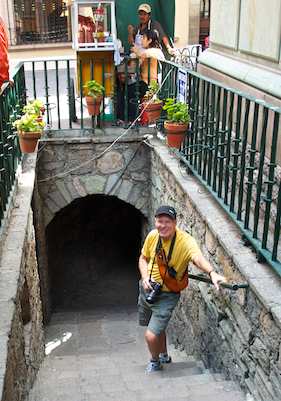
Ironically, Guanajuato is not just a town of hills and stairs and steep alleyways. We soon discovered that there is an entire maze of tunnels that wanders below the streets of Guanajuato. This underworld of tunnels makes a wonderful diversion for car traffic and also offers walkers a way to get from place to place in total shade.

Whether going up to the sky or down into the “subterreneo” below the city, we were loving our stay in Guanajuato, and we hung around for quite some time.

Where is Guanajuato? Here is a map showing some landmarks:

Map of Central Mexico

For sailors, Guanajuato is most easily reached from PV but is accessible from other ports too.

<- Previous                                                                                                                                                                                       Next->

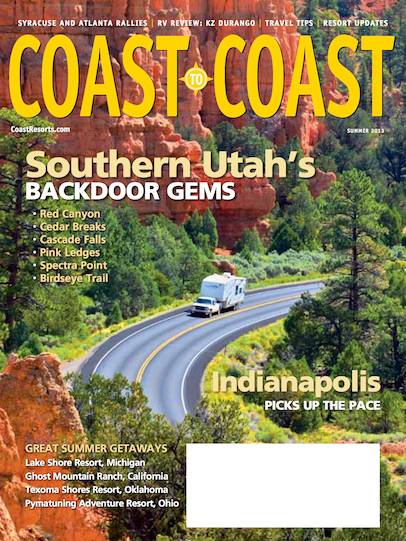
Coast-to-Coast Magazine puts our photo on the cover!!

Coast to Coast Magazine Summer 2013 Cover Photo Emily Fagan

C2C Summer 2013 Cover Photo by Emily Fagan
Red Canyon State Park, Utah

Posted June 12, 2013

Coast-to-Coast Magazine is featuring our photo on the cover of their Summer 2013 issue!!

Inside the magazine is our six page story about the many stunning hidden gems in Utah that lie between the more famous National Parks.

This pic was taken at Red Canyon State Park, perhaps the most magnificent of these too-often-overlooked destinations.  We climbed high up on one of the hiking trails and watched the endless stream of RVs parading by on the highway below us:  Rental Class C RVs, truck campers, travel trailers, Class A motorhomes, fifth wheels, and popup tent trailers dominated the roads in the area, many driven by foreign visitors to America’s crown jewels.

Lots of folks go to Utah to see Bryce Canyon and Zion National Parks, and they often hit the spectacular North Rim of the Grand Canyon while they are in the neighborhood.

However, Cedar Breaks National Park and Red Canyon State Park are equally majestic, and the lava tube caves (Mammoth and the Ice Cave) and waterfall hike at Cascade Falls are sure to inspire.

We loved the historic Mormon town of Panguitch (2nd half of page) and seeing the miniscule home of Ebenezer Bryce.  The small city of Kanab, Utah, is the other anchor between the great national parks, and tiny Alton Utah (2nd half of page) is one of the most unique communities we have ever visited, where the stop signs say “Whoa!” instead of “Stop.”

While in the area, we visited Best Friends Animal Sanctuary, an impressive and extraordinary multi-acre no-kill animal sanctuary that is set in a beautiful red rock canyon and caters to all of God’s creatures from bunnies to horses.

Southern Utah is absolutely ripe with possibilities for fun summertime RV travel, and I’m sure we will return many times in the future.  Even though Elkhart Indiana is the official heart of the RV industry with its RV/Motorhome Hall of Fame set smack in the middle of The RV manufacturing industry and Amish Country, I would claim that this southern portion of Utah is the heart of RV travel from June to August!!

Coast to Coast Magazine is the membership magazine for Coast-to-Coast Resorts, a family of resort RV Parks that is very popular among long-term and full-time RVers.  Unfortunately, the magazine does not appear on newsstands, but if you join or if you know a member, you can get a peak at our story in this season’s issue!

See all our announcements and Our most recent posts!

Mexico by Bus – Land Travel in Mexico!

ADO / OCC Oaxaca Bus

ADO (OCC) Bus from Huatulco to Oaxaca

On our voyages inland from Mexico’s west coast to see the beautiful colonial cities and ancient ruins, we’ve had a blast traveling around Mexico by bus!!

For cruisers, there’s nothing like getting off the boat and seeing the rest of Mexico.  Renting a car makes sense if there are enough people to share the cost (or for families).  However, it can get expensive for couples.

Long distance buses in Mexico are terrific, and we’ve visited many outstanding destinations in Mexico by bus.


What to Expect on Buses in Mexico

Because there is no single company that provides all long distance bus services in Mexico, and because there is a lot of variation to the countryside and highways, buses in Mexico can be a bit unpredictable.

Some buses stop for meals, some stop at military checkpoints.  Some buses offer free food or snacks, and some allow snack vendors to come on board the bus when it stops for passengers.  Our Huatulco-to-Oaxaca bus stopped at a restaurant so everyone could sit down to order and eat a meal!

Tica Bus to Guatemala

Tica Bus double-decker
Tapachula (Marina Chiapas) to Guatemala

Sometimes there is TSA-style inspection outside the bus before boarding, including a pat-down for the men, and sometimes a fellow comes on board with a video camera to record everyone’s faces.  You never really know what will happen.

Buses that cross a border (into the US, Guatemala or Belize) will involve checking out of Mexico and into the new country (passports and tourist visas required).  They also include a change in currency that is easy to forget to plan for after you’ve been sailing the Mexican coast for a few months.

In our experience, the quoted arrival times are sometimes optimistic.  An 8-hour bus ride may take 10, and there is no way of knowing ahead of time.  All kinds of crazy things happen on the road, and the folks at the ticket counter will simply quote the time given on the computer.

Some Tips for Mexico Bus Travel

The buses in Mexico are often heavily air-conditioned, so having an airline blanket or some extra clothes handy is helpful.

Also, although lots of the buses stop at convenience stores or at terminals where you can jump out and buy a snack, packing some munchies for a long ride can really help too.

Whenever you go on a vacation or a road trip anywhere, safety is paramount. If you’re going abroad, you get ready and get set with visas, passports and a global rechargeable eSIM, but what about going over mountain ranges? What about your safety in those situations?

Having some TP handy is not a bad idea on long trips too, as the bathroom can run out if the bus is crowded.

Primera Plus Bus PV to Guanajuato

Primera Plus bus from Puerto Vallarta to Guanajuato.

Our favorite seats are in the front row to the right of the driver where you get more leg room and (on OCC buses) have a great view out the huge windshield.  Also, we sometimes plan our seats to avoid getting trapped in the morning or afternoon sun if the trip is largely north/south.

Overall, we’ve found that long distance buses in Mexico can make for wild adventures.  Our bus trip from Tapachula (Marina Chiapas) to San Cristobal de las Casas was so eventful it got its own write-up!

As one seasoned Mexico/Central American traveler once said to me, “I never get on a bus in Mexico or Central America with any expectations of when I will arrive or what will happen on the way.”  That is a great way to approach the whole process — enjoy the ride.


Mexico Bus Schedules, Prices and Tickets

There are lots of long distance bus companies, and it can be confusing to figure out which Mexico buses go where.  Here is an online source that lists many of the Mexican bus companies.

Following is a list of bus companies that serve the cruising spots where we have found it is easy to leave the boat and catch a bus inland. Prices are given only as guidelines and are from June 2013. In some cases there are cheaper options, but we’ve found that if we are going to sit on a bus for 6 hours or more, spending another $10 or so USD is well worth it to be comfortable.

It is possible to book and purchase tickets online, and we have done that a few times.  If we don’t book online, we try to get to the terminal well ahead of time to ensure there are seats available and that we get the seats we want.

Some bus companies have websites in English, some don’t.  These translations might help if you are struggling with one in Spanish:

boleto = ticket
sencillo = one-way
redondo = round-trip
mañana = morning
tarde = afternoon/evening
noche = night
madraguda = wee hours of morning
fecha de ida = date of departure
tiempo recorrido = travel time

Map of Northern Mexico

San Carlos (Guaymas) is 8-10 hours from Phoenix by bus.

Guaymas (San Carlos) to Phoenix, ArizonaWe left our boat in Marina San Carlos

The Tufesa Bus Line (this is the link for Tufesa Bus Schedules) leaves from Guaymas and goes to 27th Ave. and McDowell in Phoenix.  The “Especial” bus takes 10-11 hours and stops about 8 times, including 4-5 Mexican towns, a Mexican military checkpoint, the US border crossing and Tucson.  The “Ejecutivo” overnight bus is a little more money (863 pesos or $69 USD) but takes just 8-9 hours and stops in only 2 Mexican towns plus the Mexican military checkpoint, US border and Tucson.

The “Ejecutivo” buses are luxurious with just 3 seats per row, two on one side and one on the other.  They are supposed to have electricity and wi-fi, but may or may not.  The “Especial” buses are okay, but not as nice (and in our experience much more crowded).
The bus depot in Phoenix is in an unsafe area.  If you are there at night, stay close to the terminal.  Taxi cabs come to meet the buses.

If you are heading to the airport to fly to Canada or elsewhere outside the US, you will still need about $25 US dollars to pay the cabbie to get you from the bus station to the airport (we’ve known folks who forgot about that).  The cabbie can drive you to an ATM machine, or stash a few US dollars on the boat ahead of time…

Map of Central Mexico

It is easy to get to and from the coast in Central Mexico.
Guadalajara is about halfway between PV & Guanajuato.

Puerto Vallarta to Guanajuato (or Guadalajara or San Miguel de Allende) – We left our boat in Paradise Village Marina

Several bus companies go between Puerto Vallarta and Guadalajara (about a 5-6 hour trip).  Only one has an express route between Puerto Vallarta and Guanajuato (10 hours), and this is also one of the most luxurious bus lines: Primera Plus.  From there it is a 1.5 hour ride (108 pesos or $8.65 USD) to San Miguel de Allende.
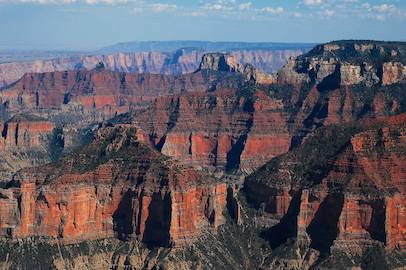
There are several Primera Plus bus stops around Puerto Vallarta.  The main bus terminal is on the block behind the big Corona bottling plant on the way into Puerto Vallarta from Nuevo Vallarta and La Cruz and takes a few minutes of walking to get there.

When we traveled to Guanajuato, our bus was a “directo” bus, going directly from Puerto Vallarta to Guanajuato with only one stop in León (it did not stop in Guadalajara).  It left from the main bus terminal.  We took a local ATM bus from Paradise Village to get to the Primera Plus bus terminal.

This ten hour bus trip (755 pesos or $60) was the easiest and most pleasant long distance bus trip we’ve taken in Mexico.  The road was smooth, there were no speed bumps, and the only stop, in León, was about 45 minutes before our arrival in Guanajuato.  We even had wifi on the bus while traveling through the larger towns (electricity was supposed to be available but wasn’t working).

The highway is good (smooth pavement) because it is a toll road (“cuota”).  If we had driven a car, the tolls would have been about 750 pesos (~$60 USD) one way, which was the same price as one bus ticket.

Another bus company that serves Puerto Vallarta and these inland colonial cities is the  ETN Bus Line.  We were not able to find a route with them that was as direct as Primera Plus, but they go to many destinations and have fabulously comfortable buses.

Ixtapa/Zihuatanejo to MoreliaWe left our boat anchored off of Las Gatas Beach, Marina Ixtapa works too!

We were very fortunate to travel to Morelia from Zihuatanejo with friends of ours in their car.  However, the trip can be made by bus (about 4-5 hours).  Parhikuni premier class (455 pesos or $36 USD) is slightly more expensive than Autovias, and likely a little nicer.

Map of South Central Mexico

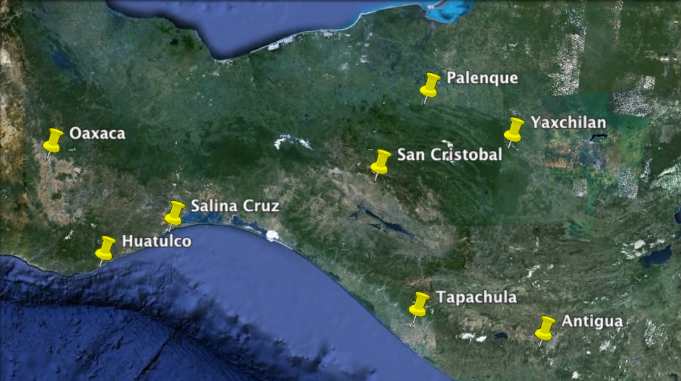
Huatulco and Tapachula (Marina Chiapas) are the best jumping off points
for west coast sailors headed inland in Southern Mexico.

Huatulco to Oaxaca (or San Cristobal de las Casas and Palenque)We left our boat in Marina Chahué

ADO is the primary bus company in this area.  Their premier brand is ADO-gl, and the overnight buses between Huatulco and Oaxaca use this service (358 pesos or $29).  OCC is their second tier brand of buses, and they are the most common provider for the colonial cities in Oaxaca and Chiapas.  If you can get on an ADO-gl bus for a leg of your inland trip, fabulous!  Otherwise, OCC is where it’s at, and that’s the line that was going to Oaxaca when we made the trip.

The ADO bus terminal is at the far end of La Crucecita, easy walking distance or cab ride.

The trip to Oaxaca was grueling for us because of the many hours of sweeping turns on the way to Salina Cruz and then the many hours of switchbacks climbing the mountains to Oaxaca.  We tried both day and night travel.  It was difficult to sleep on the 8-hour overnight trip because of the motion of the bus.  The 10-hour daytime trip (longer because there are more stops) was was full of beautiful views out the windows.  An alternative is the six-hour “vomit comet” van ride (also a bit cheaper).  Lots of people like this option.

The daytime bus stopped at a restaurant after passing Salina Cruz, and we all hopped off and ordered a meal and ate and then piled back onto the bus to continue traveling.  This was a first for us!  The bus also stopped for a military checkpoint where the luggage in the baggage compartment was searched.

Huatulco is a great jumping off point for a trip to San Cristobal de las Casas and from there to the Mayan ruins at Palenque.  It is about the same distance by bus to get to San Cristobal de las Casas from Huatulco as it is from Tapachula (the city next to Marina Chiapas on the east side of the Tehuantepec).  We made these trips from Tapachula instead of from Huatulco, so we don’t have first-hand experience on the buses into Chiapas from Huatulco.

Tapachula to San Cristobal de las Casas and on to Palenque – We left our boat in Marina Chiapas

Like Huatulco, ADO is the primary bus company in this area (here are the bus schedules and ticket info).  OCC is their second tier brand and that is the line that goes to San Cristobal de las Casas.  The “combi” vans to Tapachula from Marina Chiapas pass close to the ADO bus terminal.  Tell the van driver you’re going to ADO, and you will be dropped off about a block from the ADO terminal.  On the return trip from the ADO terminal, we always caught a cab to the “combi” terminal and boarded the van headed to Zona Naval.

The easiest trip to San Cristobal from Tapachula is via Tuxtla Guttierez (change buses there) because Tapachula-Tuxtla leg of the trip is on a highway and has no speed bumps.  The 9-hour trip directly from Tapachula to San Cristobal crawls over the mountains (many lovely views and interesting small towns), and there are tons of speed bumps.  The bus comes to a stop for most speed bumps and creeps over them one axel at a time.  We also stopped about every 30-45 minutes during the trip either to let passengers on/off, or for military checkpoints.

Our 9-hour bus trip from Tapachula to San Cristobal (276 pesos or $22) was eventful enough to warrant a page of its own.  We continued our trip by going from San Cristobal de las Casas to Palenque (312 pesos or $25).  Then from Palenque to Comitán (250 pesos or $20).  And finally from Comitán to Tapachula (206 pesos or $17), all on ADO (OCC) buses.

Tapachula to Antigua GuatemalaWe left our boat in Marina Chiapas

Tica Bus connects southern Mexico to all of Central America.  Bus schedules and ticket purchases here.  It is possible to travel on their buses from Mexico City (or Tapachula) all the way to Panama City, Panama.  They leave from the ADO bus terminal in Tapachula.  Take a “combi” van from Marina Chiapas to Tapachula, tell the driver you are going to the ADO bus terminal and you will be dropped off a block from the terminal.

Our 8-hour bus ride ($19 USD) to Antigua was on a double decker bus.  We traveled one way on the upper level (regular class) and one way on the lower level (first class).  The view from the front row seats in the upper level can’t be beat (we weren’t lucky enough to get them on our trip).  The first class seats on the lower level are nicer seats, and we were served a complimentary hot meal that was much like the old days of airplane travel.

The bus conductor escorted us through the entire border crossing process into Guatemala which involved getting off the bus, standing in line to check out of Mexico and then walking a ways to stand in line to check into Guatemala.  There were money changers everywhere clutching wads of pesos and quetzals and hoping to change money for us.  Like the Mexico side of the US/Mexico border, the Guatemala/Mexico border was a zoo-scene with vendors everywhere.

We didn’t know that we wouldn’t have a chance to change money once we got to Guatemala City, and upon arrival we hopped into a cab with only US dollars and Mexican pesos, neither of which made the cabbie very happy.  He drove us to an ATM machine to get quetzals so we could pay him.  Changing enough money for cab fare at the border would have made sense, despite the bad exchange rates those money changers were likely offering.

The 45 minute cab ride from Guatemala City to Antigua was about $45, more than twice as much as the day-long bus ride from Tapachula to Guatemala City (about $19).

Hopefully these tips will help you see Mexico by bus too!

If you found this helpful, you might also like:

To help you plan your cruise and get you inspired, we created the video series, "Cruising Mexico Off the Beaten Path - Volumes 1-3," shown below. This is a fun-to-watch and easy-to-digest introduction to Mexico from a cruiser's perspective, giving you lots of valuable information that isn't covered by the cruising guides. Each video is available individually at Amazon, either as a DVD or as a download. For discount package pricing on the whole series, visit our page Cruising Mexico Video Series.

Volume 1 reviews the geography, weather and seasons in Mexico and shows you what the best anchorages between Ensenada and Manzanillo are like.

Volume 2 gives detailed info that can't be found in any of the guidebooks about the glorious cruising ground between Manzanillo and the Guatemala border.

Volume 3provides all the info you need to get off the boat for an adventure-filled trip to Oaxaca.

Our Gear Store also has a boatload of ideas for your cruise!


PV: Paradise Village Estuary – Birds, Iguanas, Crocs…and Dolphins?

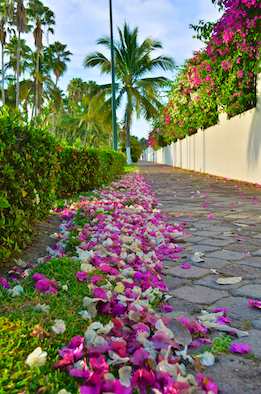
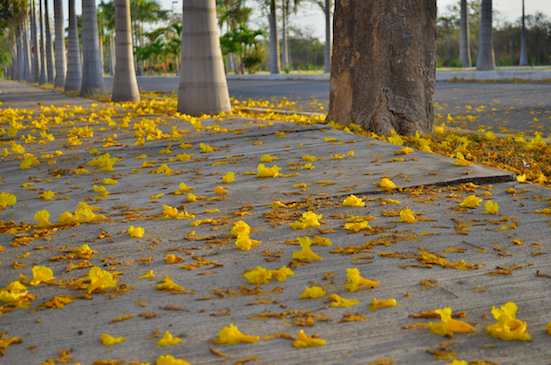
Bougainvillea Pretty Litter

Pretty Litter

April, 2013 – Paradise Village is not only a beautiful resort with a beach, pools and hot tubs, but it is a lovely community with a fantastic row of sumptuous neighboring resorts. Mark went running every morning (I was lazy!), and he always came home talking about all the wonderful things he’d seen on his run.

Flowers on sidewalk

Flowers on the sidewalk in Paradise Village

One spot in particular was strewn with flower petals, and we went back with our cameras to take photos. He called it “pretty litter.” I like that!!

White Flower

These little flowers have thick petals and are very fragrant!

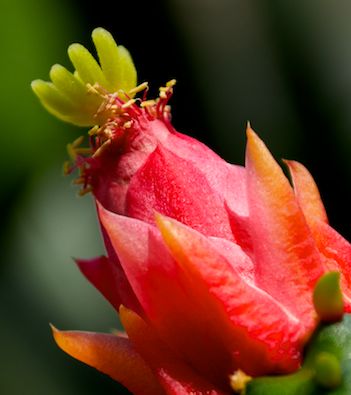
Cactus Flower

A lovely cactus flower bloomed for just a few days.


Mirror reflections in water

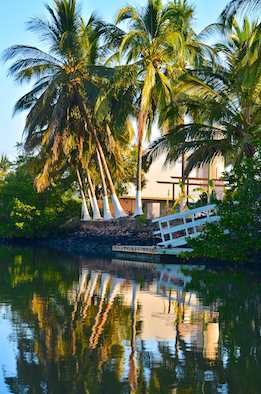
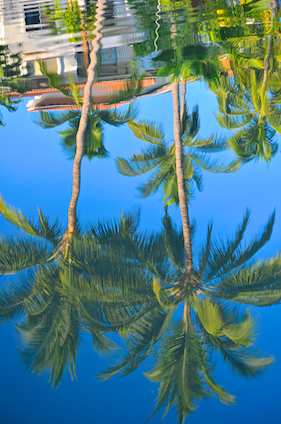
Mirror reflections in the estuary

Spring was happening, and all sorts of lovely flowers were in bloom. For a few days, we watched a tiny red cactus flower open up for its brief dance on this earth. It bloomed for just two or three days and then it was done. Such fleeting beauty!

Paradise Village Marina at sunrise

Paradise Village Marina at sunrise.

The marina sits on the mouth of an estuary, and one morning we took the dinghy upriver. The sun cast a soft glow on everything.

Mirror reflections

The water was like glass.

We especially liked the mirrored reflections in the water.

Estuary palm reflections

Peace in the Estuary

This is a narrow estuary that parallels the main Paradise Village road for a ways. At first we were on the back side of all the little shops, and then the buildings thinned out and the creatures began to appear.

Lots of iguanas were sitting in the trees sunning themselves.

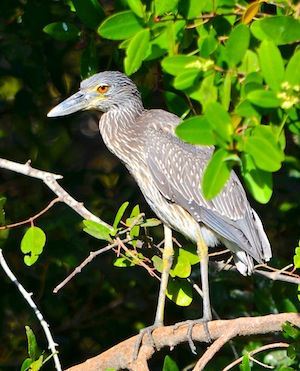
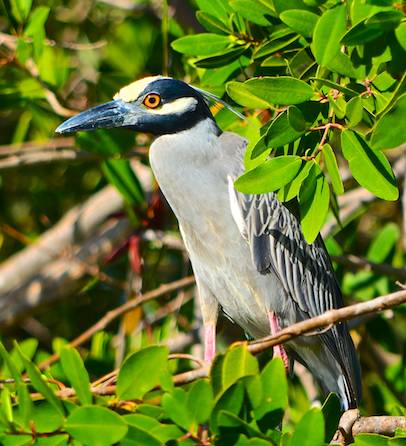
Yellow crowned night herons were in abundance. Like so many birds, they change their appearance completely as they mature. We thought we were seeing two different species of birds, but we were actually looking at teenagers and full grown adults.


Iguana in a tree

An iguana stares down at us.

Yellow crowned night heron juvenile

A young yellow-crowned night heron.

Yellow crowned high heron adult

This is what they look like when they grow up!


Before we started cruising Mexico’s west coast, we had no idea there were crocodiles. But there are! The signs aren’t kidding.

Mark is good at spotting wildlife, and while I was busy staring up into the trees, he noticed a croc hiding among the roots. He pointed the dinghy’s bow into the dark undergrowth and we quietly slipped in.

Zona de Cocodrilos

The sign doesn’t lie…

Crocodile in Paradise Village estuary

And there he is, tucked away behind branches in the shadows…

Crocodile teeth

Crocodile smile!

Yikes. This guy was a big one!! Unfortunately some branches obscured his face a bit.


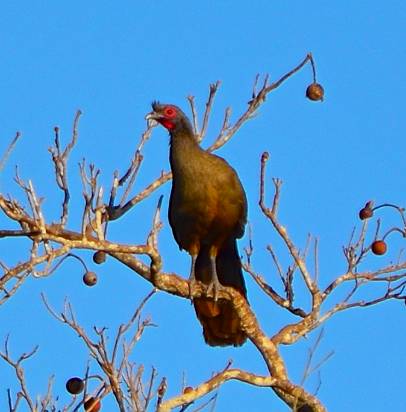
Red-faced cormorant

A mystery bird gives us the once over.


There was no mistaking that this was a croc! I got a close-up of his teeth. I don’t think I’d want those things clamped around my leg!!

Fortunately, he wasn’t in the mood to swim. He just sat there watching us float by.

As we pulled away, Mark noticed another bird was checking us out from the trees. Again, we had no idea what it was, and later thought it was a red-faced cormorant, but it doesn’t have webbed feet. So this guy is a mystery bird for now.

6 Yellow crowned night heron adult

Some of these guys were making nests in the trees.

Iguana face

Just lazin’ around…

The estuary winds on and on through thick stands of trees. We took a right turn here and a left turn there and wandered all over the place.

Paradise Village Home on estuary

There are some beautiful homes back in the estuary.

Paradise Village Home with yacht

Some of the homes even have yachts out front.


Finally we turned around and headed back, emerging among some absolutely beautiful estates. Such gracious living. Lots of the homes here have a dock out front where the family yacht is parked. What a life!!

Palm and flowers

We passed little collections of boats, some very salty looking. It was one of those lazy mornings where we just drifted along on glassy water and let the pretty images on shore come into focus and then fade away behind us.

Bridge gatekeepers hom

This bridge had a little gate-keepers house underneath!


We came to a little bridge that crossed over the estuary and noticed there was a small room at its base with a door and window on either side. Tollbooth? Bridge keeper’s house? I have no idea, but it was a fun hobbit-hole kind of place.

Finally the estuary returned back towards the sea where the two big marinas are situated (Nuevo Vallarta Marina and Paradise Village Marina). Here we saw the boat Flying Dragon safely tied up and resting peacefully after its grounding escapade on the beach in front of Paradise Village Resort.

Paradise Village Marina entrance

Looking out towards the marina channel entrance.

Flying Dragon at the dock

After her mishap, Flying Dragon is safe at the dock.


Dolphin Adventures dolphin pose

A dolphin gets a little practice behind the scenes.

This corner of the estuary is home to Dolphin Adventures where tourists can swim with the dolphins. These guys are very well trained, and as we drifted by we could see them leaping and playing in their pool.

Suddenly, a group of trainers assisted a dolphin up onto the dock! What the heck! The dolphin posed for a moment, tail in the air!


Dolphin Adventures feeding dolphin

“Say ahhh” … “Yum!”

Then one of the trainers began tossing fish into the dolphin’s mouth. The dolphin seemed to love this game and a bunch of fish quickly disappeared as he gave us all a toothy grin.

We later found out that the trainers feed the dolphins this way to keep their skills up. It also prevents their pool from becoming a fishy mess that attracts seabirds. This way every fish finds a home in the dolphins’ stomachs!!

We wandered around for a bit behind our slip in the marina, admiring the homes and yachts. This is a very beautiful place to hang around in a boat, and we felt no urge to take Groovy anywhere else for a while.

Paradise Village estate on the estuary

This beautiful estate and its resident yachts are right behind our dock.

<- Previous                                                                                                                                                                                       Next ->


Are you Ready for An RV Trip of a Lifetime? Enter the Travel Channel Sweepstakes!

This website often brings us intriguing correspondence.  We were recently contacted by the Travel Channel asking if we would let you know about a sweepstakes contest they are running.  We’re always a little skeptical about these things, but we’ve gone back and forth with them quite a bit, and it is legit and sounds like fun.  This is the way their website describes the prize:

Travel Channel and Go RVing are giving away the ultimate Arizona adventure. One lucky winner and a guest will be flown to Phoenix, where they’ll climb on board a Type A Luxury RV and spend an amazing 7 days and 6 nights touring the Sedona Red Stones, Oak Creek Canyon, Bell Rock and Cathedral Rock. The highlight of the trip will be a 9-hour tour of the Grand Canyon, from Flagstaff through the Navajo Nation, and an unforgettable sunset dinner.”

Pretty awesome!!  (Although most RVers, and those familiar with Arizona, may smile at the description).

We’ve never heard the phrase “Type A RV”, although we’ve seen quite a few Type A RVers on the road flying past us at breakneck speeds on the highway.  The Travel Channel is surely referring to a Class A motorhome, which would be an awesome platform for a 7 day vacation.

And the last time we were in Sedona, those big red monolithic formations were locally referred to as “red rocks,” not “red stones.”  But they are so glorious that it doesn’t really matter what they’re called — they are a “must see,” and what a way to see them!

All you need to do to win this cool prize is to know a bit about travel and the Travel Channel itself, as the contest involves answering multiple choice questions about travel and the Travel Channel.  So, if you’re feeling lucky, click here to enter.

Travel Channel Sweepstakes RV Arizona

Arizona is an awesome area for RVing, and we have really enjoyed our travels there.  Even if you don’t win this trip, it is a wonderful place to visit by whatever means.  Among our favorite places are:

Grand Canyon North Rim Imperial Point

Grand Canyon – North Rim

The North Rim of the Grand Canyon

Only 10% of travelers to the Grand Canyon go to the jaw-dropping North Rim, because it is a 250 mile drive around the famous chasm to get there.  The North Rim is stunningly beautiful.  It has few tourists, fabulous hiking and great cycling.

Walking the gorgeous little paved paths that wind along the rim between the flowers will take your breath away — literally — as the rim sits at almost 9,000 feet elevation, a significant altitude 1,000 feet higher than the more famous South Rim.


Grand Canyon Lodge North Rim

Picnic area outside the Lodge

If you have a small RV, a stay at the North Rim Campground perched on the rim itself is unforgettable.  The Grand Canyon view is right out your window.  We were able to squeeze our 52′ truck and fifth wheel combo into the RV dump station there — just barely!!! — but we were too big to fit into any of the sites.  A 30′ fifth wheel or 25′ travel trailer or 35′ or shorter motorhome would probably fit fine.  Reserve your site early!

If you go there by car, the Grand Canyon Lodge — and the cute little cabins all around it — is a historic landmark unto itself.  Dine indoors or out with that inspiring view as a backdrop…


Navajo Nation – Window Rock – Canyon de Chelly

Canyon de Chelly

Canyon de Chelly

The enormous Navajo Nation takes up the entire northeast corner of Arizona.  The town of Window Rock is the tribal headquarters, and they have a wonderful memorial for the Navajo Code Talkers who played such a vital role in the Allied victory in the Pacific Theater in Word War II.

Window Rock Code Talkers

Window Rock Code Talker Memorial

Nearby is one of the most amazing canyons in the southwest: Canyon de Chelly.  Full of soaring cliffs and vast flat lands that snake between them a thousand feet below, you can spot cliff dwellings tucked into these sheer walls way up in the air.  Huge petroglyphs can be seen from across the canyon.


Sunset Crater National Monument

Sunset Crater National Monument

Flagstaff & Nearby National Monuments

Flagstaff is a wonderful college town that is full of history.  There is no boondocking within an easy bike ride of the town, but Bonito Campground, about 18 miles north of town, is our all-time favorite campground.

Bonito Campground is on the way into Sunset Crater & Wupatki National Monument.  These two jewels in the National Park System are worthy of a visit.  Sunset Crater is a volcano that blew its top about 1,000 years ago, shocking the locals inhabitants of the time.  What is shocking about it today is that the lake-like cinder fields and craggy lava flow looks like the volcano erupted yesterday.

Wupatki National Monument

Wupatki National Monument

The nearby Wupatki ruins were built by the “Sinagua” (“without water”) people a century after Sunset Crater blew its top, when they arrived in the area and discovered the thick layer of ash was good for growing crops.  The collection of pueblo ruins on the 50-mile scenic drive are all fascinating, and the loop road makes a fabulous bike ride.

There is boondocking in the woods across the highway from Bonito and also in the cinders nearby.  It can get dusty, though, especially from ATVs on weekends!