February 2016 – During our RV travels to Tucson, Arizona, we had a chance to delve into pre-history when we saw the petroglyphs of Saguaro National Park, and we also experienced the deep Spanish roots of this southwestern city at Mission San Xavier del Bac. While in town, we met up with some very special friends who took us on a walking tour of the older historic part of Tucson. Here the old Mexican flavor of the area intensified.
Tucson’s Visitors Center – Yup, this is an ARTSY town!
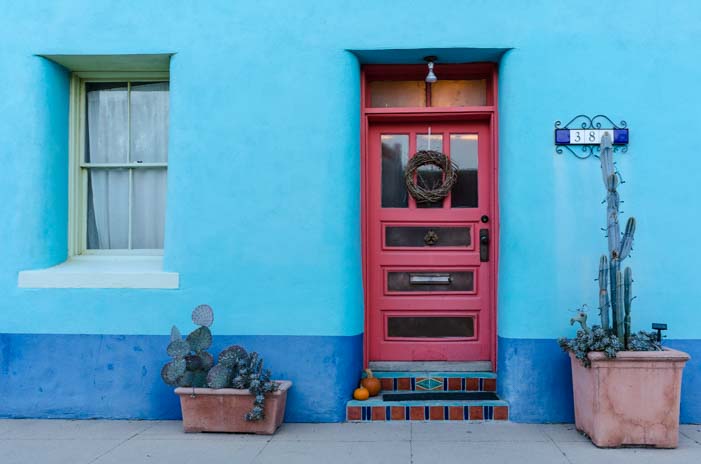
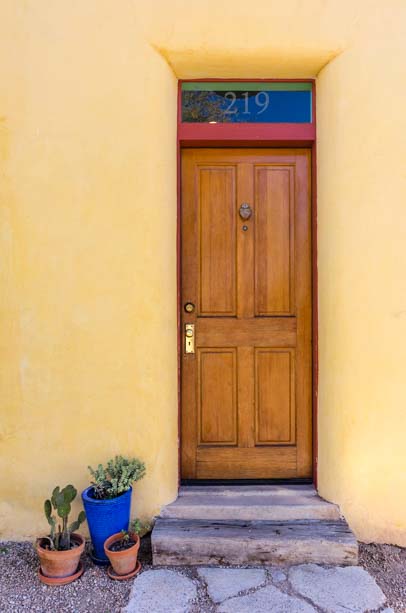
The homes in the older parts of Tucson are all made of adobe, a sun-dried clay, and the walls are enormously thick, often 8″ or more.
We loved the thick old adobe walls surrounding the doorways and windows
These super thick walls offer excellent insulation and keep the interior of the house cool in the blistering heat of the summer.
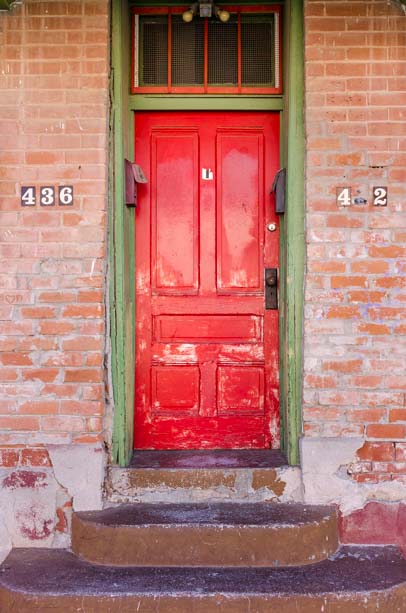
Each adobe door was unique
The buildings are painted many different shades, and we had a field day taking photos of all the doors.
The homes are all different colors
Lovely old architecture and a shadow of a tree
.
.
An ornate wooden gate
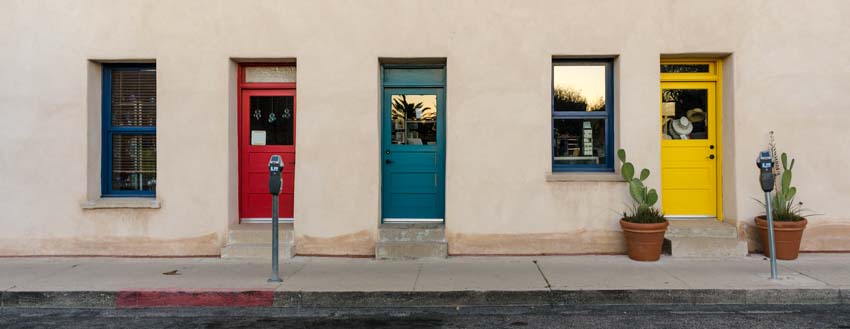
One building had several multi-colored doors all in one wall!
A door of every color…!
We wandered past the old courthouse too. What a wonderful old structure!
The Old Pima County Courthouse
At one point in our stroll, we passed the classic neon sign for the old Pueblo Hotel. The hotel has been replaced by offices now, but what a great throw back to yesteryear.
What a fun neon sign!
Tucson is a very fitness oriented city, and with its comfortable evening temperatures year round, lots of people enjoy getting out for a brisk walk after dark. Our friends introduced us to a unique Tucson event that gathers walkers and joggers together every Monday night, called Meet Me at Maynards.
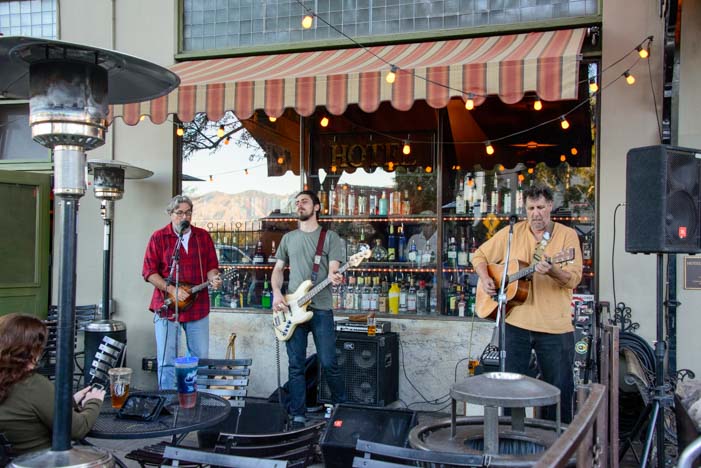
We joined the Meet Me at Maynards crowd at their starting point in front of the Hotel Congress where a band was playing.
Meet Me at Maynards is a special weekly Tucson gathering of walkers and joggers.
This is an informal and free spirited walk, and we wandered all through the streets of Tucson for three miles (the full walk is four miles). Towards the end of the walk we went through an intriguing spot where clusters of modern day hippies were hanging out with the homeless. It made for an interesting mix of sportily clad walkers/joggers making their way between folks with dreadlocks sitting cross-legged on the ground strumming guitars and singing.
We met some colorful characters on our evening walk around downtown
At the end of the walk, everyone gathered in front of the Hotel Congress to enjoy the live music over a beer.
What a fun and utterly urban neighborhood event!!
Back at Hotel Congress the band was playing and the beer was flowing. What a great gig!
If you take your RV to Tucson, be sure to spend an hour or two wandering among the old adobe homes in the older parts of town. If you feel energetic, join the walkers for a quick spin or for the full four mile hike on Monday evening at Meet Me at Maynards! More info and links below…
February 2016 – We have spent a lot of time in the Sonoran Desert in Central Arizona, but have not spent much time in Tucson down in the southern part of the state, other than racing the wildly insane El Tour de Tucson 100+ mile bicycle race long before we dreamed of becoming full-time travelers.
So, a trip to Saguaro National Park was long overdue for us.
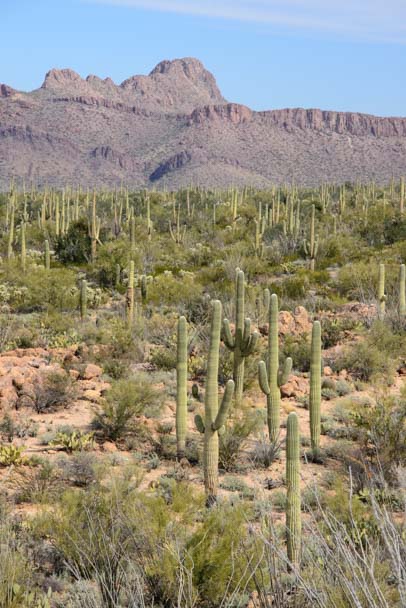
A view in Saguaro National Park (western district in the Tucson Mountains)
Saguaro National Park is split into two sections, the Western section (the Tucson Mountains) and the Eastern section (the Rincon Mountains). Amazingly, these two vast national park systems hug the east and west flanks of the bustling city of Tucson, which is home to about a million people.
.
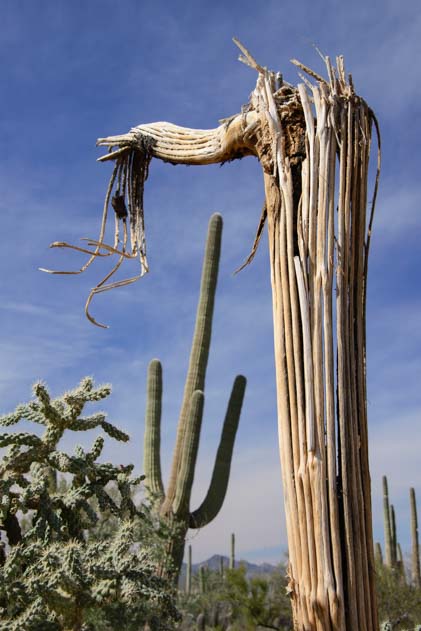
The first thing we noticed as we drove through the park is that because the land is under strict preservation management by the National Park Service (as opposed to the looser standards that exist in the National Forests like Tonto National Forest up by Phoenix), is that there are lots of old saguaro cactus skeletons standing and lying around.
We were surprised to see cactus skeletons all over the place.
These unique relics are prized as garden and household decorations, and in the open Sonoran Desert that lies all around central and southern Arizona, they get hauled away by energetic folks to be re-purposed for interior decorating and outdoor garden ornamentation.
It was neat to see so many cactus skeletons in their natural desert home.
The skeletal trunk of a saguaro cactus
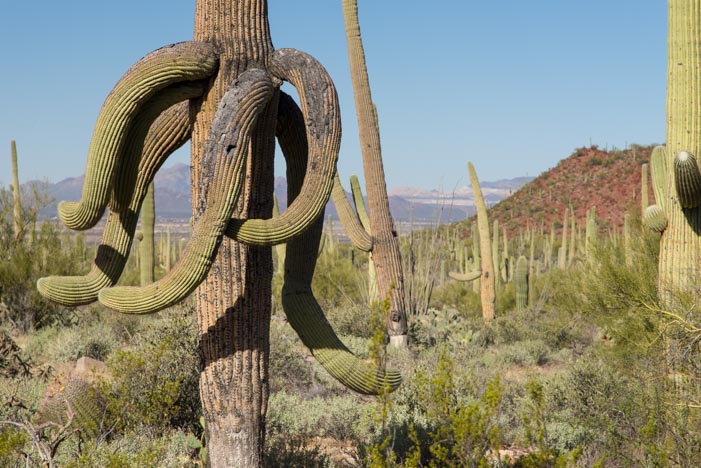
Saguaros like to be warm, and they often get bent out of shape when there is a heavy frost. They drop their arms and never put them back up again!
After a heavy frost or snow, the saguaros surrender with their arms down.
Saguaro National Park was first established in 1933. as a National Monument, and President Roosevelt’s CCC built some wonderful stone picnic ramadas that still stand today. The undersides of the roofs are lined with saguaro cactus ribs.
The CCC created wonderful stone picnic shelters lined with saguaro cactus ribs
Reading about the early history of this National Park, it was interesting again to see the differences between the National Park Service, which is a bureau of the Department of the Interior charged with preserving America’s natural treasures, and the US Forest Service, which is an agency of the Department of Agriculture charged with sustaining the health and productivity of the nation’s forests.
Cool view from the picnic ramada
Back in the 1930’s, the US Forest Service had been managing the land where the proposed Saguaro National Monument was going to be, and they didn’t want to give up cattle grazing on it, something the National Park Service would require. Fortunately, they eventually agreed to the concept of a National Monument in this forest of bizarre human-like trees. In 1994 it became a National Park.
The main loop drive through the cactus forest is a graded dirt road called the Bajada Scenic Drive, and there are several short hiking trails that go from there.
The Signal Hill hike follows a short path up to a pile of big boulders. Eons ago, the ancient Hohokam people pecked out a bunch of symbols and artwork on these boulders.
At Signal Hill there are lots of intriguing petroglyphs
Some of the petroglyphs are like wheels with spokes while another popular image is an animal with long swept back horns.
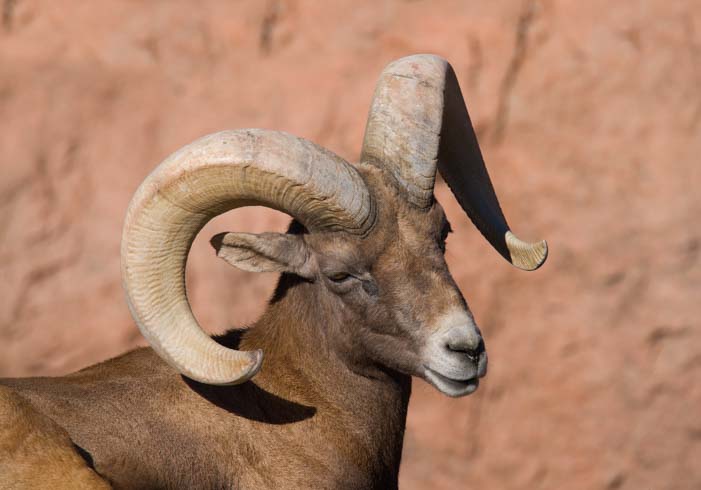
The horned animal is a common motif seen in rock art all over southern Utah and Arizona, and usually it is referred to as a big horn sheep. But if you look at the horns on a big horn sheep, they are tightly wound and are nothing like the gently curved horns of these rock images.
A “big horn sheep” petroglyph
I found an interesting photo-essay by a fellow who thinks these are not big horn sheep at all but are actually an extinct animal that roamed before the last ice age, an idea that would date the rock art to a far earlier period than is currently thought.
Talk about rocking the boat of the academics!!
The horns on a big horn sheep are a lot more curved than ancient rock art images typically depict…
I don’t know if his theory holds water or not, but I love it when new ideas make us look at history and pre-history with fresh eyes.
A very large and tightly wound spiral image dominates the rock art on these boulders.
A large spiral image is the biggest petroglyph by far
Looking at this carefully pecked imagery, it is interesting to ponder what motivated those early people to make their art, and why they did it on these particular rocks, and whether it was just graffiti, or a warning, or a bit of news for the next folks coming down the path. Or perhaps it had some deeper spiritual meaning.
.
.
.
Back on the path that leads from the parking lot to the mound of boulders, there is a bunch more rock art that is easy to miss on the way up. Just turn around as you begin to descend and keep an eye on the rocks. There is quite a bit there, fairly high up.
If you don’t catch them on the hike up the hill, turn around on the way down and look up.
If you are really into rock art, taking along a pair of binoculars or a long camera lens is a great idea! I was glad to have my 28-300 zoom..
Cryptic message, or spiritual symbols, or plain old graffiti?
Saguaro National Park is very large, and there are other hiking trails that can really get you out into the cactus forest. For this trip, we were just doing an overview and getting a feeling for what is there. We’ll dive in more deeply next time.
We enjoyed this little foray into Saguaro National Park
Saguaro National Park is a really beautiful place to see Arizona’s Sonoran Desert scenery, whether you are an Arizona resident or are in the Tucson area as a snowbird RV visitor in the winter months. There are oodles of hikes and lots of ranger led events too, and there are links for more info below.
________________
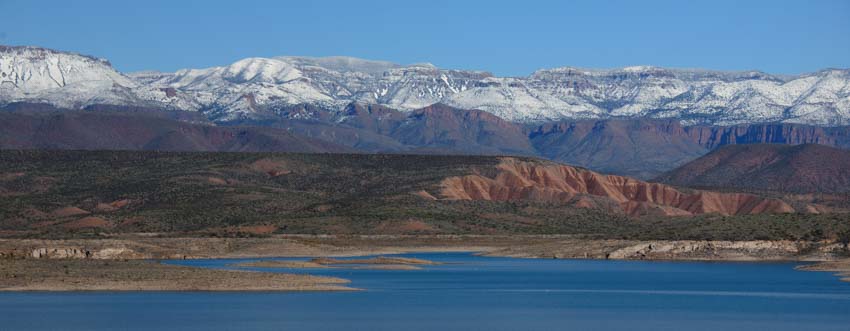
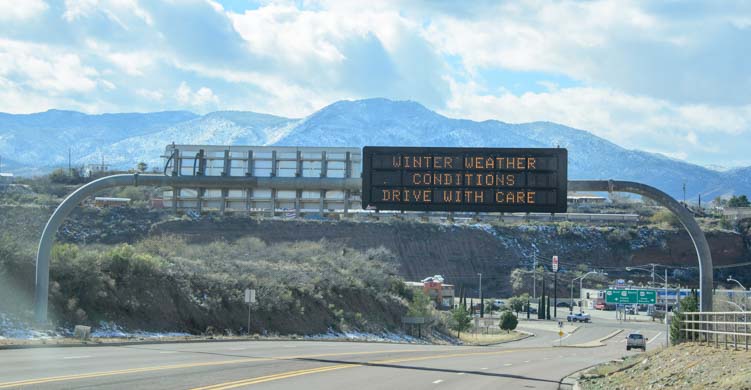
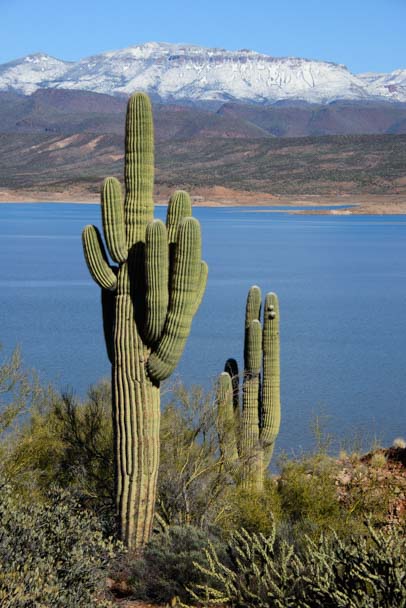
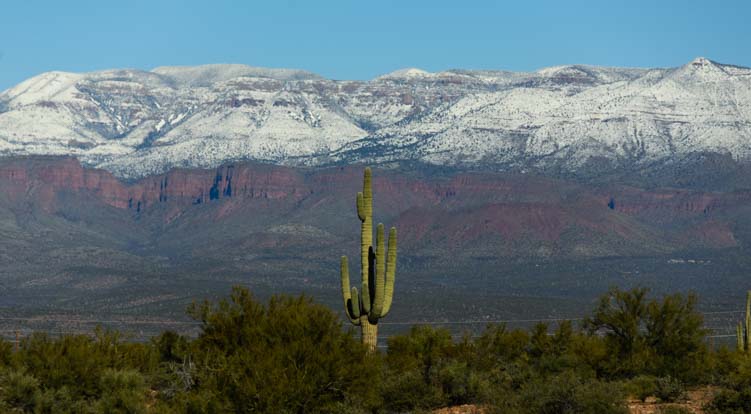
Sometimes on this blog I put up a post with some beautiful photos only to discover later than I missed a few special ones that I’d really like to share. That happened with our earlier stay during the rains at Roosevelt Lake. The other day Mark and I were reminiscing about the bitterly cold week of rain and snow we experienced out there last month, and we came across these stunning photos of his. So here they are. Better late than never!!
After the rain at Roosevelt Lake
While were camped at Roosevelt Lake, Mark snuck out of bed in the wee hours of the night and got this jaw dropping image of the stars:
After we were done with our dental and doctor visits in San Luis, Mexico just south of Yuma, we crossed the southern part of Arizona to visit Tucson. Getting off of the interstate at Gila Bend, we enjoyed a beautiful backroads drive through the Tohono O’Odham Indian reservation.
A few miles south of downtown Tucson, we visited the San Xavier Mission (Mission San Xavier del Bac).
Mission San Xavier del Bac
This catholic church was built in 1692 by Father Eusebio Kino, a Jesuit missionary who traveled throughout New Spain, an area that now includes both Mexico and some of the American southwest.
The exterior has lots of ornamentation.
Mission San Xavier del Bac was the northernmost mission in New Spain, and it was built to impress the local Indians and encourage them to convert to Catholicism. Today it remains largely intact and is considered a premier example of Spanish Colonial architecture.
Pretty details on the outside of the Mission
The Mission has been lovingly restored with generous donations and very fine craftsmanship over the past two decades. Now it is now in full splendor, and there are wonderfully ornate decorations all over the outside, from pretty windows and doorways to elaborate carvings and balconies.
.
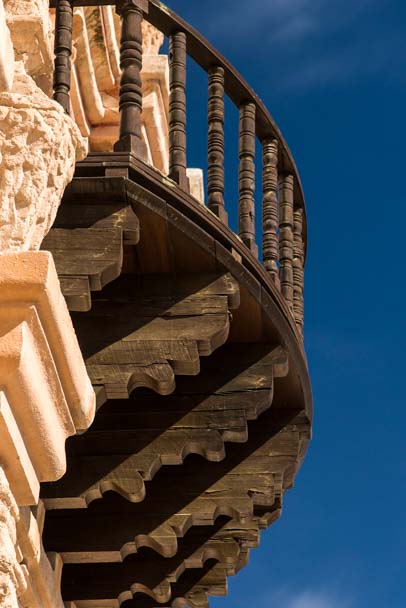
There are several buildings at San Xavier Mission, and a small shrine off to one side has a bell tower.
The bell tower
Inside were small statues and candles burning.
Candles burn alongside statues
Even though it was midweek, there were loads of tourists visiting and taking the free tours. After our tour, we really enjoyed walking around at leisure and taking photos.
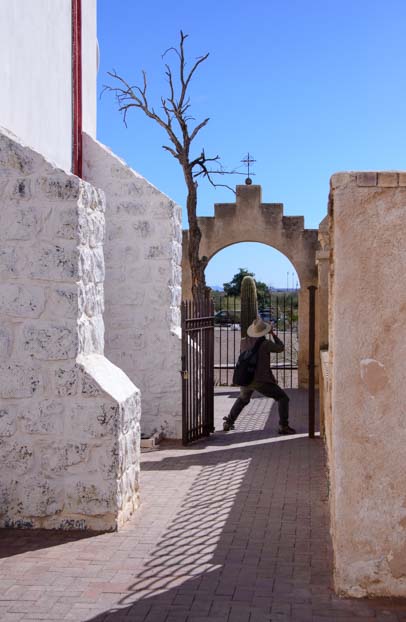
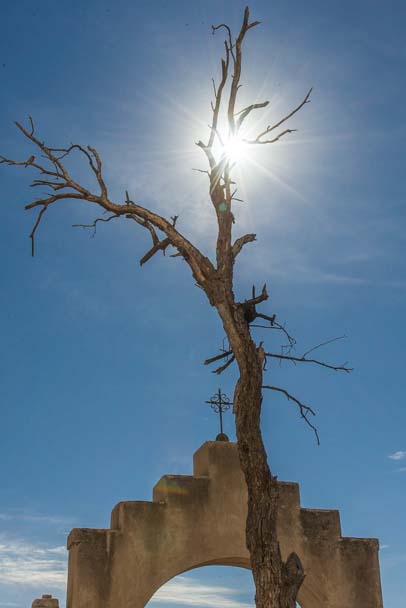
Mark lines up a scraggly tree for a photo.
Nice shot!
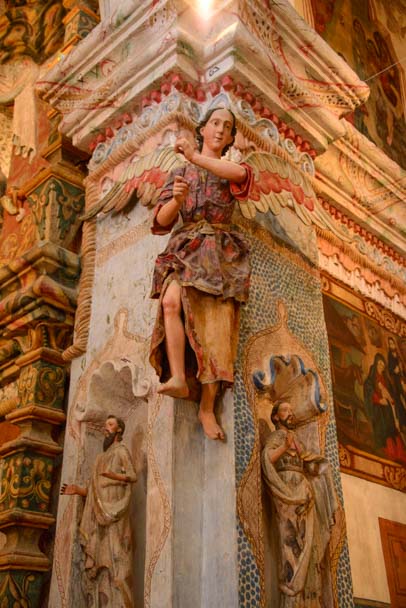
The inside of the Mission has rounded arches and is decked out with sculptures.
.
The San Xavier del Bac Mission sits on the San Xavier section of the Tohono O’Odham Indian reservation, and it is likely that the ancestors of the people that live there today were the ones converted to Catholicism by Father Kino three hundred years ago.
.
A combination of Italian, Mexican and Tohono O’Odham artisans did the painstaking restoration of the church.
The altar is very elaborate.
During the restoration, layers of history of the mission were uncovered. Apparently when the building was first painted, there were blue thumb-sized dots covering all of the walls. But during one of the earlier renovations the priest of the time didn’t like the spotted walls so he washed most of them off!
Now, specialists think the blue dots were actually fingerprints of all the people who labored to build the building three hundred years ago!
At one time all the walls were decorated with blue thumb prints like the right side of this column
There is a museum, and I was very taken with the callligraphy in an antique book on display under glass.
Beautiful calligraphy from ages ago.
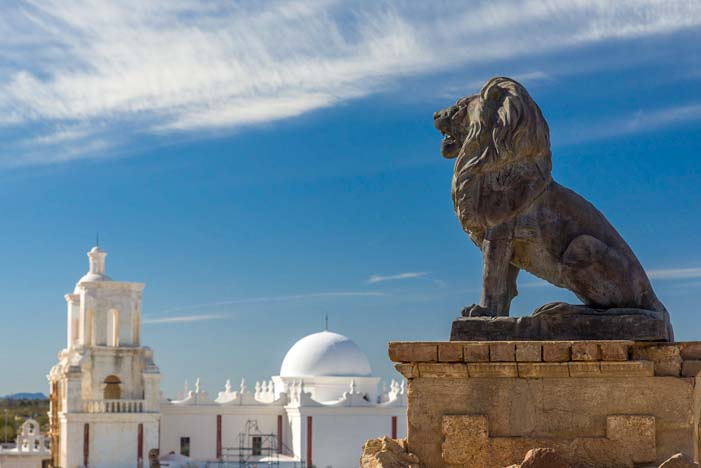
Outside we were free to roam around. A pair of lions guard the hill next to the mission.
.
We had fun taking photos of the barrel cactus which were in bloom. Wonderfully vibrant yellow flowers poked out of their tops, perfect for some creative shots.
The barrel cactus were in bloom with yellow flowers
Looking down at San Xavier Mission with the barrel cactus to one side
If your RV travels take you to southeastern Arizona, a excursion to Mission San Xavier del Bac is a really fun way to spend an afternoon.
A trip to the dentist’s office isn’t fun for anyone anywhere, but Mexican dentists do terrific work, and we have received outstanding and very affordable dental care in our travels throughout Mexico, both on our sailboat and in our RV.
This page offers a glimpse of what a trip to a Mexican dentist’s office is like, what to expect when crossing the border to get dental work done, which dentists we’ve been to and recommend, and what various dental procedures have cost us. There’s a ton of info on Mexican dentistry here, and if you don’t want to read it all in one sitting, these quick links will get where you want to go:
Our first experience with a Mexican dentist, and the one that totally changed our attitude towards Mexican dentistry in general, was in San Luis Mexico, just a little south of Yuma, Arizona, back in 2008.
Getting a Mexican Crown was quite an adventure for us back in the day.
We walked over the border and continued on for half a block to the office of Dr. Sergio Bernal at 4:00 on a Friday afternoon. We did not have an appointment, but we wanted to see what could be done about a baby tooth of Mark’s that had never fallen out but had suddenly started bothering him.
After two minutes in the chair, Dr. Bernal recommended he get a crown. We weren’t sure about getting something complicated like this done in Mexico, and were also unsure whether a gold crown or porcelain crown would be preferable. We walked around the streets of San Luis for an hour debating whether to go for it, and if so, what kind of crown to get.
When we returned to Dr. Bernal’s office, we met a group of Americans from Las Vegas in the waiting room. A big friendly guy in the group told us he gathered up his friends and family every year, rented a car, and drove down to San Luis to get their teeth checked and worked on by Dr. Bernal. He’d had extensive bridge work done by Dr. Bernal 10 years prior, and he had been so impressed by the quality and affordable cost of the job that he’d been going back ever since.
Mark decided to go for it, and in no time Dr. Bernal had ground down his tooth, made an impression of it and made arrangements for a porcelain crown to be delivered to his office by noon the next day. Because the permanent crown would be installed so soon, there was no need for a temporary crown (how nice!).
As we walked out the door (without having paid a cent for the diagnosis, the tooth grinding or the impression), Dr. Bernal asked Mark his name, scribbled it on a yellow sticky pad and put it on the impression. He waved to us as we left to walk back over the border and said, “See you tomorrow!”
Despite the next day being a Saturday (we later learned Mexicans work six days a week), we walked across the border again at noon, and Dr. Bernal quickly cemented the crown in place.
The cost? $130 US.
Best of all, it was a perfect color match and was the best fitting crown Mark had ever had. It has been fine ever since.
From that moment on, we have entrusted our teeth to Mexican dentists throughout the country without a moment’s hesitation.
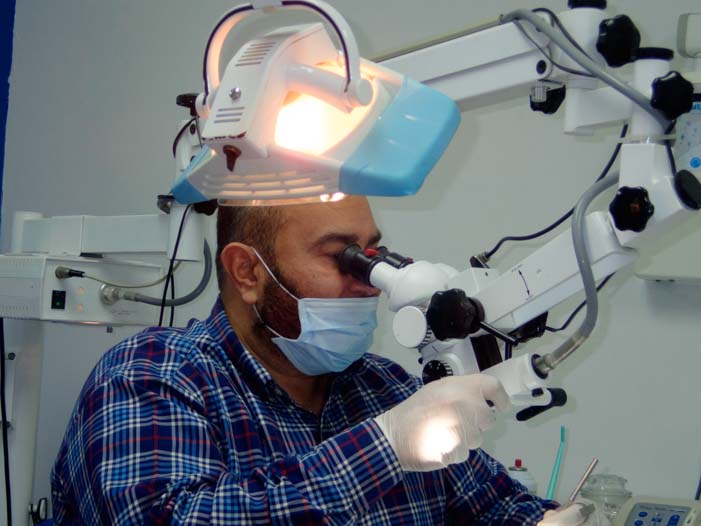
The Dentist Chair… yikes!
During our nearly four year cruise of Mexico on our sailboat, we visited dentists (and doctors) up and down the Pacific coast and in the Sea of Cortez. The dental care was always top quality, very caring, and very affordable. We have never had unnecessary work recommended (as happened to me 15 years ago in the US when an unscrupulous dentist recommended I get five crowns immediately, only one of which I actually needed).
I always feel like going to the dentist in Mexico is basically like going to the barber. You walk in off the street without an appointment, talk to the dentist directly, hop in the chair for him or her to assess what you need, get it done right away or return the next day, and walk out with everything completed at a fraction of what it would cost in the US.
Where Are Mexican Dentists Trained?
There are some urban myths about Mexican dentistry. I’ve heard people say, “The best Mexican dentists get their training in the US.”
In our experience, that is not true. Of the ten excellent dentists and doctors we have been to in Mexico, none received their training in an American university.
Usually, Mexican dentists and doctors hang their diplomas on the wall. Whether the diplomas are hand calligraphed in Latin or typed up in Spanish, it is pretty easy to tell if the university was in Guadalajara, Mexico City or Baja California (the three areas for medical and dental schools we’ve seen on diplomas).
Do Mexican Dentists Speak English?
In our experience, most speak at least a little, especially in tourist areas and in the border towns where a lot of Americans come specifically to receive dental care.
Why Are Mexican Dentists So Cheap?
People also wonder how it is that Mexican dental (and medical) professionals can charge so little for their services if they are really as good as (or better than) their counterparts in the US. The reasons are complex, but in a nutshell, the American and Mexican economies and cultures are totally different. Even more important, the business models for the dental and medical professions are not at all alike in the two countries.
A Lower Wage Scale in Mexico
The average DAILY wage for an unskilled Mexican worker is around $5 per DAY. Obviously, skilled workers make more, but the entire spectrum of wages, from professionals to janitors, is scaled down much lower than the US. In many cases, like that of a city employed street sweeper we met in Huatulco, the employee provides the equipment for their job. This industrious city worker we met had fashioned his brooms for his government job from tree branches and twigs himself.
Cheaper Office Space
Commercial property rental is also much cheaper. A friend of mine who owns a store in the popular seaside tourist town of Zihuatanejo pays $30 a MONTH to rent the space. Office space for Mexican dentists and doctors may not be quite that low, but even if it is double the price, it is still negligible by American standards.
Very Little or No Staff
Mexican dentists and doctors also don’t employ much staff, if any. Some dentists have an assistant, but many of the best ones we’ve been to don’t. Also, there is no one dedicated to answering the phone and making appointments. Any time we have had our teeth cleaned, it was done by the dentist and not by a hygienist. One very conscientious dentist spent an HOUR cleaning my teeth and then spent another HOUR on Mark’s, for $45 US each.
Little or No Malpractice Insurance and Marketing
Unlike their American counterparts, Mexican dentists and doctors don’t have to carry massive amounts malpractice insurance. Also, they don’t invest in marketing. None of the dentists we’ve been to have websites, and it is very difficult to find information about any of them on the internet. The few Mexican dentists that do have websites cater primarily to Americans, and we found that their fees are often adjusted upwards accordingly.
No Third Party Relationships
Mexican dentists and doctors also set their fees according to the market demands of their patients. There is no insurance company operating as a middle man. Patients pay their medical providers directly rather than paying an insurance company who, in turn, then pays the dentist or doctor, as happens in the US.
This keeps the patient/doctor relationship very pure. The doctor or dentist is employed by the patient, not by a third party insurance company. Fees for unexpected issues that come up requiring return visits, extra x-rays, additional prescriptions, etc., can be discussed between doctor/dentist and patient. In our experience, though, those little extras have been free because the dentist/doctor is managing the relationship with the patient/customer and wants to provide good value.
Getting A Root Canal in Mexico — Our Experience in San Luis south of Yuma, AZ
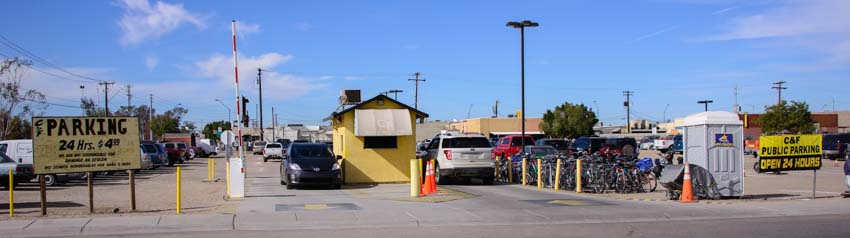
A few weeks ago one of my teeth began to bother me, so we decided to return to our dentist, Dr. Sergio Bernal, in San Luis, Mexico, who had done such a fine job with Mark’s crown years ago. We took our rig to Yuma, drove our truck to the Mexican border and parked it in a parking lot on the American side right next to the border crossing area. The parking fee was $4 for 24 hours (in 2017 it is $5 for 24 hours).
The parking lot on the American side of the border at San Luis, Arizona. $4 for 24 hours.
It was 8:45 in the morning on a Tuesday, and we followed signs that walked us through the border crossing. We saw a few Mexican border agents, but none asked for our passports. Then we emerged on the other side and saw a soldier dressed in desert camo holding an automatic weapon.
The soldier smiled broadly at us when we said “buenos días” to him as we passed by, and he said “buenos días” to us in return.
Having lived in Mexico for a few years, we learned that Mexicans always greet each other with a warm “buenos días” (before noon), or “buenas tardes” (after 12:00 p.m. – sharp), whether they are passing in the street, or standing in front of a store clerk about to pay for something, or boarding a crowded bus (everyone on the bus responds!). Mustering the guts to say that phrase in Mexico will always get you a smiling response, and it is heartwarming and fun to give it a try.
We also learned that the presence of soldiers is just standard procedure at Mexico’s borders (we’ve seen them at the US and Guatemala borders). It is also standard procedure when the Mexican Navy boards boats at sea.
Our sailboat was boarded 8 times during our cruise, either to to check our papers, to check for weapons and drugs, or to make sure we had proper safety gear on board. Each time the inspectors couldn’t have been nicer or more polite. In one case, when they brought aboard a drug-sniffing dog, they put booties on his feet so he wouldn’t scratch the boat. Another time we were given a performance evaluation form to fill out for the boss!
I touch on three of the Mexican Navy boardings we experienced in these blog posts:
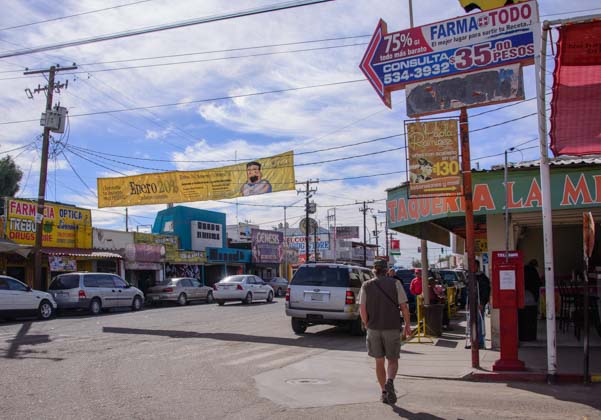
Moments after crossing the border, we emerged onto a lively and busy street in the town of San Luis Rio Colorado, the Mexican sister city of San Luis, Arizona.
After emerging from the border complex, we walked straight down the street, crossing a small intersection and looking to our left towards the opposite side of the street as we walked.
Mark crosses a small intersection after crossing the border. Dr. Bernal’s office is on the left just beyond the lavender “Genesis” sign (center of photo).
We were walking south on First Street (“Calle 1”). Dr. Bernal’s office is in an alcove on east side of the street (the opposite side…the left side in the above photo) about halfway between the first intersection we had just crossed and the street light at the next intersection.
The shops are small and tightly packed with colorful but faded signs overhead.
Walking down Calle 1 (1st Street), and looking left, these shops are just before Dr. Bernal’s alcove.
Catching sight of the lavender “Genesis” sign on the left side (east side) of the street, we spotted the alcove where Dr. Bernal’s office is located just beyond that sign (to the right of the sign while facing that side of the street (facing east)).
Inside Dr. Bernal’s alcove, we saw a large grinning tooth out in front of his office door. A sign overhead and a sign on the roof both said, “Family Dental.”
Dr. Bernal’s office is in this alcove. The door is on the right.
We head in!
Even though it had been 7 years since we had been here, back in 2008, memories flooded back as soon as we walked in. We had known nothing about Mexico back then, and we had been quite overwhelmed by the differences on the two sides of the border.
Things are not as spiffy or glam in Mexico as they are in much of America, and this dentist’s office wasn’t in fancy Class A office space like we were used to back home. That had been a little off-putting to us back then. But during those early days of full-time travel we had yet to learn that you can’t judge a book by its cover.
The waiting room.
When we walked into Dr. Bernal’s office with all these memories swirling around, he greeted us with a big smile. I explained (in English) that he had done a crown for Mark way back when and that we had come back because I had a toothache.
“Oh yes, I remember….” He said.
“You remember us???!!” I asked, incredulously.
“Of course I do…” he said, “Gold crown or porcelain… you couldn’t decide.”
Wow.
We were the only patients there at the moment, so I hopped in the chair right away and he tapped my teeth and said I needed a root canal. Darn! I was afraid of that.
Dr. Sergio Bernal tells me I need a root canal. Oof!
Mark got in the chair and was given a clean bill of health. No problems, no need for work, no need even for a cleaning. “Come back when you have a problem,” Dr. Bernal said. I should only be so lucky!!
Wasting no time on my behalf, Dr. Bernal got on the phone to an endodontist across town, Dr. Horacio Avila, to make sure he was available to see me right away. Then he walked us out to the corner and hailed a cab for us. He handed the cabbie a business card for the endodontist, and we climbed in the cab.
Dr. Bernal puts us in a cab to go to endodontist Dr. Horacio Avila across town.
The cabbie swung the car around and then let another guy in too. The cabs in San Luis are shared cabs, and it is normal to have the cabbie pick up someone else who is headed in the same general direction.
A few minutes later he dropped us off at Dr. Horacio Avila’s office. The cabbie wanted 40 pesos or $2, whichever we had. We happened to have some pesos we wanted to get rid of, so we paid in pesos. Back when we got those pesos in 2013, the exchange rate had been less than 13 pesos to a dollar. What a shock it was to find that the exchange rate is now 19+ to the dollar!
Dr. Avila’s office at Calle 13 (13th Street) and Madero
Dr. Avila’s office was nice inside, and like all dentists and doctors we’ve been to in Mexico, his diplomas hung on his wall. He had earned his dental degrees at the University of Baja California. Dr. Bernal had earned his degrees at the University of Guadalajara.
Dr. Avila’s diplomas. He was trained at the University of Baja California.
I was blown away by Dr. Avila’s equipment. A quickie x-ray yielded an image on a computer screen in seconds, and he explained (in English) that the root canal would take about 45 minutes. He said it would normally cost $180 US, but because it was in a tooth that already had a crown on it, the extra work of drilling through the crown to perform the root canal would raise the cost to $230 US.
I leaned back, he numbed me up, and in no time the root canal was finished.
Dr. Avila had very modern equipment with x-rays that went directly to a computer screen, etc., etc.
When I got out of the chair, he explained that I needed anitbiotics and anti-inflammatory meds. He described how to take them and wrote up a prescription, handed me an envelope containing prints of my x-rays as well as the images of my root canal in progress, and then he led us to the door.
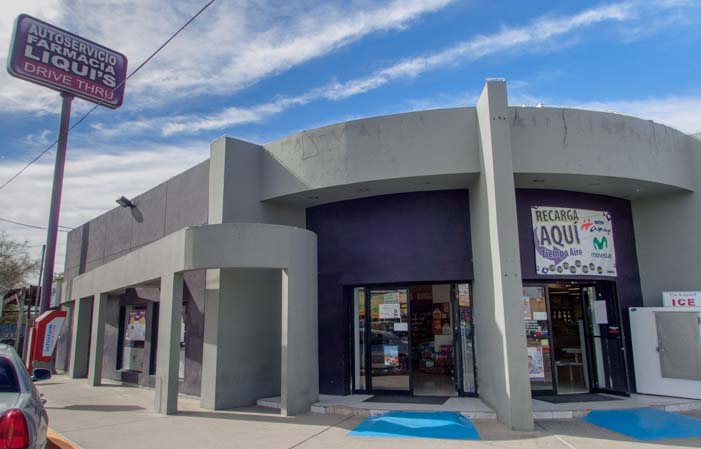
His assistant asked me my name and wrote it down on a pad. I gave her $230 in American dollars in cash, and she asked me whether I wanted a receipt. Then she took us out to her car and drove us to Liquis Farmacia, a big pharmacy back near the border crossing area. (“Farmacia” is pronounced “far-MAH-seeya” even though it doesn’t look like it).
Liquis Pharmacy (“Farmacia”) is a block away from the border.
She took us through the drive-through lane, placed the order for the meds at the window for us, and passed our cash through to the clerk (we paid in pesos, but dollars would have been fine too). It was about $10 for a supply of amoxicillan (Ampliron) and anti-inflammatory Supradol. Then she drove us to Dr. Bernal’s office.
We tipped her $5 in American dollars for driving us around town and making sure we had the right meds in hand before we left the country.
Dr. Avila’s assistant drove us to the drive-through window and ordered my meds for me.
We walked over to Dr. Bernal’s office and I climbed back in his dentist chair (gosh so many times in and out of dentist’s chairs in one morning!!). He took a look at Dr. Avila’s work and said he would complete the job by putting a filling in the crown where Dr. Avila had drilled through to do the root canal. But he didn’t want to do it until a few days had passed and the tooth was totally pain free.
So he sent us on our way (and again, did not charge us a cent).
It was 10:00 in the morning when we crossed back over the border into the US and got back in our truck.
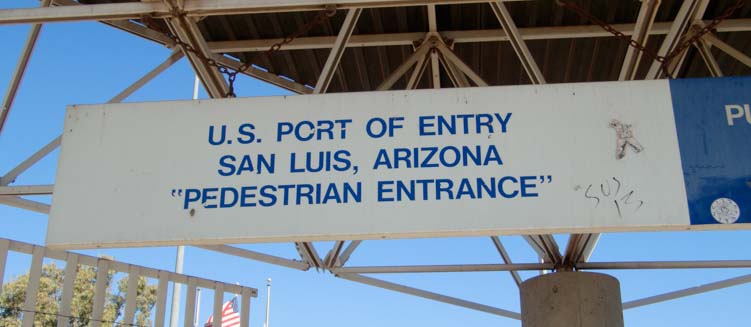
The pedestrian crossing going back into the US
The whole thing had taken an hour and a quarter — with no appointment. In that short span of time we received two check-ups, a diagnosis, a root canal, x-rays and meds.
Including the cab ride from the dentist to the endodontist, a tip for the assistant who drove us to the pharmacy in her own personal car, and the parking fee for our truck that was waiting for us on the American side of the border, it all came to a grand total of $241 US.
So far, we hadn’t paid Dr. Bernal a dime, yet he had masterminded the whole thing.
Does this sound like American dentistry?
We returned a few days later to check in with Dr. Bernal (no appointment, we just walked in). My tooth was still a little tender, so he told me I wasn’t ready for him to do the filling in the crown yet yet. So I was in and out of the chair once again! And again, he didn’t charge me for the checkup.
Finally my tooth was back in action and pain free, so we crossed over the border to Mexico again. This time we went to the endodontist, Dr. Avila, first to get a final x-ray of the root canal and verify that everything was A-okay. He was happy to see me and said everything looked great and sent me on my way. He didn’t charge me for the x-ray or the office visit.
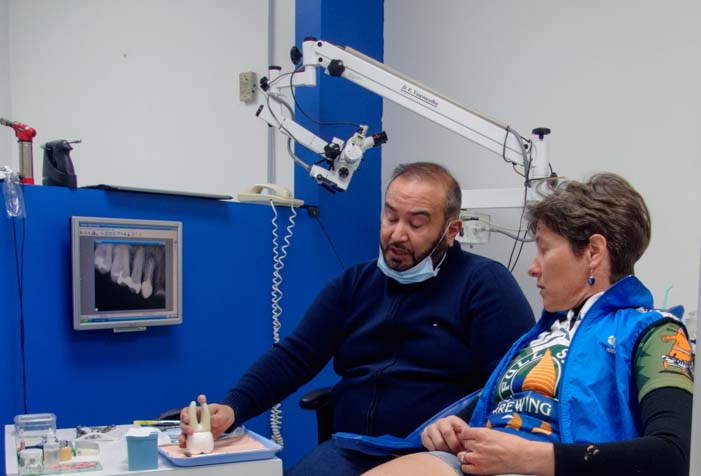
Dr. Avila explains to me about teeth and roots. The x-ray is on the computer screen on the wall.
Then we stopped in at Dr. Bernal’s office. He had a line of patients waiting this time, so we took a seat and waited with them. I got chatting with an American woman next to me, and she told me she and her family had been coming down from Phoenix to see Dr. Bernal for 25 years.
“He must have been just out kid out of dental school back then!” I said.
“We were all a lot younger back then,” she laughed.
Suddenly, an old, hunched Mexican woman came in clutching her mouth. She was moaning as she took a seat. Mark asked her in broken Spanish if she was in pain, and she nodded and rubbed her fingers along her whole lower jaw, obviously in agony.
We were next in line now, but we got up and stuck our heads into Dr. Bernal’s office where he was working on a patient and told him we’d be back later and to please take care of this old woman first.
We wandered around town for a while, and when we returned the woman was gone and Dr. Bernal was free again. I hopped in the chair, and after a few quick zips with the drill, he was done filling the hole in the crown. Then he did a full check on the rest of my teeth and polished some of my white fillings that had started to leach and turn a darker color.
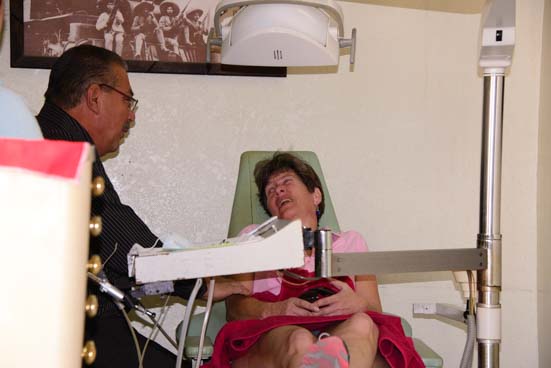
Back in The Chair with Dr. Bernal.
He charged me $40 US. This $40 fee covered the three times I had sat in his dentist’s chair over the past few days since we first crossed the border as well as putting a filling in the crown where the root canal was and polishing me teeth. We handed him the cash, and went back to the border half a block away.
Easy peasy!!
So, my entire procedure involved sitting in dentist’s chairs five times for check-ups and procedures, x-rays, a root canal performed by an endodontist, a filling performed by a general dentist, cab rides between dentist’s offices, antibiotics and pain medications, a tip for the dental assistant who drove us across town and took us to the pharmacy, and the parking fee for our truck waiting for us on the American side of the border.
The grand total for my root canal plus all that other stuff was $281
Yuma is 23 miles north of the US/Mexican border, so it is very easy for RV travelers to get dental work done in Mexico at the San Luis border south of Yuma, AZ. Allow about 35 to 45 minutes to get to the border (it’s mostly highway).
There are loads of RV parks of every description in and around Yuma, and Yuma is a fun town to visit anyway. There are some pretty buildings in the Old Town neighborhood, a really funky burger/bar scene in town at Lutes Casino, and an interesting glimpse of how the Wild West used to be for the bad guys at the Territorial Prison.
For RVers who want to be a little closer to the border and don’t mind dry camping in their trailer or motorhome, Cocopah Casino is 16 miles from the border and has a paved parking area out back that is striped for RVs. As of January 2016 the cost to stay there was $10 for 3 nights. It was very busy when we were there in late January, and I imagine the place is quite packed through the winter season.
There are tons of RV park options in Yuma. At Cocopah Casino there is dry camping as well.
In Mexico’s border towns like San Luis, you can do all financial transactions in US dollars. Some businesses, like Liquis Farmacia (the pharmacy Dr. Avila’s assistant drove us to), will take a credit card, but in our experience most dentists and doctors prefer to be paid in cash (some don’t even have credit card machines in their offices).
If you want to get some Mexican pesos, there are money exchange shops on both sides of the border. But you certainly don’t need to.
There are money changing shops on both sides of the border, but US dollars work just fine. Take lots of $1 bills for cabs and tips.
Walking over the border is easy, and if you are finished in San Luis early in the day, the walk back over the border is easy too. There was no one in the pedestrian line going back into the US when we got there at 10 a.m.
Later in the day, the border crossing into the US gets much busier. Walking back over the border late in the afternoon can involve a long wait in line for pedestrians (and much much longer for cars). Riding our bikes, we never saw anyone in line at the Sentri Gate.
For us, in all our travels and dental office visits in Mexico over the past eight years, figuring out which dentists to go to has been a matter of talking to the locals and to fellow travelers and to ex-pats who live in the area.
We first heard of Dr. Bernal from RVers staying at the Escapees Kofa RV park in Yuma. Some places with lots of ex-pats have online forums where local dentists are discussed and referred, and that’s how we found two of our favorite dentists in southern Mexico.
Some quick tips:
You need a passport to return to the US from Mexico
Take lots of $1 bills for tips and cabs just in case you want or need to be driven around town
Change will not be made with American coins, just bills. Take a variety of bills to avoid making change in general.
Some dentists and doctors will take credit cards, but not all. We carried about $350 in cash.
Bigger pharmacies will take a credit card. Unlike most stores in the US, Liquis was set up for the new chip style credit cards!
To save on currency exchange fees, get a credit card from Capital One. They waive the standard 3% currency exchange fee
If you bike over the border, you can save a lot of time getting back into the US because no one uses the Sentri pass / bike gate
Make a day of it. Go to El Parianchi (10th St. and Obregon) for some awesome food and a truly authentic Mexican experience, especially on a busy Saturday
Here is a Google Maps link for the locations of things in San Luis, Mexico. In this map link, the locations are:
Dr. Sergio Bernal – showing as “Calle 1 115”
Liquis Pharmacy – showing as “Calle 1 7”
Dr. Horacio Avila – showing as “Madero 1307”
El Parianchi restaurant – showing as “El Parianchi” at 10th St. and the border road.
You can see the location of the town square “Plaza Benito Juarez” too.
Here are some of the dentists we have been to and that we would return to. One thing that can be confusing about Mexican names is that the Spanish convention is to give your mother’s maiden name as part of your own name, at the end. So, you state your name like this:
Dr. Sergio Bernal does general dentistry and is located about 1/2 block over the San Luis Arizona/Mexico border on the left hand side in an alcove marked with a large sculpture of a tooth under a sign, “Family Dental” on 1st Street (“Calle 1”) just north of Obregon as described in detail above in this article. Call him directly from the US by dialing this number: 011 52 653 534 6651
Address: First St. #118-9 San Luis Rio Colorado, Mexico. Open Monday-Friday 9-5, Saturday 9-2, Sunday 9-11
Dr. Horacio Avila is an endodontist located at 13th Street (“Calle 13”) and Madero (address is 1305 Madero). He did a root canal for me in 2016 as described above in this article.
Dr. Aldo Velásquez works with his father Dr. Eduardo Velásquez at #53 Benito Juarez Street in downtown Loreto. In 2011 Dr. Aldo Velazquez filled a cavity in one of my teeth and checked Mark’s teeth for 450 pesos. At the exchange rate of the time, this was about $40. We went to his office because we passed it on the street while out walking and it appeared well kept and attractive. Later we found out that Aldo and his father are very highly regarded in town. I wrote about our experience in HERE at this link
In 2013 Dr. Oliverio Soberanis (#210-E 5 de Mayo Ave.) replaced several large fillings in my teeth and fixed some work that had been poorly done by an American dentist long ago. See some pics HERE at this link. I found him by reading an ex-pat forum for Zihuatanejo. He had brand new equipment with TV screens showing the work in progress. I had a cruising friend who is a retired dentist check his work afterwards, and he was very impressed that he took the time to polish the fillings, something many American dentists don’t do because it takes extra time.
In 2012 Dr. Francisco Hernandez (Sierra de Ixtlan, Edificio B Dept 101, Conjunto Residential Los Mangos) did 2 cleanings for us (550 pesos, or about $45, each) and 3 replacement fillings (450 pesos, or about $35, pesos each) for us as well. The cleanings were the most thorough we’ve ever had, taking about an hour each. He was gentle and very conscientious. We went to him because the dentist that had been recommended in an ex-pat forum was on vacation, and she had left a note on her door giving Dr. Hernandez’ name and address. Another cruising friend (whose boat appears at the top of all our blog posts from Huatulco had an excellent experience with getting some fillings replaced by Dr. Hernandez as well.
If you have been enjoying your RV down near the Mexican border this winter and have been on the fence about whether or not to get some dental work done south of the border, hopefully our stories and info here will help you decide to give it a try.
Typical Costs of Mexican Dentistry and Where It’s Cheapest
Mexico has lots of dentists and doctors practicing all over the country. After all, Mexico’s population is nearly 1/2 of America’s population, and all those people need medical and dental care, just like Americans do!
Because of the big difference in the cost of living between the two countries, Mexican dentists are well aware that their services are sought after by Americans because it’s cheap.
Mexican Dentists Whose Practices Serve Primarily Mexicans Are The Cheapest
Most Mexican dentists set up practices in predominantly Mexican communities, and they charge prices their patients can afford. Their prices are typically 10% to 15% of the costs for identical dental procedures done in America.
San Luis is such a community, even though it is a border town. A few Americans cross the border to get dental work and medical procedures done in San Luis, but they are a smaller percentage of the dentists’ and doctors’ total patient base than in other locations.
In San Luis, Mark’s porcelain crown cost $130 US in 2008. At that time, in America, the cost for a porcelain crown was typically $1,000. My root canal in 2016 plus medications, cab fees and parking fees cost $281. At that time, in America, the cost of a root canal in a tooth that had a crown on it already was typically $2,000 or more.
Mexican Dentists Whose Practices Serve Primarily Americans Are More Expensive
In contrast, dentists that are located in places where Americans tend to congregate often establish their practices specifically to serve Americans. After all, they can make a lot more money that way than by serving Mexicans. This means that they have flashier office space, they have marketing geared towards Americans that is in English, both of which Americans appreciate, and they have higher prices.
Their services may not be any better than the Mexican dentists who focus on Mexican patients, but it will feel more like dentistry “back home” in America. They may require that you make an appointment in advance, they may accept a credit card for payment, and they may speak very fluent English.
The prices in these kinds of places are typically 40% to 50% of the costs of equivalent procedures in America.
One area that is extremely oriented towards Americans is Los Algodones near the border of Yuma, Arizona. Los Algodones is a tiny handful of tightly packed streets that are wall-to-wall dental and medical offices that serve an entirely American clientele. Few, if any, Mexicans go to these dentists and doctors for care. It is way too expensive for them.
Likewise, we found in our cruise along Mexico’s west coast that the dentists who operated in the more central and touristy parts of any town tended to have more American style facilities and higher prices.
In Ensenada, a cruise ship destination 70 miles south of San Diego, a dentist on the “front side” of town greeted us wearing scrubs (you rarely see that in more Mexican-oriented dental offices). He spoke perfect English and gave us a quote for a very American sounding price for a simple cleaning and a filling.
We decided to pass on his services. However, during our stay in Ensenada, we got to know the affluent looking owner of an ice cream shop in town and asked him for a recommendation for a dentist. He sent us to a totally different part of town where a very skilled dentist in a much simpler office took care of us at the typical 10% to 15% of American prices that “Mexican dentists for Mexicans” charge.
So, when looking for a dentist in Mexico, keep in mind that dentists whose patients are primarily American will charge you prices that are much higher than dentists whose patients are primarily Mexican. Whether the actual dental care they provide is any different is truly debatable. It’s just more expensive and feels more familiar because of the outer trappings of the office space itself and the way they run their business.
Crossing the border on foot forced us to rely on taxis to get to the more distant locations on the other side, so after our first visit, we decided for future trips it would be a whole lot easier and more interesting to ride our bikes over the border instead. We simply parked our new truck on the American side for the day, unloaded the bikes, and walked them across.
Once on the other side we could get around town quickly and easily.
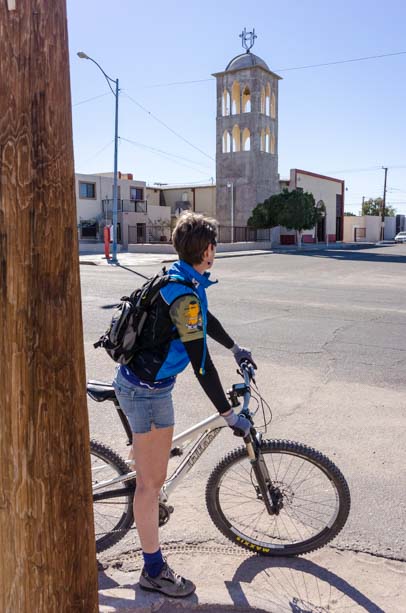
We found riding our bikes around San Luis was much more fun and made the border crossing back to the US easier.
And that’s when we really started to have some fun too.
Mexico is a vibrant country with really exuberant, fun-loving people. Everybody is outgoing and friendly and warm, and we have always found it really enjoyable to chat with people on the street, whether in our halting Spanish or in their typically very good English.
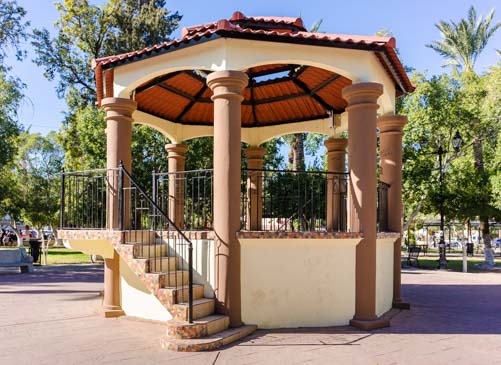
Like all Mexican towns, there is a town square in San Luis that is lined with palm trees and has a bandstand at the center. It wasn’t quite as festive as the one in Guanajuato or the town square in Oaxaca, but it we enjoyed wandering through it.
The town square/park named for Benito Juarez has a small band stand.
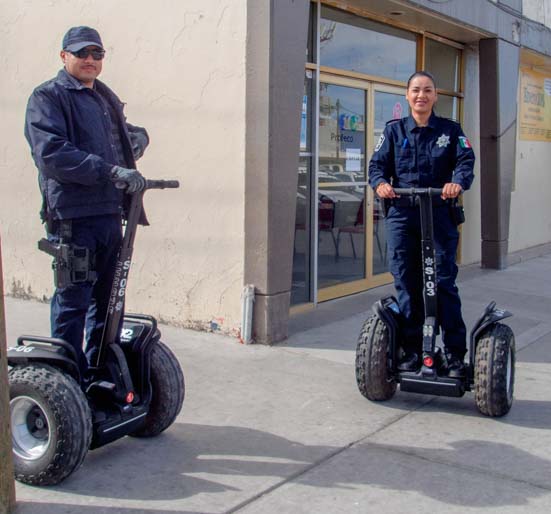
We really enjoyed seeing San Luis beyond the dentist’s office. There’s plenty of security too — we saw police riding around on Segways (how fun!). They very kindly came over to offer assistance when we looked a little lost at one point.
Now there’s a great way to get around town!
There are lots of places to eat, and if you find yourself in town waiting between dentist or doctor visits and need a bite, there is a Subway that makes sandwiches exactly the way we’re all accustomed to. The only difference is the menu is in Spanish. But don’t worry, the workers will take your order in English — and if they struggle, sign language and pointing at what you want always helps.
Subway has a shop in town, and the only difference we found was the Spanish words on the menu. Pointing and smiling works fine if you can’t make out the Spanish words.
If you have a little more time, check out El Parianchi, a fabulous restaurant that is the Real Deal for Mexican food, Mexican flair and Mexican fun. We LOVED it there.
We found El Parianchi one day when we were looking for the other top restaurant in town, El Herradero where we had enjoyed some chips and salsa and beer on an earlier visit. We were a little lost, though, and we found ourselves in front of El Parianchi instead. When we asked the parking lot attendant, Fernando, for directions to El Herradero, he talked us into staying at El Parianchi, because the food there was truly delicious.
“I’ll put your bikes in here,” he said, pointing to a locked shed in the back of the restaurant. “They’ll be safe.” Deal! We rolled them in between the rakes and shovels and barrels, and went on in.
We had been noticing that we were the only gringos in the whole town. And now we were very definitely the only gringos in this restaurant. We were also the only people dressed in cycling clothes.
Talk about standing out!
It was a Saturday afternoon, and the place was hopping. Waiters rushed here and there, grabbing extra tables and chairs for people, and the food was flying out of the kitchen at a wild rate.
The servers were hustling at El Parianchi on Saturday afternoon!
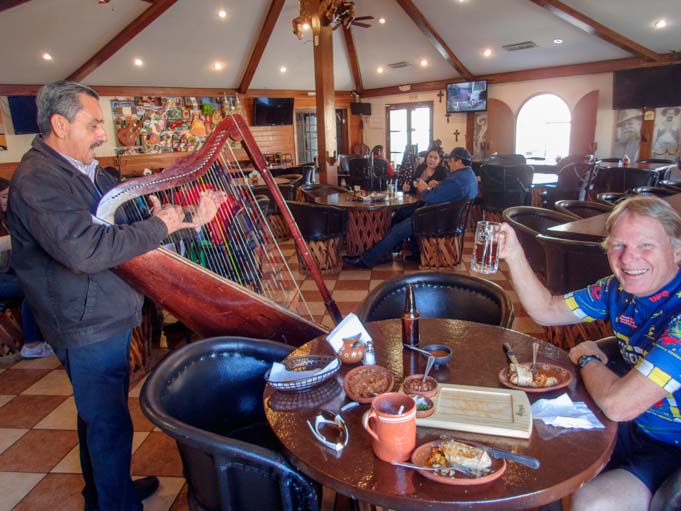
Two big parties — what looked like a baptism party and an engagement party — were in full swing at long tables on either side of the restaurant, and a Mariachi harp player was singing and strumming his heart out in a corner.
People were laughing and eating and have a grand time while the waiters ran at top speed from one end of the room to the other.
Gringos in cycling jerseys. Sure…we blend right in!
We were seated to one side, and in an instant, a waiter was at our table welcoming us.
We both ordered Corona with a lime, and Mark got a bottled water and I ordered a Jamaica water as well. Jamaica water is an absolutely delicious drink make of hibiscus flowers that has a tartness like cranberry juice (and is about that color) but is much sweeter. Jamaica is pronounced “Hamikah” with a long “i” (even though it doesn’t look like it), and it is a refreshing drink I enjoyed repeatedly throughout our Mexico cruise.
The drinks arrived along with tortilla chips and a bean dip that was to die for. If only I could make beans like that!
Suddenly the harp Mariachi player appeared at our table. Mark handed him a few dollars and asked for a song.
A harp playing Mariachi sang some songs for us — what total fun!!!
“What song do you want?” the harpist asked.
After racking our brains to remember the name of a Mexican folk song, we came up with “Alla En El Rancho Grande!”
He proceeded to play a great rendition of it. I don’t have a video of him singing, but I do have a special video of another Mariachi singing this exact same song for us when we were in Huatulco Mexico at a little beach bar in the sand. Our sailboat Groovy was anchored just out of sight.
When he finished the song, the folks at the tables around us clapped. He wanted to sing a second song for us, so we asked for Mariachi Loco. This is a really cute song we first heard on a day charter catamaran called Picante that used to circle past our boat at anchor in Zihuatanejo.
We were having so much fun in this restaurant, we hadn’t even looked at the menu yet!
Suddenly, the manager, Jose, came over and asked if we were having any trouble understanding the menu. We told him we wanted a beef and bean burrito, and he recommended one of the “percherones.” We’d never had one before, but the “Sonorense” was absolutely scrumptious. It was so good, in fact, that we came back another day just to sample it again!!
For a genuine Mexican culinary experience, check out El Parianchi on 10th Street and the street along the US/Mexico border by the international boundary wall.
When the bill came, it was $17.73 US including our 20% tip — and we had plowed through four beers, a bottle of water, my Jamaica water, our chips and bean dip plus the huge percheron burrito we had split.
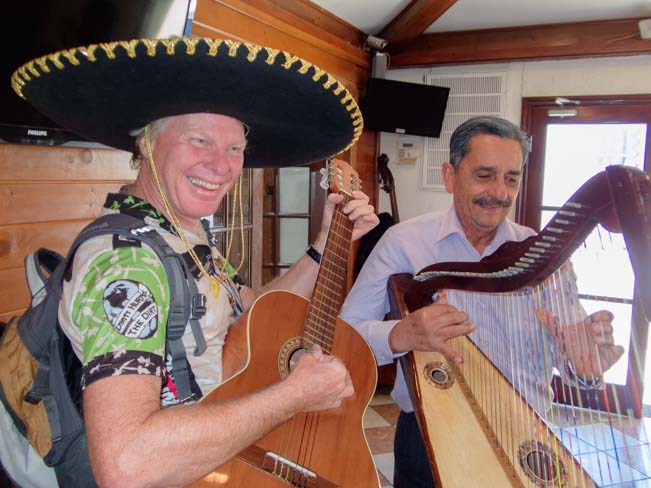
We got up to go, rubbing our aching tummies, and suddenly a waiter was carrying over two huge sombreros for us.
We put them on and cracked up.
The harp player placed his harp in front of us, and Jose took pics of us while everyone at the big party at the long table clapped and laughed. How fun!
Olé!!
Then someone handed Mark a guitar and he strummed a few chords.
What a total blast this was!
Mark finds a guitar in his hands and a sombrero on his head!!
We left to a chorus of cheers and found Fernando waiting in the parking lot. He unlocked the shed door and helped us disentangle our bikes from the rakes and shovels and buckets inside. We tipped him a dollar for his efforts.
Rolling back to the border on our bikes, we passed dozens and dozens of cars lined up to cross into the US. By now the pedestrian line was really long too.
In San Luis, bicycles go through the Sentri Pass gate (a special gate for people who cross the US border on a regular basis). This was awesome because there was never anyone in line at that gate!!
What a fabulous day… and no line for bikes at the border!
Our smiles went from ear to ear when we settled back in our little buggy after a great day in Mexico.
Note: We returned to San Luis to see Dr. Bernal and Dr. Avila for more dental work a year later in October 2016. Read the blog post here:
More of our Latest Posts are in the top MENU above.
For more info from other RVers who have gone over the border to get dental care, see the following two blog posts by Nina Fussing of WheelingIt HERE and HERE.
January 2016 – The desert RV scene around Quartzsite, Arizona, is a wild place in January, and has been compared to Burning Man in the Nevada desert and even 1969’s Woodstock in upstate New York.
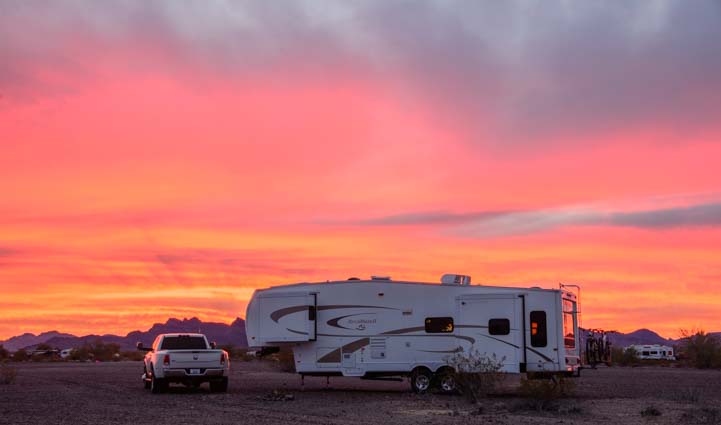
The sun winks at the RVs boondocked in Quartzsite in the early morning light
But the crazy Quartzsite RV insanity lasts longer, and more people go, and you don’t have to buy a ticket to be a part of it all. Plus — the crowd is decidedly gray haired.
Even though there may be some free love going on in a few rigs in Quartzsite, I can’t say I’ve seen Jimi Hendrix performing there. And rather than one huge bonfire, there are lots of small campfires.
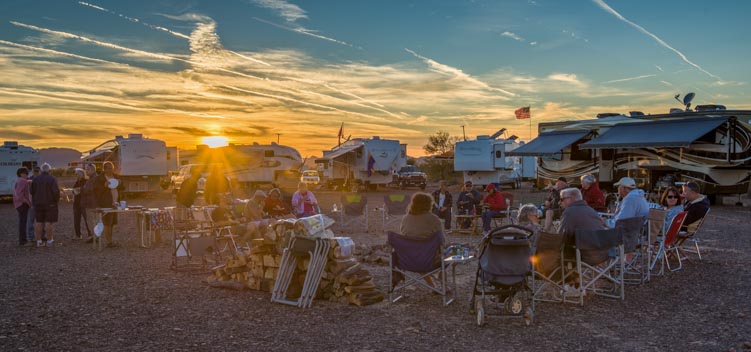
A typical scene around the campfire in Quartzsite
Of course, nowadays, it’s likely that a few faces in Quartzsite are the very same ones that were at Woodstock all those years ago, although they are probably a bit more wrinkled now, nearly 50 years later.
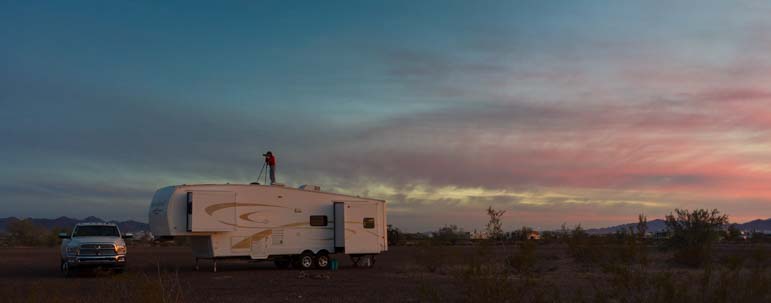
Quartzsite has its share of wacky people. Some even lug their tripod up on their trailer roof to take pics at dawn.
The fun thing is that it is open to anyone that can get there, and come they do, driving, pulling, and probably in the worst cases even pushing whatever kind of RV they can get their hands on.
Any and every kind of RV is welcome in the Quartzsite desert, from ordinary to off-the-wall.
A cool custom bus conversion we came across looked like a fabulous way to go.
Power and cargo carrying capacity to spare.
Some travelers forego the RV all together when they make their way to Quartzsite, and we were quite surprised to see a tent tucked between some RVs in the vendor area of the RV show.
If you can’t swing a rig with wheels, a tent will do the trick.
Getting up off the ground is good when it gets cold, though, and Quartzsite nights sometimes get down into the freezing zone in January. A vintage popup tent trailer we saw fit in just fine with the bigger rigs around it.
A popup can be just the ticket in Quartzsite
Some folks like to add a little class to the antique RV niche in Quartzsite, and we saw more than a few wonderful old Airstream trailers.
.
Going retro is cool, but some folks are handy and would rather build from scratch than deal with fixing and repairing an antique. We saw one rig that was totally custom.
.
Another one we noticed was not entirely identifiable.
Umm… what’s in the trailer?
At one point we found ourselves driving behind a Funny Car.
.
Out in the desert, the love of rollling wheels includes remote control ATVs that scurry around on the hard packed gravel between the rigs.
Whaddya do all day in the desert in Quartzsite? Play!!
Others take to the sky for a bird’s eye view.
What a great way to survey the scene!
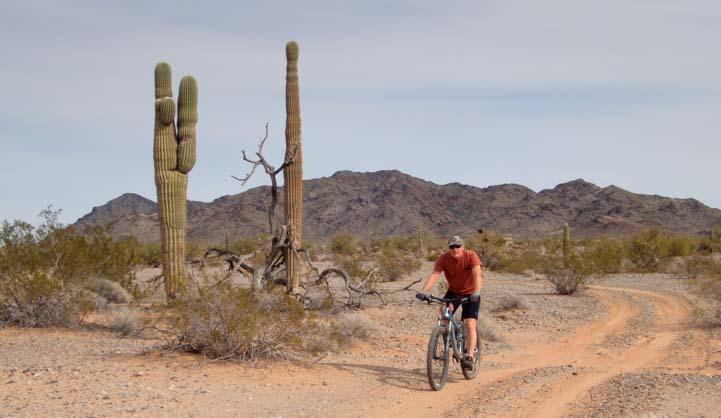
We took off on our bikes and found that just a few pedal strokes away from the RV madness are some pretty nice mountain biking trails. It can be a little soft and sandy in places, but the trails go on forever!
A little spin on the bike can take you far from the crowd.
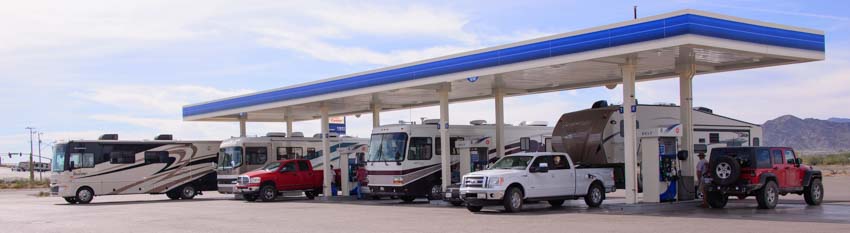
With all the RVs in town, there’s a constant RV traffic jam on the roads, and it’s not unusual to find the local gas stations filled with RVs.
RVs fueling up at the gas station.
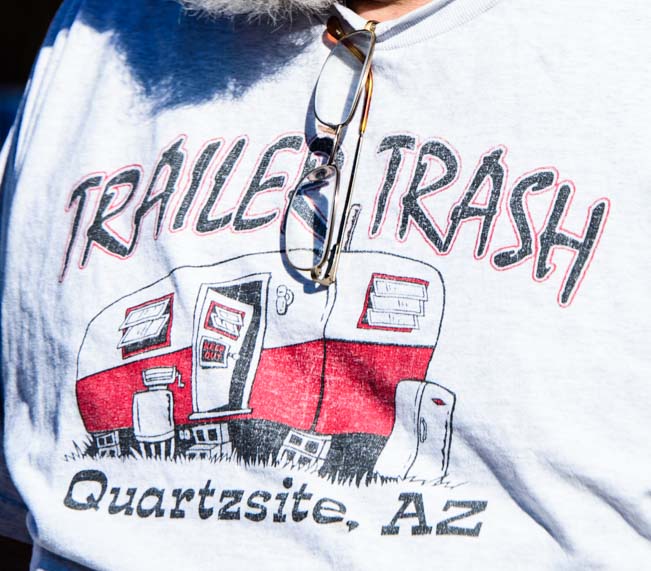
The Quartzsite RVing crowd is not proud. We all know what we’re made of and who we are. Wearing a t-shirt emblazoned “Trailer Trash” kinda sums up the sentiment in these parts.
.
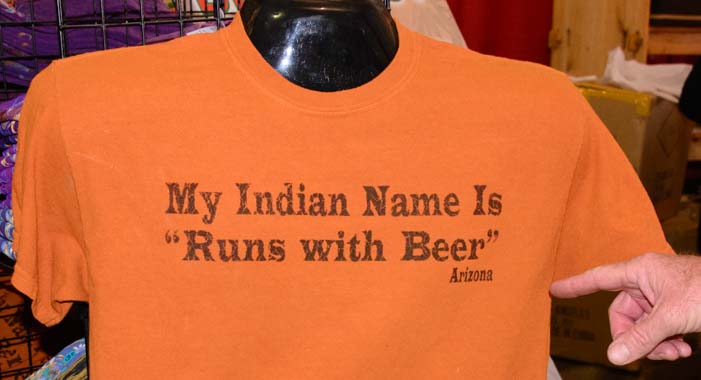
Well, maybe that’s a little harsh. “My Indian Name is ‘Runs With Beer'” may be closer to the truth for many.
.
Not everyone in town is a t-shirt type of guy, though, and the owner of Oasis Books on Main Street, Paul Winer, is famous for wearing nothing more than a thong.
He is very willing to pose for photos with the ladies at his store (I’ve done it too!), and he does his laundry — what little there is of it — right alongside all the RVers down at the Main Street Laundromat.
.
And it’s a good thing too because, as another sign at the laundromat says…
.
The bulk of the Quartzsite crowd is old enough to have grown children, so, it’s not surprising to see a sticker on the back of a Honda CRV that says, “I love my Grandog.”
.
Lots of grandmas and grandpas love their granddogs here, and a few love them to an extreme.
.
Not all RV pets are quite so pampered, though, and one Kool Kat we saw in the desert was keeping a close eye on what was happening within reach of his trailer.
.
No matter how you come to Quartzsite, there’s fun to be had in the desert, and we certainly had our share this year with the Hitchhiker fifth wheel gang.
.
At the end of our ten day stay, our new friends from the Hitchhiker group, Steve and Jean, brought out champagne for everyone, while Christine shared a plate of homemade chocolate covered strawberries fresh from her Mobile Suites RV kitchen.
Did anyone say we were roughing it out here?
Mark shows off Christine’s truly decadent chocolate covered strawberries while Steve pours champagne. This is living!
Everyone raised their glasses in a toast to the great time we shared.
Cheers…and Happy Trails til next year!
Almost every morning and evening we were in Quartzsite, the Arizona sunrises and sunsets lit up the sky in some of the most dramatic and colorful displays we have seen anywhere.
January 2016 – The focal point of the January RV migration to Quartzsite, Arizona, is the Quartzsite Sports, Vacation & RV Show. This is a wild event, attended by thousands, but the name is a little odd.
The show is geared primarily towards the lifestyle interests of the retired crowd and also has a fair bit to do with RVs. But it makes just passing references to vacations and has very little to do with sports at all!
Quartzsite and its RV Show are as quirky as the camels that greet people on the way into town!
It’s strange name aside, the Quartzsite Sports, Vacation & RV Show is a total hoot, and during the eight days it is open, thousands of folks from the North America’s senior set walk through the Big Tent in town and wander around the many booths scattered around the outside. If boredom sets in, there are loads of other flea markets and outdoor selling arenas in town that have trinkets, tools and household goodies for sale too.
Walking into the Quartzsite RV Show
The RV Show is a freestyle cross between a county fair and a flea market, and vendors set up shop all over the grounds to keep show goers well fed with funnel cakes and kettle corn and ice cream.
You won’t go hungry at the RV show!
Inside, we found the Escapees RV Club booth right away and got chatting with Mark Nemeth, the magazine’s technical guru who shares his wisdom in every issue in his column, “Mark My Words.”
We met up with RV tech guru Mark Nemeth (in the blue shirt) at the Escapees RV Club booth
Nearby was the tourism board for Alaska, and we snagged a map and learned a little about how to tackle an RV roadtrip to the far north.
Curious about Alaska? This booth has the answers!
Last year, we were charmed by a brief chat we had with Amazon Camperforce representative Nancy, and we were thrilled to find she was at their booth again. She and her husband, David, have worked for Amazon as ambassadors for their unique RV workamping program for several years, and her warm smile and enthusiasm for the program were as infectious as ever.
Even better, they travel full-time in a Hitchhiker Champagne fifth wheel trailer, and although they were camped near town for an easy commute to the show every day, one evening they came out to the Plomosa Road campsite in the desert, where the Hitchhikers were gathered, and joined the group for a potluck dinner.
I was thrilled to see David and Nancy at the Amazon Camperforce booth again this year.
The RV Show is more of a Home Show and Lifestyle Show than it is specifically an RV show, and there were lots of gadgets for sale that are handy in the home whether it rolls down the road or sits on a permanent foundation.
The Sweepa Broom looked like it could be super handy for RVers. Lots of show goers were carrying these brooms, and that had been the case last year too. In fact, last year the booth was shut down by the time we got to it because they had sold out, so we were glad to be able to catch the demo this year. It was amazing how thoroughly it swept up pet hair!
Some of the hottest selling items would be handy in either a rolling or stick built home.
The Sweepa Broom folks still had plenty of stock when we stopped by, but the Chilling the Most booth was plumb out of their product. I have no idea what they were selling, but it was obvsiouly very popular!
Oops… got to this booth too late!
There’s no segmentation or grouping by product type in this show. All the vendors are jumbled together. So we got a laugh when we saw the Vitamix blender booth right next to the National Park Service booth. Well, that’s the RV life, I guess: make a smoothie and go see the Grand Canyon!
The essence of the Quartzsite RV Show: Vitamix blenders and the National Park Service side by side.
Food prep is a big deal at this show, and lots of vendors were giving demos of various kitchen gadgets. The Primo Peeler definitely put my old fashioned carrot peeler to shame. It slices, it dices…
The Quartzsite RV Show is in large part a Home Show — and why not?!
A very popular booth offered a “detox for life” foot bath. Just soak your feet in a magic forumla in a bucket for a while, and you’ll detox your whole body. Meanwhile, the liquid in the bucket turns a frightening color.
Snake oil or life saving health product? Who knows — it’s Quartzsite!
Detox for Life – just soak your feet in this bucket for a bit.
At some booths, like the detox booth, we had to stretch our imaginations a little to figure out if they were aiming their product at the Sports people, the Vacation people or RV people in the show’s audience. The mini-flipper 4 wheel drive ATV toy and Urban Rail Car and Create A Track train sets really gave us pause for thought.
A toy for the grandkids — or for the kid in all of us!
Suddenly, it hit me. Most of the folks attending the show were grandparents — and they had grandkids to buy for. What could be better for the little tyke than a toy train or ATV?! Funny thing was, when we got back out to our desert campsite, we saw a guy — a full grown guy — playing with a flipper ATV he’d picked up at the show. I guess we’re all kids at heart!
Of course, lots of people have grandkids at home, but they travel with their little pooch when they go RVing. Many of them brought their furry friends along to the show.
Puppy love…
Even though the crowds were thick in the aisles of the show, lots of little dogs made their way from booth to booth in baby strollers.
It’s easier to brave the crowds from the protection of a stroller!!
Seminars were being given on various RVing topics.
We caught up with the folks at Wholesale Warranties too. A year ago we were not so sure how useful an RV warranty could be, but this year we discovered just how important it is to have one for an older RV — our $1,904 four year policy covered $6,700 of repairs in just over a year — so it was great to put some faces with the names of the good folks at this company.
We were also fascinated to learn about their new RV repair facility rating and review website called RV Repair Direct. Since they have a vested interest in having warranty repairs done correctly the first time, they are putting together a database of RV repair facilities where people can rate and review the service providers they have used.
We met the gang at Wholesale Warranties and learned about a new service they have.
What an inventive idea this database is. Lord knows, figuring out which repair shops are good and which aren’t is really important and not easy at all! As I chatted with founder and CEO Jeff Shelton (on the right in the above photo), I was really impressed with his energy and his many creative ideas and his enthusiasm for the RV lifestyle.
RV insurance companies were at the show too, and Progressive Insurance had a long line out the door.
Whatever Progressive was giving away, it had to be good. Look at that line!
And outside we found lots of RVs for sale.
In one area there were a bunch of used Prevost motorhomes for sale. New ones go for about a mil and a half, so we jumped at the chance to peek inside some used ones and see what it would be like to live in a six year old $650k rolling home.
Mark gets a feel for how “the other half” lives.
The Prevost tours were popular, but I think the ice cream vendors were the ones that were really raking it in. This year for the RV Show the weather was sunny and warm, and everyone seemed to be licking an ice cream cone!
Ice cream was a big seller!
Of course, as the afternoon wore on, the outdoor beer and burger venues began filling up too. In the morning when we had first passed the “Happiest Place in Quartzsite” on our way into the show, the seats were all empty. But by the time we left in the afternoon they were full!
The “Happiest Place in Quartzsite” !!
At the end of the day we relaxed with our new Hitchhiker friends around the campfire.
The RV Show is fun, but I think the real draw in Quartzsite is getting together with friends.
What a fun way to spend a few days in the middle of winter!
January 2016 – Before we went to Quartzsite this year, some soon-to-be full-time RVers asked us why it is that RV travelers go there. They were native Arizonans and they knew that Quartzsite is just a truck stop of a town on I-10 between Phoenix and LA. So why would such a dumpy little town swell from less than 4,000 people in July to something like a million people in January, almost all of them living in RVs?
Quartzsite, Arizona, is a gathering place for RVers of all kinds each winter.
We tried to explain about the January RV Show in town, and the 15 mile radius of retirees boondocking all around, and the huge rallies for owners of all kinds of RVs, from Montana fifth wheels to Alpine coaches and Safari motorhomes to dozens of other RV manufacturers.
We talked about the moveable feast of pot-luck dinners, and the campfire cocktail circles at sundown, and the huge outdoor movie screens that folks set up, and the crazy flags flying from all the RV roofs, and the light shows people put on in the dark on their RVs.
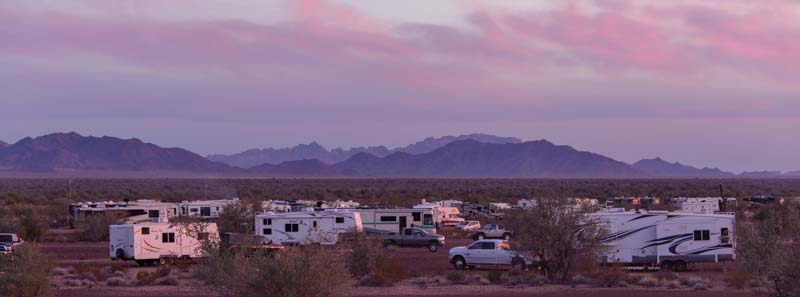
Quartzsite is best known for its wild RV boondocking scene in the desert.
“So it’s a social thing?” They asked. Well, yes, we realized. In a nutshell that’s what it really is.
Quartzsite is “The Gathering Place,” and it seems that almost everyone who is living in the southwest in their RV in January swings by for a day or a week or a month. Some even spend the whole season here.
There are RV parks in town with full hookups, and some folks stay all winter — or even all year!
There are all kinds of places to park an RV and to get together with friends. There are RV parks with full hookups, and there are enclosed camping areas called Long Term Visitors Areas (LTVAs) on BLM land near town with toilets and dump stations and water where you can stay for a modest fee. And then there’s the free desert boondocking on BLM land a little further out.
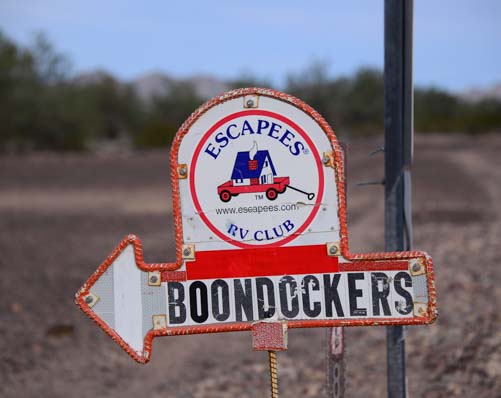
RVing groups and rallies of all kinds come to Quartzsite. Even the Escapes Boondockers “Birds of a Feather” group camps together in the desert
The Sonoran Desert in this corner of the state has a hard-packed gravel surface that is easy to drive on, and there is very little vegetation. So, you can drive your rig anywhere, in almost any direction, and park and set up camp. If you’ve got friends that are coming or if you are part of an organized group, all the better.
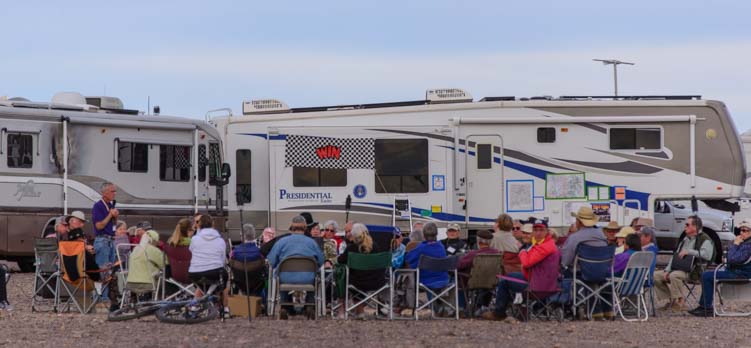
All kinds of groups gather together in Quartzsite each January.
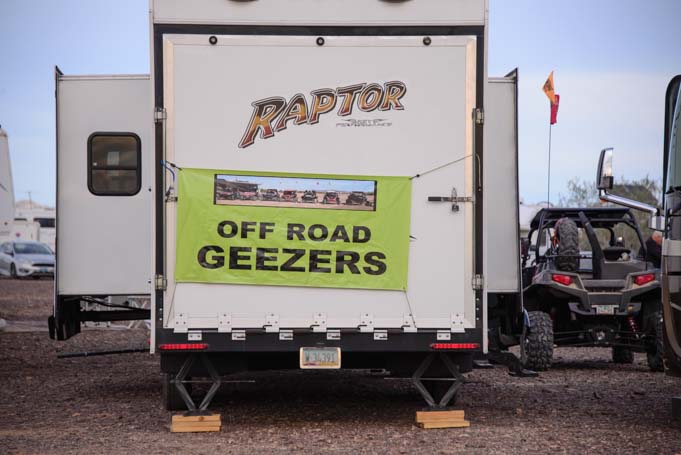
There are little signs all over the place pointing to where each social group has convened. The Escapees Boondockers stake out one area, the Off-Road Geezers stake out another, and the Gad Abouts and DV8’s take another. These are just a tiny few of the many dozens of groups we’ve seen.
Are you a Gad About? Park here!
The DV8’s were having a great time not too far from us
Some groups don’t have signs but just wave flags instead, and you have to walk over to the group and talk to them to find out what their group is all about.
A group of rigs flying a big yellow flag with a red crab on it really got us guessing.
Flags fly high from RVs all over the desert. American flag. Air Force flag. Crab flag??
“We’re Crabbers!” An old fellow told me. “We have small boats and trap crabs on the Oregon coast.”
And here they were in the Arizona desert doing the Quartzsite RV camping thing!!
Others just stake out a spot of their own without being part of an organized group. So it has always been for us.
We found a quiet corner and got set up.
However, this year, right after we unhitched our new truck and started leveling our trailer, a couple walked over and told us we were about 100 yards from the Hitchhiker fifth wheel gathering. They were all just beyond the next wash. Since we own a Hitchhiker fifth wheel trailer, they suggested we come on over for happy hour and meet the gang.
The Hitchhiker group was a great bunch to hang out with. And since Hitchhikers are no longer made, there was no problem joining in if you were in some other kind of RV. Two couples were in Mobile Suites!
What a fun group! They all knew each other from the very active Hitchhiker Owner’s Forum, a forum I haven’t frequented for many years since I first researched trailers before we went full-time.
No matter! When we got over there we were welcomed like family, and immediately handed paper plates and forks, and told to go grab some grub from the large table of sumptuous food. We joined the circle around the campfire and had a blast.
Over the next week we spent every afternoon and evening with this really fun crowd.
How cool to find that we were a short walk from the Hitchhiker gathering!!
Campfire storytelling is always a blast, and Lee and Christine regaled us with hilarious tales from their careers as dog trainers for Hollywood’s A-list stars. Steve, Jean and Pat shared great tips from their RV trip to Alaska last year.
Old salts Rick and Virgie told stories of their coastal and offshore sailing adventures between California and Mexico navigating with nothing more than a hand-bearing compass and a sextant back in the 80’s. We were amazed when they described entering the stunningly beautiful but dicey bay of Careyesat night, an anchorage that we loved but that’s so tricky that few sailors trouble with it.
There was a campfire and great food every night.
Our location was about 12 miles north of town on Route 95 and then east on Plomosa Road about 2.5 miles. There are a dozen turn-offs to both the north and south along a three mile stretch of Plomosa Road where you just drive out into the desert with your rig and find a place to park. There were little groups everywhere we turned.
RVers gather all over the place on the BLM land surrounding Quartzsite.
What’s fun is that the same groups claim the same trees and washes and fire rings in this part of the desert every year.
Little groups in camp chairs can be seen everywhere.
Interestingly, this is the corner where a lot of the single RVers hang out. The Solo’s and the Loners On Wheels were not too far from us, and the WINs (Wandering Individuals Network) were a really big group nearby.
The Wandering Individuals Network are a fun-loving group of single RVers.
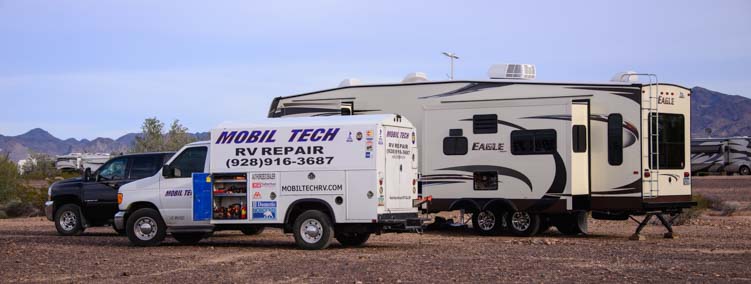
The funny thing is that with all of these people busy socializing in the desert with their RVs, there’s a business opportunity for all kinds of RV service people. A really funky undercurrent of the Quartzsite experience is all the vendors who capitalize on repairing and upgrading the RVs that show up in the desert. They take full advantage of serving this captive audience for a few weeks.
Not only did we see them in town, but they were zipping across the desert too, fixing everything from windows to awnings to electrical systems.
No customer is too far out!
Getting it done… in the desert!
Some guys are general practitioners, while others are specialists in one area of RV repair or another.
Nothing like getting the RV awning repaired while having a beer in the desert.
This desert camping is all dry camping, of course, and you can see just about every imaginable kind of boondocking setup out in the desert. Some folks have big, elaborate solar power systems on their roofs, and others have just a solar panel or two propped up on the ground, while many many others simply run a generator for a few hours a day.
Many RV rooftops sport solar panels, and there are all different configurations.
Naturally, cocktail conversation frequently turns to electrical systems, solar power and batteries, and how to keep them charged. Mobile RV service guys that specialize in electrical systems are lept busy all day long. A few solar installers in town have lines out the door as well.
Some mobile RV techs (like Phil & Ann’s RV) specialize in electrical work. What a workshop!
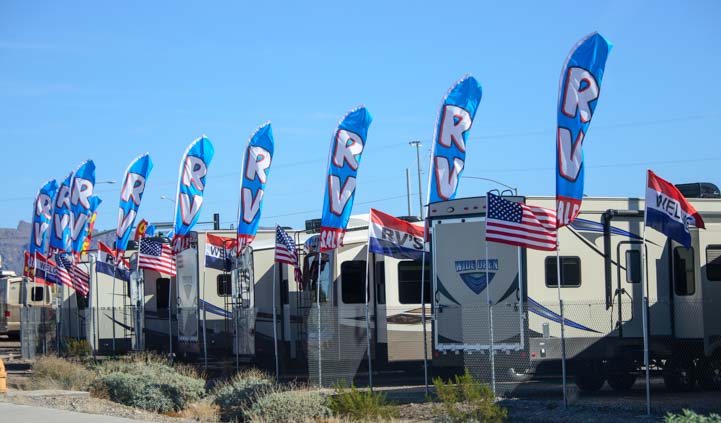
Lots of folks come to Quartzsite looking to upgrade their rig too, and RV retailers set up shop for a few weeks in town with temporary lots full of new and used rigs.
There are RVs for sale on every corner.
Lots of folks come to Quartzsite with dreams of finding a new rolling home.
For us, this was a really special Quartzsite year. Not only did we meet up with a great group of people, but the weather was pretty near perfect the whole time, with warm days and almost no wind (it can be very windy and dusty there!). Best of all, the sunsets were divine!!
Some of the sunrises and sunsets this year were truly spectacular
December 2015 – Before the holidays, we had the opportunity to enjoy a wonderful week-long stay at ViewPoint RV & Golf Resort in Mesa, Arizona. Even though our typical mode of RV travel is to boondock, which is decidedly more gritty than pulling into at an upscale RV resort park, we got a huge kick out of taking a brief time-out from our solar powered lives to enjoy the sweet amenities at this resort RV and mobile home community just outside the big city of Phoenix.
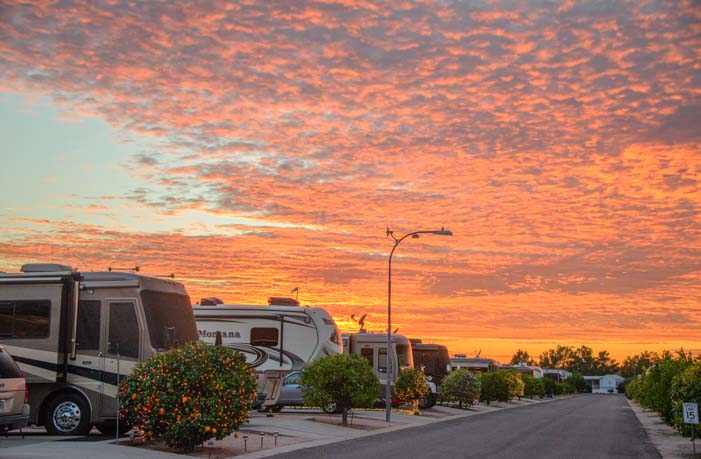
Pretty sunsets like this one ended every one of our days at ViewPoint RV & Golf Resort
It was here that we made the swap from our old 2007 Dodge Ram 3500 to our new 2016 Ram 3500 dually truck. And because the RV park is close to a Valley Metro Light Rail station, we were able to zip into town to see Alice Cooper in concert without having to worry about parking our big new truck in the city.
Our new truck poses for us in our campsite at ViewPoint RV & Golf Resort
ViewPoint RV & Golf Resort is a sister park to the beautiful and action packed Monte Vista RV Resort a few miles away. And, like its sister, it is a true resort community, complete with a lovely swimming pool where a water aerobics exercise class was going on when we arrived.
What a spot for some wintertime water aerobics!
As the name implies, this is a golf oriented resort, and for visitors and residents alike there is an 18 hole golf course just steps away from your front door!
A pretty fountain welcomes golfers onto the course
We aren’t golfers, but the course was being enjoyed by many. If there is a golf heaven on this earth, it has to be in the Sonoran Desert of central Arizona where each golf course you see is more stunning than the last!
An 18 hole golf course is just steps from the RV park
There are lots of other outdoor pursuits for non-golfers in this RV park, and as we explored the community on foot and by bike, we found pickleball courts and shuffleboard courts too.
The pickleball courts were busy!
Championship shuffleboard courts.
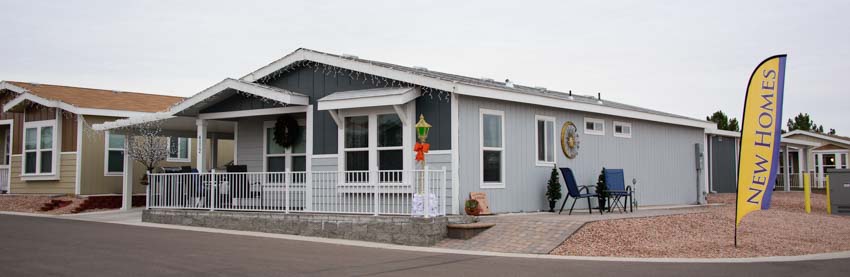
This winter snowbird community is largely made up of park model homes, and we had fun checking out the cute houses that line the lanes.
ViewPoint is a pretty community of park model homes that is fun to explore by bike or on foot.
A spacious RV park is located at one end of the community, and the sites are big and nicely spaced out. Each has a concrete slab. Most of the RVers we met there were staying for a few months or for the whole season.
Many of the rigs were actually vacant while we were there, because their owners had flown home for the holidays. But the few who were staying for Christmas said the whole park would be buzzing with activity from January through March.
Santa welcomes us to the ballroom and theater!
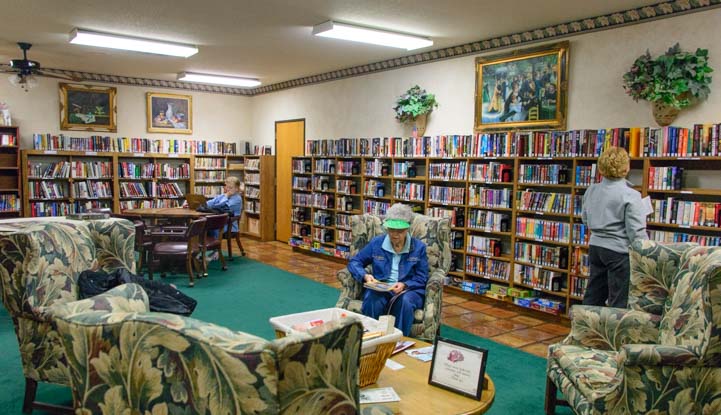
This park is really well appointed with amenities of all kinds, and I was quite surprised when I poked my head in one door to find a library loaded with books. This library is very popular, and every time I passed by, I saw several people either reading at leisure or scanning the hundreds of book titles on the shelves.
The library attracts readers with walls of books and comfy chairs
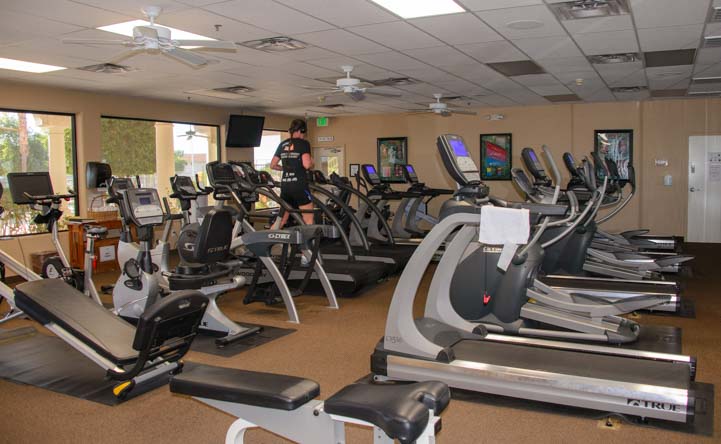
The gym was terrific and outfitted with excellent equipment, including one of my favorite machines that is really hard to find even in the biggest commercial gyms: a good quality rowing machine. Just outside the gym windows there is a hot tub, and we saw people soaking in it every time we hit the gym for a workout.
I really enjoyed my workouts at this gym — a “conventional lifestyle” luxury I miss!
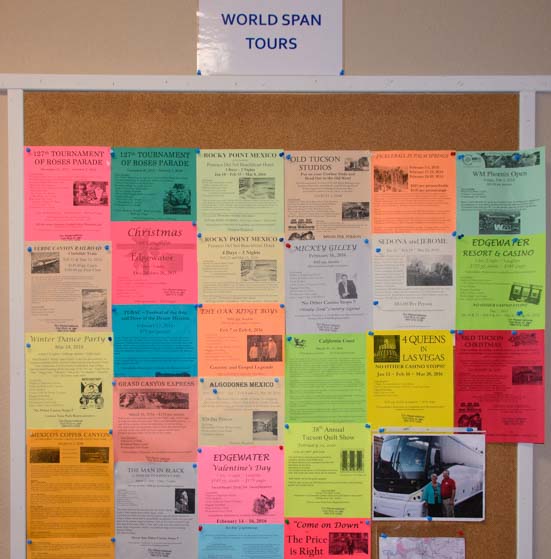
Along with arts and crafts groups and a photography club that produced a hallway full of truly stunning photos in the main building, ViewPoint RV & Golf Resort also offers a huge variety of excursions to nearby and not-so-nearby attractions. A bulletin board lists daytrips and overnight jaunts to all kinds of exotic places, from Rocky Point in Mexico, to Tubac, Arizona, to the Grand Canyon and Copper Canyon and even a trip on the Verde Canyon Railroad.
For those that want to see these special places but don’t want to drive their RV to each one, what a great way to do some fun traveling while using this RV resort as a home base!
Where do you want to go? This travel bulletin board is filled with inviting trips
ViewPoint RV & Golf Resort is a big community, and I was impressed that they have quite a few amenities right onsite, saving residents and visitors a car trip into Mesa. There’s no need to hunt down a hair salon somewhere in the city, because there is a hair salon located right on the resort grounds!
Walk to the beauty salon from your RV!
There’s also a really fun sports bar and restaurant next to the golf pro shop called Fat Willy’s. We wandered in late one afternoon to discover we had hit it on the best day of the week, Monday, when they offer $6 gourmet burgers and $3.50 pints of Kilt Lifter (a yummy Arizona craft beer). The place was so packed they had to set up extra tables and chairs in another room!
Fat Willy’s is a great little sports bar at the resort with delicious burgers at good prices
As one gal said to me during our stay, “If you’re bored here at ViewPoint, it’s your own fault, because there is always something going on!”
This is a popular place for snowbirds looking to get away from winter’s chill up north, and we discovered that lots of people come here along with friends and family who journey down from cold country for the winter.
When we were doing our laundry one day, we got chatting with a long-time winter resident and discovered she had purchased her park model home sight unseen with a phone call from Minnesota so she and her husband could join her sisters and their husbands who already had winter homes in the resort complex.
The community is expanding with new park model homes.
She was thrilled with her winter digs and just loved the community.
We also met several full-time RVers as well as former RVers who had purchased park model homes here either to establish a home base for their travels or because the time had come for them to hang up the keys.
While we were there, ViewPoint RV & Golf Resort was in the middle of a big expansion, with new park model homes going in and some of the common areas getting upgraded.
Having a cute little home base is a nice option for full-time RVers!
Staying at an upscale RV resort like this isn’t cheap, but we discovered the rates can be reduced significantly with a Thousand Trails Camping Pass.
The daily rates at ViewPoint RV & Golf Resort are $51/$65, in summer/winter while weekly rates are $306/$390 for the same periods with 20% off for Thousand Trails members. Monthly rates range from $1,097 in Jan-March to $806 in Oct-Dec to $519 in Apr-Sep., with Thousand Trails members receiving a 10% discount.
Sunset at ViewPoint RV & Golf Resort
For RVers who want to settle into this park for the most popular months of December to March, the Thousand Trails Camping Pass saves $409 over those four months, which nearly pays for the pass itself, making it possible to camp within the Thousand Trails network for very little during the rest of the year.
January 2016 – A lot of folks that have never been to Arizona think of it as a very hot and dry place. That’s true in certain parts of the state at certain times of the year, but it isn’t always so!
Snow and mist cover the mountains east of Phoenix, Arizona.
This past week the humidity level stayed above 80% for five straight days, and the rain fell relentlessly.
What a gorgeous morning on Roosevelt Lake!
The stunner of it all was that this moisture showed up as a beautiful blanket of snow in the mountains around the desert floor.
A lone saguaro cactus looks up at the snowy mountains in the distance.
This is a spectacular area at any time, but snow really sets off those mountains!
What a great reward after a soggy week in our RV. We threw open the windows, even though it was only 50 degrees out, and let the sun pour in!
Roosevelt Lake Marina – boating between snowy peaks!
This part of the desert can hit 120 degrees at the peak of summer, but the overnight lows have been flirting with the freezing point on the thermometer all this week. Nonetheless, the occasional die hard boater has cast off on Roosevelt Lake.
An enthusiastic boater takes to the water on the first day of sunshine.
A pack of coyotes lives nearby, and we’ve been hearing them a lot in the mornings and evenings. The other day we spotted one just a few feet away.
A pack of coyotes has been singing and yipping a lot around us lately.
What a gorgeous animal! I was delighted when he turned to look at me.
.
And the scenery wasn’t bad either!!
.
We were just loving the colors…
What a place!
We hopped in the truck to take a drive and were amused to see cars and trucks coming down from the mountains with snow on the roofs. There were winter warnings for drivers too.
When we crossed one mountain pass we could tell the snowplows had been busy the night before. Wow!
Snow doesn’t last long in these parts, so we snapped as many pics as we could.
So pretty.
This area is beautiful at any time of year, but the backdrop of the snowcapped mountains with the saguaro cactus and Roosevelt Lake was just fantastic.
.
.
Crossing the mountains on our way to Globe, the distant rippling mountain peaks were covered with snow.
This saguaro has upright arms. When one has a droopy arm, it’s often because snow or ice weighed it down for a while!
This was a wonderful fairy dusting of winter. Just enough to give us the beauty from a distance without having to shovel!
A tiny house on a hill…
The daytime temps warmed up to the low 60’s and the snow began to vanish from the peaks in no time. But what a neat few days we had here in “hot” and “dry” Arizona!!
The snow won’t last long, but it gave us a lovely winter interlude!
December 2015 – During our RV travels in central Arizona we took an outstanding volunteer-led tour of the ancient Indian “Upper Cliff Dwellings” at Tonto National Monument. We had already visited the “Lower Cliff Dwellings” on our own, as those are open to the public for exploration without a guide. But a visit to the Upper Cliff Dwellings can only be made if you take a guided tour.
The hike up to Tonto National Monument’s Upper Cliff Dwellings goes through some beautiful scenery.
The cost was just the price of admission to the National Monument ($5 per person or free with a Federal Interagency Pass or Senior Access Pass). But that low cost was deceiving — this was no ordinary tour!
The depth of knowledge and enthusiasm of our guide, Susan Treneer, as she taught us about these ancient Indian ruins was unbelievable, and our whole group was fascinated as we listened to her explain the theories behind the history of this special place.
The hike was uphill but not too strenuous.
A group of about eight of us gathered at the Visitors Center and then hiked the 3 mile round trip up the steep hillside to the ruins and back. We began by going through some lovely riparian habitat (wetlands) where sycamores and other hardwoods were still showing off their autumn color.
A sycamore tree just off the trail in a riparian area.
Periodically, Susan stopped us as we hiked to explain the different vegetation we were seeing and to talk about the people who lived in the Tonto Basin 700 years ago.
Susan pauses to tell us about the Salt River and the people who lived here centuries ago.
We climbed higher and higher on the hillside as we approached the cliff dwellings at the top, and the view of Roosevelt Lake grew more and more expansive below us.
The views of Roosevelt Lake were outstanding.
Right before we entered the Upper Cliff Dwelling ruins, Susan brought out photos of some of the astonishingly beautiful and intricate pottery that the people of this place had made all those centuries ago. They are called the Salado People by archaeologists today, named for the Rio Salado (Salt River) that they lived near and which was dammed up in 1911 to create Roosevelt Lake.
Susan showed us photos of beautiful Tonto Basin pottery made right here centuries ago.
The Salado people were extraordinary potters, and their pottery has been found as far away as the Paquimé ruins in northern Mexico, some 350 miles or so southeast of Tonto National Monument.
The people who built these ruins came down from Mesa Verde in southwestern Colorado and from other Colorado Plateau cliff dwelling communities.
Our guide, Susan, excitedly explained that no one really knows why the Salado built their homes in these caves so high up on the mountainside. She explained that the valleys were already filled with people living an agrarian lifestyle. Those old-timers had been raising cotton, beans, squash and corn in the Tonto Basin for 1,000 years already.
The adobe structures had roofs made of saguaro cactus ribs and juniper. These are original!
The cliff dwellers were the newcomers to the area. They may have been artisans who wanted to make a life selling their unique tricolor pottery. Or they may have been workers for the wealthier farmers who lived below them. No one is 100% sure!
The adobe homes, storage rooms and workshops were built right into the caves.
All that is known is that they came down from the Colorado Plateau, and traveled through the Kayenta, Arizona, area, and ultimately set up housekeeping in the Tonto Basin and stayed for about 100 years.
Susan was extraordinarily knowledgeable about the ancient southwest cultures.
Susan’s enthusiasm for the subject was infectious, and it struck me that she was absolutely loving her wintertime volunteer job with the National Park Service at this special spot.
For archaeology buffs, working at a site that is being actively studied by scientists must be a thrill.
In between describing the tools and other relics that have been found at Tonto National Monument, she also told us that archaeology has been her lifelong interest. She hadn’t studied it formally or been a professional in the field during her career, but now, as a retiree, she was able to work alongside scientists and archaeologists studying this site and stay on top of the most recent findings and theories while “on the job” with the National Park Service. How cool is that?!
Most members of our group had traipsed through ancient ruins in Mexico and Central America as well as all over the southwest.
Susan’s volunteer job requires 32 hours a week of work, and she has taken the position for a few months. In exchange, she receives an RV campsite with full hookups overlooking Roosevelt Lake. This may not sound like a very fair exchange if you multiply out the hours worked and the value of the campsite. Even if it were a resort campsite, like nearby Monte Vista RV Resort with its swimming pools, hot tubs, sports courts and art studios, the pay would equate to just $8.20/hour. However, there is a deeper meaning to doing this kind of work, and she was obviously thrilled to have the opportunity to learn about the ancient southwestern cultures in a professional setting and to share her passion with others.
The public can only see the Upper Cliff dwellings on guided tours given on weekends.
Susan told me she has volunteered for the National Park Service for several years and has held similar positions at a few of the most significant ancient cliff dwelling ruins sites across the southwest, including Mesa Verde, Chaco Canyon and the Gila Cliff Dwellings.
In one job, she didn’t work with the public but spent her days cataloging and storing ancient pottery. She said that having the opportunity to hold, examine and study 700 and 800 year old pots — some of them perfectly intact — was just thrilling.
These ruins were overflowing with artifacts and debris when they were first studied 100 years ago. In those days tourists were free to take home whatever artifacts they found lying around!
I asked Susan how she got started with the National Park Service, and she explained that when she started as a volunteer, she had to undergo an intensive 40 hour training class and also do a beginner’s stint as a campground host at Big Bend National Park (not her favorite line of work). But it was clear that the personal rewards she has found since starting work at the various cliff dwelling sites have been enormous.
The Salado people weren’t all that short — 5’6″ was average for men, the same as their counterparts in Europe – but the floor of the caves has built up over time.
Her enthusiasm for all things ancient and puebloan — like the small “T” shaped window that looked out from the window onto modern day Roosevelt Lake where the free spirited Salt River once irrigated the farmlands — was truly infectious.
Lots of folks think “work camping” is simply working as a campground host checking people in and out of a campground or cleaning the bathrooms. But as I learned from Susan, if you have a passion for a particular field of study that is a focus of a particular National Park, like the puebloan culture and associated archaeological ruins, volunteering is a fabulous way to apprentice yourself to get hands on experience and learn everything you can.
Susan pointed out a “matate” grinding stone that remains on site.
When Susan started, she was given a two page reading list of books to study. She was thrilled. “I like the intellectual stimulation,” she said. She wanted to spend her retirement not just traveling but learning new things and expanding her horizons in every way.
Corn was similar but a bit smaller back then. This corn cob is 700 years old!
More than once she mentioned the names of the archaeologists who are her favorite mentors. They are pioneering new work on the origins, migrations and lives of the ancient people of the southwest, and some of their theories challenge those of the researchers of prior decades. So, their work is new, their ideas are fresh, and they are breaking new ground in understanding what the earlier people of the southwest were really all about.
A corn cob got mixed into the adobe mud during construction and ended up in a wall!
We were totally impressed by the high quality of this tour. It felt like we were on a guided field trip with a true scholar. Susan had brought materials with her to show and instruct us, and she pointed out relics that were found at the Upper Cliff Dwellings and remain onsite and that the public can’t see without a guide. Best of all, she gave us insights into the lives of the people of an earlier time.
The remains of a shovel used by archaeologist Charlie Steen during the 1930’s excavation of these ancient ruins.
Perhaps even more important, she opened our eyes to the kinds of volunteer work that are possible within the National Park Service and on public lands in general. It isn’t always just cleaning up after tourists!
Susan did say, however, that there is a lot of competition for the premium volunteer positions, and that you have to build your credentials and your resume, just as you would with a paying job. After all, they aren’t going to trust just anyone off the street with handling and cataloging priceless pottery that is centuries old! But once you get yourself established in the system, there are intriguing opportunities to learn and to share — and to get an RV campsite with a view too boot!
Looking out over Tonto Basin from the back of the cave
If you have a chance to travel to central Arizona with your RV, take a trip to Tonto National Monument in the Tonto National Forest and see these wonderful ruins.
If you are lucky enough to be able to RV seasonally or full-time as a retiree, perhaps you too will pursue a lifelong interest by taking a short term volunteer position on America’s public lands!
Volunteer.gov – The website for finding volunteer workcamping positions with the National Park Service, US Forest Service, Bureau of Land Management and many other public land agencies