Casita Travel Trailers – Lots of RV in a Tiny Package

We have always admired the little travel trailers made by Casita, and two days ago, while buzzing down the freeway between Dallas and Houston, we both did a double-take when we saw a slew of them lined up on the side of the road. A huge sign above them said “Casita Travel Trailers.”

We had no idea these wonderful trailers were made in Texas! What a perfect opportunity to check them out and get a factory tour.

Casita Travel Trailers

Look! It’s Casita Travel Trailers!!

We turned our buggy around and somehow squeezed it into their front lot (which is just the right size for Casitas), and jumped out to prowl around the lot. There were dozens of brand new Casitas lined up, and each one had an owner’s name printed on a window sticker.

Casita travel trailer on the dealer lot

These are very solid and well made little trailers.

When we poked our heads in the door of the building, there was a flurry of activity going on inside. At least three couples were walking in and out of the four trailers on the showroom floor, and several sales people were in cubicles along the walls, filling out order forms and finalizing the paperwork for trailers being picked up. These things are Popular!!

Casita Travel Trailers front door

Casita Travel Trailers World Headquarters

“Feel free to look around,” a saleswoman named Carla told us. “I can give you a factory tour in a few minutes after I sign off the paperwork for a couple that just came in to pick up their new Casita.”

Casita trailer showroom

There were four trailers on the showroom floor, and we admired every one!

Casitas are sweet little trailers that are extremely well built. They range from 13′ to 17′ in exterior length end-to-end. “Our 13′ model gets the most inquiries,” she said, “but most people end up buying the 17′ model.”

17 foot Casita Trailer interior

The Freedom model has two captains chairs

There are four interior plans for the 16′ and 17′ models, and several have a king bed option! The Freedom model has two captains chairs and looked really inviting. “That model gets a lot of interest,” Carla told us when she joined us a few minutes later, “But most people end up buying a different floorplan because those chairs are a little impractical.” I sure liked her straight forward approach!

17 foot Casita Freedom Travel Trailer

Some models have furniture that folds into a king size bed!

There are lots of other options for these trailers too, including fresh water tanks as big as 25 gallons, a microwave, and a furnace. Virtually all Casitas are special ordered by the buyers who will be using them. Winter is the slow season, Carla told us, but they keep building trailers even when orders slide. Some winters they end up with four or five trailers that weren’t special ordered, but they’re always gone by spring!

Prices for new Casitas range from around $14k to $20k.

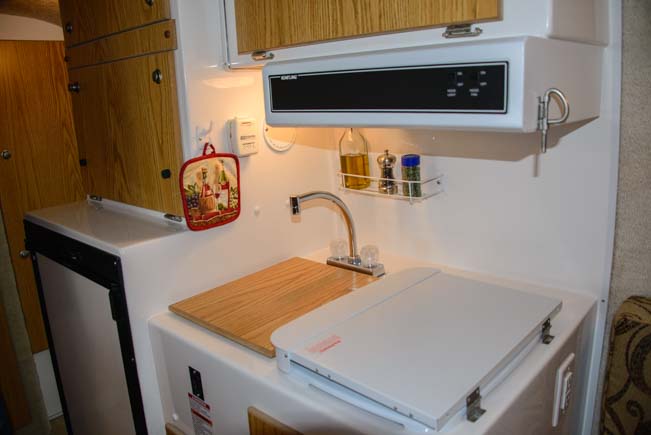
Casita Travel Trailer kitchen

The kitchen is small, but it has all the things you need to make a good meal.

Casita doesn’t have a dealer network. Instead, they have a dealership in the front of their building, where all the selling is done, and they have a factory out back where everything is made. “We build 14 Casitas a week,” Carla told us, “and it takes about two weeks to build one from start to finish.” That means there are about 30 on the line at any one time.

Casita Travel Trailer at the factory

A brand new Casita peeks out of a bay at the factory.

Out back, the factory was absolutely humming. Most of the employees have been with the company for at least 10 years, and since the company’s founding 25 years ago, Casitas have grown ever more popular. We couldn’t take any pics in the factory, but it was a great scene. Trailers surrounded us on all sides, each in various stages of completion. They are rolled by hand from station to station down the line! Outside a small tractor wheels them around with ease.

Casita travel trailer being towed by a tractor

Casitas are pretty easy to maneuver around the lot!

The top and bottom of each trailer is a molded fiberglass shell, and the two halves are joined with a bonded seal that is fiberglassed in, much the same way as our sailboat was constructed. The final testing stage was most impressive. Each Casita takes a 30 minute shower at full blast while a technician checks every square inch inside for leaks. They had shower nozzles aimed at each window and the door as well as the roof. How amazing to watch a Casita getting totally drenched by a virtual hurricane!

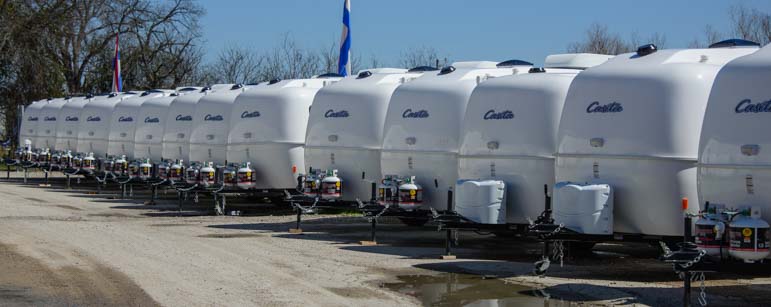
Casita Travel Trailers lined up at the factory

A storehouse full of future camping memories!

Folks sometimes ask us how to “test drive” the RV lifestyle. Without a doubt, the best way is to get a small rig and go do some camping. Our first RV was a popup tent trailer.

The Casita is a wonderful first RV, because it is a very well built trailer that has all the functionality of bigger rigs, but doesn’t require a big truck to tow it (they weigh about 2,500 lbs) and doesn’t require a lot of space to store.

Couple a Casita trailer with a portable solar power kit and you can learn all about boondocking and your rig will fit comfortably into any campsite anywhere! When you’re ready to upgrade, these popular RVs undoubtedly hold their value better than most.

Subscribe
Never miss a post — it’s free!

For more info about these fun trailers:

Related Posts:

Our most recent posts:

More of our Latest Posts are in the MENU.   New to this site? Visit RVers Start Here to find where we keep all the good stuff. Also check out our COOL NEW GEAR STORE!! *** CLICK HERE *** to see it!

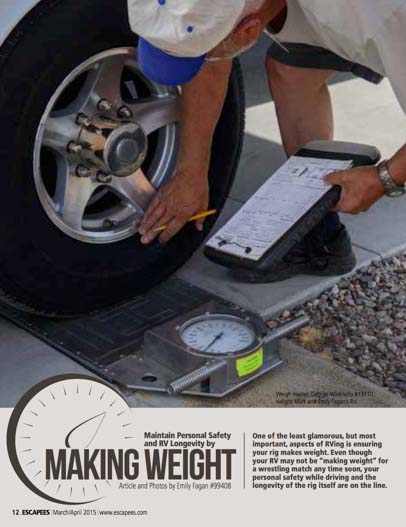
“Making Weight” With Your RV – Escapees Magazine Feature Article!

Maintain Personal Safety and RV Logevity by Making Weight

Escapees Magazine March/April 2015
“Making Weight” by Emily Fagan

GVWR, GAWR, Pin Weight and GCWR — oof, what is all that stuff?

The March/April issue of Escapees Magazine features our article “Making Weight” which explains what to look for when you set out to weigh your RV.

It’s easy enough to pull onto a truck scale to get an approximation of what your rig weighs, but it turns out that not all scales and weighing methods are the same.

Also, for those who tow their rolling home behind them, deducing the pin weight of a trailer after getting the rig weighed can be very confusing.

To address those RV weighing subtleties, Escapees RV Club offers a special program called Smart Weigh at several locations around the country.

We had our buggy weighed at the Escapees North Ranch RV Park in Congress Arizona, and besides learning a lot about why weighing an RV is important, we were a little dismayed to discover that we needed to put our fiver on a diet!

The editors at Escapees Magazine have been kind enough to allow me to share the article here:

Maintain Personal Safety and RV Logevity by Making Weight

Join Escapees RV Club is a multi-faceted club that offers a huge range of services for RVers, from discount RV parks to rallies and gatherings of like-minded people (their big rally, Escapade, is taking place in Tucson right now!), to their wonderful bi-monthly magazine, to domicile and mail forwarding services, to the SmartWeigh RV weighing program.

Luckily for newcomers, the annual membership to Escapees has been reduced to $29.95 from nearly $60 in the past. We consider this a bargain to a part of an organization that supports our hobby and lifestyle and that publishes one of the finest RV magazines in the business.

Our most recent posts:

More of our Latest Posts are in the top MENU above.

Subscribe
Never miss a post — it’s free!

Click these links for more info:

See more of our published work in the RV and sailing industry in our Press Room page.

Slip Sliding Away – An Ice Storm in Texas

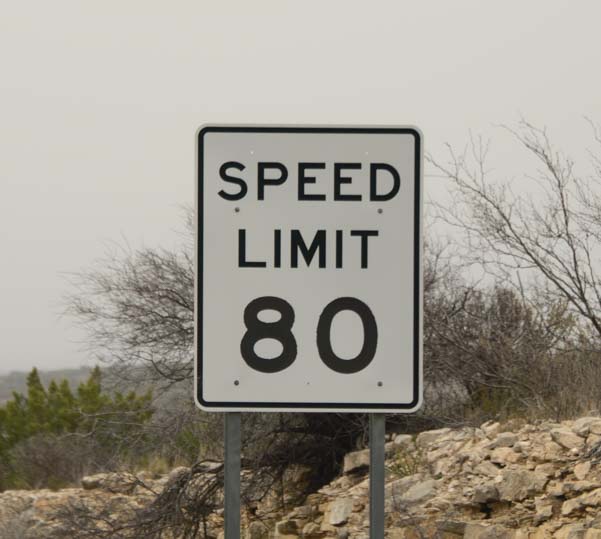
Many freeways in Texas are wide open roads where high speeds can be great fun. The 80 mph speed limit, with its unwritten 10 mph grace zone above that, is a temptation for many. We prefer to jog along at 60 mph in the right lane when we’re towing our house around, but our slow speeds put us in the minority in this part of the country.

Texas Speed Limit 80 mph

Texas highways move at a good clip!

Last Friday, a nasty winter storm swept through the Dallas/Fort Worth area, sending trucks and cars careening off of the freeways on a virtual skating rink. We first heard of the chaos in the small town of Marathon where we saw frightening images on TV at a gas station and listened to scary tales from motorists seeking safe haven on their way from Dallas to Big Bend.

Texas driving in ice storm

We drive through the remnants of a vicious winter storm 2 days earlier.

We had hightailed it out of Big Bend National Park after enduring below freezing temps for 48 hours. When we got onto I-20 about 100 miles west of Fort Worth, we began to see the remains of the ice storm from two nights before. The trees were filled with ice, and mist hung heavy in the air. A Winter Weather Warning was in effect for another incoming storm due to arrive the next day.

Winter Weather Warning on Texas I-20 freeway

Ugh…we won’t be warm any time soon!

I began snapping pics as we drove, just to keep myself occupied, and a small Beer sign in the wintry woods made me smile.

Beer sign on the side of the highway

A welcome sign on a lonely highway

This stretch of freeway is basically a truck route, with the occasional car or RV filling in around the fringes. Trucks were everywhere, ahead of us and behind us.

Truck traffic on I-20 west of Fort Worth Texas

I-20 is a major truck thoroughfare.

These guys don’t mess around, and they seem to view the high speed limit as an open invitation. And why not, when you have a tight delivery schedule to keep? We were passed by one semi-tractor trailer truck after another until we felt like the old grannies of the road.

Trucks overtake us on I-20 in Texas

Truckers get impatient with our slow little buggy.

When an “Oversize Load” truck passed us like we were standing still, and remained in the left lane until it vanished from sight ahead of us, all I could think was that we were experiencing the modern day Wild West of Texas out here on the freeway.

Oversize Load passes in the left lane on the highway

An “Oversize Load” passes us and stays in the left lane until he disappears out of sight.

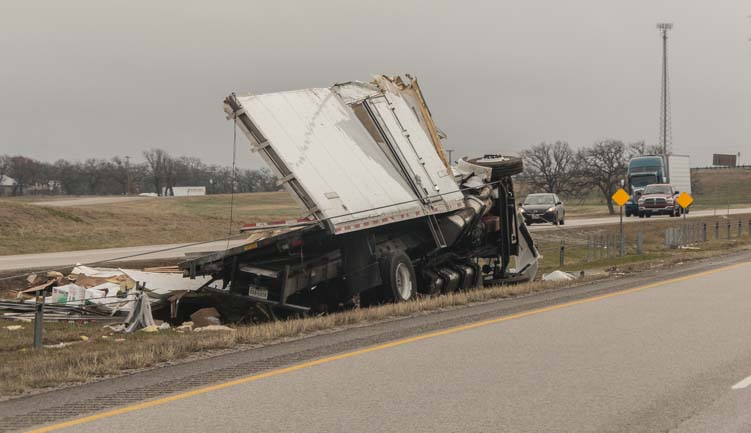
But what unfolded next took us both by surprise. The ice on the trees and mist in the air had been just an introduction to the pandemonium and mayhem that had taken place here on that fateful Friday two days prior on I-20. While scoping out my next pic, Mark suddenly said, “Look at that!”

Overturned semi tractor trailer truck on I-20 in Texas

Holy smokes — it’s a semi-tractor trailer on its side!

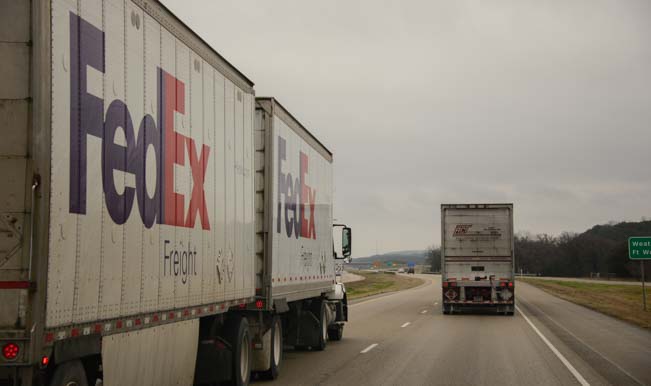
It was an overturned semi-tractor trailer that had obviously been one of the victims that slid off the road on the ice. A few minutes later a Fed Ex truck facing the wrong way in the median caught our eye.

FedEx Ground truck stranded on I-20 in Texas

Hey, there’s a FedEx truck — was the driver okay?

The front end appeared to be smashed. Mark whipped his head around as we passed it and noticed a huge hole in the windshield on the driver’s side.

Gulp.

A mile further on we saw more.

Freightliner truck rollover on Texas I-20 near Eastland

This is crazy! Another truck on its side!!

Now our eyes were popping out of our heads. We rarely see wrecks on the highway, and especially not abandoned, mangled trucks.

Signs ahead made us slow down. There was a 6% descent and the word “SLOW” was painted right on the freeway.

6% grade on interstate I-20 in Texas

A fast descent ahead!

Slow sign painted on the pavement of I-20 in Texas

If you missed the little yellow sign, here’s a big one right on the pavement!

But it probably wasn’t possible to heed these signs on the fearful night of the ice storm. More wrecks lay ahead.

Semi tractor trailer truck stranded on I-20 after Texas ice storm

We saw images of this truck later on in news reports.

Truck rollover on I-20 in Texas near Eastland

Yet another rollover a few miles further down the highway.

At the last moment Mark spotted a second Fed Ex truck stranded by the side of I-20. He leaned back as I snapped a pic out his window.

FedEx Ground trailer stranded on Texas I-20 after ice storm

FedEx was not having a good day that day…

By now I was perched on the edge of my seat, my mind racing as I tried to imagine what the scene had been like in the dark with snow falling and black ice everywhere. Now I understood why those people back in Marathon had been so rattled as they talked about what they’d experienced on the road that night.

Suddenly there were lots of brake lights ahead of us. We slowed to a crawl and were herded off the highway for a detour.

Brake lights ahead on the freeway interstate I-20 west of Fort Worth Texas

The freeway comes to a halt ahead of us.

As we climbed a frontage road and looked down at the empty freeway next to us, we saw a semi-tractor trailer that had just been raised up from its side. Its cab was jacked to one side as if it had a broken neck. There were three wreckers and countless people in vivid orange working to get it removed.

Freightliner semi-tractor trailer being removed from I-20 in Texas

As we detour around I-20 on a frontage road, we see three wreckers removing a semi-tractor trailer.

In the end, we counted ten abandoned truck wrecks and countless stomach-turning skid marks in the dirt going into the ditches by the side of the freeway. Looking for info later, we thought for sure we’d find dozens of news stories about the bedlam on I-20 around Eastland from that terrifying night, but this area had been a secondary story. The scenes on I-35 and I-75 around Dallas had dominated the news for that storm instead!

Eventually, the wrecks subsided and I sat back in my seat, rather stunned by what we had seen. Just then, as if to break our mood and make us smile again, an antique hot rod appeared, headed in the opposite direction.

Antique hot rod car on interstate I-20 west of Fort Worth Texas

Finally, something to smile about — an antique hot rod!

And so it goes, driving the wilds of Texas. It’s a jungle out there!

Our most recent posts:

More of our Latest Posts are in the top MENU above.

Subscribe
Never miss a post — it’s free!

Related Posts:

Acapulco to Huatulco – A Disturbing Passage

“RV Open Road” Feature – RV Waste Management Tips

Lippert Components, the company responsible for many trailer frames (including the one on our fifth wheel trailer) and the manufacturer of lots of other essential RV gear — from doors to windows to axles — is putting together a new RVing publication called RV Open Road.

Lippert Components Logo

Their blog has been up for a while, and it offers lots of tips and tricks for RVers. RV Open Road will soon be published in a print magazine edition as well, and it will be available for free at RV dealerships and supply stores across the country.

A little while ago Lippert Components reached out to us to write an article for them on RV dumping procedures and tips. Today the article was published on their blog (it will also be featured in the first print edition of the magazine):

RV Waste Management Tips to Minimize the Gross Factor

RV Waste Managment Tips for RV Open Road

Some RV dump stations are quite scenic — but Mark still makes a face when he puts on those rubber gloves!

The online world is an amazing place, and we got hooked up with Lippert Components almost a year ago on Google+.

While most of our social media contacts are current and future RVers, it was a hoot to find ourselves in a Lippert Components G+ circle and to be able to give them a quickie shout-out, “Hey, we live on your frame!!!”

Ironically, this is the third RV Dump Tips article we’ve written (the first two were for Trailer Life and Motorhome Magazine), and we’ve also got our own RV Dump Tips page on this site.

I’m not sure we’re specialists on that topic (yikes, what kind of credential would that be?), and I’m a little afraid of developing a reputation (I was quite taken aback when a friend of mine referred to them as my “potty articles”), but it is an important part of RVing that we just can’t ignore.

Happy reading, and congrats to Lippert Components for their new offerings to the RV community.

Our most recent posts:

More of our Latest Posts are in the top MENU above.

Subscribe
Never miss a post — it’s free!

Edge Evolution CS Tuner Review – Peak Truck Performance!

The engines in most cars and trucks are computer driven these days, but the installation of an engine tuner puts the driver in the driver’s seat instead. An engine tuner, or programmer, gives the driver the ability to fine tune the engine’s efficiency and performance by manipulating the computer’s input parameters to suit the driving task at hand.

Since 2007, we have lived year-round in a 14,100 lb, 36′ 2007 NuWa Hitchhiker fifth wheel trailer. For eight years, the truck we used to tow this big trailer was a 2007 Dodge Ram 3500 Single Rear Wheel Long Bed truck. Half of our miles driven, we towed the trailer. The other half, we drove it around town with nothing in tow and a few hundred pounds of cargo the bed of the truck. Once in a while we threw in an off-road adventure just for fun.

2007 Dodge RAM 3500

Our 2007 Dodge RAM 3500 single rear wheel truck

When the truck had 85,000 miles on it, we installed an Edge Diesel Evolution CS tuner, and what a world of difference that made to our driving experience, not only when we were towing but also when we were driving the truck around without the trailer attached.

In a nutshell, it has:

  • Increased our truck’s power
  • Improved our gas mileage
  • Given us a readout for the transmission temperature.

And it was an easy installation to boot.

We also installed an optional companion product, the Edge EAS Exhaust Gas Temp sensor which gives us another piece of crucial temperature data when we are towing under heavy load. This is not a mandatory installation.

We couldn’t be more pleased with these upgrades!
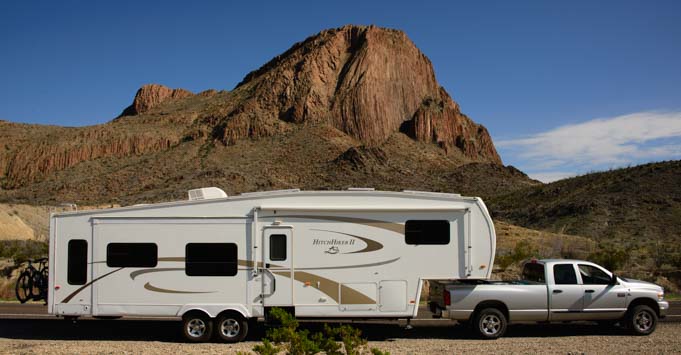
Big Bend Texas Bound

Our truck with our fifth wheel trailer attached.

This is a long post, and you can skip down the page to the following sections:

1. Why Install an Engine Tuner?
2. Edge Evolution CS Tuner – Tested and Validated
3. Installing the Edge Tuner
4. More POWER Driving in the Rocky Mountains
5. More TEMP DATA Towing in the Rockies
6. Better MPG – Fuel Efficiency Improvements, Towing and Not Towing
7. Additional Exhaust Gas Temperature Sensor Installation
8. Other features of the Edge Evolution CS tuner

1. Why Install an Engine Tuner?

We first became interested in the idea of installing the Edge Evolution CS tuner when Mark saw an article in the October 2014 issue of Diesel Power Magazine (“Tested, Proven, Validated — Edge’s DPF-On Tuner Walks the Walk”). This article discusses the improvements the tuner had made on our exact model truck (well, a 2009 rather than a 2007, but with everything else virtually the same, including the mileage!).

The Edge Diesel Evolution Tuner works on Ford, GM/Chevy and Dodge RAM.
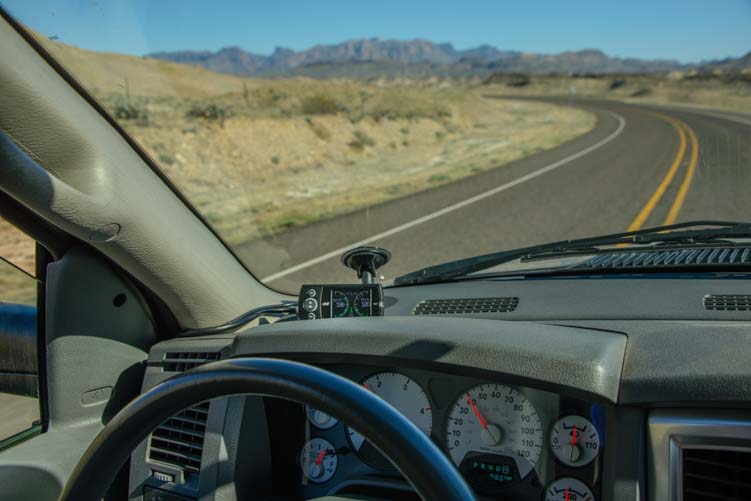
Edge Evolution CS Tuner mounted on the dashboard of a Dodge RAM 3500 truck

The Edge Tuner is mounted on the windshield, low enough not to restrict visibility but still easy to see.

Why install a tuner? It lets the driver fine tune the engine performance and boost power when needed

The beauty of the Edge programmer is that it doesn’t change anything in the engine permanently. It simply gives the driver the ability to fine tune the engine for its specific job at the moment, whether that is towing a big trailer, carrying a heavy load in the bed, racing off-road, or driving around town.

Light duty diesel trucks (i.e., Ford 250/350, Chevy 2500/3500 and Dodge RAM 2500/3500) are built for many uses, from towing heavy horse and RV trailers, to off-road racing, to driving across town and across country carrying big loads.

The on-board computer of every model truck is programmed at the factory to be able to do each of these things pretty well. However, it is impossible to program the computer to operate the engine at peak performance in all conditions. To make things worse, the truck manufacturers don’t provide the driver with a way to optimize the engine’s performance or to monitor some of the data the computer has already gathered.

Much of the truck computer’s capabilities and data remain inaccessible to the driver.

This is where the Edge tuner comes in, because it allows the driver to fine tune the engine for the immediate job at hand.

The idea behind the Edge tuner is to put the programming power into the hands of the driver, and to provide gauges for monitoring much of the data that the engine’s sensors detect. The Edge tuner can program the truck’s computer to maximize towing power or maximize non-towing fuel efficiency, depending on the kind of driving you are doing that day. It can also set the truck’s computer back to the stock factory settings, which is important if the truck is going into the shop for repair.

Because nothing mechanical is modified or tampered with, this means that nothing whatsoever is lost by installing the Edge tuner, but a whole lot is gained.

Why install a tuner? It gives the driver more detailed engine & transmission temperature data

We were intrigued by the Edge tuner because the installation appeared to be very easy, and the results were absolutely terrific. We tow our big fifth wheel trailer over huge, nasty mountain passes in the western states on a regular basis in the summertime, often tackling 10% and 15% grades on secondary roads. A little more towing power would be awesome!

What’s more, the tuner displays temperature data that the truck’s computer already has but that the truck manufacturer doesn’t display on the dashboard gauges. All this data is readily available via the OBD-II port (“On Board Diagnostic”) under the dashboard, you just have to plug into it. This is what the Edge programmer does — it is totally “plug-and-play.”

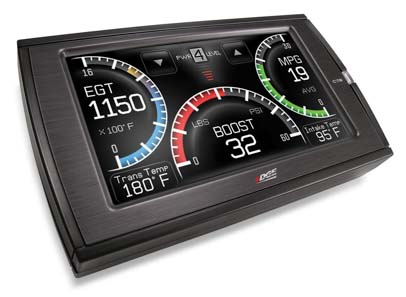
Edge Evolution CS Tuner programmer for diesel trucks

In this image, the tuner is set up to display three different types of temperature data:
Engine Coolant Temp (left), Exhaust Gas Temp (middle bar), Transmission Fluid Temp (right).
From the factory, most trucks display ONLY the Engine Coolant Temperature.

So, the Edge tuner would allow us to monitor the transmission temperature as we drove over mountain passes. This is vital data that is not accessible with our standard engine temp gauges.

Installing a companion product, the Edge Products EAS Exhaust Gas Temp sensor would let us monitor the exhaust gas temperature as well. Data from this optional sensor is shown in the middle gauge in the above image.

Having this extra information would allow us take action if something other than the engine coolant temperature overheated. It would also keep us better in touch with what was going on in the engine, in the event that the engine coolant temp was within an acceptable range but some other part of the truck’s propulsion were overheating. That scenario doesn’t seem possible, but read on…

You see, the factory installed engine coolant temp gauge in the truck cab tells only part of the story!

Why install a tuner? It improves the truck’s Fuel Efficiency (MPG)

We’ve always wished for a little better fuel mileage, both towing and when we are driving around town without our house attached. The tuner’s Level 2 programming mode promised improved fuel efficiency in non-towing conditions.

As it turned out, the tuner has increased our truck’s fuel efficiency in all situations.

What about the truck’s warranty?

A tuner (or “programmer”) does not permanently modify the truck’s computer or engine. There are “chips” on the market that make a permanent modification, but tuners and programmers don’t fall into that category.

We have called a few Dodge dealerships, and they have all assured us that if we had a truck that was in warranty (ours is not), they would service the truck even if it had an Edge tuner installed in it. Their recommendation to us was to reset the Edge tuner to “Stock” and then unplug it from the OBD-II port under the dashboard before bringing it in for service so they could properly analyze the engine (they use OBD-II port for their diagnostics).

The dealerships did say that if they found service was needed because of the presence of the Edge tuner (for instance, the tuner failed and shorted something out), they wouldn’t warranty that work, but they said the Edge tuner itself would not void any warranties.


2. Edge Diesel Evolution Tuner – Tested and Validated!

Return to top

It’s easy enough for manufacturers to offer a bunch of sales hype and fake claims about a product like this, but the aspect of the magazine article that really got our attention was that the folks at Diesel Power did a controlled experiment to measure both the horsepower and torque that this tuner generates. First, they put a stock 2009 Dodge RAM 3500 on a dynamometer and took horsepower and torque measurements. Then they installed the Edge tuner on the same truck, put it back on the dynomometer, and did the measurements a second time.

With the Edge tuner set to its lowest setting (Evolution Level 1), the results were:

Stock (no tuner) With Edge Tuner
Horsepower: 321 @ 2,900 rpm 362 @ 2,900 rpm
Torque: 605 ft-lb @ 2,350 rpm 711 ft-lb @ 2,300 rpm
Peak Exhaust Gas Temp: 1,266 degrees 1,200 degrees

So, they saw a jump of 41 hp, 106 ft-lb torque and a drop in peak exhaust gas temperatures. Wow!!

The Edge Tuner suddenly became a “must have” for us.

3. Installing the Edge Evolution CS Tuner

Return to top

The installation took a total of 90 minutes, from opening the box, to sitting down and reading the manual, to getting the unit installed in the truck. Very easy. In fact, it was so darned quick that Mark had completely finished the installation before I got my camera out to get pics of the unit going in.

Edge Products Diesel Evolution Programmer Package Contents

Edge Diesel Evolution Tuner Package Contents

The package contents include:

  • The user manual
  • The display unit
  • A windshield mounting bracket
  • Two wire/plug assemblies
  • Tie wraps

You just mount the display unit on the windshield with the suction cup mounting bracket, plug the unit to the OBD-II port, use the tie wraps to dress it all up, and you’re done. So I guess I didn’t miss much!


4. More POWER!! Driving in the Rocky Mountains

Return to top

15 mph grade in the Colorado Rocky Mountains

The switchbacks are 180 degree
hairpin turns

When we installed the Edge tuner on our truck, we just happened to be staying at the base of one of the biggest mountain passes we have ever traversed with our truck and trailer, the Million Dollar Highway that runs through the Colorado Rocky Mountains between Ouray, Silverton and Durango, on US Route 550.

This hair-raising, 70 mile stretch of road winds through dozens of 10 mph, 15 mph and 20 mph hairpin turns, going up and down grades that the Colorado Department of Transportation rates at “7% or more,” with some folks claiming a few are in the 9% range.

To add a little excitement to the drive, this is a fairly narrow two lane road with steep, unprotected drop-offs.

The views are divine, but it can be a white knuckle ride. The drive begins in Ouray at an altitude of 7,800′ and then climbs and descends over three major passes:

After finishing the Edge tuner installation, we took the truck up and down the first part of this road between Ouray and Red Mountain Pass about a dozen times. Mark set the tuner to Evolution Level 1, and he felt the difference in performance immediately.

He hit the gas pedal on a steep incline and his eyebrows shot up as he said to me, “This feels like a race truck!”
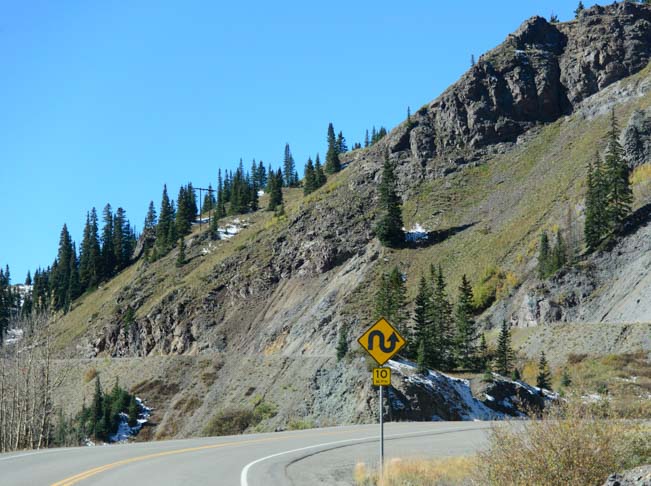
Steep 10 mph switchback on Red Mountain Pass on Route 550 the Million Dollar Highway between Ouray and Silverton Colorado

Steep 10 mph grades climbing Red Mountain Pass


5. More TEMP DATA!! Towing in the Rockies

Return to top

Once he was comfortably familiar with the road and the mountain passes, and once we were ready to leave Ouray, we hitched the trailer to the truck and drove the entire Million Dollar Highway — Route 550 — over those three mountain passes from Ouray through Silverton to Durango.

20 mph grade on the Million Dollar Highway in Colorado's Rock Mountains

20 mph switchback ahead.

Mark was impressed that the truck had plenty of power at all times and made it up and over the passes without straining. He kept the engine torque in its power band of 2,200 to 2,600 rpm, and he never had to depress the gas pedal all the way to the floor to maintain a safe speed.

You can set up the Edge tuner display to show whatever data interests you most.

On the CS model (which we installed), there are two large analog displays with accompanying digital readouts and a smaller digital display in between them.

The CTS model (which is slightly more expensive) has three analog displays with accompanying digital readouts.

Mark had set up our tuner to show the Engine Coolant Temp (ECT) and the Transmission Fluid Temp (TFT) on the two large semi-circular analog gauges to the left and right.

The ECT is a measure of the antifreeze temperature in the radiator, and is the “engine temperature” reading that is given in an analog gauge on the truck’s dashboard. It is also the temperature that most manufacturer’s use to indicate that the engine has overheated, usually displaying a big red light on the dash.
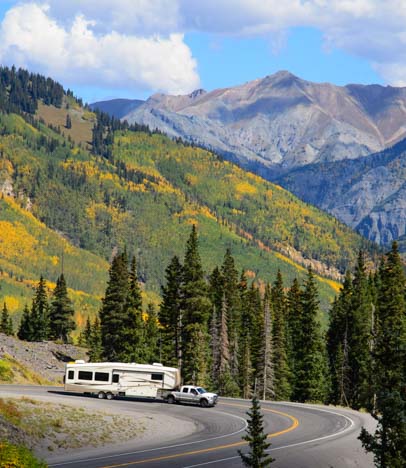
Fifth wheel trailer in the Colorado Rocky mountains_

Despite the hairpin turns and sheer drop-offs, semi-tractor trailers and RVs traverse this highway all the time.

The TFT is a measure of the transmission fluid temp, and it is not a value that is tied into any of the dashboard instrumentation on most trucks.

In general, both the ECT and TFT temps should be kept below 225 degrees, although newer trucks can run slightly hotter than older trucks.

The digital readouts on the Edge tuner display unit are big numbers that are easy for both the driver (and passenger) to read.

Getting into the Red Zone

What a shock it was to begin our first big ascent on Red Mountain Pass and to see that while the Engine Coolant Temp was in the normal range, according to both the factory-installed in-dash gauge and the Edge tuner (which showed 215 degrees), the Transmission Fluid Temp went into the red zone, climbing past the safe zone of 225 degrees up to 237 degrees.

The ascent was almost over when we hit this max, and both temps quickly dropped back down as we descended towards Silverton. The ECT cooled down to 198 degrees and the TFT cooled way down to 163 degrees.

On the next ascent, Molas Pass, (10,970′), the Engine Coolant Temp climbed back up to 215 degrees (still in the safe zone) while the Transmission Fluid Temp topped out at 244 degrees.

Edge Diesel Evolution CS Tuner showing high transmission fluid temperature

The truck’s temp gauge (and Edge ECT data) said we were not overheating, but
that’s just the antifreeze. The transmission fluid temp (right) was 19 degrees too high.

In the next valley, the temps dropped back down again, and on the last ascent, Coal Bank Pass (10,640′), the temps climbed again, but this time the Transmission Fluid Temp stayed below 235 degrees.

Insights

We were both amazed that the truck never overheated, according to the dashboard Engine Temp gauge, but in fact, the transmission had exceeded its limits by as much as 19 degrees, or 8%. We never would have known that without the Edge tuner, and it made us wonder just how hot the transmission fluid would be in the event that the engine coolant temp actually went into red alert.

If the transmission stays over 225 degrees for too many minutes, the transmission fluid breaks down permanently, and the transmission can be irreparably damaged.

10 mph grade on steep Red Mountain Pass switchback on Route 550 the Million Dollar Highway in Colorado

Steep grade ahead — prepare for a 10 mph turn

You can set up alerts in the Edge tuner display so that buzzers sound and/or the display flashes when any of the data being monitored exceeds its maximum. However, by default, the alert system is turned off. This makes sense, as it could be annoying to have a buzzer going when you are already nervously looking for a way to safely pull over to let the engine cool.

For anyone installing the Edge tuner, just keep the magic number 225 in mind, and you will easily see when you have exceeded that value on the tuner’s display, as the numbers are nice and large. There is also a “red zone” on the analog display, but we found it was so faint that we did not notice it until we studied our photos of the gauge afterwards!


6. Better MPG – Fuel Efficiency Improvements

Return to top

When we tow, we set the Edge tuner to Level 1.
When we are not towing, we set the Edge tuner to Level 2.

Increased MPG – Towing – Improves by 2 MPG!

Before we installed the Edge tuner, we typically got somewhere between 9.7 and 10.5 mpg while towing for long distances, according to the electronic gauge in the truck. This gauge has its limitations, because it is somehow averaging the most recent miles driven, but I have not been able to find exactly how the average is calculated or how many miles back it goes — is it the most recent 100 miles? 500? 1,000?

Measuring the MPG from one full tank of diesel to the next is a more accurate method, but it is still fallible because one tank may be filled slightly more than another, and if the tank of gas includes both towing and non-towing miles, then the numbers are thrown off.

So, I can’t offer scientifically collected numbers here, but I can say that after we installed the Edge tuner, the gauge in our truck now typically shows numbers between 11.7 and 12.5 when we are towing consistently for distances of 250 miles or more.

In essence, the truck is saving 2 miles per gallon while producing more power. Very impressive!

Increased MPG – Not Towing – Improves by 3 MPG!

Our truck always used to get somewhere in the 16-18 MPG range when we weren’t towing, better on highways and less in town.

Now, if we travel 100 miles or more without the trailer, we see an MPG in the 19-21 range. That is an improvement of 3 MPG!

What a shock it was the first time we drove 130 highway miles at 65 mph and saw 21.6 MPG on our truck’s mileage gauge!!

Return on Investment

If this fuel savings alone were used to justify the cost of a new Edge Evolution tuner, how many miles would we have to drive for the unit to pay for itself?

If we assume the tuner costs ~$450 and diesel costs ~$3/gallon (both rough but reasonable estimates given prices in the last year), and we assume a conservative savings of 2 MPG, whether towing or not, and we tow for half the total miles driven, we will have saved approximately $450 in fuel once we have driven about 15,500 miles.

Of course, the tuner does a lot more than save a little fuel…


7. Additional Exhaust Gas Temperature Sensor Installation

Return to top

A month after installing the Edge Evolution CS tuner, Mark installed a companion product, the Expandable Accessory System (EAS – product #98603) Exhaust Gas Temperature sensor. This product measures the temperature of the exhaust gases in the exhaust manifold, giving the driver yet more insight — beyond just the antifreeze temp and the transmission fluid temp — into how hot the engine is running.

This was an optional installation, but after seeing the value of knowing the transmission fluid temperature, we wanted to be able to monitor our exhaust gas temperature readings as well.

This installation was quite a bit more complicated than the Edge programmer, as the probe had to be inserted into the exhaust manifold. This required drilling a hole in the exhaust manifold, tapping the hole, screwing the probe into the newly tapped hole, and running the wires through the engine firewall back to the Edge Evolution tuner where they plugged into the back of the display unit.

The hardest part of this installation was drilling and tapping the hole, in part because the exhaust manifold is not super easy access to with a large drill, and in part because the metal of the exhuast manifold is very thick and hard.

The instructions in the manual called for:

The most important thing is that the tap handle be big and solid to give you lots of leverage, because the solid cast iron on the exhaust manifold is very thick and very hard. This will make the difference between an easy installation and a miserably hard one.

As always, Mark got the project underway before I got my camera going, so I don’t have a “before” photo. However, the “after” photo below shows what you’re gunning for and what stands in the way between you and the exhaust manifold.
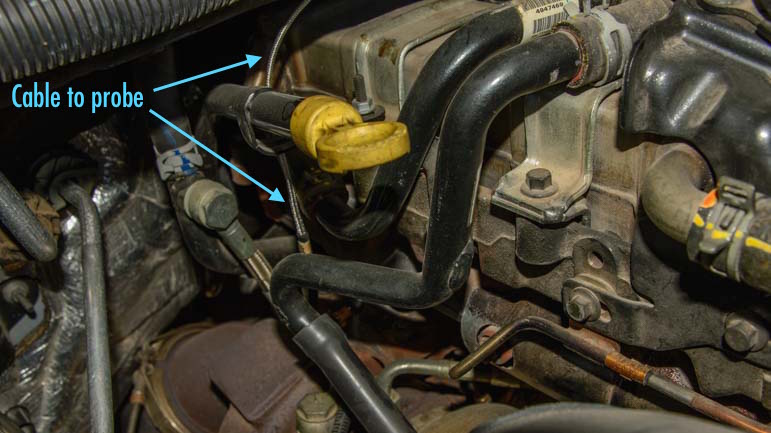
Edge Products Evolution Programmer Installed on a 2007 Dodge RAM 3500 truck

Completed installation with only the braided stainless cable for the probe showing.

First, unscrew the bolt holding the two black tubes in place so they can be pushed aside.

Remove the bracket for access to the exhaust manifold

Remove the bolt to free up the tubes that are blocking the exhaust manifold

The probe will be inserted here.
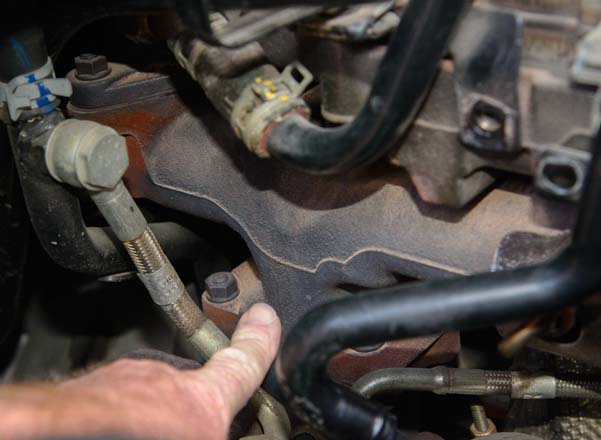
Location for inserting the Edge Products EAS Exhaust gas temperature probe in the exhaust manifold

Location for the Edge Products EAS Exhaust gas temp probe in the exhaust manifold

Space is tight, so a 90 degree right angle drill is necessary. Drill a pilot hole first. Then drill the real hole for the probe.

In order to avoid getting metal filings in the wrong places, grease the drill bit first. Drill a little, then wipe the drill bit down, re-grease it, and drill a little further. Do this for both the pilot hole and the real hole.

Use a 90 degree right angle drill
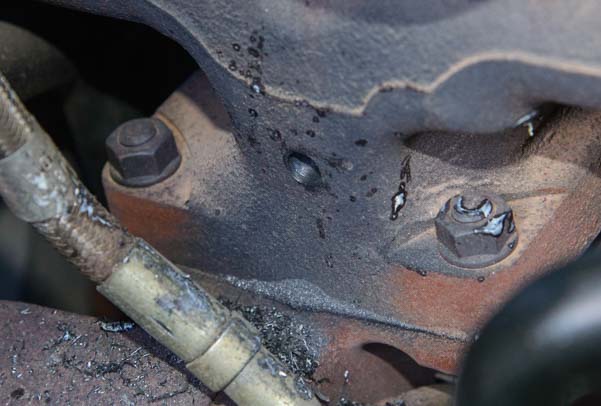
Use a 90 degree right angle drill

Hole drilled in the exhaust manifold

Hole drilled in exhaust manifold

Now the hole is ready to be tapped. Grease or oil the tapping tool well, and work it in and out a quarter turn at a time. As before, after a few turns, back it all the way out and wipe off the metal filings, and re-grease it.

As mentioned above, a small tap handle will not give you enough leverage for the thick, hard cast iron of the exhaust manifold.
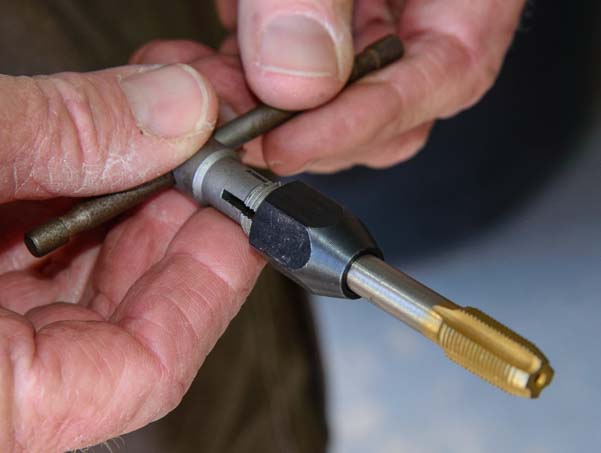
Preparing to tap the hole in the exhaust manifold

An undersized tap handle will make the job very difficult. Get a big, sturdy one!

Once the hole is drilled and tapped, the probe can be screwed in. Grease the probe’s threads with <strong>Permatex Anti-Seize Lubricant first. Then, a cable connecting the probe to the Edge tuner is run from the exhaust manifold back through the engine firewall between the engine and the cab, and on up to the tuner.

Edge Products EAS exhaust temperature probe screwed into the exhaust manifold

Edge Products EAS exhaust temperature probe screws into the exhaust manifold

Wires run through the engine firewall between the engine compartment and the truck cab

Wires run through the engine firewall between the engine compartment and the truck cab


Mark opted to put the display for the exhaust gas temperatures in the middle display area between the Engine Coolant Temp and the Transmission Fluid Temp. Of course, you can choose to display any data in any of the three display areas, and Mark experimented a little before settling on ECT on the left, EGT in the middle and TFT on the right.

Edge Evolution CS Tuner programmer for diesel trucks

Engine Coolant (left), Exhaust Gas (middle bar), Transmission Fluid (right)

The more expensive Edge Evolution CTS tuner has three large displays with both analog and digital readouts rather than the two large displays and one small one on the Edge Evolution CS tuner.

Results

We installed the Exhaust Gas Temperature probe after we had done all of our mountain driving for the season, so we have yet to test it in the mountains. The “overtemp” magic number for the EGT is 1350. Typical temps we have seen driving around town are in the mid-900’s, and climbing a long 5% grade while towing our fifth wheel, we’ve seen the mid-1100’s. However, these have just been the long, gradual grades of Arizona and not the steep switchbacks typical of Rocky Mountain passes.

We will report our findings about the exhaust gas temperature readings once we have taken our RV over a big mountain pass!


8. Other Features of the Edge Tuner

Return to top

The Edge tuner has a ton of other things it can do, because it essentially opens up the truck’s computer so the driver can access the data and temporarily modify the input parameters for the current driving conditions. (Obviosuly, you must be parked to mess with the menus on the tuner.)

Our only interest in the tuner has been the improved power while towing, improved fuel economy while not towing and the additional temperature data that is made available when towing over big mountain passes.

Maintenance and Diagnostic Trouble Codes

There is a Maintenance Manager mode where you can establish a reminder system for standard maintenance items like changing the transmission fluid, checking the trans case fluid level, inspecting the brake pads, lubing the tie rod ends and rotating the tires. Simply get it started with your current odometer reading, and the reminders will alert you at your chosen intervals.

If you are really concerned about fuel economy, there is a Mileage Coach that can show you how to vary your foot’s pressure on the gas pedal to maximize fuel economy as you drive. You can also find out the fuel cost per mile of a particular trip if you enter the price of the fuel you buy!

In addition, the Edge tuner can reveal the Diagnostic Trouble Codes that are present when the truck’s Check Engine light goes on. Most codes can be looked up on the internet, so this might save some head scratching before heading off to a mechanic to get the problem looked at.

For racers

We have used only Levels 1 and 2 (for towing and around town driving), however there are two more levels beyond that for increased power performance, if you find your truck on the starting line of a racecourse. These modes adjust the fuel injection and timing to be more aggressive. In addition, the CTS model can be interfaced to a backup camera and it can also monitor the pitch, roll and G-forces!! For those with racing in mind who find themselves at a drag strip, there are also 0 to 60 mph performance tests and quarter mile tests, and the record highest values of these tests are maintained.

Studying the Data

You can also connect the Edge tuner to a computer using the USB port. You can retrieve all the data from the Edge programmer into an Excel-readable .csv file. using the downloadable Windows software called MyStyle (instructions given in the manual).

For us, however, we are content with just the basics!

Product info:

For fun:

After 20,000 very happy miles with this engine tuner, we replaced our ’07 Dodge Ram 3500 with a 2016 Ram 3500 dually. A detailed description of our buying process and options on the new truck can be found here: Which Are the BEST Ram 3500 Options for Towing a 14K lb. 5th Wheel Trailer? A fun story is that rocker Alice Cooper Sold Us Our Truck! For those that are curious, we put a fabulous “puck” based B&W Fifth Wheel Hitch in the bed of our new truck, and we’re getting another Edge tuner!

Subscribe
Never miss a post — it’s free!

Below are some of our most POPULAR POSTS (also in the MENUS above)

Buddy - A Journey in Spirit - The story of an event that changed our lives forever.

ARTICLE INDEXES
  • RV Tech Tips Articles - A one page index of links to all our RV Tech Tips, RV Upgrades & RV Maintenance articles.
  • RV Lifestyle Tip Articles - An index of links to all our RV Lifestyle Tips (finances, boondocking, major repairs, work/jobs, etc.)
  • Solar Power Articles - Overview and tutorial articles for how to design and install solar power on an RV or boat
  • Product Reviews - An index of links to all of our Product Reviews
RV UPGRADES, SYSTEMS & TIPS MONEY FULL-TIME RV LIFESTYLE GEAR STORE
  • Gear Store - A list of the goodies, equipment and gear we've found useful in our RV lifestyle!
 

Our most recent posts:

More of our Latest Posts are in the MENU.   New to this site? Visit RVers Start Here to find where we keep all the good stuff. Also check out our COOL NEW GEAR STORE!! *** CLICK HERE *** to see it!

2007 36′ Hitchhiker 5th Wheel Trailer for Full-Time RV Living

In May, 2008 we went to Chanute, Kansas, to do a factory tour of the NuWa Hitchhiker 5th wheel manufacturing plant. We were so impressed that we bought a new fifth wheel trailer right then and there. This 2007 NuWa Hitchhiker II LS 34.5 RLTG fifth wheel trailer was the third RV we had owned and was our second full-time RV home.

Ever since that time, other than a nearly four year cruise of Mexico on our sailboat from 2010-2013, during which time we alternated between cruising and RVing, this fifth wheel trailer has been our only home.

Fifth wheel RV at sunset with full moon

It is a 36′ long fifth wheel with an open floorplan that includes three slides and offers 360 square feet of living space. It was designed and built with full-timing in mind, so it is more rugged and better insulated than almost any other brand on the market.

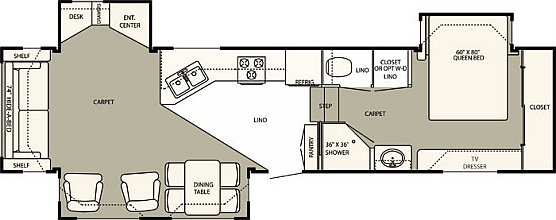
RV Flooplan for NuWa Hitchhiker LS II 34.5 RLTG Fifth wheel (5th wheel)

The floorplan is open and spacious.

For us, the two recliners and the desk were the major reasons for our move from our smaller travel trailer into this bigger fifth wheel, as those features make life infinitely more comfortable. We swapped the position of the sofa and recliners, and put one of the four chairs at the desk and the other in storage so there are just two chairs at the dinette table.

The specs for our 5th wheel are:

  • 70 gallons of fresh water
  • 78 gallons of grey water
  • 50 gallons of black water
  • Dry weight 10,556 lbs
  • GVWR 13,995 lbs (which we reached with the cabinets only 1/3 full)
  • 15,000 BTU air conditioner
  • 40,000 BTU furnace
  • 8′ Dometic fridge

The upgrades we did on it are:

Before we bought this 5th wheel trailer in 2008, we already owned a 2007 Dodge RAM 3500 long bed single rear wheel truck which we had purchased brand new the summer before. It works a lot harder pulling this trailer than it did the Lynx travel trailer, which was our previous full-time RV, however we could still get up and down the big mountains out pretty well..

We used to get 8.5-10.5 mpg while towing, but since we installed an Edge Tuner on our diesel engine in October 2014, we now get 10.5 to 13 mph while towing.

To learn more about the upgrades we have done on our truck and trailer, visit these pages:

2007 NuWa Hitchhiker 34.5 RLT 5th wheel RV trailer

The dining room table and chairs and the sofa are in the big slide-out on the curb side.

RV - 2007 NuWa Hitchhiker II 34.5 RLTG fifth wheel (5th wheel)

We love the big picture windows along the side and back of the trailer – they let in light and give us views!

RV living room in 36' Hitchhiker fifth wheel trailer

Most modern trailers have short (60″ or 66″) sofas. This one has a 74″ sofa, long enough for Mark to stretch out on.

RV Living room area of 2007 NuWa Hitchhiker 34.5 RLT fifth wheel

The recliners are very relaxing. We found we weren’t as comfy without them in our old trailer.

RV Kitchen 36' 5th wheel trailer by NuWa Hitchhiker

The kitchen is open and easy to work in.

5th wheel RV Kitchen NuWa Hitchhiker 36' fifth wheel

A big window and expansive counter tops.

RV Desk slide-out in 36' 5th wheel trailer by NuWa Hitchhiker

The desk was a nice addition and gets the mess off the kitchen table!

RV bedroom slidout fifth wheel trailer

The queen bed has a window for each occupant — a nice feature if you want a light breeze on you at night.

Fifth wheel bedroom slideout NuWa Hitchhiker 5th wheel RV

The dresser and wide closet allow enough space for all our clothes for all seasons.

Unfortunately, the economic downturn in 2008 shook up the RV industry right to its core, and many excellent manufacturers of full-time quality RVs went out of business. NuWa ceased building fifth wheel trailers in 2014. Their outstanding RV service center in Chanute, Kansas, is still in operation, however. Their manufacturing plant has been replaced with an RV dealership called Kansas RV Center.

Ram 3500 dually diesel truck and 14,100 lb. fifth wheel trailer

Dodge Ram 3500 Dually Long Bed Truck to tow our 36′ NuWa Hitchhiker 34.5 RLTG Fifth Wheel Trailer

As for towing this trailer, after towing it over 50,000 miles with our 2007 Dodge Ram 3500 Single Rear Wheel Long Bed truck, in December, 2015, we replaced that truck with a much more powerful 2016 Ram 3500 Dually Long Bed. The difference in power is staggering. We have a very detail post explaining the differences between these two trucks and why our new truck is so superior here:

Dodge Ram 3500 Dually Truck – Best Truck for RV Fifth Wheel Trailer Towing

We had a blast buying this truck when we found out that our dealership had a marketing relationship with Alice Cooper, one of Mark’s rock star idols since his teenage days:

Alice Cooper Sells Us a New Truck

We decided to add some really awesome bling to this truck by outfitting it with a new B&W Companion Fifth Wheel Hitch. This hitch is unique because it takes advantage of the Dodge Ram fifth wheel hitch in-bed puck system. It took just one hour to install this hitch, and we have a step-by-step pictorial installation guide with instructions for how to install it:

B&W Companion OEM Fifth Wheel Hitch – Installation Guide with Step-by-Step Instructions

Dodge Ram 3500 Dually Truck towing a 36' NuWa Hitchhiker Fifth Wheel Trailer RV

Subscribe
Never miss a post — it’s free!

Below are some of our most POPULAR POSTS (also in the MENUS above)

Buddy - A Journey in Spirit - The story of an event that changed our lives forever.

ARTICLE INDEXES
  • RV Tech Tips Articles - A one page index of links to all our RV Tech Tips, RV Upgrades & RV Maintenance articles.
  • RV Lifestyle Tip Articles - An index of links to all our RV Lifestyle Tips (finances, boondocking, major repairs, work/jobs, etc.)
  • Solar Power Articles - Overview and tutorial articles for how to design and install solar power on an RV or boat
  • Product Reviews - An index of links to all of our Product Reviews
RV UPGRADES, SYSTEMS & TIPS MONEY FULL-TIME RV LIFESTYLE GEAR STORE
  • Gear Store - A list of the goodies, equipment and gear we've found useful in our RV lifestyle!
 

Our most recent posts:

More of our Latest Posts are in the MENU.   New to this site? Visit RVers Start Here to find where we keep all the good stuff. Also check out our COOL NEW GEAR STORE!! *** CLICK HERE *** to see it!

Cruising World Feature Article – Installing a Huge Watermaker!

Cruising World February 2015 Issue Installing a Watermaker on a sailboat

Cruising World – February, 2015

The February 2015 issue of Cruising World Magazine features our article on how to install a big engine-driven watermaker.

How big? 60 gallons per hour big!

Unlike boondocking in our RV, where we run from water spigot to water spigot to fill our fresh water holding tanks and jerry jugs in our truck, our watermaker was our sole water supply for the nearly four years we lived aboard and cruised in Mexico.

During that time, this system happily desalinated about 20,000 gallons of ocean water surrounding our sailboat Groovy. It created truly delicious drinking water while pumping raw water from the ocean through a massive filtration system into our fresh water holding tanks.

Talk about long showers! We had virtually unlimited water and could even wash our decks at anchor or underway after a tough, salty passage.

Water, Water Everywhere Page 1

Article: Water Water Everywhere!
By: Emily & Mark Fagan


However, I have to say that showering on a boat while rolling around on the Pacific ocean is a hilarious caper that has to be experienced to be believed!

This sprawling piece of watermaking equipment was spread out across compartments throughout our bilge and under our salon settees.

It included a sea strainer, two large pumps, three big water filters, two 4′ long desalination membranes, countless feet of high pressure and low pressure hoses, a mountain of stainless steel hose clamps, and two holes with valves drilled through the hull of our boat.

To put it mildly, installing our engine-driven watermaker was a mammoth undertaking. Mark did the entire job while bobbing around at anchor in San Diego bay, without electric power other than from our house batteries, despite having to do things like saw through bulkheads to run the high pressure hose. All I can say is: he’s amazing!

Sailboat Groovy anchored with Bella Marina at Glorietta Bay in San Diego Caifornia

Groovy (right) anchored with sistership Bella Marina (left) in Glorietta Bay, San Diego

Preparing to drill a hole in the boat's hull

Preparing to drill a 1″ hole in Groovy’s hull for the discharge brine water

We also did it without a landing dock for the dinghy, except for the few days here and there that we stayed at the Police Dock near the entrance to the bay.

When Mark needed parts, I tied the dink to a boulder and scrambled up some rocks on the end of Harbor Island to get to our truck. I got to know San Diego’s industrial areas and back streets surprisingly well!

Most cruising boats have watermakers, and most run on 12 volt DC power and produce 6 to 13 gallons per hour.

We knew from our years of RVing off the grid that we would want a lot more water than those small systems could produce easily, but we did not want to install a large generator to run a big watermaker either.


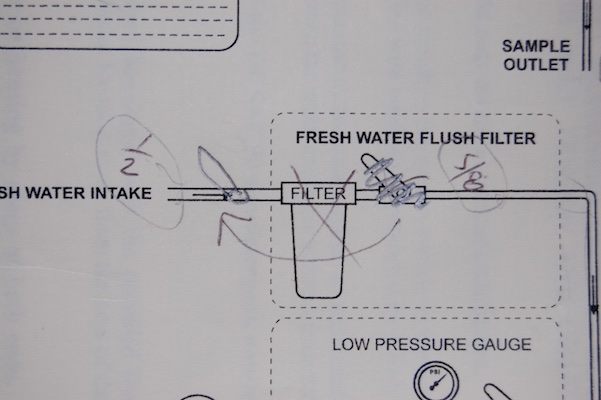
Watermaker installation manual errors

The manual had some major errors (sigh).

So, we invested in an engine-driven model that required having a special aluminum mounting bracket designed and constructed so we could hang the main high pressure water pump off the engine to allow it to move with the engine’s vibrations.

In the end, after a lot of cursing (the installation manual was very vague and often outright wrong), and some failures (the first two sets of watermaker membranes both failed: the first pair failed upon installation and the second pair failed after we’d been cruising in Mexico for 3 months), we got it all squared away and it worked like a charm.

The Cruising World Article can be read here: Water, Water Everywhere!

As the years went by, this miraculous piece of equipment became our absolute favorite piece of gear on our boat. To this day, when we think of Groovy, memories of our awesome watermaker and its grueling installation are among our fondest memories of the boat itself!

Cruising World is the premier American sailing magazine for cruisers (available in print and digital subscriptions), and it is with enormous pride that we are among the contributors this month.

The February 2015 edition of Cruising World Magazine is on newsstands now. Most chain bookstores like Barnes & Noble carry it in their magazine section, and it can be found at boating supply stores like West Marine as well.

Landing a feature article in Cruising World is not easy, as there are many cruisers who write brilliantly about their unique and truly inspiring sailing experiences. Famous cruising author Beth Leonard has said that the biggest sailing magazines receive 1,500 submissions per month! So, it was a wonderful surprise when I received an email from the editor saying:

“this is the absolutely clearest and best-organized technical/installation article I’ve ever read in CW. also very interesting. kudos to the author”

In September 2012, our first feature article appeared in their pages about our maiden voyage from San Diego to Cabo San Lucas when we began our cruise of Mexico.

Sailboats anchored near Coronado Island in San Diego Bay California

Sailboats anchored by the Coronado bridge in San Diego

I have been a Cruising World reader for several decades and recommend it highly for all sailors and future cruisers that are planning their own great escapes. When I first began contemplating seeing some of the world by boat nearly thirty years ago, teenager Tania Aebi was recounting her stories of her solo circumnavigation issue by issue.  The publication of Cruising World Magazine not only predates her cruise by a few decades but has presented the tales of many other impressive voyages since then as well.

I am extremely honored to be counted among their contributors this month, and I feel very fortunate that Mark’s incredible hands-on mechanical and electrical expertise made for an article they were eager to publish.

Our portfolio of other published work can be seen here which is also linked to the Press Room menu item above.

New to this site? Visit our Home Page to learn more about us, and see our Intro for Cruisers to find out where we keep all the good stuff, including tips for planning your cruise to Mexico, our Solar Power pages, and our ideas for outfitting your boat.

Subscribe

Hobie Mirage i14t Tandem Inflatable Kayak Review

This is a review of the Hobie i14t inflatable tandem kayak after 3 years of use on rivers, lakes, Mexico's Pacific coast and the Sea of Cortez.

Enjoying our kayak at St. George State Park, Florida.

Mark demonstrates using the Mirage drive pedals for Hobie i14t inflatable tandem kayak

Mirage-drive pedal/fipper

system.

Our Hobie i14t inflatable tandem kayak in Puerto Balandra, Mexico

Puerto Balandra, Sea of Cortez, Mexico.

Our Hobie i14t kayak on a beach in the Sea of Cortez

Puerto Balandra, Sea of Cortez, Mexico.

Lake Havasu, Arizona - perfect for kayaking with a Hobie i14t inflatable tandem kayak

Lake Havasu, Arizona.

Our Hobie i14t inflatable tandem kayak at Redfish Lake, Idaho

Redfish Lake outside Stanley, Idaho.

The Hobie i14t inflatable tandem kayak in its folded and stored postion stands taller than expected.

The kayak in its rolling case.

Extra equipment needed for the Hobie i14t inflatable tandem kayak: seats, paddles, pedals, pump, lifejackets

The other pieces that don't fit in the case: seats,

paddles, pedal/flippers, lifejackets.

Deflated Hobie i14t inflatable tandem kayak Pumping up a Hobie i14t inflatable tandem kayak Inflating a Hobie i14t inflatable tandem kayak Pedaling around San Diego Bay on a Hobie i14t inflatable tandem kayak

Playa Cove, San Diego, California

Sea of Cortez (Bahia Falsa) with our Hobie i14t inflatable tandem kayak

Bahía Falsa, Sea of Cortez, Mexico.

The storgage back for the Hobie i14t inflatable tandem kayak

It's all gotta fit in this bag...

Inflation/deflation valve for Hobie i14t inflatable tandem kayak

Valve for inflating/deflating.

Putting away the Hobie i14t inflatable tandem kayak - First fold the bow in on itself Putting away the Hobie i14t inflatable tandem kayak - fold it in thirds Putting away the Hobie i14t inflatable tandem kayak - fold the stern over everything Putting away the Hobie i14t inflatable tandem kayak - tighten the webbing straps. Putting away the Hobie i14t inflatable tandem kayak - finished package. Hobie i14t inflatable tandem kayak can be rolled around (if you're careful) Hauling the Hobie i14t inflatable tandem kayak Carrying the Hobie i14t inflatable tandem kayak with a shoulder strap. Hobie i14t inflatable tandem kayak  - seats Hobie i14t inflatable tandem kayak - lifejackets pedals/fins Hobie i14t inflatable tandem kayak - paddles The Hobie i14t inflatable tandem kayak fits into a fifth wheel basement

Tight squeeze going into the fiver basement.

Hobie i14t inflatable tandem kayak takes up most of the space in a fifth wheel basement

Once there it takes up a lot of space.

The kayak makes a good platform for waxing the hull. Hauling the Hobie i14t inflatable tandem kayak up into the Garhauer racks

Getting ready to hoist the kayak.

Hobie i14t inflatable tandem kayak at rest in the Garhauer racks

In the Garhauer racks with the

bridle/halyard attached.

A butt saver for the Hobie i14t inflatable tandem kayak - self-inflating seat.

A thermorest butt-saver cushion.

Our commuter vehicles.

Kayak moulds at the Hobie Cat factory in Oceanside, California

Hobie kayak mold rocks back and forth to distribute

the molten plastic inside the mold.

Kayak factory at Hobie Cat in Oceanside, Caliornia.

Hobie Cat factory, Oceanside, California.

New kayaks lined up ready to sell

New kayaks ready to go.

Pedaling the Hobie i14t inflatable tandem kayak in Redfish Lake, Idaho.

Pedaling into the mountains at Redfish Lake, Idaho.

Hobie i14t inflatable tandem kayak at Lake Havasu, Arizona

Lake Havasu, Arizona.

Hobie i14t Tandem Inflatable Kayak Review

One of the best additions to our RV and boat has been our Hobie

i14t inflatable kayak (manufacturer: http://www.hobiecat.com/

kayaks/mirage/i14t).  It is easy to launch and is a very stable

platform with three inflatable chambers: two pontoons and a floor.

We've tried Hobie's identical hard-shell tandem kayak and found it

to be a lot more tippy.  We can stand up in the inflatable kayak and

not lose our balance.

The kayak can be driven either by

traditional paddles or by Hobie's

Mirage Drive pedal system.  These

are removable pedals/flippers where

with each pedal stroke the flippers flip

back and forth.  Apparently the idea

for this system came to its inventor

one day while watching marine mammals on Discovery channel, and they are wonderfully

effective.  The best part is that it makes kayaking a hands-free affair.  The kayak is steered by the

person in the rear who has a small dial control connected to a rudder.

We now take only one paddle with us and

we use it only for quick steering situations

(the kayak has a very wide turning radius

otherwise).  Being hands-free we can take

photos and use the binoculars with ease.

There are two kinds of pedals, the

standard ones which are slightly shorter,

and longer ones that

are harder to push

but make the boat

go faster.  We have

the standard pedals.

There is also a sail

kit which we don't

have.

This kayak does not fold

up to a small size.  Once

packed away in its case it

stands almost chest high.

It is also about the same weight

as the comparable hard-shell

kayak.  However it can be

packed away in a truck bed or in

the basement of a fifth wheel

trailer, unlike a hard-shell which

must be carried in some kind of

roof rack.

There are quite a few extra

pieces besides the hull:  the two

Mirage pedal systems, two

seats, two break-apart paddles,

the pump and two life jackets

(purchased separately).

Assembly takes about 15 minutes and is very straight-

forward.  First the kayak hull is laid out on the ground.  Then

the three chambers are each inflated independently via

three valves at the back end of the kayak.  They can be

inflated in any order, and its just a minute or so of easy hand

pumping for each chamber.

Then the seats are set in place

using clips and webbing straps.

The paddles are assembled

and stored in place on the sides

of the kayak.  The life jackets

are slipped under the bungee

cord storage area in the back.

And off we go.

Putting the kayak

away is a little trickier, as it needs to fit back into its case.  We lay the

case out on the ground and put the kayak on top of it with the stern

end at the cover-flap end of the case, and then we deflate the three

chambers.

The kayak is folded up by first curling the bow in on itself and then

folding the boat in thirds.  The bow section folds towards the pedal

opening in the stern of the kayak.  Then the stern of the kayak is

folded up and over the top.

At this point we pull the sides of the case up

and around the kayak and pull the webbing

straps tight.

Then we fish out the top flap of the case from

underneath and fold it over the whole thing and

pull its webbing straps tight.

Now the case is ready to be rolled around.  There is also a shoulder strap that can be attached so you can lug the kayak with

you as you walk.

Neither rolling nor carrying the case is easy.  The kayak is quite heavy and it's a big awkward package.  I have read of people

finding the case so flimsy that it ripped and had other problems when traveling as checked baggage.  If I were to travel with it

that way a lot I would have a strong canvas carrier made for it.  The wheel system is also rather delicate.  On ours the axel bent

from the weight of the kayak and then the bag dragged on the ground.  It could be bent back into shape, but it is a weak system

and not for long distance use (like through endless airport walkways).  Rolling it a few steps from our disassembly spot in our

campsite to the trailer, or from a boat ramp to the truck is not a problem.

The big heavy kayak hull and its bag are just part of the total package.  There are also those pesky seats, pedals, paddles,

pump and life jackets to contend with.  All this is easy in a truck or trailer, but carrying all this on public transport by airplane or

bus would be a challenge.

The kayak neatly fits into our fifth wheel basement, but once it is in there it is just about all that

will fit.  All the other favorite basement goodies like camp chairs, barbecue, buckets, tools and

generator, not to mention the seats, pedals, paddles and lifejackets etc. all have to fit around

this beast.  However, the days on the lakes and rivers are well worth the hassle.

The kayak has brought us lots of fun times

on the boat.  It has been useful as a

platform for waxing the hull, but far more

important, it has given us a little exercise

and a nice slow pace for exploring the

anchorages we have stayed in.

We always keep it inflated on the

boat and we use Garhauer kayak

racks to store it outside the

lifelines in when its not in use.  We

rigged a simple bridle system

using the two pedal holes to hoist

it into the kayak racks using the spare

halyard.  Once up, we leave the seats

in it and store the pedals, paddles and

life jackets in the cockpit lockers on the

boat.  It takes less than five minutes to

rig up the bridle and either hoist or

lower the kayak.

We also bought two self-inflating thermarest seat

cushions.  We slip these under the seats and it

really helps with overall butt fatigue and the

inevitable numb foot problem that creeps up if we

are out in the kayak for a long ride.  The seats on

the hard-shell kayak are a little more comfortable

and less inclined to put your feet to sleep.

We visited the Hobie Cat factory in Oceanside California where the hard-shell kayaks are

made (the inflatables are made at another plant).  Molten plastic is poured into moulds and

then swished around for a few hours to completely fill the mould.  Then when the plastic

has cooled the mold is opened up and out pops a new kayak hull.

It was a lot of fun to see all the new gleaming kayaks lined up.

The inflatable kayak is definitely more delicate than its hard-shell sister, and most cruisers with Hobie Mirage tandem kayaks

carry a hard-shell instead of an inflatable.  We have had to fix several leaks in the bow chamber and reattach many small pieces

to the hull using JB Weld (i.e., the anchors for the seats and for the bungie cord in the back).  They fell off due to the relentless

heat in Mexico.  I also sewed a Sunbrella kayak cover to protect it from the UV rays.  For tropical cruisers spending more than

one season in the tropics, I would recommend taking a long look at a hard shell tandem Hobie rather then the inflatable.

However, it is such a fun little boat -- stable

and easy to clamber in and out of for snorkeling -- that we are happy with our choice, even if it means babying our baby a little

extra.


Subscribe
Never miss a post — it’s free!

More of our Latest Posts are in the MENU.   New to this site? Visit RVers Start Here to find where we keep all the good stuff. Also check out our COOL NEW GEAR STORE!! *** CLICK HERE *** to see it!

Below are some of our most POPULAR POSTS (also in the MENUS above)

Buddy - A Journey in Spirit - The story of an event that changed our lives forever.

ARTICLE INDEXES
  • RV Tech Tips Articles - A one page index of links to all our RV Tech Tips, RV Upgrades & RV Maintenance articles.
  • RV Lifestyle Tip Articles - An index of links to all our RV Lifestyle Tips (finances, boondocking, major repairs, work/jobs, etc.)
  • Solar Power Articles - Overview and tutorial articles for how to design and install solar power on an RV or boat
  • Product Reviews - An index of links to all of our Product Reviews
RV UPGRADES, SYSTEMS & TIPS MONEY FULL-TIME RV LIFESTYLE GEAR STORE
  • Gear Store - A list of the goodies, equipment and gear we've found useful in our RV lifestyle!


Escapees RV Club Travel Guide 2015 Cover Photo

We are very excited to have our photo on the cover of the 2015 edition of the Escapees RV Club Travel Guide. This photo was taken at Lost Dutchman State Park in Apache Junction, Arizona, where the beautiful Superstition Mountains make a stunning backdrop to every scene.

Escapees Travel Guide 2015

Photo by Mark & Emily Fagan

We were camped there for a few days when an adorable little trailer pulled in alongside us. After the owner got set up, we went over to chat with him and found out his cute retro rig is actually just two years old!

We kept admiring the little buggy out our window as the sun played on the mountains in the distance, and one afternoon Mark went outside and took this absolutely gorgeous photo. I never would have thought of cutting off the trailer on the right side, but it balances the vivid cliffs beautifully and draws you into the photo.

Escapees loved the image too and wanted to use it for their cover, but unfortunately it didn’t fit their size format. Argh! We were bound and determined to make it work, so the next afternoon we both dashed out and snapped away for half an hour as the light faded, duplicating his idea but playing with the composition.

In the end, my finger hit the shutter on this particular version of his vision, so, like many of our magazine cover photos, this image is the result of a combined effort by the two of us — the best kind of shot!

Escapees RV Club publishes this travel guide each year for their members. It is a thick little book chock full of RV parks that give Escapees members discounts of up to 50%. They also list kindly Escapees members who offer their property to other members for overnight RV parking.

We enjoyed this unique kind of hospitality last year when we were traveling in Oregon. A wildfire had smoked us out of the area we had been staying in, and it was very comforting to find safe haven and companionship in the back yard of a couple who were fellow RVers and Escapees members.

The Escapees Travel Guide is just one of the many unique benefits that come with an Escapees membership.

I often mention Escapees on this website, and you may roll your eyes every time I do. And I understand that! The first time we heard about Escapees was when we were boondocked in Death Valley. We camped with a couple from Calgary for a few days, and they raved about the benefits of being Escapees members.

They showed us the Day’s End Directory and told us it was awesome. To us, it seemed hopelessly cryptic and weird, which is why I give a mini translation on our boondocking page. They were super nice, but they were so enthusiastic that we came away convinced that they were getting some kind of kickback from the club! We were completely turned off to the idea of becoming “joiners” in a club that sent out evangelists like that!
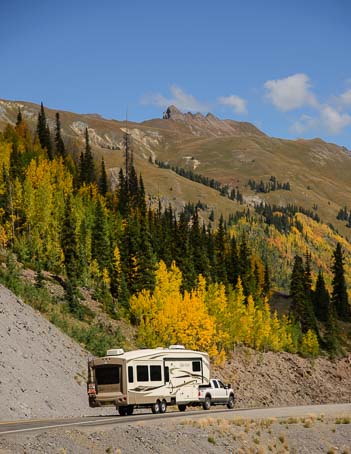
So we waved off the whole idea and went on our merry way.

But we kept meeting Escapees members in our travels, and someone showed us their wonderful magazine, and we realized that this is a club that the membership really values. Eventually we decided to give them a try — and now we’re very glad we did.

This nomadic life can become a little rootless after a while, and it is heartwarming to know not only that there is a huge group of people living this odd lifestyle too, but that we all have a link to one another through a large club that is geared towards our needs. Escapees was founded by one of the first couples to travel full-time in an RV, back in 1978, and their club now looks out for the best interests of all full-time (and long-term) RV travelers in a huge variety of ways.

______________________________

Related Post: How Big an RV do you Need?

To see more of our published work, visit our Press Room (also on the menu bar above)

New to this site? Visit our Home page to read more about our full-time traveling lifestyle and our Intro for RVers to find out where we keep all the good stuff. If you like what you see, we'd love for you to subscribe to receive our latest posts!

Subscribe

What Is Your Dream?

Escapees Magazine Cover Jan-Feb 2015

Escapees Magazine Jan-Feb 2015
Cover photo by Emily Fagan
Feature Story: Stay the Course on the Road to Your Dreams

The January, 2015, issue of Escapees Magazine is graced with a photo of ours on the cover, taken at Lost Dutchman State Park in Apache Junction, Arizona, at dusk, with the stately Superstition mountains in the background.

We were out walking the campground loop one evening when we noticed that the host campsite looked very inviting. It was huge, and the hosts had done some creative landscaping to make it really homey. The lights were glowing in their rig, and they had just started a campfire. It was a classic camping scene — I had to get a pic!!

Because it was evening, it would be a long exposure photo that would require a tripod. The light was fading fast, however, much too fast to be able to run home and grab a tripod and return for the shot. So, we gave up on the idea and walked over to their campfire instead. We introduced ourselves to the hosts, Dave and Linda, who were very warm and friendly, and we started chatting with them.

After an hour or so of happy chit-chat (including us telling them what a perfect photo their campsite would make), it was now pitch dark and time for us to find our way home.

As we were leaving, they invited us to come back another night for a beer — and to bring a tripod and get the shot. And so we did — and what a wonderful evening we had sitting around their campfire sharing stories afterwards.

This kind of spontaneous and informal socializing is one of our favorite things about the full-time RV lifestyle. It suits our personalities and our style perfectly because we just aren’t big on formalities and planning things. We like leaving ourselves open to interesting happenings that find their way to us.

Full-time RVing is a dream-come-true lifestyle for us, and our feature in Escapees, “Stay the Course on the Road to your Dreams,” touches on what it takes to get from dreaming about going full-time to actually doing it: tenacity!

Happy campers at Grand Teton National Park Wyoming

Grand Teton National Park in Wyoming is one of our favorite destinations

The article sprang from a blog post I wrote a little over a year ago when we were leaving our boating life behind and returning to RVing full-time.

We were madly selling everything we had purchased to live on a boat (plus the boat itself), and our life was utter chaos as we downsized back into our fifth wheel trailer.

The only thing that held us together was the absolute certainty that we were doing the right thing. How were we so sure? Because we had been full-time RVers already and we knew exactly what lay ahead.

Caribbean Dreams

With our trailer in storage, a fateful Caribbean trip landed us in the cruising lifestyle!

Generally, future full-timers don’t have that luxury, and I often receive emails from people who are both excited and terrified by the prospect of going full-time (or going cruising).

As they downsize and sell off everything they own, the terror begins to come in waves, and every doubt they’ve ever had about running off in an RV or sailboat looms monstrous around them.

Most future full-timers are folks nearing retirement, and the idea of breaking out of the bonds of the workaday world is tantalizingly delicious.

Yet, at the same time, the thought of running away to a life of free-spirited adventure after decades of predictability is daunting. Letting go of the house and its contents — your very roots — can be overwhelming.

It is one thing to be wild and crazy at twenty, when no one is looking and you have nothing to lose.

Sailing Groovy

Our sailboat “Groovy” taught us many incredible life lessons.

It’s a whole different story to be wild and crazy at retirement age when you’ve become accustomed to certain luxuries, routines and structure, when you’ve been responsible for and beholden to other people for eons, and especially when your kids, or friends, or in-laws are looking at you like you’ve lost your mind as you tell them you are going to sell up and go.

For most of us, retirement is the first time in our lives when we have both the financial resources and the time to pursue our dreams.

What a boon!

Fifth wheel trailer RV on Million Dollar Highway in San Juan Mountains Colorado

An RV roadtrip is a dream come true, whether you make it a lifestyle or do it just once.

But how frightening it can be too.  With a finite amount of time, and a finite amount of money, you sure don’t want to waste either one. It is even more unsettling when you realize that all the joy or misery your precious dream may bring you is entirely on your own shoulders.

For the first time in your life, you’re chasing a dream that doesn’t belong to someone else. You’re not doing this to please your parents, or to help the kids, or to impress a boss. This dream is all your own.

For that reason, I believe the most important thing to do before turning your life upside down to move into an RV or boat and go traveling is to spend some time figuring out why you want to go.

What is the real draw to this lifestyle: Is it independence? spontaneity? freedom from schedules and agendas? a yearning to see new places? a desire to live more simply? a need to spend time with far-flung family in distant states? Or will this be an in-depth multi-year search for a permanent retirement home?

For all the time spent researching whether life is better in a Class A motorhome or a fifth wheel trailer, it makes sense to spend an equal amount of time digging around in your own soul to figure out why you want to leave hearth and home to live in a box on wheels.

Golden aspen and snow-capped peaks in Colorado's San Juan Mountains

What a combo – golden aspens and snow-capped peaks in Colorado

The more you understand the origins of your dream — and the origins of your spouse’s dream — the better you will be able to create a full-time RV lifestyle that is truly fulfilling.

If your dream is to be wild and free, then boondocking may play a big part in your lifestyle. If your dream is to integrate deeply into two seasonal communities, then choosing the right sites at the right RV parks will be important.

If the hubby dreams of seeing all the Civil War historic sites in the eastern states and the wife dreams of traveling primarily between the kids’ homes in Montana and Utah, then some careful itinerary planning (and negotiation!) will be necessary.

Santa Cruz Bay in the Bays of Huatulco Mexico

The exquisite Bays of Huatulco, Mexico, were a stunning discovery in our travels

The very nature of what it is that you want out of your RVing lifestyle is what will drive all your decisions about how to put your lifestyle together.

The beauty of pursuing your own dreams is that it is an evolutionary process, and that is the part that has really surprised us over the years.

We started with very little idea of what we were getting into. Like a young bride who is totally focused on her fancy dress and big party, and not really thinking about the 50 years of togetherness that lie ahead, we were focused more on leaving than on where we were going!

However, we did know we wanted independence and freedom in our day-to-day lives, something neither of us had had since our youth, and that theme is with us still. Our personal evolution as full-time travelers has taken that theme a step further.

After several years of dealing with the many big challenges that come with the boating life — something that was completely self-inflicted because going cruising on a sailboat in foreign waters was our dream — we came to realize that our primary life theme is actually very simple:

We want to spend as much time as possible doing the things that make us happy, and we want to spend as little time as possible doing the things that make us unhappy.

That may sound ridiculously simplistic, but it has helped us immensely to crystallize our biggest life decisions and to understand what we really want, deep down inside, in our day-to-day lives.

Butterfly in a flower

Our travels introduced us to the fun of photography,
a passion we both share.

Too much of adult life is spent in some middle ground, doing things that are “good for you” (or good for your job, or your kids, or your retirement package, or something else), but that aren’t a whole lot of fun.

Until you start trying to fulfill your own innermost dreams in that wee bit of time that lies between retirement and the Great Beyond, it is very hard to understand that “good for you” and “truly satisfying” are very different things.

This is especially true when your dream is a little off-beat, like wanting to move from a house into an RV or boat.

There is a lot of support in our society for doing the conventional things that are good for you, but there’s not a lot of support for doing things that excite you but that don’t fit the norm. And this is where fear creeps in.


The one thing that holds most people back from fulfilling their dreams is fear.

What if…your dream doesn’t pan out, you blow all your money, you don’t like the lifestyle, you lose touch with friends and family back home, and all those other horrible things that might happen if you start RVing full-time. Is pursuing this fantasy of an unusual and adventurous lifestyle worth that risk?

Wildflower

Peace.

Understanding why you are attracted to the idea of full-timing will give you the answer and limit your fears.

There are lots of ways to achieve many of the thrills of the full-timing lifestyle without actually going full-time.  Loads of people RV seasonally because they want the exhilaration of traveling but they also want to go home and enjoy their roots. That’s great!

For others, it is the actual act of living on the road all the time that really matters, and for them, giving up the sticks-and-bricks home is an essential part of the process. That’s great too! There’s no badge of honor for living this lifestyle in one manner or another — or for living it at all.

Regardless of what your individual dream is, the only thing that should strike fear in your heart is reaching the end of the road and not having had the guts to give your dream a chance. If you know what your dream really is, and you believe in it and are passionate about it, then nothing should frighten you from chasing it down.

Rainbow arching over saguaro cactus in  Arizona

Recent rainstorms brought us gorgeous images of saguaro cactus framed by rainbows.

Even if you aren’t ready to cast off in your new life today, or next week, there are steps you can take everyday — internal, thoughtful and emotional ones — that will strengthen your resolve and ease your lifestyle transition immensely when your time finally comes.

But don’t dally. Life is extraordinarily short.  If you are on the verge of retirement, you may have 20 years ahead of you to enjoy some travels.  Great!  But look back 20 years.  How fast did those two decades go?!  Yikes!

We have met dozens of people over the years who have seen what we’re doing and said, “I want to do that!” For them, the opportunity is there.

Sadly, we’ve met many others who said, “I always wanted to do that when I was younger, but now I can’t.” That’s tragic.

Why didn’t they go when they could? Was it fear of the unknown? Were they waiting for the housing market to improve? Did they hang in on the job an extra five years to get a little bigger pension?

We’ve heard people give all those reasons and many more for not pursuing their dreams today. As Kay Peterson, the co-founder of Escapees RV Club, wrote in the October 1990 issue of the magazine:

“Because we have no way of knowing how long our life’s cycle will last, it upsets me to hear people, young and old, who are waiting for a particular event to start doing whatever it is they want to do… If you don’t fulfill your dreams now, when will you?

Mirrored magic in Grand Teton National Park Wyoming

The Tetons wake up to their reflections at sunrise.

If all this sounds a little heavy or deep, it shouldn’t be. Mark and I talk about these topics every single day as we continually create and refine our dream lifestyle, and we have since we first stepped out of our old lives and hit the road.

Sometimes our conversations have been a little edgy, because this process brings you around to figuring out who you really are, but for us, thinking about this stuff, thinking about the meaning of life — of our lives — has become an essential part of everyday living.

As you list your New Year’s resolutions and look forward to new adventures in 2015, ponder this:

What do you really want out of life, and what makes you truly happy?

Then get ready to jump in with both feet!

Happy campers at Black Canyon of the Gunnison National Park Wyoming

Happy 2015!

Other articles about “Living the Dream:”

Related Posts:

Subscribe
Never miss a post — it’s free!

Our most recent posts:

More of our Latest Posts are in the MENU.   New to this site? Visit RVers Start Here to find where we keep all the good stuff. Also check out our COOL NEW GEAR STORE!! *** CLICK HERE *** to see it!