How To STAY WARM in an RV – Survival Tips for Winter RVing!

Winter RVing is loads of fun, but figuring out how to stay warm in an RV on those chilly winter mornings and long cold dark evenings makes all the difference between having a great time and wishing you were in a house. Going to a southern state is a good start, but it may not always fit with your overall full-time RVing itinerary. You might get caught in an early winter storm, like we did in one year in Colorado’s Rocky Mountains. Or you might get whipped by a blizzard on your way south, as has happened to some of our snowbirding friends who wanted to celebrate the holidays at home in Montana before trekking south to Arizona in January.

Here are some tips for ways we’ve found to stay warm in our RV in winter…
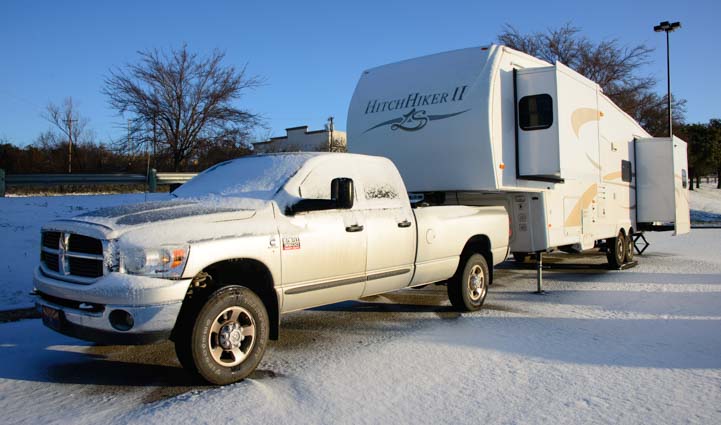
Winter RVing Tips How To Stay Warm in an RV

Brrr…How do you stay warm inside of this??

WINTER RV TIP #1 – STAY IN BED UNDER THE COVERS TIL SPRING!

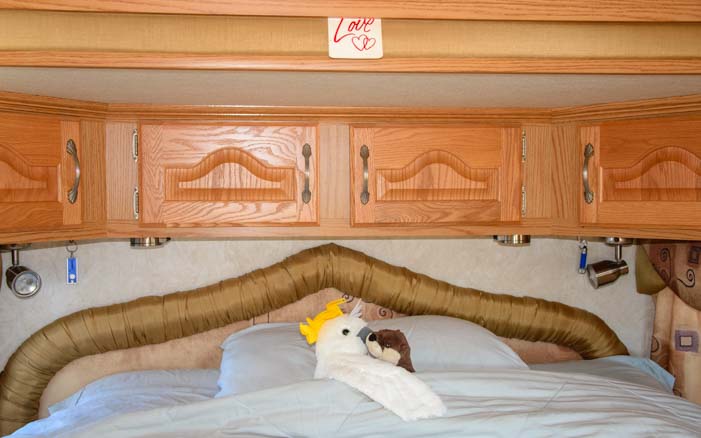
One winter RVing tip is to go to bed and stay in bed until the spring wildflowers begin to bloom. Our two little RV companions, Chrissy the cockatoo and Weazie the ferret (named for former beloved pets) seem to have decided to go that route this year.
Winter RVing how to keep warm in an RV

One solution – jump under the covers and stay there until Spring!!

WINTER RV TIP #2 – GET AN EFFICIENT SPACE HEATER!

A better option is to get a good and efficient heater. The factory installed propane furnaces that come with most RVs is very inefficient. The blower uses a lot of electricity. What’s worse, the heater goes through a lot of propane, because much of the hot air is exhausted outside the RV (just go outside on a cold day and put your hands by the RV furnace vent — they’ll be warm in a jiffy!).

If you will be plugging into electric hookups a lot, and staying for just a few days at a time in most of the places you travel to (with no metering on the electricity and unlimited power built into the overnight camping fee), then it makes sense to get a really great electric space heater.

WINTER RV TIP #3 – INSTALL A VENT-FREE PROPANE HEATER!

If you are going to be boondocking (or dry camping), out in the southwestern deserts — or even in Florida or Texas — then you will need an RV heater that is efficient both in its use of electricity and its use of propane. The best option is a vent-free propane heater.

Winter RV tips vent-free blue flame propane heater

We LOVE our vent-free propane heater.

We have been using ours since Mark installed it in 2008, both during the winter and the summer, and we love it. We have a whole blog post explaining how this kind of heater works, what the technologies are behind the different styles of vent-free propane heaters on the market, what kind of heat each type of heater produces, and how to install one here:

Choosing and Installing a Vent-Free Propane Heater in an RV

We have used this heater from sea level to 10,000′ altitude year round, and we share some tips for heating strategies we’ve used when we’ve camped on a lofty mountaintop as temps plummeted and a snowstorm rolled in:

How to Heat an RV in Cold Weather and Winter Snowstorms


WINTER RV TIP #4 – GET A PORTABLE VENT-FREE PROPANE HEATER!

Mr Buddy Portable Propane Heater Staying warm in an RV

A portable vent-free propane heater is an easy way to go.

If you love the idea of using an efficient propane heater that doesn’t use any electricity, but you’re not keen on doing a permanent installation, another great option is to get a portable propane heater.


WINTER RV TIP #5 – INSTALL A VENT-FREE PROPANE FIREPLACE!
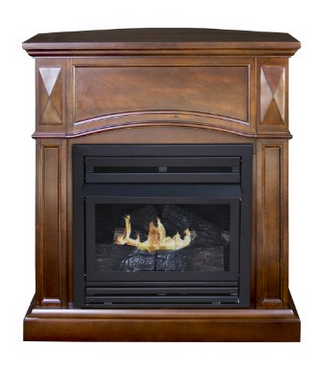
Pleasant Hearth Vent-Free Propane Fireplace 35 inch

How about a vent-free propane FIREPLACE?!!

On the other hand, if you are outfitting the RV of your dreams for a life of full-time RV travel or of winter snowbirding RV adventures, then you might consider installing a vent-free propane fireplace that is built into an elegant mantel. These heaters give off the same incredible heat as the more industrial looking vent-free propane heaters, but they have the cozy and inviting appearance of a fireplace and produce a beautiful (and mesmerizing) flame. What a great addition to an RV!!


WINTER RV TIP #6 – SHRINK-WRAP YOUR RV SCREEN DOOR!

One of the easiest ways to winterize an RV is to shrink-wrap the screen door. By covering the screen door with a thin layer of plastic, you can keep the big RV door open all day long, close the screen door, and let the sunshine fill your rig with light and warmth. It is really surprising that just a thin layer of plastic on the door is all it takes to keep the cold air out and let the warm air in (if you aren’t in sub-freezing temps!!).

Winter RVing Tips Shrink-wrap RV screen door

Shrink-wrapping our RV screen door keeps the cold air out and lets the sun shine in!

We learned this trick from our RVing mentors, Bob and Donna Lea, in our first winter of RVing back in 2007-08. The beauty is that the installation of the shrink-wrap is less than a one hour job, and you can remove it in the springtime in just a few minutes.

Winter RVing how to stay warm in an RV use Window Shrink Film

Window shrink-film kit

We love having shrink-wrap on our screen door so much that we’ve gone through quite a few summers without removing it. Up in the mountains, it can be chilly in the summertime, with a brisk breeze blowing into the rig in the mornings, so the shrink-wrap can work its magic there too, and it also keeps the dust out.

This year, however, we took the shrink-wrap off our screen door when we got into the heat and humidity of the northeastern states in August, so we had to reinstall it just a few weeks ago.

To get started, all you need is

  1. Pair of scissors
  2. Razor blade (or boxcutter or sharp knife)
  3. Hair Dryer
  4. Window Shrink Film kit
Winter RVing Tips - Tools to Shrink-wrap RV screen door

All the tools we used to shrink-wrap our screen door.

The window shrink film kit comes with double-sided tape, and all you have to do is outline the door with the tape, remove the backing, press the plastic onto the tape, trim off the excess and then heat it up with a hair dryer to make the plastic taught. It is best to clean the frame of the door with alcohol or film remover first so the tape adheres well.

Winterize an RV screen door attach double-sided tape

Press the double-sided tape along the frame of the door, going around the plastic sliding insert
by the door handle.

Go around the little slider opening for the door handle, because you need to be able to slide this open and closed (the shrink-wrap is covering only the screened parts of the door!). Then peel the backing off the tape all the way around the door.

Winter RVing winterize screen door remove tape backing

Remove the backing from the tape.

Press the plastic onto the sticky tape around the door frame.

Winter RV Tips - Winterize screen door and hang plastic shrink film

Hang the shrink wrap around the door frame.

Then use a razor blade to trim off the excess all the way around the door. Get the plastic as taught as you can. It doesn’t have to be perfect, though, because all the wrinkles will be taken care of in the next step.
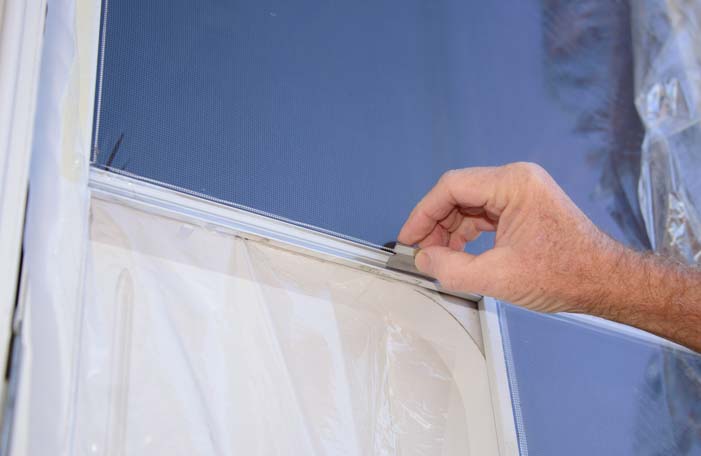
Winterize RV screen door - trim off excess plastic shrink film

Use a razor blade or box cutters to trim off the excess plastic.

Using the hair dryer on the high setting, wave it gently back and forth over the edges of the door. The plastic will miraculously shrink up and become taught.
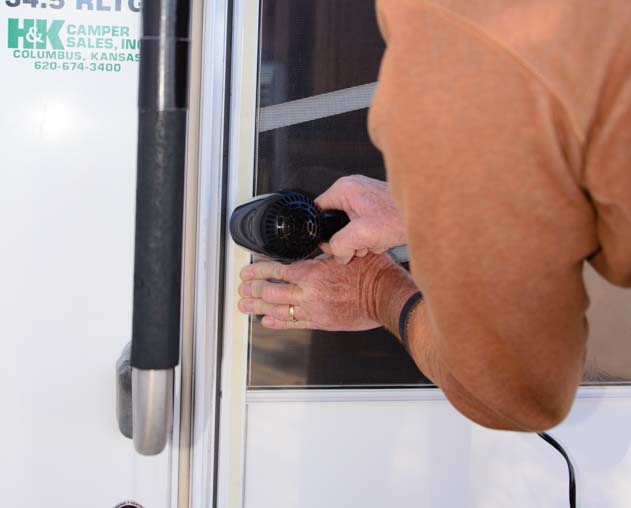
Shrink-wrap RV screen door and use hair dryer to shrink plastic film

Use a hair dryer on the high setting to shrink up the plastic along the door frame.

Once you’ve gone around the frame of the door, wave the hair dryer across the middle to tighten that up too. Keep the hair dryer moving so it doesn’t melt the plastic in one spot.

Shrink-wrap RV screen door and shrink plastic film with hair dryer

Keep the hair dryer moving and wave it across the plastic to tighten it up.

If it’s cold out, you can always give yourself a blow dry too!

That hot air feels good!

.

Once it is done, open the outer RV door open and close the screen door. The warm sun will pour in, but the cool breezes will stay outside!
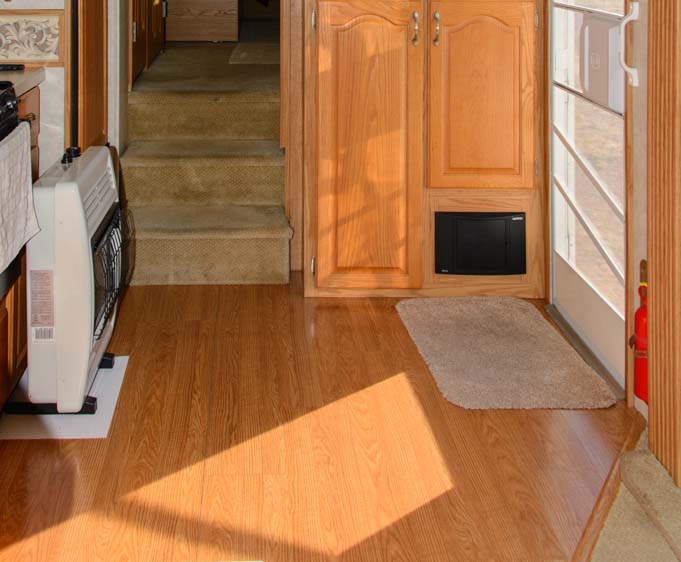
Winterize RV screen door sunshine comes in

Morning sunshine fills our kitchen

Note: Since publishing this post, we have refined our shrink-wrap system even further. We have found that it is easy to make this into a Dual Pane system but adding a second layer of shrink-wrap film on the INSIDE of the RV door. What a world of difference this second layer makes!!


WINTER RV TIP #7 – ORIENT THE RV WINDOWS (and DOOR) TOWARDS THE SUN

Every RV floorplan is different, with the largest windows and the door placed in various locations, depending on how long it is and whether it’s a trailer or a motorhome. Take a look at where your biggest windows are, and try to orient the rig so those windows are in the sun for most of the day.

Our biggest windows are in a big slideout on the curb side (passenger side) of the trailer and also in the rear of the coach. So, in the wintertime we are best off orienting our rig with the truck headed northeast. This places our biggest windows towards the southeast and southwest.

In the summertime, the opposite is true as we try to avoid having our windows facing the sun. Our best orientation in the summertime is for the truck to be headed northwest. This way, although we get blasted with some sun in the morning, our biggest windows are blissfully shaded during the long hours of blazing hot sun as it shines from the south and sets in the northwest.

This does place our RV refrigerator in direct sunlight during the hottest hours of the day in the summer, but we’ve never had trouble keeping our food cold with the fridge on the highest setting during those hot months (of course, our fridge died recently, but we discovered that that was to be expected because of its age!).
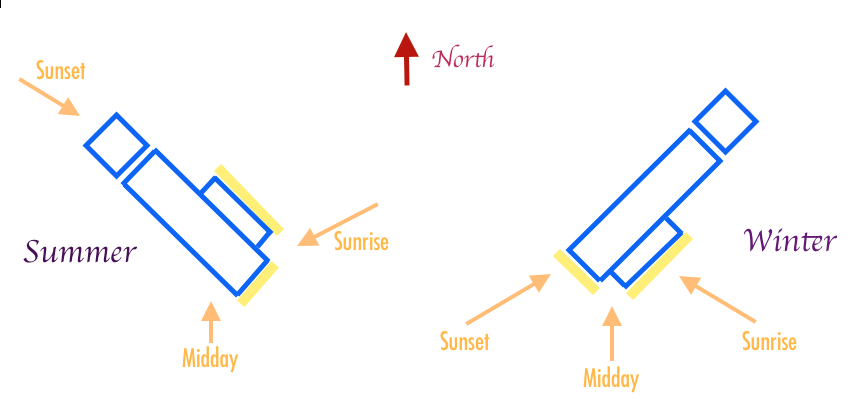
How to stay warm in an RV Orient the RV windows towards the Sun

For our rig, it’s best to orient the truck to the northwest in summer and the northeast in winter.

Note that the sun doesn’t travel the same arc in the sky in the summer months as it does in the winter, as shown by the orange arrows in the graphic above.

In the dead of summer, the sun rises in the northeast and sets in the northwest. During the day it is high in the sky, almost directly overhead. In mid-winter, the sun rises in the southeast and sets in the southwest, traversing a very low arc in the sky. At its highest, the sun is only halfway up the sky. These low angles are advantageous for keeping an RV warm in winter, however, as the sun shines directly in the windows into the center of the coach.

WINTER RV TIP #8 – INSULATE THE HATCH VENTS

The RV roof may have some fabulously high R-rating that the manufacturer proudly touted when you bought it, but that applies only to the parts of the roof that are solid. Most RV vent hatch covers are thin pieces of plastic, and they don’t have much of an R-factor at all.

You can give the vent hatch covers a hand by using a hatch vent insulator. These have reflective insulation on one side to make them even more effective.

How to keep warm in an RV Hatch vent insulating pillow

A hatch vent insulator really helps!.

Another option is to cut styrofoam to the exact dimensions of the hatches. When we bought our fifth wheel trailer from the manufacturer NuWa Industries, we asked them to cut four pieces of the Blue Dow insulating styrofoam that they used in the walls to the exact dimensions of our four roof hatches.

The great thing about having insulation on the hatches is that they work both summer and winter. We often use ours in the summertime when we leave the rig for the daytime hours.

Another helpful benefit is that they block out all light. So, if you are parked under a bright light or there is a full moon that wakes you up as it shines right in your eyes, you can block out the light with an insulator in the bedroom hatch.

How to stay warm in an RV hatch vent insulation

We use Blue Dow foam from the fifth wheel walls cut to the dimension of our hatches


WINTER RV TIP #9 – DEALING WITH CONDENSATION!

One of the biggest annoyances in cold, winter weather in an RV, is condensation. If you run a vent-free propane heater while boondocking, whether it’s a portable heater or one that is permanently installed, condensation will build up on the insides of the windows when the dew point is at a certain level.
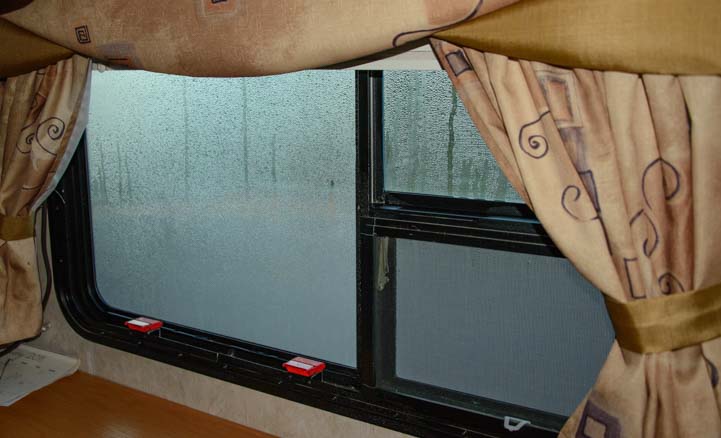
Condensation on an RV window in winter

Insulation on our windows – ugh!

You can minimize the condensation build-up by running the RV furnace for a while to blow out the moist air. You can also open a window a crack, or open the RV door for a bit.

Absorber XL towel wipe away condensation

Absorber towels sop up moisture with ease.

The fastest way to deal with the condensation is simply to wipe it off with an Absorber towel. As the name implies, these towels are incredibly absorbant. They are most effective when they are damp, so they come with a little plastic container that will keep them damp for months.

Simply wipe the window and then wring out the towel. And repeat. Once the window is dry, give it a final swipe with a soft microfiber towel. This gets rid of any streaks.

To make your life easier during the winter condensation season, remove the window screens and put them in a closet. This way, you aren’t fighting with the screens every time you wipe down the insides of the windows.

How much do we love our Absorber towels? We have two — blue for him and red for me!


WINTER RV TIP #10 – INSULATE THE WINDOWS AT NIGHT

Like the big roof insulation R-factor that doesn’t account for the hatch vents, the well advertised high R-factor in the walls doesn’t account for the windows, which is where much of the heat in a rig escapes, especially at night. Closing the blinds makes a difference. When we’re in a remote area with no one around, we prefer to keep the blinds open so the first light of morning fills the rig. But we can’t do this in the wintertime unless we want to wake up to a rig that is 5 degrees cooler than it could be.

Likewise, on the worst of the cold winter nights, covering the windows with Reflectix insulation makes a big difference. This aluminum foil insulation comes in a big roll, and you can cut it to the exact dimensions of each window. Just use a marker to write on each one which window it’s for.

To put one of these window insulators in place, simply hold it against the glass and then lower the blinds over it. In the case of our biggest one in the back of the rig, we rest the bottom of it on a spare pillow so it doesn’t slip down.

Reflectix insulation keeps heat from escaping out an RV window

The window-sized piece of Reflectix Insulation is held in place by the window shade.

We keep all of them rolled up together in a closet and use them both summer and winter. In the summertime, they help immensely with keeping the heat out during the day.


WINTER RV TIP #11 – USE THE OVEN

One of our favorite ways of warming up the inside of our buggy is by baking. Mark is the Resident Baker in our household, and there is nothing like a batch of yummy muffins or a fresh loaf of banana bread coming out of the oven to warm us up inside and out!

How to stay warm in an RV baking muffins

On a brisk morning, there’s nothing like a fresh loaf of banana bread coming out of the oven!

After the baking is done and the oven is off, we keep the oven door open for a while so we can enjoy the residual warmth as it cools down. By the way, we recently discovered Chiquita banana bread mix, which is absolutely delicious and tastes just like a loaf made from scratch. It requires two bananas, and lately Mark has been adding raisins to it too.

On a cold afternoon, we’ll bake something in the oven for dinner. The longer it takes, the warmer the buggy will get during the baking process! Anything from frozen pot pies or lasagna to a whole chicken does the trick nicely.


WINTER RV TIP #12 – DO SOME EXERCISES

As soon as we wake up in the morning, we do some modest exercises. We might be shivering when we first turn on the vent-free heater, but a quickie round of 25 sit-ups and pushups always gets the blood flowing, and by the time we get in a few rounds with the hand weights, we’re sweating and turning the heater off!

This is also a great way to work off those extra calories from the tasty muffins, sweet breads and pies that keep coming out of our oven!

Exercise to keep warn in an RV in winter

One way to take the chill off — do a set of sit-ups. Still cold? Roll over and do a set of push-ups!


WINTER RV TIP #13 – PLAY THE FIREPLACE DVD

Fireplace DVD How to stay warm in an RV

Fireplace video.

This may sound a little goofy, but a video of a fire burning in a fireplace is really fun and makes the rig cozy. The video simply shows logs in a fireplace burning down to embers, accompanied by the crackling sound a fire makes. It is surprisingly realistic, and quite funky. The crazy thing is that whenever we play it, the person sitting in the recliner closest to the TV always feels a little warm on the side by the fire!


WINTER RV TIP #14 – INSULATE THE HOT WATER HEATER and HOT WATER PIPES

To conserve propane, we always heat the water just once a day, right before we take our showers. After we’re done, we have warm water for dishes, etc. By insulating the hot water heater, the water stays warmer longer. We also put insulating pipe foam on the hot water pipes that run from the heater to the shower and the vanity and kitchen sinks.

Taking a shower in an RV in the winter can be a numbing experience if temps got to freezing the night before, no matter how hot the water is in the hot water heater, because the cold water has to run through the pipes before the hot water reaches you in the shower.

If we are conserving water, we’ll bring a small cooking pot into the shower and run the cold water into it. Then we’ll warm that water up on the stove later for dishes or whatever. Even though it’s less than a quart of water, this way it’s not wasted on our bodies as we hop around in the shower shouting expletives and soaping up our goose bumps!

For more tips on heating an RV, see these articles:

How to Heat an RV in Snow Storms and at High Elevations

How to Install a Vent-Free Propane Heater in an RV

 
Thank you for using any of our links to Amazon to shop online. When you access Amazon this way, anything you put in your shopping cart right after that results in a small commission to us at no cost to you (no matter what you buy) and helps us keep our site online.
It’s a true win-win — THANKS!

Below are some of our most POPULAR POSTS (also in the MENUS above)

Buddy - A Journey in Spirit - The story of an event that changed our lives forever.

ARTICLE INDEXES
  • RV Tech Tips Articles - A one page index of links to all our RV Tech Tips, RV Upgrades & RV Maintenance articles.
  • RV Lifestyle Tip Articles - An index of links to all our RV Lifestyle Tips (finances, boondocking, major repairs, work/jobs, etc.)
  • Solar Power Articles - Overview and tutorial articles for how to design and install solar power on an RV or boat
  • Product Reviews - An index of links to all of our Product Reviews
RV UPGRADES, SYSTEMS & TIPS MONEY FULL-TIME RV LIFESTYLE GEAR STORE
  • Gear Store - A list of the goodies, equipment and gear we've found useful in our RV lifestyle!
 

Subscribe
Never miss a post — it’s free!

Our most recent posts:

More of our Latest Posts are in the MENU.   New to this site? Visit RVers Start Here to find where we keep all the good stuff. Also check out our COOL NEW GEAR STORE!! *** CLICK HERE *** to see it!

Space Craft RV Factory Tour – Custom 5th Wheels Made To Order!

October 2015 – During a wonderful 8 month season of RV travel that had taken our fifth wheel trailer 10,000 miles from Arizona to Big Bend Texas to Florida’s Gulf Coast and up through the Smokies via the Blue Ridge Parkway to Nova Scotia and then over to Acadia National Park in Maine and west through New York’s Finger Lakes, culminating with a fabulous stop in Maysville, Kentucky, we had not only seen some beautiful sights, but we had visited several RV and trailer repair shops on the way.

Custom fifth wheel trailer RV by Space Craft Manufacturing

How about a new custom fifth wheel trailer from Space Craft Manufacturing?!

After installing disc brakes in our trailer in Texas, an upgrade we have been grateful for every single day since, we replaced a bent trailer axle in Maine, followed by swapping out a dead RV refrigerator in Indiana.

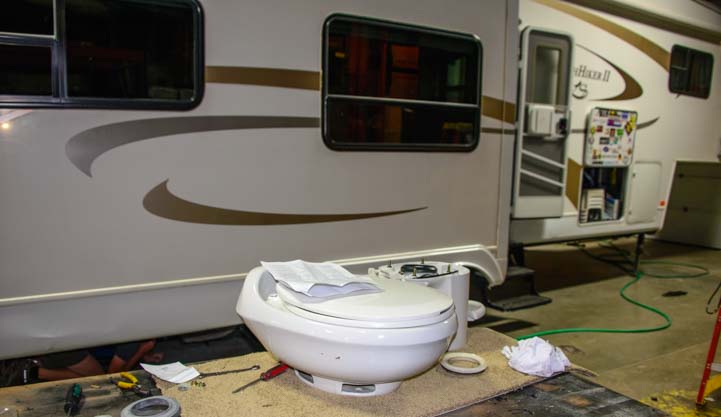
In Kansas, we tackled a slew of plumbing repairs, from a new fresh water tank to a new kitchen faucet, rebuilt toilet, new black tank sensors, new black tank sewer valve, and a repaired window leak, among many other things. And our trailer still has suspension issues.

Besides being grateful for our RV warranty, we began to wonder: at what point do you give up on an aging RV and get a new one?

Space Craft Manufacturing custom fifth wheel trailer RV

A newly completed Space Craft 30.5 fifth wheel trailer

On our way from our refrigerator repair to our plumbing repairs, we stopped in to visit the unusual custom fifth wheel builder, Space Craft Manufacturing. We have known about this company for a long time, and were thrilled to be able to take a peek at their facility.

Space Craft’s primary market is the carnival and circus industry. These traveling folks work full-time and are very hard on their trailers. One client, we learned, lives with his leopard and his chimpanzee in his fifth wheel. He came to Space Craft looking for a design that could give both of his companions a comfortable home in his trailer — along with a little space for him too!

Maple kitchen Space Craft Manufacturing 5th wheel trailer RV

Inside the 30.5 – beautiful custom built maple cabinets

Circus folk don’t have the time to fuss with repairs. They need rugged trailers that hold up to big cats and great apes! Out in Space Craft’s used trailer lot, we saw a bunch of 2014 and 2015 top-of-the-line fifth wheel trailers that had been traded in for Space Crafts after just one season on the road, because they weren’t up to the job.

The beauty of getting a Space Craft is you can have anything you want. They build trailers from 30′ to 57′ long, and they outfit them with whatever kinds of cabinets you want, whatever floorplan suits your fancy, whatever paint job you think is cool and whatever appliances and components you deem vital to your personal happiness on the road in an RV.

Have It Your Way!

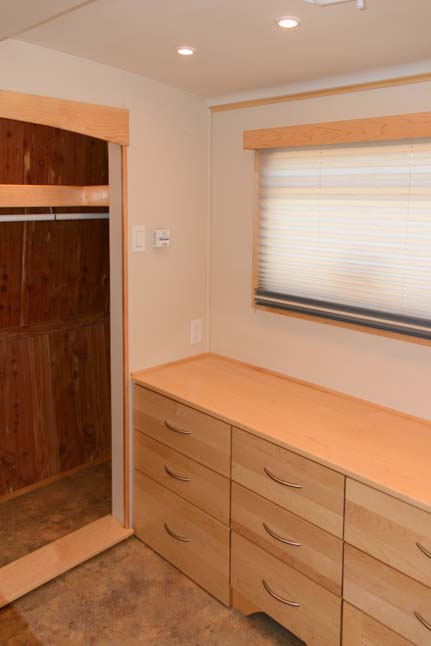
RV bedroom Space Craft Manufacturing custom fifth wheel trailer

Cedar closets and a beautiful maple dresser. The furnace blows from under the dresser rather than floor ductwork.

In town, we chatted with a gal that has lived in Concordia, Missouri, home of Space Craft Manufacturing, all her life. She says the locals there are all accustomed to Space Craft’s unusual customers who swing through now and then for repairs or to upgrade to new units. Space Craft is located right behind a rest area on I-70, though, and interstate travelers are often shocked when they see an elephant or a giraffe grazing in the grass just beyond the trees!

When we first poked our heads in the door of a finished Space Craft 30.5 fifth wheel trailer, we were astonished by the quality. Every inch of the trailer radiated hallmarks of rugged construction. Frankly, all other fifth wheels we’ve been in (including our home and other popular and expensive units) are weekend toys by comparison!

RV living room Space Craft custom fifth wheel trailer

This buyer wanted house-like painted walls rather than wallpaper fiberboard

Space Craft is a family owned business run by Marsha Trautman and her son Wyatt. They don’t bother with marketing, because they just don’t need to do it, although they do take a trailer showcasing unique design features to the Tampa RV show most years. They build 10 to 15 units a year, and right now, they are booked with orders for a full year in advance. To get in line, just put down a 25% deposit on your new trailer.

Outer wall of an RV slide-out room

The frame of the outer wall of a slide-out room

Space Craft does everything in-house. They build their own frames and pay extraordinary attention to details that most manufacturers overlook. Rather than focusing on a standardized fleet of sexy floorplans with luxurious furnishings and fixtures, they ensure the underpinnings of each trailer are top notch, something buyers often forget to think about when they are seduced by a beautifully appointed RV living room at a dealership.

Tiny details like the superior construction of slide-out rooms are a given. Most manufacturers build slide-out rooms with multiple joints and rows of screws holding things together, making them prone to leaks. At Space Craft, every slide-out room is built with a single sheet of fiberglass covering the roof and sides, with nary a screw to be found.

Seamless slideout customer 5th wheel trailer Space Craft Manufacturing

Seamless slide-out construction – no chance of leaks

Underneath, their trailers are equally uncluttered, and there is no flimsy corrugated plastic screwed to the bottom. Just pure, fine lines and solid construction.

Space Craft manufacturing clean underbelly custom fifth wheel trailer

Even the underbelly has fine lines and no dangling parts or corrugated plastic sheeting.

Space Craft builds what you request, and they have blueprints for hundreds of different designs they’ve built already to give you ideas.

When I chatted with Wyatt, Space Craft’s designer, about what he feels is important in fifth wheel construction, he made it plain that easy access to all components and leak-proof, solid construction were his first priorities. Whereas many other brand new full-time fifth wheel trailers place important systems and components in out-of-the-way places, Wyatt puts every system in a spot where it will be easy to service or replace.

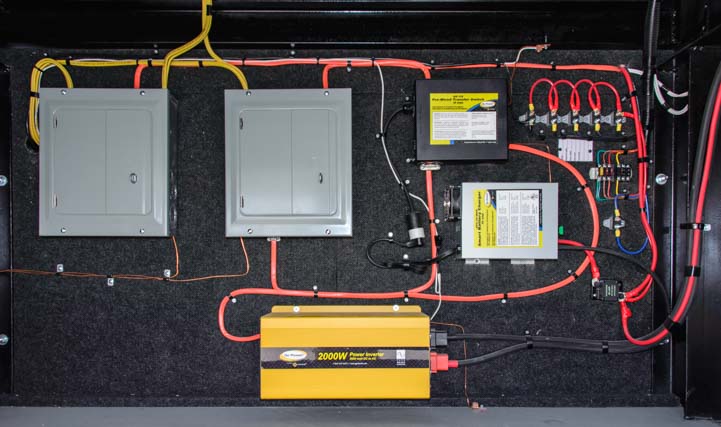
Electrical compartment Space Craft custom fifth wheel RV

Now THIS is a well dressed RV electrical installation!

The DC and AC wiring in the basement of a Space Craft is a sight to behold. Beautifully done!

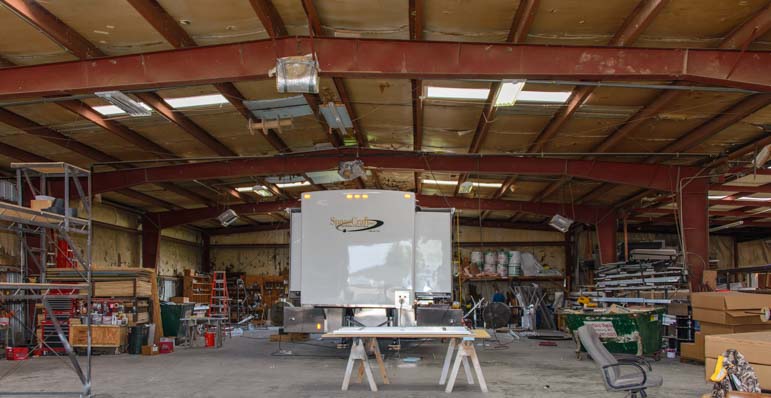
Only one Space Craft trailer is built at time by a handful of loyal and skilled employees. While we were there, a 53′ two bedroom, two bathroom model was in the finishing stages on the line.

Space Craft Manufacturing custom 2 bedroom 2 bathroom trailer

Space Craft produces one meticulously built trailer at a time.

Many of the Space Craft trailers are two bedroom, two bathroom luxury models, designed for carnival and circus owners. Many others are “bunkhouse” units that have four to six entrance doors on one side going to individual bedrooms to house employees on tour.

Space Craft Manufacturing custom 53' fifth wheel trailer RV_

During our visit, a 53′ two bedroom two bath model was on the line.

However, Space Craft has built loads of smaller fifth wheels for full-time RVers, although Wyatt said with a smile that none of their buyers are first-time owners. Afterall, it is impossible to know what custom options you’ll want or need in a full-time rolling home before you’ve been on the road a little while.

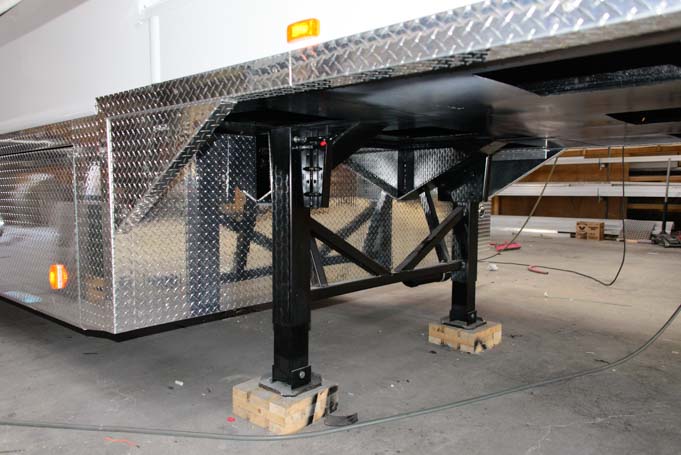
Space Craft Manufacturing custom fifth wheel RV landing legs

Ummmm…our landing legs don’t look anything like that!

What does one of these babies cost? I was astonished to discover that a 37-38′ fifth wheel would come in around $125k to $150k, depending on options like hydraulic leveling, disc brakes, pre-installed solar power, generator, etc.

Solar panels on a Space Craft custom fifth wheel RV

This buyer wanted two 100 watt solar panels. They’ll install whatever you ask for!

That is very comparable to the MSRP on Continental Coach (Forks RV), DRV (Thor), Luxe (Augusta RV) or New Horizons semi-custom fifth wheels. The nice thing is that if you want a top quality unit that doesn’t have an island kitchen and is in the mid-30′ range, a nearly extinct mass-market design, Space Craft can engineer and build it for you. They can even build in a beautiful vent-free propane fireplace with real flames and a wooden mantel as a cozy centerpiece for those cold winter nights!

Space Craft Manufacturing custom kitchen 53' fifth wheel trailer RV

Custom kitchen built to the buyer’s specs

If you travel with unusual pets, no matter how big or how exotic, Space Craft will surely take it in stride and will build the rolling home of their (and your) dreams!

Space Craft Manufacturing Logo

.

Subscribe
Never miss a post — it’s free!

More info about Space Craft:

Related Posts – Cool Factory Tours and Different Kinds of Trailers:

Our most recent posts:

More of our Latest Posts are in the top MENU above.
New to this site? Visit RVers Start Here to find where we keep all the good stuff!!

<-Previous || Next->

Thanks for the Great Times, Maysville KY!!

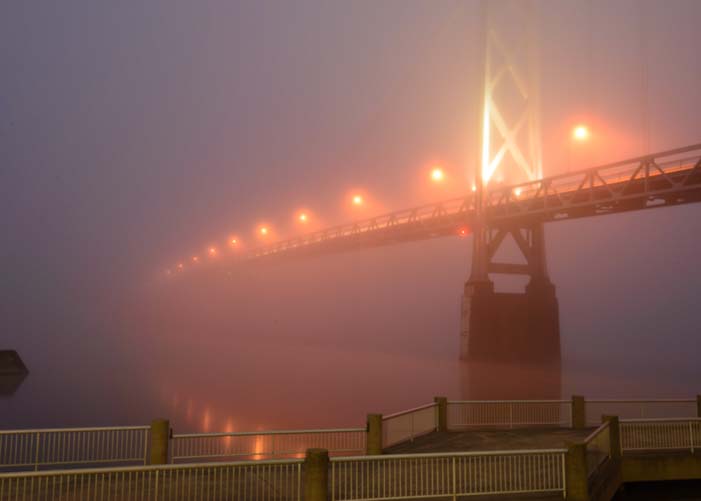
September 2015 — It’s been well over a month since we left Maysville, Kentucky, but our travels there were so special that we have a few more tales to tell and photos to share in one last blog post here. For starters, Mark got up early one morning and caught the town’s classic suspension bridge lit up in the mist just before dawn. What a beautiful sight!

Misty Lights Simon Kenton Memorial Bridge Maysville Kentucky

Lights in the mist at the Simon Kenton Memorial Bridge in Maysville Kentucky

During our stay in Maysville we happily became regulars at O’Rourke’s Neighborhood Pub. Every afternoon we joined a special group of newfound friends for a pint. We ended up meeting lots of people and got caught up in conversation whenever we stopped in.

One particularly hot and sultry afternoon, as we were relaxing over a pint on the patio, Mark noticed that his buddy sitting next to him, Jeff, was all suited up for a running race. “When’s the race?” Mark asked him. “In about an hour!” Jeff said, grinning, “You should do it!”

O'Rourke's Pub Maysville Kentucky

In two short weeks, we became regulars here at O’Rourke’s Neighborhood Pub

To my complete astonishment, after Mark polished off his Guinness, he got up from the table and took off to put on his running gear too. I felt like a total bump on a log, but I was glued to my chair and couldn’t possibly imagine doing a 5k run at race pace right about now!

In no time, Mark returned in his running shorts and shoes and headed down the street to the registration table at Limestone Landing. It’s a good thing he had all that hydration in him, even though it was beer, as this particular afternoon was truly sweltering with 95 degrees heat and 95% humidity to boot! I was dripping with sweat just sitting in a chair in the shade!

As I followed him to the starting line, I saw a whole slew of young kids lined up for a photo op. How fun! The heat wasn’t fazing them one bit. They were raring to go!

5k running kids Maysville Kentucky

Kids pose before the start of the 5k race

Suddenly, the race started and they were off. A whole pack of people of all ages ran past me and vanished down the road.

The finish line was in front of the bar (perfect!), so, with nothing to do while they were gone, all of us bumps-on-logs went back to enjoying our beers and chatting on the back porch of the pub. I felt a little guilty for not doing the race too, but not that guilty!!

After a while we saw some heads bobbing in the distance, and along they came.

Finishing the 5k race in Maysville Kentucky

From bar stool to finish line in record time

Mark sprinted over the finish line looking much too fresh for all that exertion, but he admitted he was pretty pooped. The kids, however, were just getting started. As a band played in the streets, they jumped up on the picnic tables and began to boogie, to everyone’s delight!

Kids dancing on the table Maysville Kentucky

The running race sure didn’t wear out these kids…they were dancing on the tables and ready for more!

Parties in the streets, dancing on the tables, and live music all seemed like such a natural part of day-to-day life here in cute and historic Maysville. If there wasn’t an event going on outside on the brick streets, then there was usually something going on inside somewhere.

Historic alley Maysville Kentucky

No dancing in the street right now, but just wait!

We took in a terrific photography exhibit at the Cox Building one afternoon. Photographer Rad Drew had taken most of the photos with a DSLR camera, but they had all been processed on an iPhone using iPhone apps. The results were gorgeous!

Maysville has its own Opera House which has recently been renovated from top to bottom. This wonderful theater hosts all kinds of performances throughout the year, and we were lucky to catch a fabulous show there.

Maysville Kentucky Opera House

The Washington Opera House in Maysville

We had seen posters around town for a free Elton John tribute concert at the Opera House, and as we sat in the seats of this beautifully restored building, we were transported to a different time and place as performer Lee Alverson channeled the rock star on stage.

Besides his great renditions of old favorites, what amazed us was when an announcer hopped up on stage and listed all the upcoming performances at the Opera House. Not only did the theatrical group the Maysville Players have a major production planned for every other month during the winter, but a medalist in the International Franz Liszt Piano Competition was on tap to perform a few days after we left. This is one busy stage!

Elton John Concert Maysville Kentucky Opera House

Elton John comes to life on stage at the Opera House

There were other kinds of free music being played around town too, and we enjoyed listening to a band at the St. Patrick’s Fall Festival at the historic St. Patrick’s Church in town .

St Patrick's Fall Festival Maysville Kentucky

Playing great tunes at the St. Patrick’s Fall Festival

Just outside of town we found even more things to do. Before Maysville came into being, the village of Washington was settled just a few miles away. The area was first explored by Simon Kenton, and when the town was later formed, one of the trustees was Daniel Boone.

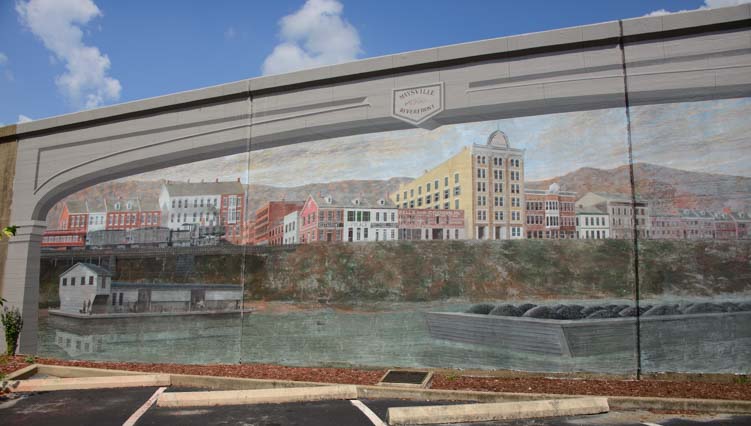
A mural on the flood wall in Maysville shows how the earliest travelers came down the Ohio River on flat boats in the 1700’s. When they built their homes, they dismantled the flat boats and used the boards to build their houses.

Maysville Kentucky floodwall mural early settlement

The Maysville flood wall tells the history of the area, including the arrival of settlers in flat boats on the Ohio River

One such house in Old Washington was built by George Mefford. Those early settlers were made of some pretty tough stock. He lived here with his wfe and thirteen children!!

Washington Kentucky 1790's Settlement near Maysville_

Cozy living: a family of fifteen lived under this roof. Wow!

Another fun building in town is the old post office. Established in 1789, it was the first post office west of the Appalachian Mountains, and it served settlers all the way out to Wisconsin and Minnesota.

Washington Kentucky Post Office near Maysville

The historic post office in Old Washington

The town was also the site of a slave auction that was witnessed by Harriet Beacher Stowe when she was visiting a friend there. That scene later played an important part in her famous book, Uncle Tom’s Cabin.

We were surprised to learn that during the Civil War, Kentucky did not side strongly with either the North or the South, instead finding itself split in its allegiance. Ironically, the little village of Washington was the birthplace of two Civil War generals, one who fought for the Union and one who fought for the Confederacy.

Kentucky was so torn by the war that, at times, the merchants in Maysville were unsure which currency to use to pay their laborers, knowing that if they paid them in the wrong currency it would have no value when the war was over.

One afternoon, we watched a World War II ship sail down the Ohio River. Like so many unexpected events we stumbled into, this one spread by word of mouth around town, and by the time the ship floated past, the banks were full of spectators cheering as the crew yelled out, “Hello Kentucky!” (They yelled “Hello Ohio” to the crowd on the other side!)

US Navy WWII Ship Maysville Kentucky

Sailors on a US Navy ship from WWII shout “Hello Kentucky” as they float by on the Ohio River

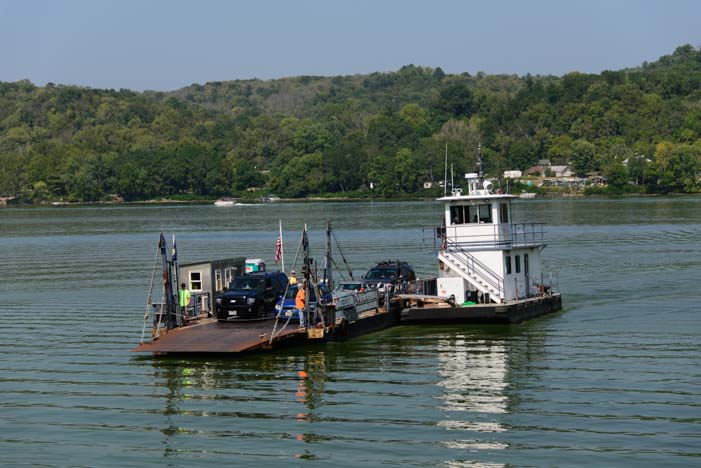
Just a few miles away in the town of Augusta, the Augusta Ferry is a really fun way to get out on the Ohio River. The ride is free for foot traffic and is $5 per car. It takes just a few minutes to cross the river, and it goes back and forth all day long.

“What’s on the other side?” I asked the boatman as I took a spot by the rail.

“Ohio!”

Oh gosh, ask a silly question, get a silly answer! There’s no town on the other side, just a ramp and a dock, so we didn’t get off. But it was fun to see how the cabin compartment of the ferry swiveled around the barge as it turned to go back towards Kentucky.

Augusta Ferry Ohio River Kentucky

The Augusta Ferry offers a free ride to Ohio

We happened to be in Augusta for Augusta Heritage Days, a fall festival featuring a truly awesome car show. Antique cars were driving all over this tiny little village, and they lined up in the grass on the banks of the Ohio.

Augusta Heritage Days car show Kentucky

An antique truck parks on the main drag in Augusta

A trolley shuttled people between Augusta’s main drag and the big park where the cars were on display.

Trolley ride Augusta Kentucky Heritage Days

We hopped on a trolley to go between the town’s main street and the car show at the riverfront park

Mark was in seventh heaven talking to all the car owners, peering under hoods, and admiring glistening paint jobs on sporty cars from every era. As we drove back to Maysville, we found ourselves behind a really cute little yellow convertible. That’s the way to go!

Antique Car Augusta Kentucky

Now, THIS is the way to enjoy the riverside drive between Maysville and Augusta

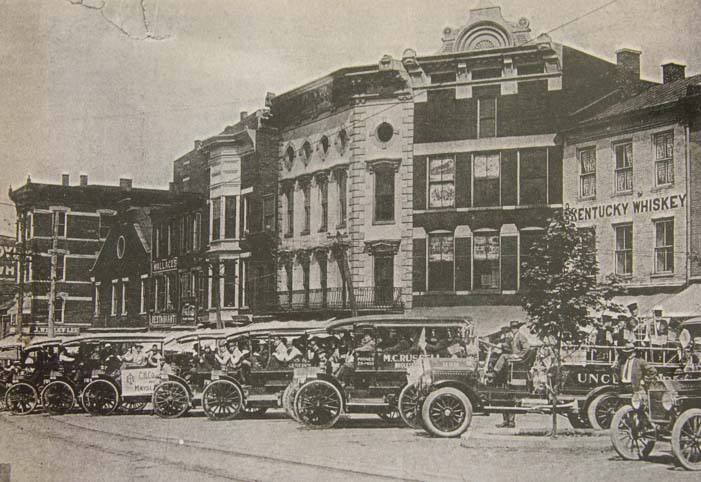
Maysville is steeped in history, and I just loved a photo we saw of Market Street filled with antique cars back when they were the hip new thing to own. We had been in Maysville long enough that I could now recognize not only Market Street but also the buildings that were still standing and the few that were no longer there.

Market Street Maysville Kentucky early 1900's

Antique cars — when they weren’t antique — on Market Street in Maysville

As our happy days in town began to wind down, we ran around getting final shots of the lovely downtown area. We had fun giving them an artsy look.

Maysville Kentucky Historic Town

Historic buildings downtown offer an antique flair in modern times.

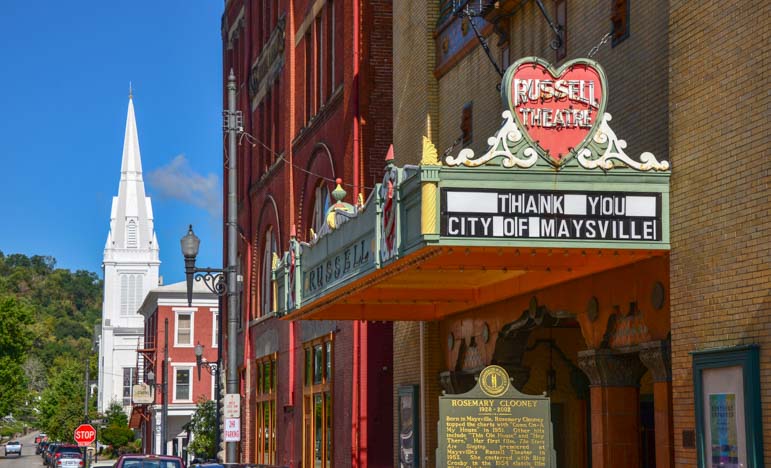
Pretty buildings and beautiful renovations aside, it is the people that ultimately make Maysville special. The warmth, hospitality and friendship we found in this small river town will forever touch our hearts, and we can’t say thank you enough to everyone for letting us feel like locals for a while.

Thank you City of Maysville Kentucky

Like the sign on the Russell Theater says… Thanks!

Subscribe
Never miss a post — it’s free!

Here are some links with more info about Maysville, Kentucky:

Other posts from our RV travels to Maysville, Kentucky:

<-Previous || Next->

We were deeply saddened to learn about a devastating fire in a Maysville apartment building last week that took the lives of a family and their neighbor. Our hearts go out to everyone, and we hope these glimpses of our special days in town last month bring a smile.

Our most recent posts:

More of our Latest Posts are in the top MENU above.

RV Solar Panels – Flexible or Rigid? 12 or 24 volt? Mono or Poly? Yikes!

There are a lot of decisions to make when you install solar panels on an RV or boat. Some of the most basic are: what size solar panels to buy, whether to go with flexible solar panels or aluminum framed rigid panels, whether the solar cells should be monocrystalline or polycrystalline, and whether to install nominal 12 volt or 24 volt panels.

We have done several RV and marine solar panel installations, and we have used not only 12 volt and 24 volt panels of various sizes but we have also used both aluminum framed rigid solar panels and the newer semi-flexible solar panels. We have also worked with both monocrystalline and polycrystalline solar panels. This article outlines the pros and cons of the various types and sizes of solar panels and offers some things to think about when you are deciding which solar panels to buy for your RV or boat.

RV solar panel selection

.

Our article RV Solar Power Made Simple explains how to determine the overall wattage for an RV solar power installation. In general, a weekend / vacation RV can get by with 200 watts or less while a full-time solar power system is best with 500 watts or more.

SOLAR PANEL SIZE and PLACEMENT

Once you decide on overall capacity for your solar panel array, the next thing to think about is solar panel placement and wiring. The panels should be a matched set of identical or nearly identical panels. If you have a lot of real estate on the RV roof, then you can get a few big panels. If you have a truck camper or your RV roof is cluttered with a lot of things on it already (hatches, vents, antennas, etc.), then you may need to go with smaller panels that can be squeezed in and around everything else.

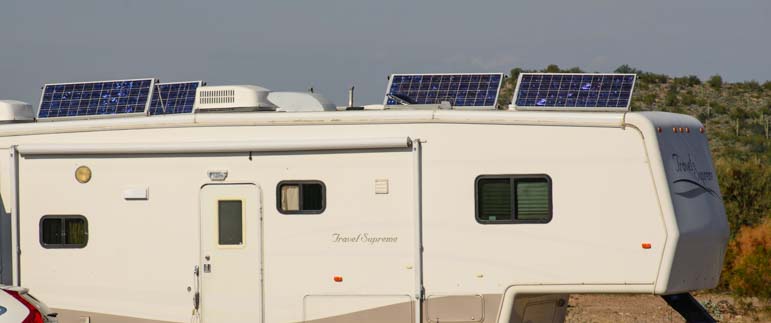
Solar panel installation on a ffith wheel RV

Our fifth wheel trailer is powered by four 120 & 130 watt 12 volt rigid polycrystalline solar panels wired in series

WHAT VOLTAGE IS THAT SOLAR PANEL?

Solar panels are constructed internally with DC wiring, and they are sized to work on 12 or 24 volt circuits. So, they are commonly referred to as 12 or 24 volt solar panels. What’s confusing is that while the nominal voltage of a solar panel may be 12 or 24 volts, the open circuit voltage is higher. So, for a nominal 12 volt solar panel that is 100 watts, the open circuit voltage (“Voc“) will be 17 or 18 volts. Likewise, for a nominal 24 volt panel, the Voc will be 34 to 36 volts.

Also, smaller solar panels (both physically and in terms of watts) are typically nominal 12 volt panels while larger panels are typically 24 volts. Solar panels under about 150 watts in size are usually 12 volt panels. Solar panels over about 150 watts are usually 24 volt panels.

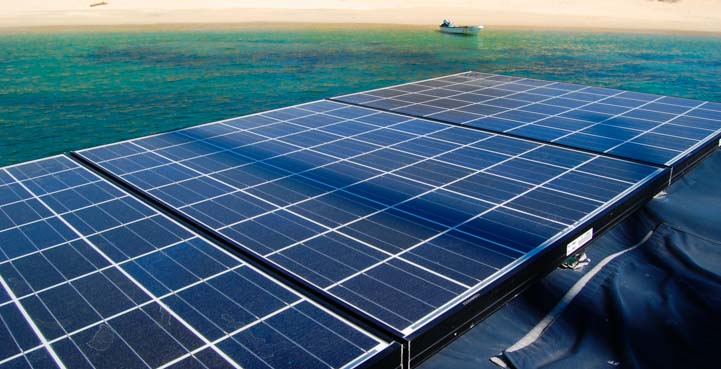
Solar panel installation on a sailboat

For nearly four years, we sailed our boat on Mexico’s coast relying on three 185 watt 24 volt
polycrystalline rigid solar panels, wired in parallel, for all our electrical needs.

Solar panels work best when they are a matched set. The electrical characteristics of all the solar panels in the array need to be very similar, preferably identical. When upgrading a solar power array this can make things complicated as you try to mix and match old small panels with new big ones.

One technique for upgrading is to wire two 12 volt solar panels in series to work on a 24 volt circuit. For instance, if you have two 100 watt 12 volt panels and you are buying a 200 watt 24 volt panel, you can wire the two 100 watt panels in series and then wire that pair in parallel with the new 200 watt solar panel.

This will work as long as the electrical characteristics of the pair of solar panels in series match the electrical characteristics of the single panel that is wired in parallel with them.

THE EFFECT OF SHADE ON SOLAR PANELS

Shade is the biggest enemy of any solar power installation. Unbelievable as it seems, a tiny bit of shade will effectively shut down a solar panel. The impact is dramatic: a few square inches of shade can drop a solar panels current production down from 8 amps to 2 amps. A few more square inches of shade can drop the current production to 0.

Before deciding on the size of the panels, it is worthwhile to take some time to study the various things that might cast shade across them once they are in place. A closed hatch may cause little shade, but when it is open on a hot day, depending on where the sun is in the sky, it might cast a big shadow across a nearby solar panel. Satellite dishes, air conditioners and even holding tank vents can cast sizable shadows as well.

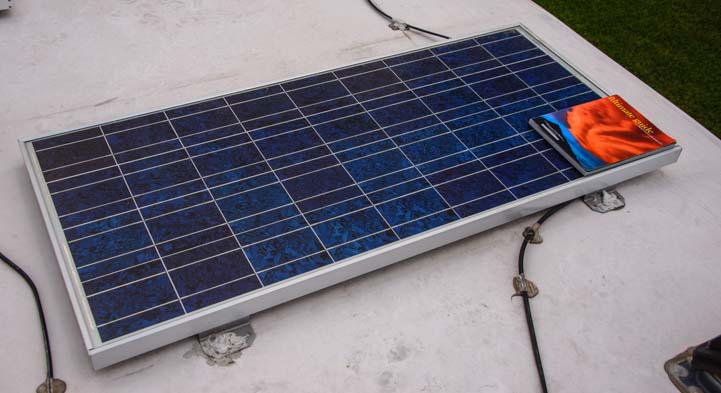
We put a book in one corner of a 120 watt 12 volt panel and discovered that even though it was a small percentage of the surface area of the panel, that 8.5″ x 11″ book was enough to knock down the current production of a 120 watt solar panel by 80%. Rather than producing 7 amps, it produced a measly 1.4 amps. Egads!

Shade on one corner of solar panel

Just 8.5″ x 11″ of shade from this book reduced current production by 80%!

Similarly, shade wreaked havoc on our three185 watt 24 volt panels on our sailboat. The shade from our mast traveled across the panels as the boat swung at anchor, and the current production dropped by 1/3 and then by 2/3 as the shade first crossed one of the three panels and then straddled two of them. It did this over and over, with the current rising and falling repeatedly, as the boat slowly swung back and forth at anchor.

Effect of shade on solar panels installed on sailboat

A line of shade from the mast on our sailboat reduced our solar panel array to 65% and then 35% of its capacity as it traveled across the panels and occasionally straddled two of them.

Shade is a huge concern in the solar power industry, and there are several white papers (here’e one) about the impact of shade on commercial solar panel installations. The gist is the importance of spacing the rows of commercial solar panel arrays in such a way that one row of panels doesn’t accidentally shade the bottom inch or so of the next row behind it when the sun is low in the sky.

If it does, the second row of panels shuts down. If there are rows and rows of solar panels spaced like this, none of the panels except the ones in the first row can function until the sun rises a little higher in the sky.

Solar panels are most sensitive to shade along the longest part of the panel, so in the case of our sailboat, when the sun was over our bow, the mast would shade the panels in a strip that had a maximum impact on current production (as you can see in the above photo)!

For RVers, besides rooftop obstructions, shade comes into play primarily if you park near a building or trees. Snowbirds boondocking in the southwest deserts of Arizona and California during the wintertime have little concern with shade from trees and buildings. But summertime RV travelers who boondock in wooded areas need to be cognizant of where the shade from the trees will fall during the course of the day.

WIRING SOLAR PANELS IN PARALLEL vs. IN SERIES

One of the big decisions for a solar power installation on an RV or boat is whether to wire the solar panels in series or in parallel. There are several things to consider when making this decision.

When the solar panels are wired in series, then the developed voltage across all the panels is additive while the current remains constant from panel to panel. That is, if there were four 120 watt 12 volt panels producing 7 amps each, then the developed voltage across all the panels would be 48 volts (12 x 4) while the current would be just 7 amps.

In contrast, when the solar panels are wired in parallel, then the voltage of the panels remains constant through the circuit while the current is additive from panel to panel. For instance, for those same four panels, the developed voltage across them would be 12 volts but the current would be 28 amps (7 x 4).

The solar charge controller takes care of balancing everything out by ensuring the circuit between it and the batteries is 12 volts. In the case of the above solar panels wired in series, the solar charge controller steps down the voltage from 48 volts to 12 volts (if they are 12 volt batteries). The current then increases from 7 amps to 28 amps in the wire run going between the solar charge controller and the batteries.

In the case of the above solar panels wired in parallel, the voltage is already 12 volts, so the solar charge controller does not need to step it down for the batteries.

SHADE EFFECTS on SOLAR PANELS WIRED IN SERIES vs. WIRED IN PARALLEL

When solar panels are wired in series, if shade hits one panel and shuts it down (caused by that solar panel’s internal circuitry building up a massive amount of resistance), then the entire string of solar panels shuts down. For instance, if a tree shaded 1/3 of one solar panel in the string of four panels given above, wired in series, the current production of the entire array of four panels would be reduced to to 0 amps, even though the three other solar panels were in full sun.

In contrast, if the panels are wired in parallel, when shade knocks one panel out, the other panels are unaffected. So, even if 1/3 of one solar panel were shaded, reducing it to 0 amps of current production, the other three would be working just fine. The total current production would be 3/4 of what it could be if that one panel were in full sun (in this case, 21 amps), rather than 0 amps.

So, it would seem that the best way to wire solar panels is in parallel.

Unfortunately, it’s not that easy, and here’s why:

CURRENT and WIRE SIZE in a SOLAR PANEL INSTALLATION

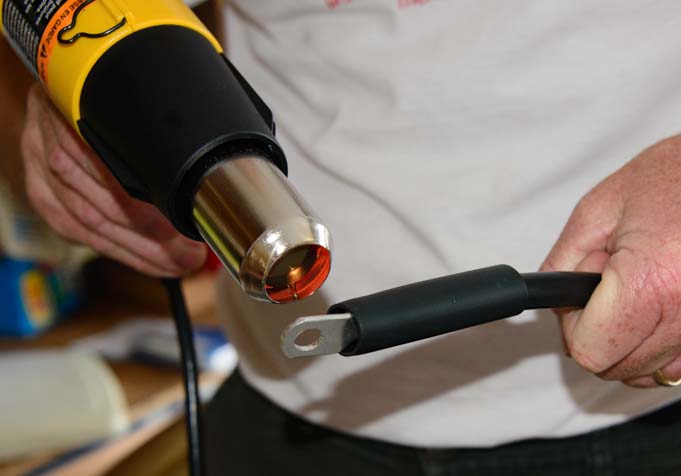
The more amps of current there are flowing in a circuit, the thicker the wire needs to be to ensure that no energy is lost to heat. Unfortunately, thicker, heavier gauge wire is a pain to work with. It’s stiff and doesn’t bend around corners easily. It is hard to tighten down in the solar charge controller connections and it’s hard to crimp ring terminals onto. It is also more expensive per foot.

So, when the solar panels are wired in series, a thinner gauge wire can be used for a given distance than when they are wired in parallel.

Of course, the thickness of the wire is also dependent on the length of the wire. The longer a wire is, the more energy is lost along its length. So, if you are installing the solar panels high on an arch off the aft end of a 50′ sailboat and the batteries are located at the bottom of the hull over the keel, the wire must be a lot heavier gauge than if you are installing the panels on an RV roof directly above the battery compartment.

What is the price difference in the cable? We like to use Ancor Marine Cable because it is tinned and it is very supple (the copper is fine stranded). Here are the price differences for 25′ of 2 gauge wire as compared to 25′ of 10 gauge wire.

Ultimately, there is a dilemma: Is it better to go for thinner, cheaper wire and an easier installation, and wire the panels in series, risking that the whole array will shut down whenever a corner of one panel is shaded by a nearby tree? Or is it better to pay the extra bucks for heavier gauge wire and endure a more challenging installation but have a system that will be more tolerant of partial shade?

What to do?

SOLAR PANEL VOLTAGE and WIRE SIZE

Luckily, there is another option: higher voltage solar panels can be wired with thinner gauge wire. Remember, Watts = Current x Voltage. So, for the same number of watts in a panel, a higher voltage panel will produce a smaller amount of current.

Rather than using four 120 watt 12 volt panels wired in parallel that would produce 28 amps at 12 volts, you can use two 240 watt 24 volt panels wired in parallel that produce 14 amps at 24 volts. The net effect on the battery bank will be the same, but the bigger panels can be wired with smaller gauge wire.

As mentioned above, the wiring that is most affected by these solar panel choices is the wiring that runs from the solar panels to the solar charge controller. The wiring from the solar charge controller to the batteries is the same in either configuration, as the same amount of current will be flowing in that wire regardless of how the solar panels are wired. In the case of solar panels wired in parallel, the voltage will be stepped down in the solar charge controller. So, in our example, the solar charge controller will step down the voltage from 48 volts to 12 volts, ensuring that the circuitry between the solar charge controller and the batteries is at operating at 12 volts.

CHOOSING THE OPTIMAL WIRE GAUGE

The thickness of the wire, or wire gauge, depends entirely on how long the wire is going to be. That is, the wire gauge is determined by how far apart the solar panels and the solar charge controller and the batteries are.

Why is this? The more current that flows in a wire, the more the conductor in the wire will warm up. The more it warms up, the more energy is lost to heat. Eventually, this becomes measurable as a voltage loss between the two end points.

When wiring solar power circuits, you can choose how much voltage loss you are willing to have. Somewhere between 2.5% and 5% is typically considered okay. There are voltage loss tables that will help you decide on the proper wire gauge size for the distance you are spanning between the solar panels and the solar charge controller and between there and the batteries. Here’s a good one:

AWG Voltage Loss Table

An Example: 480 watts of solar power located 27′ from the batteries

  • Say we have four 120 watt 12 volt panels wired in series. If the distance is going to be 27′, then by looking at the third chart at the above link (the 12 volt chart) and going to the line for 8 amps flowing in the wire, it shows a wire run of up to 27′ can be done with 10 gauge wire.
  • Now, imagine putting those same panels in parallel. 32 amps will flow at 12 volts. For that same 27′ distance you’ll need 2 gauge wire.
  • Lastly, instead of using four 120 watt 12 volt panels, use two 240 watt 24 volt panels wired in parallel. For this you use the 2nd chart down (24 volt chart). There will be 16 amps flowing in the wire at 24 volts. You will be able use 8 gauge wire.

Of course, due to the nature of multi-stage battery charging and the changing position (and angle) of the sun in the sky, the solar panels will be operating at full tilt for a very short time each day. They may produce max current for 30 minutes near noon as they wrap up the Bulk Stage, however, as the Absorb stage takes over and continues in the afternoon, the solar charge controller will gradually hold the panels back so they produce far less than max current.

With less than peak current flowing in the wires, less energy will be lost to heat.

If this is confusing, see our articles:
RV and Marine Battery Charging Basics
How Solar Charge Controllers Work

So, although it may seem dire that you’re wiring is on the hairy edge size-wise, it is only that way for a little while each day. Depending on the overall size of the solar power array, the size of the battery bank, and the state of discharge when the batteries wake up in the morning, your system may not even hit the theoretical maximum current production or even come close.

MULTIPLE SOLAR CHARGE CONTROLLERS

Another method of keeping the wire size down is to install more than one big solar charge controller. For instance, you might install several smaller charge controllers for each pair of panels wired in series, or perhaps even one for each panel. Of course, this adds complexity and expense, and you will probably buy less sophisticated solar charge controllers that have fewer programming options than a single big one.

You must run more wires between the RV roof and the location in the coach where the solar charge controllers are installed (preferably next to the batteries), and so you must not only pay for additional solar charge controllers, but you must buy more wire and install it all. However, this design option does deserve mention and consideration.

TILTING THE SOLAR PANELS

Solar panels perform a whole lot better in the summer than in the winter. This is because the sun rides much higher in the sky and its rays hit the panels at a nearly perpendicular angle in the summertime. The days are also a whole lot longer. In the winter, the sun’s rays hit the panels at an angle and the sun is only out for a short while.

Solar panels on a fifth wheel RV roof

Tilting solar panels in winter can improve current production by 30%
Or…install more panels and save yourself from climbing up and down the RV ladder!

To get around this, rather than using ordinary Z-brackets to mount their solar panels on the roof, many RVers use tilting brackets. By tilting the panels towards the sun at about a 45 degree angle (technically, at the angle of your latitude), then the sun’s rays hit the panels at a nice 90 degree angle if they are oriented to face south. This can increase the overall power production by about 30% on a sunny winter day.

The only problem is that you have to climb up on the roof to tilt the panels each time you set up camp and then climb up again later to lay them flat when you are packing up before you drive away. We’ve seen many a winter snowbird driving their RV around with the solar panels still raised.

An alternative is simply to install more solar panels and to keep them lying flat all the time. This is easy for a big RV that has a huge roof but is not so easy for a little trailer with a small roof. We have not installed tilting brackets on our trailers.

MONOCRYSTALLINE vs. POLYCRYSTALLINE SOLAR CELLS

Monocrystalline solar panel

Monocrystalline
solar panel

There are lots of different kinds of solar panels on the market today. There are two primary types of solar cells used in the manufacture of solar panels: monocrystalline and polycrystalline.

Monocrystalline solar panels are more efficient and more expensive, but they are also extremely intolerant of shade. Polycrystalline panels are slightly less efficient and less expensive, but they handle partial shade just a smidge better.

The way to tell if a solar panel is monocrystalline or polycrystalline is to look at the pattern of rectangles on the panel itself.

If the circuitry between the rectangles has large silver diamond shapes, it is monocrystalline. If the pattern of rectangles is just intersecting lines, it is polycrystalline.

Polycrystalline solar panel

Polycrystalline
solar panel

Examples of popular monocrystalline solar panels are here:

Examples of popular polycrystalline solar panels are here:

RIGID ALUMINUM FRAMED SOLAR PANELS vs. SEMI-FLEXIBLE SOLAR PANELS

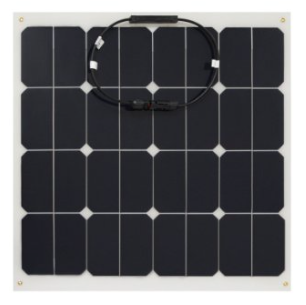
Flexible solar panel

Flexible solar panel

Solar panels can also be rigid or flexible.

Rigid panels are built with an aluminum frame surrounding tempered glass that covers the solar cells.

Flexible solar panels are built with the solar collecting material impregnated into a thin mylar film that is affixed to an aluminum substrate.

Flexible solar panels are not flimsy, they are simply bendable up to about 30 degrees.


There are a number of manufacturers selling flexible solar panels:

FLEXIBLE SOLAR PANEL ADVANTAGES

Flexible solar panels have several advantages over rigid panels. They are a little lighter than framed solar panels and you can glue them onto an RV roof using Dicor Lap Sealant, or something similar. This saves you from the complexity of drilling holes into a perfectly watertight roof and risking creating leaks. This is especially helpful with a fiberglass roof. It takes just a few minutes with a caulk gun to attach these panels to the RV roof.

Another nice feature is that on a rounded roof, like an Airstream travel trailer or Casita travel trailer, the panels can bend to follow the contour of the roof.

Installing solar panels on a motorhome roof

Mark uses Dicor Lap Sealant to affix flexible solar panels to a friend’s fiberglass roof.

One of the most important things for solar panels to work well is heat dissipation. Rigid aluminum framed solar panels stand up off the roof of the RV by about an inch, allowing air to flow underneath and for heat to dissipate. Air can’t flow underneath flexible solar panels. The aluminum substrate serves to dissipate the heat instead. This may or may not be as efficient a method of heat dissipation, and I have heard of a case where all the flexible solar panels on a sailboat had to be replaced after two years because they did not dissipate the heat sufficiently in the tropics and the panels self-destructed.

FLEXIBLE SOLAR PANEL CONSTRUCTION and INSTALLATION

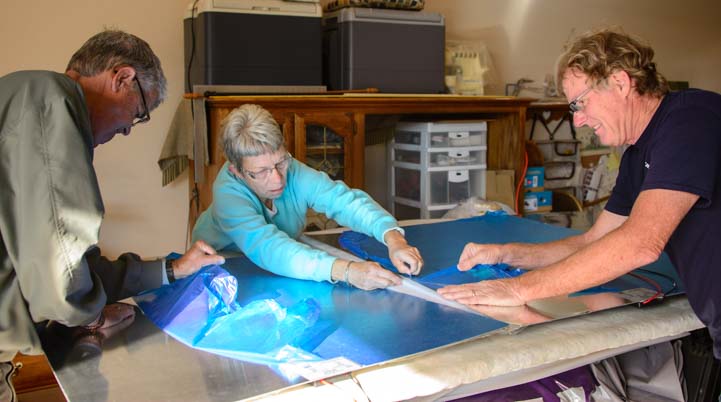
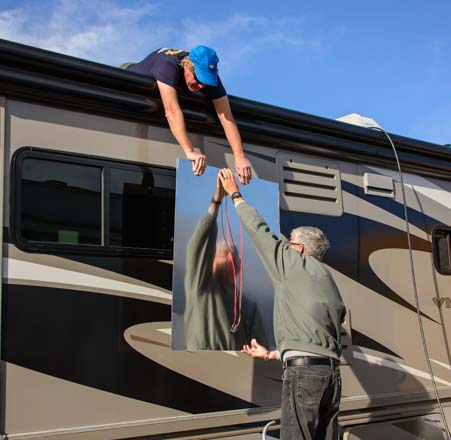
Our RVing friends Dick & Katie asked us to install six 100 watt 12 volt flexible solar panels made by Eco-Worthy on the roof of their motorhome, along with all the other projects involved in an RV solar power installation. Ironically, the hardest part of the entire installation was removing the plastic protection from the aluminum substrate of each panel (it kept ripping!). We all ended up working on this together.

Flexible solar panel installation on an RV

We had a tough time getting the plastic off the back of the Eco-Worthy flexible solar panels

Removing plastic from flexible solar panel

With all of us working together, we got the job done!

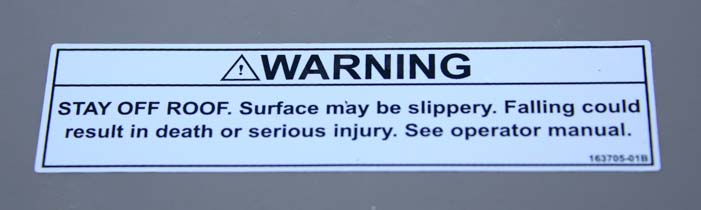
Once we got up on the roof, and got past a cute warning from Winnebego, the installation was straight forward.

Warning slippery roof on RV

Hmmm…I wonder what sage advice the manual suggests for this problem?

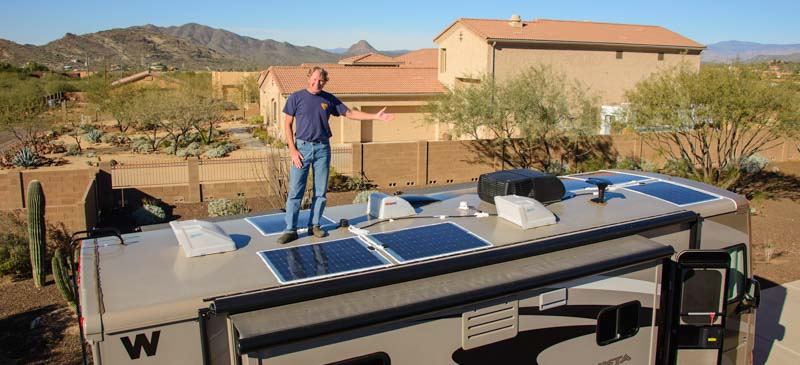
Solar panel installation on a motorhome RV

Flexible solar panels are lighter than their rigid counterparts

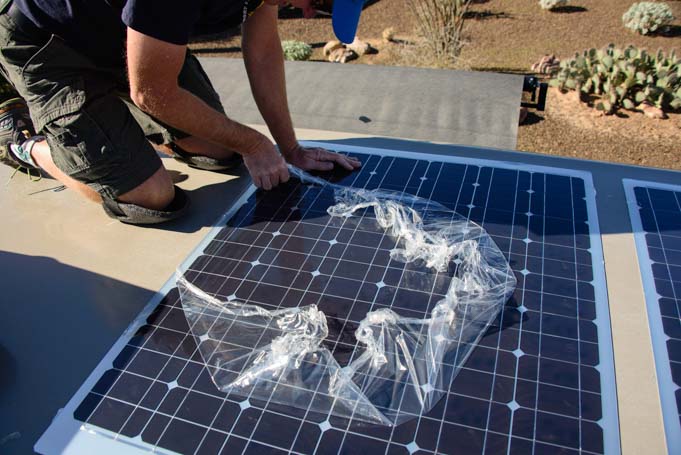
The plastic protection needed to be removed from the face of the panels as well. Interestingly, at one point Mark found himself picking at the corner of the mylar that has the solar collection circuitry embedded in it and almost began to peel that whole layer off the aluminum substrate! But once he got a hold of just the most superficial layer of plastic, it came off easily.

Removing plastic from flexible solar panel

Mark removes the plastic from the face of the flexible solar panels

He used Dicor Lap Sealant to tack down the corners of the panels and then ran a bead around each side of each panel.

FLEXIBLE SOLAR PANEL DISADVANTAGES

Flexible solar panels are less efficient than rigid aluminum framed solar panels, which means you may want to get a few more total watts of solar panels than you would if you were buying framed panels. Bendable panels also can’t be installed on tilting brackets. So, again, buying more total watts may be the best solution.

Flexible solar panels are not as rugged as rigid aluminum framed solar panels built with tempered glass. Overhanging branches can scratch them. This is important for anyone that will be boondocking or dry camping a lot on public lands and in rustic public campgrounds, as it is often impossible to get in or out of a site without ducking under some low lying tree branches.

Some RVers have found that flexible solar panels installed on flat motorhome roofs tend to pool water when it rains. This can lead to debris building up and taking root and damaging the panels.

Perhaps for all these reasons, flexible solar panels are sold with a much shorter warranty than rigid solar panels. Whereas many solar panel manufacturers warranty their tempered glass aluminum framed rigid solar panels for 25 or 30 years, bendable solar panel manufacturers generally warranty their panels for 5 years or less.
This may or may not be relevant for RVers, as the fine print in almost every solar panel manufacturer’s warranty states that their solar panels are not warrantied for use on mobile vehicles.

Also, there has been a huge problem across the entire solar power industry with rigid solar panels failing prematurely in large numbers in big commercial installations (see a May 2013 NY Times article here). Apparently, just because those lovely rigid solar panels are warrantied for decades doesn’t mean they will last that long. We have already had a failure of one of our framed solar panels that was warrantied for 25 years, and we discovered the manufacturer’s warranty did not apply to RV installations.

However, as a general rule, when manufacturers warranty a product for 5 years versus 30 years, it says something about how they think their product will hold up over time.
Flexible solar panels installed on a motorhome RV roof

Nice job! (but don’t fall off that roof!)

CONCLUSION

There are many ways to go about installing solar power on an RV roof, and the solar panels that work best in one installation may not be the same as those that are best for another. Not only is every RV roof different, but every RVer’s needs are different.

If you have loads of space on a big motorhome roof or fifth wheel trailer roof, and you are setting it up for full-time use, you may be best off with three or four 200+ watt 24 volt rigid solar panels wired in parallel. If you have a little tear drop camper you use on weekends and store in the garage, a single flexible 100 watt 12 volt panel may be just the ticket for you.

Subscribe
Never miss a post — it’s free!

Related articles about Solar Power on RVs and Boats:

Related articles about Batteries and Battery Charging:

Our most recent posts:

More of our Latest Posts are in the top MENU above.

RVers Jason and Nikki Wynn have written about the condition of their flexible solar panels after a year of use HERE

Maysville Kentucky – Tobacco, Freemasons, Miniatures & Clooneys!

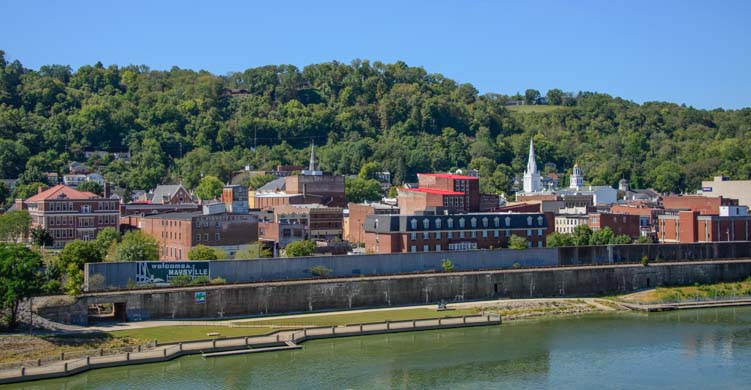
September 2015 – We stayed in Maysville Kentucky for two weeks, and every day was filled with fun things to do. Some of our favorites were various tours we took around town.

Dawn Simon Kenton Memorial Bridge Maysville Kentucky

Dawn in Maysville, Kentucky

Kentucky is tobacco country, and Maysville once flourished as the heart of the burley tobacco industry. Burley tobacco leaves are what give cigarettes their flavor, and the climate and landscape here is ideal for growing this kind of tobacco.

Tobacco fields mural Maysville Kentucky

A mural on the Maysville floodwall shows the view of a tobacco field during the harvest
as seen from inside a barn where the cut leaves have been hung for drying

This is a very labor intensive industry, and it seemed that all the guys we talked to had worked in the tobacco fields at some point when they were younger. It almost seemed as if it was a rite of passage to spend some teenage years making money out in the hot sundrenched tobacco fields or climbing high up in the barns where the leaves are carefully hung to dry.

Tobacco drying in a barn Mason County Kentucky

Tobacco leaves drying

Our friend Norbert wanted to be sure we experienced this unique aspect of Maysville life, and he took us out to some fields to see the harvesting in action. We’d never seen tobacco fields before, but in no time we could recognize the broad, yellowing leaves from a distance. We wandered in and out of a few barns utterly wide-eyed at the painstaking effort it takes to cut and dry a tobacco plant’s precious leaves.

Tobacco leaves hanging in a barn Maysville Kentucky

Burley tobacco, which gives cigarettes their flavor, is the leaf that is grown here

Apparently, farm machinery has been developed to take some of the back breaking effort out of the cutting process, but it doesn’t do the job nearly as well as human hands. As sweat poured down our brows in the sweltering Kentucky sun, we watched a bunch of strapping young men bounding on and off of tractors, cutting the leaves, loading them up on trucks and driving them off to the barn.

Cutting tobacco leaves Maysville Kentucky

Cutting tobacco is very labor intensive work.

As we followed a truck to one of the barns, we noticed other trucks loaded with tobacco leaves on the roads too. This was cutting season, and now that the plants were ready to be harvested, it was all hands on deck to get it done.

Cutting burley tobacco leaves Maysville Kentucky

Harvesting tobacco

In the barns, we watched in amazement as these young men leaped up into the rafters effortlessly. They were nimble, strong and quick on their feet. Sidestepping out along the beams, they each took a wide stance facing the racks of leaves, and then the bucket brigade began.

Guys on the ground unloaded the leaves from the truck and passed them up to waiting hands in the rafters that, in turn, passed them higher. And so it went, up and up and up until the guys at the top placed the leaves on the racks to dry.

Burley tobacco leaves drying in a barn Mason County Kentucky

Young men climbed high in the rafters and passed the tobacco leaves up from hand to hand

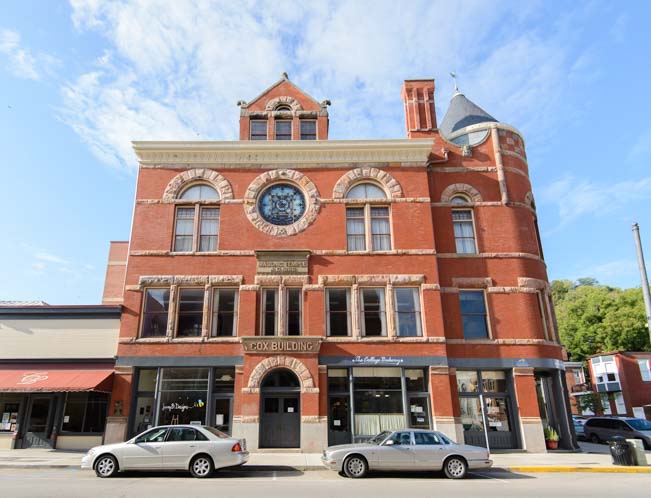
The tobacco industry has all but disappeared today, but the elegant buildings of downtown Maysville are testament to a time when the local industry thrived. One particularly beautiful building is the Cox Building

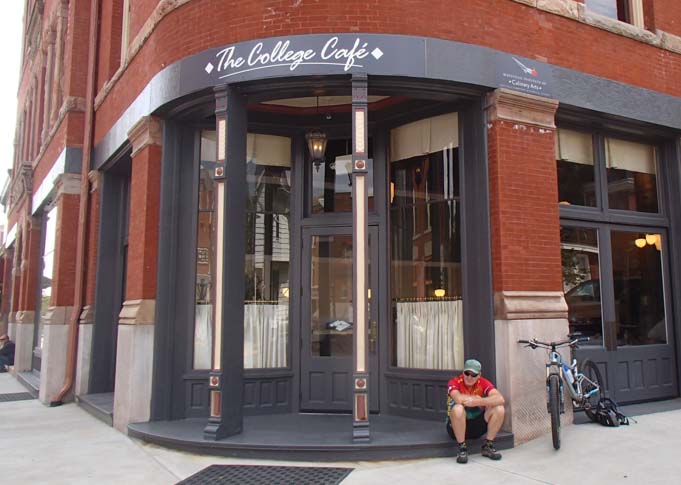
When we first arrived, everyone kept sending us to the Cox Building. Afterall, not only is it home to the College Cafe, with its yummy desserts and inexpensive gourmet Friday lunches, but it also houses the visitors center on the second floor.

And everyone kept telling us, “Make sure you take a tour of the Cox Building too!”

When we poked our heads inside the door of the visitors center, we saw an enormous corner office with a big desk and huge windows overlooking the town.

Cox Building Maysville Kentucky

The elegant Cox Building.

Suddenly we heard a perky, welcoming voice greeting us, and we quickly got caught up in a rapid fire conversation with a petite and vivacious gal named Suzie. As she talked to us about how much she loved living in Maysville, we were struck that she didn’t have even a hint of that leisurely, drawn out Kentucky drawl we’d been hearing around town. She spoke with a British accent!

She was talking so fast about the history of Maysville and the history of Kentucky that I was still scratching my head to figure out out how a Brit came to be the visitors center’s hostess of this very cool and quintessentially American town as we found her leading us up the stairs on a tour that would soon reveal the many hidden secrets of the stately yet mysterious Cox Building. But how unique and special it is that a small town filled with people who grew up together welcomes not just tourists but new residents with such open arms!

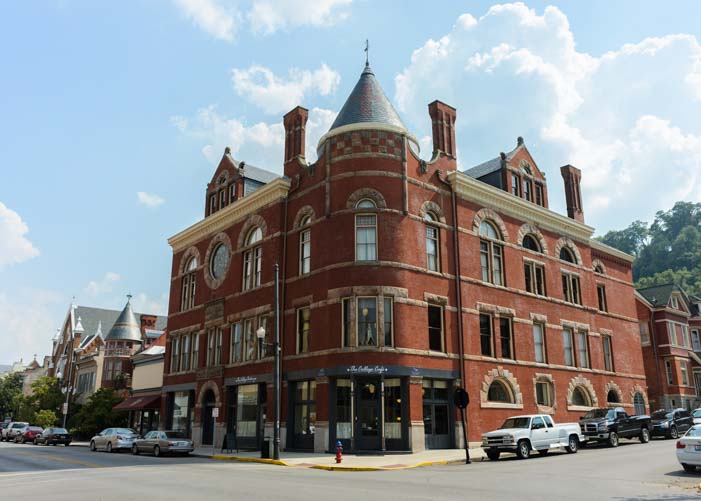
Cox Building Maysville Kentucky

You’d never guess what lies inside this building!

It turns out that the Cox Building is a Masonic Temple and that the Freemasons of the York Rite Knights Templar built it to their very unusual specifications over a century ago. In the last few years, the building has been lovingly restored, and by some stroke of luck, what might have been a very superficial makeover was given a chance to become a very detailed restoration.

Masonic Temple stained glass window Cox Building Maysville Kentucky

A beautiful stained glass window in the Cox Building.

Back in 2010, the Cox Building suffered a terrible fire caused by the heat of a workman’s light igniting the tinder dry interior wood. The whole town watched in horror as flames shot out of the turrets (there are heart wrenching photos of the fire on the first floor of the building).

That fire could easily have been the end of this magnificent building. However, a wise insurance agent had insisted that the town guard against disaster and insure the building for its true value. So, when this disaster struck, they were financially prepared.

But of course! This is, after all, a town that has been trained to prepare for disaster by the Mighty (and unpredictable) Ohio River!

The insurance claim allowed the town to attend to every detail in the building’s reconstruction, and what details there are. The frescoes on the walls and ceilings are exquisite!

Masonic Lodge Cox Building Maysville Kentucky

The Asylum is an enormous room that is decorated with fabulous frescoes on the walls and ceiling

I won’t give away all the secrets of the Cox Building here, because the mysteries of the building and its Masonic origins are best experienced in person. The unusual architecture, bizarre staircases, and obscure symbols etched on everything from interior door hinges to exterior stonework all left us reeling.

So, we’ll join the chorus: When you visit Maysville, take a tour of the Cox Building!

Maysville Kentucky Cox Building Masonic Lodge Knights Templar

Unusual symbolism of the York Rite Knights Templar

Another special tour we enjoyed was through the Kentucky Gateway Museum. The entire history of Maysville is written out and shown with pictures in great detail, from the arrival of Simon Kenton and Daniel Boone, who settled the area, through the rise of industry, to the rise of the Ohio River floodwaters. (By the way, the Boone family tavern was down by the river and you can see headstones of the Boone relatives buried in the Pioneer Cemetery in town).

Our favorite part, however, was the miniatures exhibit. The Kathleen Savage Miniatures collection is a stunning display of building replicas done in exact one twelfth scale, that is, where one inch equals one foot.

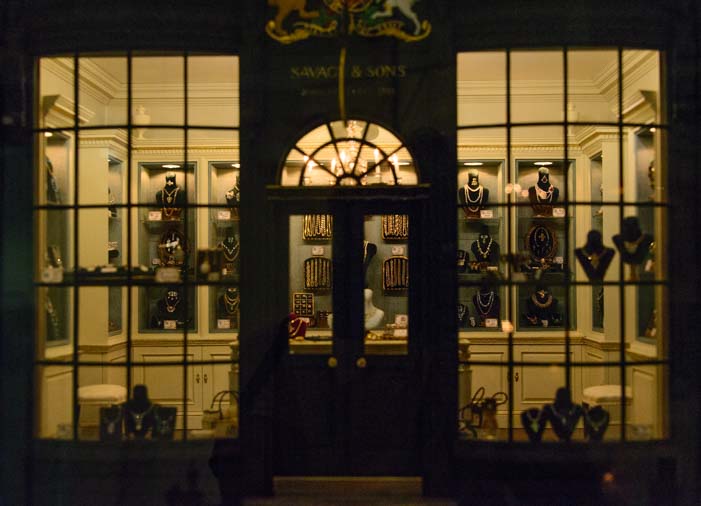
Jewelry store Miniature collection Kentucky Gateway Museum Maysville KY

Photos of the miniature replicas belie their size because the scale is perfect unto itself.
This jewelry store is just inches tall.

There are living room interiors and dining room interiors complete with furniture and table place settings (imagine a fork or spoon in perfect 1/12 dimensions!). One of our favorites was the jewelry store. Peeking into the well lit store through the windows and door, you can see jewelry on display. Every piece is crafted with real gem stones!

The centerpiece of the whole exhibit is a replica of Princess Diana’s ancestral home.

London Spencer House Lady Diana Ancestral Home Miniature Collection Kentucky Gateway Museum Maysville

The extraordinary London Spencer House,
Princess Diana’s ancestral home

The exterior of this building is extremely grand, and I found that while I was peering at the enormous dining room and luxurious bedrooms I could almost imagine what life would be like inside such a home. Being served at the long dining room table or relaxing in the library almost seemed possible!

All of the miniatures have paintings on the walls along with candles and vases and all the other decorations that go with an elegant home. The surprise in Spencer House was seeing miniature portraits of Diana herself!

Miniature Display Kentucky Gateway Museum Maysville Kentucky

The table settings and wall decorations are all exquisitely made.

Maysville boasts another wonderfully skilled craftsman who brings antiques to life, but in full, lifesize scale. Joe Brannen replicates antique furniture in a wonderful workshop at the end of the main drag in town. We stopped by to visit and were instantly enveloped in the deliciously pungent smell of wood.

Joe Brannen Antique Furniture Reproductions Maysville KY

Joe Brannen showed us his fine furniture reproductions workshop

Joe has every woodworking tool imaginable, and there are pieces of wood on the workbenches that are in every stage of transformation from raw wood to fine works of art. Out front we saw the finished products: beautiful pieces of museum quality furniture.

Joe Brannen Antique Furniture Reproductions Maysville Kentucky

Each piece is expertly made, bringing 1790’s furniture to life today.

Maysville boasts its own homegrown Hollywood celebrity family fame too. Singer Rosemary Clooney was born in Maysville in 1928, and her nephew, George Clooney grew up in the area.

Rosemary Clooney Flood Wall Mural Painting Maysville KY

A mural on the Maysville floodwall honors hometown sweetheart Rosemary Clooney

Celebrity sightings are fairly common in Maysville, and when we had dinner overlooking the river at Caproni’s, we admired a huge display of dinner plates signed by all kinds of dignitaries that have eaten there. Front and center, of course, was a plate signed by George Clooney!

George Clooney Plate Caproni's On The River Maysville KY

Rosemary’s nephew, George Clooney, ate at Caproni’s too!

We thoroughly enjoyed Maysville, Kentucky, but what really surprised us during our stay was how many events there were going on. It seemed that every day there was some kind of special gathering, and in no time our usually empty Day Planner was full to overflowing with activities. We just had to stick around!

Subscribe
Never miss a post — it’s free!

NOTE: The timing of this post is really unfortunate. I discovered after publishing it that in the same moments that I was writing about the Cox Building fire above, another horrific blaze was burning in a group of row houses in downtown Maysville. These were buildings we knew well from our runs and walks in town. Tragically, five people died in the fire, a mother, her three young children and a neighbor. Words can’t express the grief we feel for our special friends in this beautiful and vibrant town as they rally together once again in the face of unspeakable loss.

Our most recent posts:

More of our Latest Posts are in the top MENU above.

Here’s a little more info about some of these special spots in Maysville:

If you take your RV to Maysville, there are two RV parks across the river in Aberdeen, Ohio, that have a great view of the town:

Other posts from our RV travels to Maysville, Kentucky:

<-Previous || Next->

When Reality Interferes with Fun RV Travels and Blogging!

This week was one of those weeks where our idyllic lifestyle of sightseeing and playing in beautiful places had to be put on hold while we took care of some important repairs on our fifth wheel trailer. We have been waiting for these repairs since we were in Nova Scotia three months ago where the rough roads bent an axle on our trailer and caused a leak in our fresh water holding tank.

Kansas Sunrise

A stunning Kansas sunrise!

We were able to replace our trailer axle in Maine over two months ago at Harvey RVs, an outstanding RV repair facility in Bangor. Unfortunately, they did not have a fresh water tank in stock that would fit our trailer. I doubt any RV repair facility would stock such a tank, as they are generally custom made to fit between the floor joists, with fixtures and plumbing connections placed in locations that are unique to each RV.

RV fresh water tank in fifth wheel trailer underbelly

Getting ready to remove the fresh water tank.

So, we decided to return to Chanute, Kansas, where our trailer was built in 2007, to have the fresh water tank replacement done at the NuWa service center. We were assured they had the proper fresh water tank in stock.

Since we were relying on our RV extended warranty to cover the fresh water tank replacement cost, we decided to have a few other broken things taken care of at the same time. We had been living with these broken items for a while, as they weren’t too critical, but because each one qualified to be repaired under warranty, we could bundle the repairs together and get them all fixed at once while paying just one warranty deductible for everything.

RV toilet replacement repair

RV toilet rebuild — fun fun fun!!

The day of our repair appointment in Kansas finally came on Monday this week, and we have had a whirlwind (tornado?) of a week as we watched and assisted as many as five mechanics working on our rig at once, all day long, for three days. To add to our own personal confusion, we had to move out of our trailer and into a motel for a few days.

Turmoil in our RV

Chaos reins!

All of our repairs were related to water in some way, with most of them having to do with either our fresh water or sewer water plumbing systems. For the entire job, our precious rolling home straddled an open grate in the floor that serves as the RV dump station for the shop. This is where they fix clogged black tanks and replace broken ones. They had just replaced five black tanks the week before we got there!

RV fresh water holding tank replacement

Our new fresh water tank gets installed.

This meant that for three days both we and the mechanics were lying on and scooting around on the (often wet) floor that was layered with who knows what kind of muck, from who knows whose rigs.

RV holding tank valve replacement

New black tank valve…nice!

Of course, most people don’t hang out with their mechanics when their RV is being worked on, but we were with them every step of the way. We learned a lot about how RVs are put together, and we were able to catch quite a few bloopers that would have bitten us big time down the road.

RV kitchen faucet replacement

A new kitchen faucet goes in.

Being present throughout the repair process ensured us that everything was installed correctly using best practices (i.e., using teflon tape and hose clamps where needed, installing all the o-rings that came with the replacement parts not just some of them, and testing each repair after it was finished). Several projects on our list were done two or three times to get them to 100%.

This was awesome for us in the long run, because we knew our repairs were being done well, but it was exhausting to live through. Needless to say, there wasn’t any creative writing or blogging going on!

Fifth wheel RV window removed

Rear window removed.

But life is groovy once again and our buggy is back together and fully functional. NuWa provides an awesome cleaning service after a repair job, and Sharon did a terrific job making sure our living areas were clean before we left. Once we were back in the wonderful (and nearly free) city RV park, we followed her lead and shampooed the carpets and detailed the exterior of the rig too.

Washing our fifth wheel RV

Working hard…well, one of us is!

With this big interruption behind us, and with a huge sigh of relief, we are now planning to leave Kansas in our wake and head south through Oklahoma and Texas over the next few weeks before turning west. Yay!

Oh yes — and that Trailer Warranty we have through Wholesale Warranties? What great fortune that we had it, as these repairs came to $1,242, and all we had to pay was the $100 deductible.

Note added later: Sadly, we had another major repair waiting for us just a few weeks in the future when our trailer suspension failed when we got to Phoenix, Arizona for the holidays. Here’s how the warranty has worked for us to date:

Here's a summary of what our four year RV warranty through Wholesale Warranties cost, what our repairs WOULD HAVE cost, and what our warranty reimbursements have been to date:

Cost of Warranty $1,904
Total Cost of Repairs we've had done $7,834
Total Out of Pocket Costs for those repairs $1,145
Repair Reimbursements:
Trailer Axle Replacement $1,036
RV Refrigerator Replacement $1,647
Plumbing Issues & Window Leak $1,142
Suspension Replacement $2,550
RV Toilet Replacement $314
Total Repair Reimbursements $6,689

Our trailer warranty has paid for itself 3.5 times over!
Confused about the nitty gritty fine print buried in RV Extended Warranties? Here's an excellent detailed explanation!!

If you are thinking about getting a warranty for your trailer or motorhome, Wholesale Warranties is offering a $50 discount to our readers. Just mention that you heard about them from our website, Roads Less Traveled, and the discount will come off the quoted price at the time of purchase. You can get a quote from them here:

Wholesale Warranties Quote Form

Subscribe
Never miss a post — it’s free!

Similar stories of our adventures with RV repairs and installations:

Our most recent posts:

More of our Latest Posts are in the top MENU above.

Wet Cell vs. AGM Batteries & Wiring Tips for Installation on an RV or Boat!

There is a world of difference between wet cell batteries (also called flooded batteries) and AGM batteries for use in an RV or marine battery bank, because AGM batteries are totally sealed, maintenance free and keep the user from coming into contact with battery acid (electrolyte). In a nutshell, the advantages of AGM batteries over wet cell batteries are the following:

  • AGM batteries are maintenance free, which means:
    • They don’t need periodic equalizing to clean the internal plates and never need the electrolyte topped off with distilled water.
    • They do not release gasses during charging, so they don’t need special venting in the battery compartment.
    • Since gasses are not released, the terminals and battery cables do not corrode over time and don’t need to be cleaned.
  • AGM batteries discharge more slowly than wet cells, so an RV or boat can be stored for a few months without charging the batteries.
  • AGM batteries charge more quickly than flooded batteries because they can accept a higher current during the Bulk charging phase.
  • AGM batteries can be installed in any orientation, which is helpful if installation space is limited.
  • AGM batteries can’t spill battery acid if they are tipped over. This is especially important when a boat heels excessively or capsizes. (Not that you’d be too concerned about spilling electrolyte if your boat were upside down!)
RV battery upgrade from 6 volt wet cell batteries to AGM batteries

.

OUR ORIGINAL BATTERY INSTALLATION

We used Trojan T-105 wet cell (flooded) batteries for nearly six years in our fifth wheel trailer, and they worked great. They were installed in our basement compartment, all lined up in a row. This was a custom installation that was done by H&K Camper Sales in Chanute, Kansas, when we purchased our trailer new from the NuWa factory in 2008.

Fifth wheel RV battery boxes in basement

Four 6 volt golf cart batteries installed in our fifth wheel basement

The original battery compartment was designed at the NuWa factory to hold two 12 volt Group 24 batteries. Group 24 batteries have the same footprint as 6 volt golf cart batteries but are about an inch shorter. We had 2″ angle iron bolted onto our fifth wheel frame so the four batteries could stand side by side in battery boxes.

Angle iron supports under an RV fifth wheel battery bank

2″ angle iron is bolted onto the fifth wheel frame
to support the batteries.

There were four venting flex hoses that ran from the battery boxes to four individual louvered vents on the front of the basement on either side of the hatch door.

RV 5th wheel basement with 6 volt battery boxes

Each battery box is vented to the outside with flex hose going to a louvered vent cover.

These batteries worked well, but because we put our RV in covered storage for 4 to 20 months at a time during the four years we cruised Mexico’s Pacific coast on our sailboat, we were not actively present to take care of the the battery charging and maintenance duties. Despite our best efforts to have someone do this while we were gone, when we moved off of our boat and back into our fifth wheel, we found our four Trojan wet cell batteries were completely dead and unrecoverable.

We replaced these batteries with four inexpensive 6 volt golf cart flooded batteries from Costco. These new batteries did not last. Within 18 months, the internal plates had sulfated badly, they took forever to charge, and they discharged extremely quickly.

6 volt wet cell batteries in fifth wheel RV basement

Upgrade time! We removed the old wet cell batteries and replaced them with AGMs.

In April, 2015, while staying in beautiful Sarasota, Florida, we replaced our wet cell batteries with four fabulous new Trojan Reliant T105-AGM batteries that Trojan had just begun manufacturing and selling. We replaced all the wiring as well.

CORROSION CAUSED BY WET CELL BATTERIES

One of the biggest problems with wet cell, or flooded, batteries is that the battery terminals and ring terminals on the battery cables get corroded easily due to the gassing that goes on when the batteries are being charged. When Mark removed the battery cables from our old batteries, he measured as much as 20 ohms of resistance from the end of each cable to its ring terminal.

Corrosion on battery cable

We measured 20 ohms of resistance between the end of the cable
and the end of the ring terminal.

Flooded batteries need to be held at 14.5 or more volts during the Absorption charging stage (depending on the battery), and at this voltage the electrolyte in the batteries begins to release gasses into the air. These gases are both explosive and corrosive, and venting them protects everything around them. However, inside the battery box these gases can corrode the battery terminals and wiring.

The best way to clean off the corrosion is with a solution of baking soda and distilled water. Put it in a disposable cup and then use a cheap paintbrush to paint it on and smooth it around the terminals and cable ends. Let it sit for a few minutes and then pour a little distilled water over it to rinse the baking soda and crud off. Dry it with paper towels.

Also, while driving down the road, the electrolyte can splash around inside the battery cells and drip out the vent holes. Dust can settle on the spilled electrolyte and can cause a minute trickle discharge across the top of the battery. So, it is important to wipe down the tops of the batteries regularly and keep them clean.

It’s a good idea to wear rubber gloves for all of this too!

6 volt wet cell RV house batteries

These batteries did not hold up well and corroded badly every few weeks.

Watch out for drops of liquid settling on your clothes when messing with the batteries. It’s nearly impossible to avoid, and Mark has holes in some of his jeans from drops of battery acid landing on his pants while he either checked the state of charge of the batteries with a hydrometer or poured distilled water into the battery terminals or cleaned the corrosion from the battery terminals and cable connections.

Battery hydrometer not used with AGM batteries

Now that we have nifty new AGM batteries, we no longer need the hydrometer!

OUR NEW RV BATTERY INSTALLTION

We chose the new Trojan Reliant T105-AGM batteries to replace our old flooded batteries because these are a completely redesigned battery from one of the top battery manufacturers, Trojan Battery. Rather than being dual purpose batteries, like othe AGM batteries on the market, the new Trojan Reliant AGM batteries are single purpose deep cycle batteries.

Trojan Reliant AGM 6 volt RV batteries

Our new Trojan Reliant T105-AGM batteries ready to go.

TRUE “DEEP CYCLE” – START BATTERIES vs. HOUSE BATTERIES

Large RV and marine batteries can be used both to start big engines and to run household appliances. However, these functions are polar opposites of each other! A start battery gives a big but short blast of current to get an engine started and then does nothing. In contrast, a house battery provides a steady stream of current to power lights and household appliances for hours on end.

Most deep cycle AGM batteries on the market today are actually dual purpose start and deep cycle batteries, largely due to the history of how batteries have developed and what they have been used for. The new-to-market (in 2015) Trojan Reliant AGM batteries were engineered from the ground up to be strictly deep cycle batteries, and the design is not compromised with start battery characteristics.

Installing Trojan 6 volt Reliant AGM battery in RV fifth wheel

Mark installs the new batteries in the old plastic battery boxes.

12 volt batteries come in many sizes: Group 24, Group 27, Group 31, 4D, 8D and more. As the battery sizes increase, they provide more and more amp-hour capacity. 6 volt batteries come in various sizes too, and the golf cart size is one of several.

The Trojan Reliant T105-AGM 6 volt golf cart style batteries (68 lbs. each) are rated to have a capacity of 217 amp-hours when two of them are wired in series to create a 12 volt battery bank. In comparison, our sailboat came with three Mastervolt 12 volt 4D AGM batteries (93 lbs. each), and we added a fourth. These batteries were rated to have a capacity of 160 amp-hours each.

The advantage of using two 6 volt golf cart batteries instead of enormous 4D or 8D 12 volt batteries is that they are smaller, lighter and easier to carry around and to put in place during the installation and easier to remove in the event of a failure.

BATTERY WIRING

We wired our four new 6 volt batteries in series and in parallel. We wired two pairs of batteries in series to create two virtual 12 volt battery banks. Then we wired those two 12 volt banks in parallel with each other.

Four 6 volt batteries wired in series and in parallel

Four 6 volt batteries: two pairs wired in series to make virtual 12 volt batteries.
Those pairs are wired in parallel with each other (red / lavender circles explained below).

Trojan Battery recommended the following wire sizes for this battery configuration:

  • 4 gauge wire between the batteries that are wired in series
  • 2 gauge wire between the pairs of 12 volt battery banks wired in parallel

This is thicker wire than many RVers and sailors typically select for their battery banks.

Because we were wiring batteries that would be physically lined up in a row, we drew out a wiring diagram to be sure we got it right.

Four 6 volt batteries in a row wired in series and in parallel

Same wiring but with the batteries lined up in a row (red and lavender circles explained below).

WIRING THE BATTERY CHARGERS and INVERTER

Because AGM batteries have a lower internal resistance, they can accept a higher bulk charging current than wet cell batteries.

Trojan Reliant AGM batteries can accept a bulk charge current of 20% of their 20 hour amp-hour rating. For the T105-AGM batteries, the 20 hour amp-hour rating is 217 amps per pair of batteries wired in series. So the max current the batteries can accept is 20% of 217 amps, or 43 amps, per pair. The wiring for each charging system should be sized for a max current flow of 43 amps.

In contrast, Trojan’s wet cell batteries can accept only 10%-13% of their 20 hour amp-hour rating. For the T105 battery, the 20 hour amp-hour rating is 220 amps per pair of batteries wired in series. So the max current the batteries can accept is 13% of 220 amps, or 28 amps.

It is important when wiring both the battery charging systems and inverter systems into the battery bank (that is, the solar charge controller, the engine alternator on boats and motorhomes, the inverter/charger or the individual DC converter and inverter), to ensure that the wiring going to those devices is connected across the entire battery bank and not to just one 12 volt battery (or 6 volt pair) in the bank.

If the charging systems are connected to the battery terminals of just one 12 volt battery, whether it’s an individual Group 24 or 4D battery or is a pair of 6 volt golf cart batteries wired in series, then the batteries in the system will not charge equally. Likewise, if only one battery of the parallel bank is wired to the DC side of the inverter, the batteries will not discharge equally.

In the above drawings, the two optimal connection points for the charging and inverter systems are shown in red and in lavender. Either pair of terminals works equally well.

We found that with individual devices for our converter, our inverter and our solar charge controller, there were a lot of ring terminals getting piled up on two of the battery terminals. So we chose the inner pair of battery terminals for the inverter and the outer pair for the converter and solar charge controller.

Since we dry camp 100% of the time and rarely use our converter except when we have to pull out our generator after days of storms or to run our air conditioning, this division means that our primary charging system spans the batteries one way while the inverter driving the AC household systems that discharge the batteries span the batteries the other way.

NOT ALL BATTERY CABLE IS CREATED EQUAL

We chose Ancor marine wire for our battery cables because it is very high quality cable. The individual strands of wire inside the casing are thin, which makes this cable very supple, despite being thick overall. It is easy to work with and to snake around tricky areas. The individual strands inside the cable are tinned as well.

This is expensive wire, but after all the wiring projects we have done on our RVs and on our sailboat, we felt it was well worth the extra cost.

We also used Ancor marine tin plated lugs made of high-grade copper with flared ends for our ring terminals (available here).

Ring terminal on battery cable

Mark slips a ring terminal onto the new battery cable.

It was critical to get a good solid connection between the ring terminals and the 2 gauge and 4 gauge wire we were using.

We don’t own a crimper of that size, but West Marine Stores often have a crimper for heavy gauge wire that customers can use, and we got an excellent crimp from a workbench mounted crimper.

Crimping ring terminal on battery cable

Crimping 2 and 4 gauge wire requires a large crimper.

With Mark hanging onto the ring terminal and me hanging onto the wire, we both pulled with all our might and we couldn’t pull the lug off the wire.

Good crimp on battery cable

A good, solid crimp.

As these projects always go, we needed to return to West Marine for crimping a few days later when we wired in our solar charge controller. We went to a closer West Marine store this time, and they had a different crimper that wasn’t quite as nice.

Using a hand crimper to crimp ring terminal onto battery cable

This wire is so thick you need a huge wire cutter!

Mark wasn’t as confident that these crimps were as good electrically as the ones made with the first crimper, even though we couldn’t pull the lugs off the wire. So he fluxed the wire and used a propane torch to flow solder into the connection. This way we had not only a solid physical connection but an excellent electrical connection as well.

Soldering ring terminal crimp on battery cable

Mark flows solder into the connector to make a superior electrical connection.

Then he slipped shrink tubing over the connection and used a heat gun to shrink it in place.

Heat gun shrink wrap over ring terminal on battery cable

Shrink tube covers the whole connection, and a heat gun tightens it up.

After our installation, we discovered that Camco makes 2 and 4 gauge battery cable and you can get them here.

Back at the RV, Mark wired the batteries up. He placed the batteries in the battery box bottoms to keep them from sliding around and put the battery box tops on as well so that if anything fell over in the basement while we were driving, it wouldn’t accidentally land on the battery terminals and short something out. We keep that area clear, but you never know when you’ll hit a huge bump and things will go flying.

Trojan Reliant AGM 6 volt batteries in fifth wheel basement

The batteries are ready for their battery box tops.

The AGM batteries do not need to be vented, so he removed all the vent flex hoses. This gave us much better access into the fifth wheel basement from the front hatch door.

Trojan Reliant AGM 6 volt batteries in fifth wheel RV battery compartment

The new batteries are installed, wired and labeled.

Without any flex hose behind the louvered vents, dust and road grime could now flow into the basement, so Mark removed the vent covers and placed a piece of solid plastic behind each one.

Replacing battery vents on fifth wheel RV

The louvered vents are open to the basement in the back and will let dust in.

RV battery vent

Mark puts a thin plastic sheet behind each louvered vent to keep dust out.

We then went on to wire in our new converter, inverter and solar charge controller (installations to be shown in future blog posts).

HOW DO THE NEW TROJAN RELIANT AGM BATTERIES WORK?

The performance of these new batteries is nothing short of outstanding. We are floored everyday by how quickly they get charged, and not one bit of corrosion has appeared anywhere.

Mark is happy not to have to check the electrolyte levels in the batteries any more or to remember to equalize them every month. The new AGM batteries are winners all around.

RV battery boxes in 5th wheel basement

Even though AGM batteries don’t have to be installed in battery boxes,
ours are because our basement is large and open and we want to protect them from falling objects!

WHY WOULD ANYONE USE FLOODED BATTERIES?

Our Trojan T-105 wet cell batteries worked just fine for us for years, and flooded are actually advantageous over AGM batteries in two significant ways:

  1. Flooded batteries are much cheaper than AGM batteries.
  2. Well maintained wet call batteries can be cycled more times than AGM batteries

Flooded batteries cost 30% to 40% less than AGM batteries. This can add up to a savings of hundreds of dollars. Depending on the value of the RV or boat, it just may not make sense to have a huge investment in batteries on board.

Also, perfectly maintained wet cell batteries can be cycled more times than AGMs. “Perfectly maintained” means staying on top of equalizing the batteries to keep the battery plates clean and also checking each cell in each battery regularly to ensure that the electrolyte is completely topped off with distilled water at all times.

Under these ideal conditions in the laboratories at Trojan Battery, the Trojan T105 flooded batteries can survive 1,200 cycles where they are discharged to 50% (12.06 volts) and then fully recharged. The Trojan Reliant T105-AGM batteries can survive only 1,000 cycles.

Of course, battery cycling in real world conditions is very different than in laboratory conditions. The degree to which RV and boat batteries are discharged and recharged day to day is far from regular (partial discharging and partial recharging are common). Also, batteries on RVs and boats that are left in storage for any period of time can be difficult to maintain and may degrade despite good intentions (like ours did).

So, the ultimate performance and value of flooded versus AGM batteries is going to vary widely from one RVer or sailor to the next. However, for us, we will not be going back to wet cell batteries any time soon!

Subscribe
Never miss a post — it’s free!

WE HAVE LOTS MORE INFO AT THE FOLLOWING LINKS:

BATTERY CHARGING SYSTEMS:

SOLAR POWER:

Below are some of our most POPULAR POSTS (also in the MENUS above)

Buddy - A Journey in Spirit - The story of an event that changed our lives forever.

ARTICLE INDEXES
  • RV Tech Tips Articles - A one page index of links to all our RV Tech Tips, RV Upgrades & RV Maintenance articles.
  • RV Lifestyle Tip Articles - An index of links to all our RV Lifestyle Tips (finances, boondocking, major repairs, work/jobs, etc.)
  • Solar Power Articles - Overview and tutorial articles for how to design and install solar power on an RV or boat
  • Product Reviews - An index of links to all of our Product Reviews
RV UPGRADES, SYSTEMS & TIPS MONEY FULL-TIME RV LIFESTYLE GEAR STORE
  • Gear Store - A list of the goodies, equipment and gear we've found useful in our RV lifestyle!
 

Our most recent posts:

More of our Latest Posts are in the MENU.   New to this site? Visit RVers Start Here to find where we keep all the good stuff. Also check out our COOL NEW GEAR STORE!! *** CLICK HERE *** to see it!

Oregon’s Wallowa Mountains (and more) – In Trailer Life Magazine!

One of the most beautiful and remote places we have enjoyed in our RV travels is the eastern part of Oregon. The Wallowa Mountains are a little visited treasure that hug the sparkling clear waters of Wallowa Lake. Nestled at the base of the mountains near the lake is the charming village of Joseph, home to just 1,000 residents. How remote is this area? Joseph is 6 miles from the next town, Enterprise, which is home to just 2,000 residents!

The October 2015 issue of Trailer Life Magazine features our article about the many wonderful things there are to see and do in eastern Oregon.

Out Yonder In Oregon Trailer Life October 2015

Trailer Life Magazine – September 2015
Article by Emily Fagan, Photos by Emily & Mark Fagan

Trailer Life Magazine has posted the article online here: Out Yonder in Oregon

What makes the Wallowa Mountains and the town of Joseph unique is that they lie at the end of the road rather than along a road that leads to somewhere else. On the way there, Baker City is a wonderful town to visit, and if you go in June, you can watch the fabulous finale of a four day bicycle stage race that winds all through the city streets while sipping a beer in a front row seat outside a brewpub.

Once in the Wallowas, there are unusual rides — one on a bicycle railcar on the old narrow gauge train tracks in the valleys and another on a tram that goes up to the top of the mountains — and there is beautiful lakeside camping, a town full of exquisite bronze sculptures and hikes among the wildflowers on the mountain tops.

Our blog posts from our RV travels in this area can be seen at these links:

Hiking the Wallowa Mountains in Joseph Oregon

Hiking into the peaks above cute little Joseph, Oregon. We’ll be back!

Trailer Life Magazine was one of the first RV magazines to be published and first appeared on newsstands in 1941. When we watched the old 1954 movie The Long Long Trailer starring Lucille Ball and Desi Arnaz, we were surprised to see images of 1950’s era issues of Trailer Life magazine in the movie!!

For both new RVers and old pros alike, this is a good magazine to learn various RV tech tips, get inspired to travel to different destinations across the country and stay in touch with the latest developments in the world of towable rolling homes. Subscriptions to Trailer Life are available here.

We have published several articles in Trailer Life Magazine, and you can read them all at this link.

For another perspective on RV travel to the Wallowa Mountains in Oregon and for more beautiful photos from the town of Joseph, check out the four blog posts written by Nina Fussing from the RV blog Wheeling It.

Subscribe
Never miss a post — it’s free!

Our most recent posts:

More of our Latest Posts are in the top MENU above.

A Sweet Life on the Ohio River – Maysville, Kentucky

September 2015 – We knew as soon as we got to Maysville, Kentucky, that this was a unique town and that something special was going on here. But what makes one town stand out from all the rest?

Simon Kenton Bridge Maysville Kentucky Rooftops

A bird’s eye view of Maysville Kentucky

For one thing, there are some great bakeries that make this town very sweet!

On our first morning in town, we discovered the Parc Café where we found delicious lattés and yummy croissants and muffins in a really pretty setting. During our stay we kept coming back for more, and we found that there were different kinds of goodies coming out of the oven every time we stopped in.

Parc Cafe coffee shop Maysville Kentucky

The Parc Cafe is a great spot for a leisurely cuppa joe

Even more unusual is The College Cafe. This little corner bakery is where the students from the Maysville Institute of Culinary Arts show off what they have learned in class. And all I can say is that whoever is teaching down there really knows their stuff.

We dove into sinfully delicious brownies and cookies, and stocked up our RV pantry for later too, and all for pennies on the dollar, because they sell their wares at prices that just cover their costs!

Maysville College Cafe Maysville Institute of Culinary Arts

Students from the Maysville Institute of Culinary Arts strut their stuff here – yum!

But man doesn’t live by bread alone. There was something else here in Maysville that drew the town together, made the friendships so strong, and gave us a sense that neighbor helps neighbor and rich and poor rub shoulders without prejudice.

City Park flowers Maysville Kentucky

Pretty flowers in a city park

As we walked down to the river, we found that Maysville is actually a walled city. Unlike European walled cities, it isn’t walled against human invaders. Instead, it is walled against a much more powerful and brutal adversary: the Ohio River.

Maysville Kentucky Ohio River Flood Wall

Maysville is protected from the menacing Ohio River by an enormous floodwall.

This towering concrete wall protects the town from the river’s floodwaters that have a nasty habit of rising to alarming heights with frightening regularity. The back side of the floodwall, facing into town, is decorated with beautiful and enormous murals that stand two dozen or so feet high. Each one depicts a period of Maysville’s history, starting with the Shawnee Indian buffalo hunters who stalked their prey in the area in the 1600’s.

Maysville Kentucky Flood Wall Mural Bufallo Hunt

The first floodwall mural in the series shows the Shawnee Indian buffalo hunts of the 1600’s

Another mural depicts a later period in the 1800’s when paddle boats cruised up and down the Ohio River, connecting Maysville to distant towns and giving birth to a thriving economy as goods and people traveled up and downstream.

Maysville Kentucky Flood Wall Mural Paddleboat on the River 2

The Ohio River gave Maysville a highway to the world

A few decades later, the town’s buildings had become much taller and the paddle boats had been replaced by huge barges. Maysville had become a very important port, and industry was booming.

Maysville Kentucky Flood Wall Mural River Barges

By the late 1800’s Maysville was a truly happening place with big riverfront buildings and huge barges
delivering and shipping goods

But then the Ohio River flooded the town, first in 1884 and then again in 1937. Spring rains and snowmelt rushed downriver from the north, and the water in the city streets rose higher and higher until the buildings were immersed.

Maysville Kentucky 1884 Flood

The Ohio River asserts its authority by flooding the town in 1884

The 1937 flood was such a doozy that it wiped out many of the buildings on Front Street right along the river. Rather than giving up in despair, however, the townspeople responded by banding together and erecting an enormous floodwall to protect their town from the river in the future.

Flood Wall Gate Maysville Kentucky_

The floodwall gate at Limestone Landing

At Limestone Landing there is a huge floodwall gate. As we walked through, we wondered how the city closed the gate when floodwaters came. A city worker named Terry showed us the brick partitions that are stored right next to the gate. Would there really be time to get all those things in place? I asked him. Oh yes, he said, you usually get a few days’ notice!

Bricks to close floodwall gate Maysville Kentucky

The gate is closed by inserting these partitions
into the slots in the edges of the gate

I looked out at the placid and seemingly harmless water. The Ohio River sure didn’t look like an enemy, and it certainly wasn’t an enemy that used ambush tactics. Instead, it is a much more sinister foe that gives you plenty of advance warning before it attacks, and then relentlessly advances, inch by frightening inch!

It was hard to imagine those floodwaters rising so. Terry described standing on the railroad tracks alongside the river and watching a house float by in the terrifying flood of 1997.

Yet the river is very beautiful and placid 99% of the time. Down at the river’s edge the town has built a wonderful zig-zag boardwalk where we watched barges pushing cargo up and down the river under the Simon Kenton Memorial Bridge.

Simon Kenton Memorial Bridge and riverfront boardwalk Maysville Kentucky

There is a wonderful boardwalk along the river at Limestone Landing

One day a school class came down to the river to watch an old World War II ship sail past, and we listened from a distance as they were given a little lesson about the geography of the states of Ohio and Kentucky and the river that runs between them.

School class on the Ohio River bank Maysville Kentucky

School kids learn the history of their town
and the importance of the Ohio River

In the distance we could see a power plant that also relies on the river for its operations.

Maysville Kentucky RIverwalk and power plant

The Ohio River is at the foundation of the area’s economy

The Ohio River plays an important part in many aspects of day to day life here. And just as the barges carry goods up and down the river day in and day out, trains have done the same thing right next to the river for a century.

Train tracks Maysville Kentucky

Trains parallel the barges next to the river.

Maysville is a waterfront town, and Limestone Landing is a great place to enjoy the beauty of the river. From the floodwall gate a tunnel goes underneath the train tracks to the river, and hundreds of clay tiles line the tunnel walls, each one imprinted with a child’s hand. This very cool riverside artwork was a school project in the mid 1990’s.

Children's hand imprints in flood wall gate tunnel

Touching artwork decorates the walls of the tunnel under the train tracks,
courtesy of the local high school kids in the mid 1990’s

We’d never spent much time in a river town before, and as the days passed we began to realize just how deeply the Ohio River is integrated into Maysville’s soul. It’s not just that the river gave rise to the town’s early settlement and burgeoning economy two centuries ago. It is simpler and yet also more subtle than that.

The Ohio River put Maysville on the map, but in return, it has reminded the town, in startling 50-60 year intervals ever since, that it also has the ability to take it off the map!

The oldest folks in town remember the horrific devastation of the flood of 1937. Most everyone else remembers the flood of 1997 when the river crested just shy of the top of the flood wall.

Barge on the Ohio River

As this barge floats past Maysville, it’s hard to imagine how devastating an Ohio River flood can be.

But Maysville gets plenty of small reminders of what the river can do in between those mammoth floods. Last year’s heavy snows and rains brought the river almost to the base of the floodwall in the spring, covering the zig-zag boardwalk by many feet and rising through the clay tile decorated tunnel and going right up the staircase that leads to the floodwall gate. It did the same thing a few years earlier.

Without a doubt, living with a neighbor — and benefactor — just over the wall that is as temperamental as the Mighty Ohio River will shape a town’s personality.

Perhaps it has united the community in ways that other towns never experience. Keeping the river at bay must be a special source of pride, and certainly everyone we met expressed a genuine affection for Maysville that is far deeper than most people feel for their hometown.

Simon Kenton Bridge and St Patrick's Cathedral Maysville KY

The historic Simon Kenton Memorial Bridge

And perhaps the bakeries in Maysville are so good because people in town understand the importance of living by this credo:

Life is short and uncertain — eat dessert first!

High up on 6th Street we got an awesome bird’s eye view of the town and the river as we looked across the rooftops at the two suspension bridges, the older Simon Kenton Memorial Bridge and the very modern William Harsha suspension bridge in the distance.

William Harsha Bridge and Maysville Kentucky church steeples

Maysville is flanked by two beautiful suspension bridges.
The William Harsha bridge in the distance has a wonderfully sleek and modern design.

In the days that followed, we learned that there was another equally important sculptor, besides the Ohio River, that played a role in forming Maysville’s unique spirit: the tobacco fields. And we were very fortunate to be given a special view of this labor intensive industry up close…


RV Camping near Maysville, Kentucky:

Subscribe
Never miss a post — it’s free!

Here’s a little more info about Maysville, Kentucky:

Other posts from our RV travels to Maysville, Kentucky:

<-Previous || Next->

Our most recent posts:

More of our Latest Posts are in the top MENU above.

Escapees Magazine Cover Photo + Photography Tips!

We are delighted to have another photo on the cover of Escapees Magazine in the September/October 2015 issue. This photo was taken just after the peak of the magnificent autumn colors in Colorado’s San Juan Mountains. We were fortunate enough to be there for a few weeks, soaking up Nature’s incredible display. One morning we woke up to find our buggy and everything around it covered in snow.

Escapees Magazine Cover Sep-Oct 2015

An early autumn snow in the San Juan Mountains of Colorado
Photo by: Emily Fagan

Inside this issue we have a feature article offering a few pointers we’ve learned about how to take great photos.

We weren’t photographers before we started traveling in our trailer in 2007, but living this life of sightseeing throughout North America’s most beautiful places has made us eager to improve our skills.

While I spend many happy hours writing magazine articles and blog posts, Mark sits next to me studying photography. And when that boy decides to learn something, he dives in deep!

In a few short years he has plowed through a steady stream of photography books, ebooks, tutorial blogs and more. Luckily for me, as we sit side by side, he gets so excited about what he’s reading that he often reads aloud.

So, we have learned together, which has been great fun, even though it can be a little tricky sometimes for me to write and listen to his photographic words of wisdom at the same time!

The editors of Escapees Magazine have kindly allowed me to share the article here:

Enhance Your RV Travel Photography Skills.

I’ve got lots more tips and share all of our favorite photography resources and learning tools and also list all the camera gear, backpacks, filters and software we have used over the years in this post: Photography – Cameras, Gears, Tips & Resources.

Some our favorite photos from our travels this summer can be seen in these links:

Escapees Magazine is the membership magazine for Escapees RV Club, a wonderful club that brings together RV enthusiasts from all walks of life and that drive all kinds of rigs. Besides their outstanding magazine, one that covers a wide enough range of topics to include something as off-beat at photography tips, Escapees is also the biggest RV advocacy group out there. For that reason alone, anyone with an RV should be grateful.

Escapees looks after the unusual needs of all RVers, especially full-timers whose unique lifestyle could often leave them falling through legal cracks. Among the many other things Escapees’ advocacy work includes ensuring that overnight parking in commercial parking lots remains possible.

If you are an RVer, you can help their efforts by taking a minute to fill out the new Escapees / Xscapers survey so they can determine the demographics, interests and travel styles of the RVing community as a whole:

Escapees / Xscapers RVer survey.

This information will help them in their future RV advocacy efforts!

Subscribe
Never miss a post — it’s free!

Our most recent posts:

More of our Latest Posts are in the top MENU above.