

Primary Mexico cruising landmarks.
More info on Mexico Maps.

Groovy's solar panels on their arch support.

A few of the watermaker parts, not including the
high pressure pump, 75' of 3 different kinds of
hoses & two 4' membranes.
Tips for Cruising Mexico - Part 1
This guide was adapted by the Baja-Haha Cruiser's Rally for their Baja Ha-Ha First-Timer's Guide to Mexico
This page is a guide for cruisers that contains a huge collection of tips for Mexico cruising in your own boat. These are things we
wish we had known before we cast off the docklines. See our Tips for Cruising Mexico - Part 2 and Mexico Maps too.
If you are planning a cruise to Mexico, I hope this page will inspire you with new ideas for your preparations. They include:
• Mexican Culture
Adapting to living in a very foreign country
• Learning Spanish
The best course you can take before you go
• Navigation:
Related equipment and cruising guides
• Weather Prediction:
Methods and websites
• Tides and Lunar Calendar:
Websites
• Sailing in Mexico
Where the wind is -- and isn't -- and the best places to sail
• Boat Preparation:
Major upgrades for marina-based versus anchor-based living
• Goodies:
Oddball items we have found very useful
MEXICAN CULTURE
All it takes is one provisioning run to realize that you're not in Kansas any more, and it can be quite a culture shock. Mexicans
are a wonderful, outgoing, friendly and exuberant people, and their warmth is infectious. But their traditions, ways of doing
things, history and ethnicity are very different than in the US and Canada.
We spent six months living on Groovy at Hotel Coral and Marina in Ensenada, and it was an awesome way to adapt to living
in Mexico while we still had wheels to drive back to San Diego. If you are planning to cruise to Mexico, I highly recommend
spending a few months in Ensenada as you outfit the boat, perhaps split your time between Hotel Coral and Cruiesport
Marina. Boatyard Baja Naval does outstanding work, and you be over your culture shock before heading south.
Ensenada is a terrific university town filled with activities and festivals of all kinds. From classical music concerts to art
exhibits to the Baja 500 and 1000 car and motorcycle races to the Newport-Ensenada sailboat race to tours of the
surrounding wine country to the Rosarito-Ensenada bike ride, to the very active running community, there are all kinds of
things to do. The bay is fantastic for daysailing -- the wind comes up most afternoons -- and you will be the only boat out there.
Some people have the misconception that Ensenada is not a "real" Mexican town. In our experience it is as Mexican as any
other, but is more varied, less touristy and has fewer gringos than most of the other coastal cities.
If you can't spend a few months living in Ensenada, a long weekend can help give you a feel for what to expect. There is a bus
line, ABC Bus (Spanish language website, prices in pesos) which runs between the Tijuana border and downtown Ensenada.
Take the trolley from San Diego to the border, walk over the border and catch the ABC bus to Ensenada and a cab from the bus
depot to your hotel. For a high-end treat weekend getaway, stay at Hotel Coral and Marina.
LEARNING SPANISH
One of the best things I did to prepare for cruising in Mexico was to take some conversational Spanish classes at my local
community college. I took three semesters and have found it has not only made it easier to get around and find things, but it
has enriched my time in Mexico. I have gradually reached a point where I can listen to the thoughts of these fine people in their
own language. Although three semesters taught me almost all the verb tenses and lots of vocabulary, learning to actually hold
a meaningful conversation is still an ongoing process for me. However, the conversation in which the pizza store guy in Loreto
explained the Mexican presidential election process to me, the day the canvas lady in San Carlos told me all the ups and downs
she has faced as a professional boat service person in a man's industry, and the time the fuel dock guy in Manzanillo told me
about the keys to enjoying a long marriage all stand out as true highlights of this crazy cruising experience. If you won't be
starting your cruise for a few years, sign up for a Spanish course today, and keep taking it until the day you leave.
Ensenada and La Paz both have immersion Spanish schools where four weeks of four-hour-a-day classes gives you a
semester's worth of conversational Spanish. (Se Habla...La Paz) is one of the schools). I'm sure there are others in the
mainland coastal cities as well. Click here for our Spanish Learning Tools page
I have met many cruisers trying to learn Spanish from courses on CD like Rosetta Stone. I haven't met anyone who learned
Spanish this way. Get serious, make the time, invest the money, and take some classes!
To see the funny things that happen to gringos living on sailboats in Mexico, see: What's it like to cruise Mexico?
NAVIGATION
Navigation in Mexico with a modern electronic chartplotter and radar overlay is a cinch. All the cruising guides give GPS
waypoints for major obstacles and anchorages. Sean Breeding and Heather Bansmer, authors of the popular Sea of Cortez: A
Cruising Guide and Pacific Mexico: A Cruising Guide, include a table at the end of each book that lists the suggested waypoints
with logically named labels and descriptions. Entering these waypoints into your chart plotter turns Mexico cruising into an easy
paint-by-numbers affair.
The survey data used to create the chartplotter charts (Navionics and others) is something like a century or more old, and
although the contours are usually correct, the data is often offset from the real GPS coordinates by as much as a mile or so.
Whenever we approach an unknown anchorage we turn on the radar to see how accurate the chartplotter is. 50% of the time it
is right on. The rest of the time it is usually just offset to one side or the other and it is easy to see where you should go and
what to avoid.
Check out this Amazon Video with CRUISING TIPS:

Cruising Mexico - Off the Beaten Path, Part 1
Note: we receive a 4-6% commission -- at no cost to you --
for purchases made through our Amazon links.
This helps us pay our out-of-pocket costs for this site.
If you buy something, let us know so we can say thanks!
Before setting out, we purchased Pat Rains' Mexico Boating Guide and Charlie's Charts of Mexico by Charles and Margo Wood
as well as the two books by Bansmer/Breeding. All four were useful, and we were glad to have each one on board, as they offer
different perspectives. Charlie's Charts reflects an earlier age of cruising but is completely up to date. Pat Rains gives down-
and-dirty practical advice. Bansmer/Breeding paints a vivid picture of what you will find in each anchorage. We relied on Rains
and Wood for the San Diego to Cabo passage. We used Rains, Wood and Bansmer/Breeding on the Pacific coast and used
Rains and Bansmer/Breeding in the Sea of Cortez.
WEATHER PREDICTION
We have found the weather in Mexico to be generally benign and the bad weather predictable well in advance. The worst
weather we have experienced has been while we were at anchor.
Our preferred method for weather prediction is the internet. We have had internet access from the boat at most locations,
relying primarily on our USB modem from TelCel (more on acquiring one of at Mexico Tips (2)). On the trip south the only
place without internet via TelCel is Cedros Island. Once south, the only place where there is no internet access (and you really
could use it for weather forecasting) is from Islas Espiritu Santos north to just south of Ensenada Blanca (Bahía Candeleros) in
the Sea of Cortez and from north of Isla Coronado further north to Bahía Concepción also in the Sea of Cortez. These are both
long stretches of excellent cruising grounds, so after a few days at anchor when your downloaded weather data is out of date, it
becomes necessary to rely on SSB radio broadcast forecasts from amateur meteorologists (more about that below) or some
other method of obtaining weather information. If you can understand rapid-fire Spanish full of wave heights and wind speeds,
the port captains periodically broadcast weather forecasts on the VHF radio on channel 12 or 14 (they are announced first on
Channel 16 and come mid-morning and mid-afternoon).
The key to all the internet weather websites is to add 5 knots to the wind speeds and a few feet to the wave heights, especially
in the Sea of Cortez where predicted, pleasant sounding 15 knot winds may be 20 with gusts to 25, accompanied with short
steep waves -- not fun.
San Diego to Cabo San Lucas Passage Websites:
https://www.sailflow.com - Gives high resolution graphic images of the Pacific side of Baja that are are accurate if you
add 5 knots to the wind speed for good measure.
https://www.passageweather.com - There is a page for Baja California that shows the conditions on the Pacific side
of the Baja peninsula. The time is given in UTC (Greenwich Mean Time). Rather than worrying about time zones and
being exact, I simply subtract 6 hours to try to keep it simple and easy reading these charts, as the forecasts are given
for 3, 6, 9 and 12 am and pm. You really need to study each time-stamped chart carefully to figure out what conditions
to expect.
https://www.wunderground.com/blog/Geary/show.html - From amateur SSB weather broadcaster Geary (see below),
this site gives 3-day forecasts for each major anchorage on the Pacific side of the Baja peninsula. The posts are
not always up to date.
Mainland Mexico weather websites:
https://www.passageweather.com - There is a page for California to Mexico that offer wind and wave forecasts.
Subtract 6 hours from UTC to get approximate local time.
https://www.passageweather.com/download.htm - The California to Mexico forecasts are available for download
if you have a slow internet connection. These are also useful to download if you are going to lose internet
access in the next few days.
https://surf-reports.com - Offers wind and swell forecasts similar to passageweather.com.
https://www.weather.solmatesantiago.com/wxdata/Solmate Santiago Weather.html - Posted by amateur meteorologist
Stan from Manzanillo Bay, there are separate links for each region of Mexico including the Tehuantepec. The posts are not
always up to date.
https://www.sailflow.com - Gives high resolution graphic images for the Sea of Cortez that are accurate if you
add 5 knots to the wind speed for good measure.
Sea of Cortez weather websites:
https://www.bajainsider.com/weather/baja-weather108.htm - This gives a nice synopsis, including sea
temperature (SST tab), and there is a ton of other information about Baja elsewhere on the website.
https://www.passageweather.com - There is a page for California to Mexico that offer wind and wave forecasts.
Subtract 6 hours from UTC to get approximate local time.
Sea of Cortez to Mainland Crossing Websites
https://www.weather.solmatesantiago.com/wxdata/Mazatlan to Banderas Bay Forecast.html
- From Stan in Manzanillo Bay, forecast for crossing the Sea at different points.
https://www.wunderground.com/blog/Geary/show.html - From amateaur SSB weather broadcaster Geary (see below),
this site gives 3-day forecasts for the northern and southern crossings including the wind conditions on each side and in
the middle. The posts are not always up to date.
SSB Broadcasts
There are several amateur weather forecasters who give their predictions on various SSB radio nets. The two most popular
forecasters are Geary who is located in Bahía Concepción in the Sea of Cortez and broadcasts on the Sea of Cortez focused
Sonrisa Net, and Don Anderson who (used to) broadcast from Ventura California on the Mexico and Central America focused
Southbound Net and Amigo Net. Their volunteer work is extremely generous and they take their self-assigned jobs very
seriously.
Geary's 3-day forecasts for the passages down the outside of the Baja peninsuala (San Diego to Cabo) and the two Sea of
Cortez crossings (north and south crossing) are all excellent. However, he does not offer a prediction beyond today for any of
the areas inside the Sea of Cortez.
He posts the broadcast on the internet as well (see above website listings). and he takes questions from listeners
about specific areas.
Due to time constraints on the air, there's necessarily a lot of generalizing, lumping many miles over many hours into a single
"15 knots NNW" kind of statement. When I have internet available, I find it much easier to look at pictures of the Sea of Cortez
or of Mainland Mexico showing wind speeds and directions in a graphical form to get an idea of what will be happening in my
particular little spot. Especially in the Sea of Cortez where the wind wraps around the towering mountains, changing its direction
and intensity with every mile it traverses, a single wind speed and direction forecast can't tell the whole story.
We also like to get a general weather prediction for the air temperature, humidity, sunshine and rain. We use:
Other websites that can be useful:
https://www.grib.us - a free downloadable application that allows you to manipulate GRIB files. Windows only.
https://www.bouyweather.com - a subscription-based marine weather predictor.
https://www.predictwind.com - a subscription-based marine weather predictor
https://www.wunderground.com - a general weather forecasting website
https://www.ssec.wisc.edu/data/us_comp/us_comp.html - Gives a radar overview of the most recent conditions
https://www.atmo.arizona.edu/products/wximagery/usir.html - Gives a radar overview of the most recent conditions
TIDES & LUNAR CALENDAR
Tides generally run less than 6 feet in most of Pacific Mexico except in the far northern Sea of Cortez where they can be a lot
more (few cruisers venture to that area).
https://tideking.com/Mexico/- Tide forecasting site that includes fishing, solar, lunar and other info too.
https://www.tideschart.com - Has a good graphic layout that shows where in the tide sequence you are right now.
It is nice to know how much moon you will have on an overnight crossing. This website detects where you are from your IP
address and generates a lunar calendar for the month. It also lets you put a red pinpoint on any location in the world and then
create a lunar calendar for the month:
https://www.kwathabeng.co.za/travel/moon/full-moon-calendar.html
SAILING IN MEXICO
The best sailing in Mexico is north of Cabo Corrientes: in the Sea of Cortez, in Banderas Bay (Puerto Vallarta area), and in the
"crossing zone" between Cabo San Lucas, La Paz, Mazatlan and Puerto Vallarta. South of Cabo Corrientes -- the Gold Coast
(Costa Alegre) and south to Zihuatanejo -- has very light wind and it tends to run parallel to the coast, making it either right on
the nose or dead astern as you sail between those anchorages. See our MAPS OF MEXICO page to get your bearings
We have sailed about half of the time that we have been in transit north of Cabo Corrientes and 10% of the time south of there.
This translates to somewhere around 5-10% of all the miles we have covered as the crow flies. In order to sail in Mexico you
have to be willing to tack, to sail dead downwind and to sail at 2 or 3 knots. Romping sailboat rides in 15 knot winds on flat seas
are not common, but they can be found. One of the best ways to do that kind of sailing is to daysail. Our favorite places for
daysailing have been Manzanillo Bay (south end of the Costa Alegre (Gold Coast)), Loreto Bay between Isla Carmen and the
Baja peninsula north of La Paz in the Sea of Cortez, Acapulco Bay, and the Bahías de Huatulco. Banderas Bay (Puerto
Vallarta) is reportedly another good spot. In any of these places you will likely be the only boat out daysailing.
Fishermen's "long lines," or nets, crop up in certain places. We have seen one in the Sea of Cortez, five or six in the Isla
Isabel / Mazatlan area, one south of the penal colony islands Islas Marias outside Banderas Bay, and one on the Gold Coast
south of Cabo Corrientes. They are marked by some kind of bouy at each end, and these end bouys are a few hundred yards
or a few miles apart. The two end bouys may have a flag on them and may have a second smaller bouy floating nearby.
Reports from people who have sailed into them are that you can cut them fairly easily with a knife.
The VHF radio is an experience unto itself in Mexican waters. The fishermen go crazy on channel 16, especially out at sea late
at night. They whoop and holler and whistle at each other. They hold the mic way too close and yell into it in very fast and
excited sounding Spanish. I asked a Bolivian cruiser what the heck they were saying, and he said he couldn't understand them
either and that they have their own jargon. Sometimes they hold the mic to their radio speakers and play songs on Channel 16.
Sometimes they make animal sounds and other weird noises. In between, the cruisers hail each other and the freighters and
cruise ships hail the port captains, all sounding very formal. The other day I heard a Mexican voice say in Spanish, "This
channel is for serious mariners, not animals." To which the reply was a loud chicken squawk and then silence. Channel 22 is
the channel cruisers use to hail each other when not underway, and many busy anchorages host morning nets on Channel 22.
BOAT PREPARATION
If you are outfitting a boat for cruising, I hope this section offers some food for thought and sparks some ideas. We have found
that it is easy to get caught up in a mindset of never-ending boat projects to the point where the projects overshadow the
cruising. Starting north of the border with a slew of upgrades., it is really tempting to continue taking on huge boat upgrade
projects in Mexico. In addition, things break, and suddenly The Boat turns into a 50-hour-a-week job with no time left for
sightseeing and enjoying Mexico itself. Soon frustration sets in. "When do the boat projects end and the cruising begin?" one
friend asked in me in jest, but not really joking. Here are some thoughts I've had about some of the most popular upgrades:
Solar Power and Watermaker -- Marina-based Living
If you are going to be in Mexico for just a season or two, and you have the budget to spend 50% or more of your time in
marinas, you may be best off skipping the watermaker and solar panels. These are two huge, complicated, expensive projects
that will only help you when you are anchored out, and in reality, how many nights will that be? For a lot of people the time
spent anchoring out is just a few weeks in the Sea of Cortez, a few days here and there between La Paz, Mazatlan and Puerto
Vallarta, and a few weeks on the Gold Coast. The $10-15K outlay for a watermaker and solar power/arch setup might be much
better spent at the swank resort marinas and on trips inland to Mexico's famous landmarks. Doesn't sitting in a hot tub or
visiting the extensive but distant Mayan ruins and dramatic landscapes sound better than overseeing a worker installing your
upgrades, or worse, doing it yourself?
If you stay at a marina for a few weeks and are then in transit for a week or two before settling into the next marina, a Yamaha
or Honda 2000 generator will keep the batteries happy on days you don't use your engine, and a large alternator will top them
off when you motor between anchorages. If you have good sized water tanks you can manage with onboard water from the last
marina stop.
Some of the happiest cruisers we've met are people who didn't install these expensive items. The water at the marinas is good.
If in doubt, you can always filter the water at the dock with a 1 micron filter and a carbon filter in series, or you can add a carbon
filter at a sink onboard. If you are fussy about drinking water it is easy to stock up with bottled water in gallon containers, as it is
carried in even the tiniest one-room stores.
US camping stores sell collapsible water jugs in 2.5 and 5 gallon sizes. Grab a few of these before you set out and you can
increase your on-board water supply without having to store the bottles on deck when they're empty.
Solar Power and Watermaker - Living on the Hook! For more on solar visit our SOLAR POWER pages.
On the other hand, if you are going to anchor out most of the time or are planning a longer cruise to places beyond Mexico that
don't have so many marinas, solar power and a watermaker are two awesome upgrades. For us it made sense to get the
biggest ones we could.
Our DC fridge and freezer eat up about 100-120 amp hours every 24 hours. Our 555 watts of solar panels tied to a 60 amp
MPPT charge controller is just barely sufficient in the winter if we keep the freezer running. If we run just the fridge but
keep the freezer turned off, we can live on solar power indefinitely.
On good sunny days we get anywhere from 150 amps in December/January to 230 amps in June/July. We need to run the
engine (with its 100 amp alternator) for a few hours every third or fourth day in the wintertime. This works out fine because that
is generally about the time we are ready to move on anyways.
We have met a lot of boats in Mexico that found they did not installed enough solar power before starting out and decided to
add more in Mexico. This isn't easy to do. So if you are considering putting solar power on your boat before starting your
cruise, get at least 500 watts, and more if possible.
The panels need to be installed so they are not shadowed and they need to be
wired in parallel. Ours are aft of the boom, but they often get a little shade when
the sun is on the beam or foreword of the beam. Lashing the boom off to one
side often helps. Unfortunately, if as little as 5% of a solar panel is shaded, it
quits working all together. If the panels are wired in series this knocks out the
whole solar panel array. I have seen this on our fifth wheel where our 490 watts
of solar (wired in series) went from producing 10 amps on an early winter
morning to producing 0.1 amp when I used my body to shade a corner of just
one of the four panels. Placing panels near or under radomes, wind generators
or the boom will make it very easy for shadows to creep onto one of the panels
and severely impair the system. Of course while sailing they often end up tilted
away from the sun as well as shaded by the sails.
Our engine-driven water maker is rated to produce 38 gallons per hour, but it
actually makes as much as 60 gallons per hour. In our research we discovered
that most DC watermakers require running the engine to keep the batteries at a
high enough voltage for the watermaker to operate well, so getting an engine driven unit that produces five times more water
made sense to us. It was the same price as the more popular DC
watermakers that produce 6-12 gallons per hour.
In our fifth wheel we use only 8 gallons of water per day, because obtaining
water when boondocking can be tricky. On the boat we use much more.
The salty, grubby marine environment requires lots of fresh water to keep
things clean. Mark attaches a hose to the watermaker's sample tube so we
can wash the decks while making water (although the water pressure
is light). Snorkeling gear and kayaking gear needs rinsing after use, and it
is nice to rinse off salty feet and salty bodies after swimming. We also have
fresh water flush toilets. We use about 20 to 30 gallons of water a day.
Because we are used to keeping our drinking water in gallon bottles in the
trailer rather than drinking from our holding tanks, we always make the last
bit of water into gallon jugs. This allows us to add minerals to the water,
since desalinated water doesn't have any minerals in it.
Anchor & Rode
In Mexico we have been able to anchor in 15 to 25 feet of water almost everywhere, and we put out 120' of chain regardless of
the depth because there is usually plenty of swinging room. When a Sea of Cortez Norther or Corumuel or Westerly blows in
we let out more chain, often as much as 250'. We thought it was a little crazy when we followed the advice of seasoned cruisers
and installed 300' of chain, but we're sure glad we have it now, as we have never dragged. Snorkeling over our 60 lb. Ultra
anchor (and Ultra flip swivel) we have seen a case where the boat pulled the chain in a 360 degree circle around the anchor,
and the anchor neatly cork-screwed into the sand. The chain's pattern on the sand was very pretty. I wish I'd had an
underwater camera to capture it!
GOODIES
These are some goodies we found extremely useful that are not usually on the list for outfitting cruising boats.
Shower Bags
Our hot water heater holds 11 gallons and relies on the engine to heat the water. After two days at anchor it's not hot any more.
If we run the engine to make water in the anchorage then the water gets heated up again and the batteries get topped off.
However, if we don't want to run the engine another option is to fill a camping solar shower bag with water, set it in the sun for a
few hours and then use it to take a shower. We tie the shower bag outside the bathroom window and run the nozzle through
the window to the shower. It's not quite as nice as the real shower nozzle, but it does the trick. The 2.5 gallon shower bags are
an easy size to deal with, and we can both get a shower from one bag. The 4 gallon bags are ungainly.
SSB Radio (portable)
The SSB radio is great for socializing on the SSB nets and, if your radio can transmit, the addition of a
Pactor modem also gives you email access while out of reach of Wifi or TelCel cell towers. However,
installing one is an expensive and complicated project, so we decided to forego it. Instead, we use a
portable, battery operated SSB receiver. Clipping a lead between the radio and a steel rod that comes
into the cabin from one of the inner shrouds is all we need to do to listen to the SSB cruiser nets. It took
us quite while to figure out which buttons to push to get the various frequencies, and the nets often change
frequencies slightly up or down if the official frequency is in use when the net is supposed to begin. SSB
broadcasts are full of beeps and blips and weird outerspace noises that make our fellow cruisers sound
like Martians. Ours is a Sangean ATS 909, but others are made by Grundig, Eton and Sony.
WiFi Booster
There are a lot of places in Mexico where you can get a free wifi signal on the boat, but you need a booster. We have a
Bitstorm BadBoy wifi antenna which has an RJ45 ethernet jack at the end that goes to the computer. This makes the wifi
signal onshore available to one computer on the boat. The manufacturer, Bitstorm, also sells their Unleashed product, a small
antenna which connects to this ethernet jack and then broadcasts wifi within the boat. This effectively makes the external wifi
signal onshore available to multiple computers on board via local wifi. When you turn on the BadBoy antenna it turns on the
Unleashed antenna at the same time, and all of it runs off DC power so there is no need to turn on an inverter.
GMRS Radios
One of the best things on our boat is two little GMRS walkie-talkie radios. These are rated for 36 miles, but they require line of
sight to achieve that distance. We have found they work over several miles with buildings in between. For instance, from West
Marine's parking lot on Shelter Island Drive all the way down to the Police Dock. We use them when anchoring, which makes
the whole process much less stressful and a lot more polite as we can discuss what's going on while Mark scopes out the
anchorage at the bow and I stand at the wheel. Hand signals are great but you can't really converse about whether this or that
spot might be better and why.
They are also very handy when one person goes to shore and the other stays on the boat. Most cruisers use a handheld VHF
for that purpose, but all VHF radio conversations are public, and I prefer our conversations not to be broadcast all over the
anchorage.
Shade Screen & Fans
If you will be cruising in the Sea of Cortez between May and October you will need a lot of shade in the
cockpit. There are many fancy ways to create shade screens, and lots of people use a mesh that keeps
out 75% to 90% of the UV rays. We chose screens that keep out 90% of the rays, and that was not
enough from June to early October. You need true shade at those times. A fancy solution is a sunbrella
flap that can connects to the bimini and comes down past the lifelines. A cheaper option is just to buy
some bedsheets and use clamps to clamp them onto the bimini and lifelines. These are easy to fold out of
the way and to wash. The biggest problem with shade screens is that the boat rotates, so you need
coverage around the entire cockpit or you will go nuts constantly moving the shade screens from one
place to another.
Some portable DC fans that can be taken into the cockpit or pointed at yourself wherever you are sitting really
help too. Caframo makes high quality DC fans, and they have a small 2-blade model that rotates. Perfect.
Super Siphon Hose
These plastic hoses have a check valve at one end, and they are ideal for transferring diesel or water from
jerry jugs into the boat's tanks. You put the open end of the hose into the tank and put the check valve
end into the jerry jug. Shake the check valve end of the hose up and down to coax the water into the
hose. Once the siphon starts, keep the open end of the hose at the bottom of the jug until it is empty. We
have one Super Siphon hose for water and another for diesel.
Electronic Spanish-English Dictionary
A small book dictionary will work too. The idea is to have something small that you can whip out at the
grocery store when you are staring at a label and have no idea what is inside the container -- is it whole
wheat or oats? Is it whole milk or skim? Is that price for the carrots or the zucchini? Etc., etc. Also, it is
handy for deciphering signs, billboards and newspaper headlines.
Swimmer's Towels (and boat cleaning towels)
These are highly absorbent towels that you rinse out after use and store damp in a plastic container. We
found swimmer's towels online, but they seem no different than the similar towels sold in auto parts stores and
the Walmart auto parts department for wiping down cars and boats. We have a few of each. We use the
swimmer's towels after swimming or after showering in the cockpit. This significantly reduces the number of
salty, wet terry cloth towels we have lying around. The boat cleaning towels are perfect for giving the boat a
sponge bath wipedown on dewey mornings.
Battery Operated LED Candles
We got four 3" candles at Bed Bath and Beyond, and they make the cabin very homey, especially since our
cabin lighting is fluorescent and LED. On overnight passages they make the cabin feel warm and secure.
LED Lights
We replaced all of our incandescent lamp bulbs with LED bulbs, and we replaced two overhead halogen
bulbs with LED bulbs. A good inexpensive source for LED bulbs is https://www.superbrightleds.com.
We got extra bulbs and we got a few in red so that on overnight passages we can switch a few of our lights
to red (although we don't generally bother to do that). Our overhead cockpit light has a red LED bulb, and
this is very handy for identifying our boat in a crowded anchorage when we come back to it in the dark.
We replaced our anchor and running lights with LED bulbs too, but those are specialty items we got
through the traditional marine stores.
We also installed two LED reading lights that have turned out to be really great. They cast a nice light that
is excellent for reading, and they don't have the harsh glare of most LED interior lights. We also put
several $4 battery operated stick-on LED lights in hanging lockers, under the sinks and in other poorly lit
areas.
Dive Tank Handles - BUY HERE
Getting dive tanks refilled usually involves at least a long walk if not a dinghy ride, and the easiest way to haul around the
ungainly tanks is with a webbing and velcro strap handle. We found these simple handles make all the difference in the world.
Just make sure the dive shop knows the handles belong to you, or remove them before you leave the tanks if you have to leave
the tanks for a few hours or overnight, just so they don't disappear while at the shop.
This Tips for Mexico Cruisers guide is continued here: Tips for Cruising Mexico - Part 2
Cruising Mexico
Off the Beaten Path

Cruising Mexico
Off the Beaten Path
Cruising Mexico
Off the Beaten Path
Cruising Mexico
Off the Beaten Path
To help you plan your cruise and get you inspired, we created the video series, "Cruising Mexico Off the Beaten Path - Volumes 1-3," shown below. This is a fun-to-watch and easy-to-digest introduction to Mexico from a cruiser's perspective, giving you lots of valuable information that isn't covered by the cruising guides. Each video is available individually at Amazon, either as a DVD or as a download. For discount package pricing on the whole series, visit our page Cruising Mexico Video Series.
Volume 1 reviews the geography, weather and seasons in Mexico and shows you what the best anchorages between Ensenada and Manzanillo are like.
Volume 2 gives detailed info that can't be found in any of the guidebooks about the glorious cruising ground between Manzanillo and the Guatemala border.
Volume 3provides all the info you need to get off the boat for an adventure-filled trip to Oaxaca.
Our Gear Store also has a boatload of ideas for your cruise!
Curious about the price or specs for something similar to an item mentioned on this page? You might find it here:
New to this site? Visit our Home Page to learn more about us, and see our Intro for Cruisers to find out where we keep all the good stuff, including tips for planning your cruise to Mexico, our Solar Power pages, and our ideas for outfitting your boat.
Tips for Cruising Mexico – Part 2 – Costs, Provisioning & more

20 Peso Note

Mega Comercial Mexicana supermarket (La Paz).

Produce at the Mega Comercial Mexicana
supermarket (La Paz).

Chicken on a table at the Comercial
Mexicana supermarket in Ensenada.

Frosted Flakes - Kellogg's cereals are everywhere.

Cocoa Krispies.
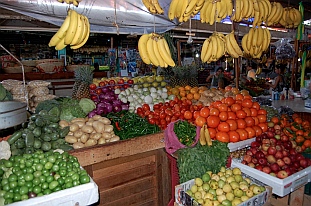
Produce at the Central Market in Zihuatanejo.

Chicken in Zihuatanejo's Central Market.

Fish market in Ensenada.

A vendor at the fish market on the
beach in Zihuatanejo.
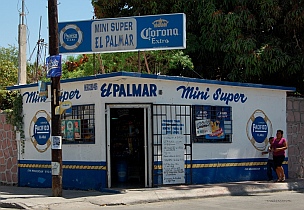
A typical corner "tienda" or "mini-super."

Inside a "mini-super" in La Manzanilla (in
Tenacatita Bay).

One of two "tiendas" (small stores) in Agua Verde, a
remote village in the Sea of Cortez.

Inside the store in Agua Verde (by far the
smallest store we've seen).

Waldo's - the Dollar store.

Boxed milk. We prefer
Alpura products.

Alpura plain yogurt
("sin azucar")

Excellent refried
beans.

Mayonnaise in a nifty
container.

Yakult
Happy tummy

Microdyn
Vegetable Wash

A typical hardware store, or "ferreteria."

Another hardware store ("ferreteria").

Lopez Marine, the best stocked chandlery we have seen in Mexico.

Vallarta Chandlery in La Cruz (on right).

Getting a haircut in La Cruz.

Typical laundromat, or "lavenderia."

Wendy, the French coffee guru,
grinds his delicious French Roast
in La Cruz.
Tips for Cruising Mexico - Part 2
(This guide was adapted by the Baja-Haha Cruiser's Rally for their First-Timer's Guide to Mexico)
This is Page 2 of our collection of tips for cruising Mexico in your own boat (see Tips for Cruising Mexico - Part 1
and Mexico Maps for more info). These are things we learned en-route and wish we had known before we left. If you are
planning a cruise to Mexico, I hope this special page from our boat blog helps paint the picture of what you might find there.
• Checking In Procedures:
What you might experience during the check-in process
• Money:
Currency exchange and credit cards
• Provisioning:
Stores and foods
• Boat Parts:
What to expect - it's nothing like the US or Canada
• Internet Access:
UPDATE from 08/25/2016 - See INTERNET info at bottom of page!!
• Laundry:
Where to do it and what it costs
• Clothes
What kinds of clothes - and how much - to bring
• Hair Care
Getting your hair done can be a cultural experience
• Bugs:
There aren't many, but here are the few we've seen
• Dinghy/outboard Theft
Crime against tourists is rare, but dinghy/outboard theft is a known problem in two areas.
• Costs:
Approximate costs of cruising in Mexico
• Hurricane Season
Some things we learned after leaving our boat in San Carlos
CHECKING IN
This procedure changes so much it is almost silly to put anything in here, as it is probably out of date already. But this will give
you an idea of what might take place, as it is what we went through in February 2010 and October 2010…
We checked into Mexico in Ensenada. This is a great place to do it, as everything is in one room. In 2010 the Ensenada
marinas charged $60 to have a staff person take you to the port captain and walk you through the process, although we have a
friend who was not charged a centavo. Having a guide makes it a no brainer to check in, and you know everything is done right.
If you decide to do it yourself you will still need the marina to write up a crew list for you. The port captain in Ensenada wants to
see the letterhead of one of the three local marinas on the crew list. I tried to write one myself upon our second entry into
Mexico after we had left for the summer and they wouldn't accept it. The port is encouraging all boats not to anchor out, so this
may be part of their method for controlling that.
Your marina may write up a crew list for free, at least Baja Naval did for us when we checked into Mexico the second time.
They will also ask you to give them a copy of the paperwork when you get back from the port captain's office. It is a tightly
controlled port and the marinas are required to keep copies of the check-in paperwork for boats that stay with them. All
together you will need:
• Crew List
• Passports for all on board
• US Coast Guard boat documentation
• Boat insurance declaration page (I think…)
• Serial numbers of your boat's main engine and dinghy outboard
The port captain's office is on the north side of the big fish market at the north end of the malecón. It is down a side road,
opposite the chandlery Agencia Arjona, and is clearly marked "Capitania de Puerto." Ask for directions when you get to the fish
market.
Walk inside and tell the first person you see that you want to check in. There are several windows with officials sitting behind
them, and you will be pointed to the right one for starting the process.
You will be obtaining a 10-year Temporary Import Permit ("TIP") for your boat and a 6-month tourist visa for each person on the
boat. For each of these documents you will have to pay first at one window (the Banjercito) and then take your receipt to
another window to obtain the paperwork. You may go back and forth between the windows twice to get these documents
completed.
The TIP is a document that includes an addendum page that lists everything you have on your boat, including watermaker,
electronics, cooking appliances, etc. This is where the serial numbers of the engines comes in. We knew we would be adding
solar and a watermaker within a few months, so we listed the boat as having those already.
At the end of the whole process you will have three documents in your hand: 10-year TIP, Tourist visa(s), and stamped Crew
List. In addition you will have the two receipts from the Banjercito (TIP and tourist visa(s)). The process could take an hour or
could take two, as it did for us because we walked in right after a megayacht that had 10 New Zealanders on board.
Then you will be asked to press a magic button that is connected to a large street light. If it lights up green you are good to go.
If it lights up red and sirens go off, you will be mortified and everyone in the room will stare at you. This means you have been
arbitrarily selected for a boat inspection. A few uniformed people with clipboards will accompany you back to the boat and will
have a look around. They checked out our boat but didn't verify line-by-line what was on the TIP as I would have expected. It
was just a general, friendly inspection, much like the many Mexican Navy boardings that have taken place since then.
MONEY
There are lots of places to get the current exchange rate between the Mexican peso and US or Canadian dollar. One site with a
historical perspective and current rate is: http://www.x-rates.com/d/MXN/USD/graph120.html. Although in the past two years
the exchange rate has hovered between 11 and 13 pesos to 1 USD, most people use a 10-to-1 exchange rate in their heads
when trying to figure out prices on the fly.
The best place to change money is with your debit card at ATM machines located
within bank buildings. By using a bank's ATM machine you have someone to go to if
the machine doesn't give you your money (three different friends have told me a
free-standing Mexican ATM machine shorted them their money or gave them nothing
at all, and they had little recourse). You can't exchange money with a bank teller
unless you have an account at the bank, and the money changers on the streets
don't give great rates.
You will be charged a fee by the bank that changes your money, usually about 19-27
pesos, and unless you bank has a relationship with the Mexican bank, your bank will likely charge a $2-$3 fee too. So we prefer
to change as much money as possible whenever we do it (6,000 to 8,000 pesos seems typical with most cruisers I've talked to),
and the final exchange rate after the two sets of fees works out to about a few tenths of a peso less than the advertised rate.
The receipts never show the exchange rate you were given, so we find out what rate we got when we look at our bank account
online after the fact.
HSBC, Bancomer, Banamex, Santander and Scotiabank are in most cities. I haven't studied the comparative exchange rates,
but I do know in La Paz HSBC gives the best rate. One interesting note: I walked into a Santander bank and the first ATM
machine I walked up to wanted to charge 31 pesos to change money, while the second one, further from the door, charged only
21 pesos.
Credit card fraud is rampant in Mexico. In one year we had five cases of fraud on three different credit cards. I guess it took us
a while to learn our lesson. So bottom line: don't use your credit card. Our last fraud was either at an Ensenada marina or at
the main TelCel office in Ensenada, so even if you are dealing with an established, above-the-board big business, your card
may get compromised. Look up "ATM skimmers" or "credit card skimmers" online to learn more about some of the ways credit
card fraud is accomplished, both at US bank ATM machines and abroad.
All that being said, it can still be helpful to have a credit card available for emergencies or for purchases where you trust the
merchant. Most credit cards charge a fee for changing the currency from pesos to US dollars. However, Capital One credit
cards are terrific for all international travel because they do not charge any kind of a fee for changing money.
You will need lots of smaller bills when you are in smaller towns -- 20, 50 and 100 peso notes. We have found some places are
challenged to make change when you hand them a 200 peso note. Lots of 2, 5 and 10 peso coins are also handy for tipping. If
the ATM machine gives you a wad of 500 peso notes, go inside the bank and get some small ones.
FOOD & PROVISIONING
Warehouse Stores
There are some warehouse stores on the Mexican coast. Sams Club is more prevalent in the coastal port towns than Costco.
The only coastal Costcos are in Cabo San Lucas, Puerto Vallarta and Acapulco. The one in PV is very difficult to get to,
especially if you are staying in La Cruz, as there is no bus to it. The cab ride back to La Cruz from that Costco is about 100
pesos ($7.50). Sam's Club is much more common in coastal Mexico (Manzanillo, Puerto Vallarta, Mazatlan and La Paz) and is
relatively easy to reach in every town. Before buying or renewing your club card, check the Mexican locations online, as new
Costcos and Sams Clubs will continue to pop up.
Supermarkets
There are lots of big supermarkets in the major cities (Ensenada, La Paz, Loreto, San Carlos,
Mazatlan, Puerto Vallarta, Manzanillo, Zihuatanejo). The Mexican chains are Soriana,
Comercial Mexicana (which has a line of mammoth supermarkets called "MEGA") and Ley.
Walmart is in most of those cities too. If you need to do a big provisioning run, take the bus
there and a cab back. Most cab rides are around 30 to 50 pesos ($2.30-$3.80). Negotiate the
fare before you hop in.
The selection and prices are all over the map, both in the warehouse stores and in the major
supermarkets. American packaged products are often more expensive than in the US due to
import taxes. Some brands have a big presence in Mexico and some are non-existent. For
instance, Kelloggs cereals are everywhere, some General Mills products are re-branded Nestle,
a handful of Quaker cereals can be found and Post cereals don't exist at all. If you have certain
products you can't live without, stock up before leaving the US. If you are willing to take the time
in the bigger cities, you can find just about everything if you check each of the big supermarkets.
Soriana and Comercial Mexicana (Mega) both have
club cards for frequent shoppers. It is easy to sign up
for a card and you will accumulate points. Every so
often it pays off. I've never fully grasped the subtleties
of these cards, but a few times we've had a hundred or
so pesos deducted from our grocery bill at the checkout
counter.
It is customary to tip the bagger a few pesos for bagging your groceries. I have
heard rumors that they are not paid by the stores, but I don't know if this is really
true. Also, we purchased two big insulated "cold bags" and keep some cold packs
in our freezer. This helps keep the refrigerated items cold during the long trek
back to the boat.
Public Markets
Many bigger towns have a Mercado Publico -- a central public
market. These usually take up nearly a city block and are enclosed
with lots of booths for different vendors. The meat, fish, poultry and
produce is brought in from the outlying farms. Prices aren't posted,
so it's a great time to practice your Spanish numbers as you ask
what different items cost. You bag what you want and pay the
person near the booth's register. Often lots of other things are for
sale -- there might be a hat booth, a straw basket booth, a hardware
booth, a broom booth, a DVD booth, etc. For us gringos, it can feel like a
very third world experience, but is also very colorful and exciting.
Small Grocery Stores
In smaller towns, villages and on the back streets of the cities you'll find corner "tiendas" or
"abarrotes." These are small convenience stores and grocery stores that carry essentials.
These little one-room shops usually have a few vegetables (onions, potatoes, tomatoes, and
maybe a few others), lots of canned goods, bread, boxed milk, soaps, cold drinks, bottled water,
beer and other basics. They are often called a "mini-super."
There are US-style convenience store chains as well. Oxxo is the most common convenience
store chain. Similar to 7-11 or Circle K, it can be found on many city street corners. The beer
breweries also have chains of convenience stores that sell their beer and other basics. Modelo,
Pacifico and Tecate all have convenience stores. For Corona fans: Modelo makes Corona.
Dollar Stores
There are dollar stores in Mexico. The most common are Waldo's ("Todo a un precio" - "Everything at one
price") and Solo Un Precio. Just like dollar stores in the US, they sell all kinds of cheap goodies. This is one of
the few places we have found pretzels, although they are not quite as tasty as pretzels you buy in the US. We
also found huge jars of peanut-butter and relatively inexpensive peanuts.
Provisioning before leaving the US
Specialty items, from favorite toiletries to spices, sauces and condiments, may or may not available in Mexico, so stock up on
those before you leave. Kikkoman soy sauce is easy to find, but Neutrogena facial products aren't. It's impossible to list all that
is available and not available. This is where living in Ensenada for a few months first (or at least driving or taking the bus down
for a weekend to check out the shopping situation) is really helpful
Don't bring any canned vegetables with you except what you are going to consume right away. Canned vegetables can be
found in even the tiniest "tienda" in the most remote Sea of Cortez village, so unless you eat a lot of canned vegetables, there is
no need to bring any with you from the US. Other canned goods like Dinty Moore Beef Stew, Chef Boyardi products, Bush's
Baked Beans and Hormel Chili are not easy to find. Canned tuna and canned chicken are reported to taste different in Mexico.
I can't verify that as I am still working on the enormous stash we bought at Costco before we left the US.
Paper products in Mexico are not the quality we are used to in the US. If you use a lot of paper towels and like them to be
strong enough not to disintegrate at first touch, take as many rolls as you can fit. We have friends who now use blue Shop
Towels as paper towels (available at auto parts stores in Mexico) -- an expensive way to go, but they couldn't stand the flimsy
Mexican paper towels. Likewise with toilet paper. Good quality brands of these products can be found at the warehouse stores,
but not necessarily at the supermarkets.
We found we longed for American snack foods, and were glad to have a stash of favorites. Ritz crackers,
potato chips and Oreos are readily available at supermarkets in Mexico, but Wheat Thins, Cheezits,
Triscuits, and Chips Ahoy are nearly impossible to find. Dark Chocolate, Peanut Butter Pretzels and Nuts
of any kind are rare and expensive.
If you have a freezer, stock up on meats, chicken and your favorite cheese before leaving the US. The
Mexican counterparts are okay, but they are different, and it is really nice after a few months to bite into a
steak from your favorite hometown grocer.
Get some long-life veggie bags. Debbie Meyer's Green Bags or the Brawny pink ones. Both keep veggies
longer than if they are in regular plastic bags. You can wash and re-use the bags. We had beautiful fresh
broccoli 3 weeks after we bought it in San Diego. Carrots, potatoes and onions last well in brown paper
bags out of the fridge.
Provisioning in Mexico
Many big city supermarkets have a gringo section, and that is often stocked with Kirkland
(Costco) brand items, although the prices are more than in the US. Breton crackers, fancy
mustards and olives can often be found on these shelves. I've even seen peanut-butter pretzels.
Mexican dairy products are not the same as in the US. For some reason the fresh milk goes
sour a lot faster -- is it inferior processing, or does the US use more potent chemicals? Who
knows. Mark stopped eating cold cereal all together and I use boxed milk for my coffee. I don't
taste a difference. To me the boxed milk is just like fresh milk, but Mark disagrees
wholeheartedly.
If you like yogurt, the best yogurt we have found is from the dairy Alpura. This brand is sold
primarily on the mainland, but sometimes you can get lucky in Baja. All plain yogurt by other companies
has sugar in it ("azúcar" in the ingredients list). Alpura is the only dairy that sells true plain yogurt. Their
flavored yogurt is also the most similar to US yogurt. Even though Yoplait and Dannon sell yogurt in
Mexico, it is nothing like the US versions of the products.
If you want fat free products, that is "sin grasa," and sugar free is "sin azúcar." Many people confuse
yogurt and sour cream because the containers look the same. If the container says "Crema" it is sour
cream. If it says something that looks like the word "yogurt" (spellings vary) then it is yogurt.
There is one major Mexican cheese sold everywhere: Manchego cheese. It has a Spanish origin where
it is made from goat milk. In Mexico it is a different recipe using cow's milk/cream. It is a white cheese
that is good with crackers or in quesadillas or tortillas. However, many Americans eventually long for their
familiar orange cheddar cheese which Mexicans don't eat. Most supermarkets carry one brand of cheddar cheese: Joseph's
Farm from California. Stock up when you see it, if you like that kind of cheese, as other gringos will be stocking up too, and a lot
of times the supermarkets are sold out. Most big city supermarkets sell Gouda cheese and many have Brie and other soft
European cheeses as well.
Also in the dairy section you can always find Yakult, a terrific little sweet dairy drink packed with
probiotics, the perfect antidote to any kind of gastric distress caused by Montezuma or anything else.
We have never gotten sick from water or food -- only from swallowing red tide by accident. Most
digestive complaints from cruisers seem to come after a meal out.
The biggest supermarkets have good selections of fresh produce. However, the quality is not as high
as the US. Examine everything carefully, because blemishes are common. Most big supermarkets
sell small bottles of Microdyn or other antibacterial wash products. Pour a cap-full in a sink of water
and let all the veggies float in it for a while. Then rinse them well.
Eggs are often sold unrefrigerated. They can be kept unrefrigerated if you turn the box over every 24
hours. I had never in my life seen a rotten egg before living in Mexico. I cracked my first one not long
ago. The yolk and white were completely black and putrid. Now I understand the childhood taunt,
"Last one home is a rotten egg."
Meats and chicken take a little getting used to, as the quality is often only so-so. The chicken is very yellow. We have asked
lots of people why, and we've gotten several odd answers. There is an old wive's tale that it is from feeding the chickens
marigolds. Well, Mexican chickens are raised in factory farms, so that is doubtful. Some say they are dipped in iodine. I've also
heard they are fed corn, but US chicken is fed corn too. Who knows. It is very yellow and it can have a potent smell when
cooked if you don't remove the skin and fat.
Lunch meat is available in one variety: turkey ("pavo") that has been made to look like ham ("jamón"). The most common
brand is "Fud." It resembles the worst quality lunch meat available in US stores, and even that brand name "Fud" is
unappetizing. If you like good quality lunch meat, buy a bunch in the US, freeze it and bring it south with you.
Fresh fish is often a better bet. The Spanish names are different. Fish we have enjoyed immensely are Cabrilla (bass) and
Sierra (Spanish Mackerel), as well as dorado (mahi-mahi).
Pollo Asado is grilled chicken sold at outdoor stands. This chicken is delicious. Choose a stand that has a crowd of Mexicans
around it, and it will be tasty and safe to eat. A whole chicken is usually around 100 pesos ($7.50) and you can also buy half
and quarter chickens. They are often split along the sternum and laid out flat on the grill so they look like roadkill. They are sold
with corn tortillas and often with delicious flavored rice. This is a terrific thing to buy prior to a long passage. You can nibble the
chicken plain, make chicken salad or sandwiches, turn it into a stir-fry, or wrap it in a tortilla with cheese and heat it up.
Tacos on the street are also a great way to go for cheap eats. A good price is about 8 to 20 pesos per taco (around $0.60 to
$1.50). Two makes a meal and three stuff you. They are served open so you can fill them with toppings and then roll them up
yourself. Always choose places that are crowded with Mexicans. They know where the good food is. Carne, chicken and fish
tacos are available from Puerto Vallarta and to the north. The best are on the Baja peninsula (at Rancho Viejo in La Paz and
Las Brisas in Ensenada).
South of Cabo Corrientes corn tortillas begin to dominate and flour tortillas disappear along with the familiar style of beef,
chicken and fish tacos found up north. It is not nearly as easy in this area to find good beef taco stands. In Manzanillo we
walked all over town in search of fish tacos and finally asked at the visitors center where to find them. They sent us to a back
street where a vendor had a vat of fish stew he ladled into corn tortillas -- not at all the fish tacos we were used to in northern
Mexico and southern California and Arizona.
You can easily make fish tacos from any kind of cooked fish by dicing up tomatoes and cold crunchy veggies (cucumber, celery,
cabbage, etc.). Heat up the fish on a tortilla in a skillet or microwave, then sprinkle on the veggies and add a little mayo and hot
sauce and roll it up. Yum.
The best flour tortillas are on the Baja peninsula, and are found in tortillerias that make them there on the spot. They are
typically about a peso apiece, sold by the kilo (about 28 tortillas). Separate them before refrigerating or they will stick together
and rip. If you freeze them they may stick together when thawed, so separate first and make sure they are dry before freezing.
South of Cabo Corrientes there is only one brand of commercial flour tortillas, "Tortillinas," and they aren't nearly as good as the
homemade ones, but they are sold even in the smallest tiendas. Tortillerias in this southern coastal part of Mexico make and
sell only corn tortillas.
Totopos are a fried corn tortilla chip snack food that were probably the original ancestor of Doritos and Fritos (we discovered
that the famous Frito Bandito song from the old commercials is actually a take off on a famous Mariachi song here in Mexico).
They are available primarily on the mainland. You can buy them freshly made at tortillerias and in the bakery section of the big
city supermarkets, or you can buy them prepackaged at little corner tiendas. They are tasty as a snack served plain or with a
guacamole, bean, cheese or other dip.
We have found awesome refried beans under the brand "Isadora" that come in soft
plastic packaging. These are fantastic for a quickie bean burrito on the boat (tortilla,
beans, cheese, hot sauce - heat and roll up).
Mayonnaise also comes in this kind of soft packaging which is perfect for jamming
into a packed fridge…
It is hard to find good quality coffee in the northern part of Mexico. However, the
best coffee I have ever had can be found at The Octopus's Garden / Galeria Huichol in
La Cruz (Puerto Vallarta/Banderas Bay). The proprietor, a Frenchman named Wendy,
roasts his own beans to create a French Roast that is to die for and is about half the
price of Starbucks coffee in the US. He also sells his coffee at the weekly Farmer's
Market in La Cruz and is located in the last booth that sells coffee (so don't get hasty
and buy the wrong stuff!). Further south in Zihuatanejo you can get locally grown
Mexican coffee, and it is very good.
There are lots of products I have been told can't be found in Mexico, but they can be if you are patient. They just
aren't easy to find and may not be in the city where you want them to be. But keep prowling around and eventually
you will locate them. Among these are brown sugar, pickle relish and high quality packaged bread.
BOAT PARTS
While all Mexicans eat and there is an abundance of food to be had, even if it isn't quite what you're used to at home, not that
many Mexicans own cruising boats. Finding parts for the boat is a challenge. Even finding simple tools and hardware is a
challenge.
The best chandlery we've seen is Lopez Marine in La Paz. It is about ⅓ the size
of West Marine in San Diego. If they don't have it on the shelf they can order it
for you from the US. Prices are 10% to 30% higher than in the US. All the other
chandleries we visited in Mexico were fishing oriented and had few, if any,
sailboat-specific parts. My eyes popped out of my head when I saw a snap
shackle at Lopez Marine -- it was the first I had seen since West Marine in San
Diego 6 months earlier, and we had been all over the Mexican coast at that point.
The rule in Mexico for buying anything is: if you see and think you might want it
someday, buy it, because you won't see it again. That goes for the humongous
jar of Skippy peanut-butter and it goes for the gizmo-widget that looks like it might
come in handy in a crisis at sea.
Most hardware stores ("ferreterias") are small one- or two-room shops that
carry a variety of general purpose tools and parts. The selection is often
minimal and sometimes a bit weird. They may have 100 screws of one
length and pitch, six of another, and none of any others. When you ask for
an item they might hand you a dusty, opened box with something similar to
what you want inside. You have to rely on your own ingenuity and creativity
to make the best out of what you find in these little places. That's what the
Mexicans do, and they are extremely good at it.
Some hardware stores have specialties -- the
nuts-and-bolts-and-screws store, the tool store,
etc. Little is available in stainless steel. Home
Depot has a few stores in Mexico, and they are much the same as the stores in the US, but they
don't sell things the Mexicans don't buy. Appliances are smaller; the selection of things like faucets
is minimal. The major US auto parts stores like Napa Auto Parts are also common in Mexico. Again,
patience, lots of walking, and creativity are key. Most store clerks will point you to another store if
they don't have what you are looking for. You will get in lots of miles on foot.
In many ways we have had some of our best days getting to know the Mexicans and their culture
when we wandered the back streets of different towns looking for a particular part. We might not
have found the part, but we had a chance to practice our Spanish and experience a little of life in a
culture that is very differently than our own.
Major replacement parts can be
brought into Mexico, but it is a
complicated process that is heavily taxed. Some cities like
La Paz have an enterprising person that will drive to the US
and carry packages over the border for you for a fee (they
avoid the import tax for you by not declaring the part at the
border crossing). Otherwise, if the parts are shipped by a
commercial shipper they have to go through customs in a
major inland city (Mexico City or Guadalajara) and an import
duty is imposed. We have not done either of these things,
so I won't mislead you any further.
INTERNET - THIS SECTION IS OBSOLETE. SEE "INTERNET" AT BOTTOM OF PAGE
For internet access from the boat we found the TelCel USB modem to be very valuable. It uses the TelCel cell phone towers to
operate, and there are cell towers wherever there is a good sized town. It is a small stick that plugs into the computer's USB
port. The first time you plug it in it will download some application software onto your computer. You run that software to make
the USB modem connect to a cell tower.
TelCel (pronounced "Tell SELL") is owned by the world's richest man, Carlos Slim, but it is not a particularly easy device to buy
or renew. The best way to get one is to go to a main "TelCel - Atención A Clientes" office building. These are huge buildings in
major cities (Ensenada, La Paz, Cabo San Lucas, Mazatlan, PV, Manzanillo, Ixtapa). Inside (often upstairs) there is a row of 20
or so clerk windows, like you find at a huge bank or at the Department of Motor Vehicles. Don't bother with any of the small
TelCel shops on the street. They are cell phone oriented and don't have what you need.
The big TelCel offices are run something like the Department of Motor Vehicles too: you tell the receptionist what product you
are there for and she gives you a number. Then you stand in line for as much as an hour until a window opens up. Like the
check-in process for entering Mexico, this whole process is ever evolving, but I will explain here what we have gone through to
purchase and renew our TelCel Banda Ancha. It is just a guideline...
The product you want is the Banda Ancha Amigo Alto 3G. The 3G is pronounced "trays jeega," but the important thing is to
get a clerk that speaks English. If the one you walk up to doesn't speak English, wait for one that does.
Once at the clerk's window, it will take a while for the paperwork to be processed. You will then be sent to a line to pay for it.
Your purchase should include both the USB modem and the first month's 399 pesos of upload/download. After you have paid (it
might be handled in two transactions) you return to your clerk's window with the receipt and they give you the USB modem stick.
Before leaving the building, take out your laptop, plug in the stick and verify that it works. Look for the word
"Idioma" (Language) in the software (it may be in the "Herramientas" (Tools) menu). By clicking "Idioma" you can set the
language to English. If you can't get it working, ask for help and stick around until it does. Make a note of the cell phone
number that has been assigned to your USB modem.
We got a Huawei modem stick and it works great. Other cruisers like their Huawei stick too. Our first stick was a Nokia and the
Macintosh implementation of its software couldn't go through the steps necessary to renew the account at the end of the month.
A real headache.
The stick lights up blue if it is a 3G connection and green otherwise. Much of the time it is green. The fastest connection I've
seen is in La Paz and has a download speed of just under 2.5 Mbps and an upload speed of around 0.15 Mbps. To compare
this to your current internet connection, go to http://www.speedtest.net and do the speed test. In most anchorages the
download speed is more like 0.5 Mbps and upload is around 0.07 Mbps. Pretty pitiful, but it sure is better than nothing and it
teaches you patience, a critical skill for cruising. Sitting in the cockpit, aiming the stick towards the cell tower and even holding
the laptop overhead can all make a difference in the speed (I held our laptop overhead off and on for 45 minutes while we left
Tenacatita during the March 2011 tsunami so we could get the latest news reports on how the waves were affecting the
California coast. We had connectivity--of sorts--for six miles out).
The cost is 399 pesos (~$32) per 3GB of uploads/downloads or 30 days, whichever comes first, and the USB
modem stick is a few hundred pesos. Oddly, access is sold in increments of 500 pesos. You can buy more
than one 3GB packet of access, but they are distinct purchases and you should get a separate receipt for each.
I found it best to stick to one 500 peso advance purchase at a time, activated when needed..
The 3GB of access is enough to send and receive email, surf the web, watch some YouTube and news videos and access
social media websites. If you spend a lot of time on YouTube or watching news videos or downloading large files you will use it
up faster.
You can see your approximate usage in the Statistics tab in the TelCel software. For a more accurate accounting, especially if
you access TelCel from more than one computer, you need to set up an account online. To do this go to http://
www.mitelcel.com and create a NIP (password) to go along with the cell number of your modem. Once you have logged
in you can go to "Internet TelCel" and click on "Consulta" see the exact amount you have used so far. On the right hand side
bar under "Mi Cuenta" you can go to "Consulta tu Saldo" to see the balance of pesos in your account.
Whether or not you use all your 3GB, your account will expire after 30 days at a specific hour, minute and second (given in your
online account). The communication between you and TelCel is handled through text messages in the software, and you will be
notified when it expires. All the text messages are in Spanish, so a Spanish-English dictionary really helps. Or, you can copy
the text from the message into the Google Translator (http://translate.google.com/) to get it translated into English.
In order to renew your service, you need to put more money in your account and then inform TelCel to apply it to another month
of Amigo 3G access. This is a two step process. You can put more money in your account any time by going to a chain market
(Soriana, Comercial Mexicana (MEGA), Chedraui, Walmart, Oxxo) and asking the checkout person to put 500 pesos on your
USB modem's cell phone number. Just show them the phone number and ask for 500 pesos to be put on your account.
Once the money is in your account you will get a text message in your TelCel software telling you it has been received. Activate
it after the current packet has expired, not before. There is a grace period of a few days where you get free access.
To activate it, open the TelCel application on your computer and go to the TEXT tab (for Text Messages). In the "Send
message to:" field put: 5050. In the body of the message write: bat30 You will get a text message reply stating that the
service has been restarted. It will also tell you the date and time the service expires. Or do it through your http://
www.mitelcel.com account. You can also purchase air time with a credit card through www.mitelcel.com, but when I last tried it
was not a secure credit card transaction. (Recently the text msg renewal deducted 500 pesos whereas the online one deducted 399).
Of course all this will probably change, so this is just an approximation of what to expect.
Patience is key, but the reward is internet access from the boat. A lot of times the speed is not great. Sometimes the servers
are down (and if so it will likely take until the next business day for them to be brought up again). However, something is better
than nothing, and it's all part of the cultural experience of living in a foreign country.
LAUNDRY
There are lots of laundromats in Mexico, usually within an easy walk. Most marinas have them onsite. The cost per load is is
somewhere around 30 to 60 pesos to wash and dry, or about $2.30 to $4.60 per load. For another 10 pesos or so per load you
can have your laundry done for you and returned to you folded and smelling good. The pricing is
frequently based on weight rather than load, and it is typically about 15 to 20 pesos per kilo to have your
laundry done for you (or about $1.15 to $1.50 per kilo). A load is usually two to three kilos. As with
everything, prices are cheaper further south.
We often go 2-3 weeks between laundry runs, so we have a second set of sheets and towels. We also
wash some lighter and smaller items by hand, like running shorts, bathing suits and tank tops. Washing
out a few things every day makes it an easy job.
Generally the commercial washing machines and dryers are far from new and unfortunately it is rather
common to get your clothes back with small rust stains on them, usually placed front and center on your
brand new souvenir t-shirt or dress. Occasionally you may find an article of someone else's clothing in
your bag when you get it back, or you might discover an item is missing. This is just because things get
stuck in the crevices of the washers and show up in the next load.
CLOTHES
Almost everyone takes too many clothes to Mexico. Living on a boat, especially at anchor, is a grubby business. It is amazing
how many times you will wear a piece of clothing because you know you won't be near a laundromat for a while. Several
changes of clothes may be sufficient to start -- that way you can get some souvenir t-shirts and beach cover-up dresses without
overloading your lockers. I loaded up on bathing suits before leaving the US, and then couldn't justify buying any of the really
cute bathing suits for sale in the Mexican tourist shops. Mark made the same mistake with t-shirts. So before you overstuff
your lockers, keep in mind that a lot of our clothes north of the border are made in Mexico, and they are cheaper down there!
You will need cold weather clothing for the trip to Cabo. If you spend the winter in La Paz, Mazatlan or Puerto Vallarta, you may
still need a light jacket, long sleeves and long pants as well as shorts. If you stay south of Cabo Corrientes for the winter you will
be living in shorts and t-shirts. If you spend the coldest part of the winter in Z-town or south of there, you will be in a bathing
suit, lightweight shorts and tank tops.
HAIR CARE
Some of the best haircuts I've gotten have been in Mexico, and I've never paid more
than 80 pesos (about $6). Just as we discovered in our trailer in the US, sometimes
you learn a lot about a community from the hair stylists. I felt I had really reached a
high point when I was able to talk to the lady that cut our hair in Loreto for an hour in
Spanish. If you want true styling and not just a cut, the prices are more typically 200
pesos (about $15).
BUGS
Bugs are generally not an issue at all in Mexico. The only bugs we have come across have been:
Bees - In the Sea of Cortez there are a lot of thirsty bees looking for fresh water. In 2011 they were particularly pesky on the
islands around the Loreto area and at Puerto Los Gatos slightly south of there. However, I suspect that they move, as
anchorages reported to be bee-filled had few when we got there, and anchorages that were supposed to be bee-free were
inundated when we arrived. The best way to deal with them is to have a few good fly swatters on board and to get aggressive.
They move fairly slowly and are easy to kill. They send a scout first, and then they come in pairs and threes. If you can prevent
the scouts from returning to the hive you are winning. Another trick is to make sure you have no fresh water puddles from your
cockpit shower. I found that dousing the transom near the shower with seawater can really help discourage them. They can
detect fresh water in a sealed plastic water bottle…
Bobos - These are tiny mangrove-loving flies that don't bite but bug the heck out of you anyways by landing repeatedly all over
you. They can't get through screens.
Jejenes (pronounced "hayhaynays") - These are virtually invisible no-see-ums that bite like the dickens. You'll feel this zing and
then study your arm or leg and see nothing unless you get a magnifying glass. You can kill them by smearing your finger
across them. Screens don't keep them out. We found them in Amatorjada Bay on Isla San Jose in the Sea of Cortez, and they
seemed to stay with us on the boat for a week after that.
DINGHY & OUTBOARD THEFT
In most places in Mexico you can leave the dinghy in the water overnight without any concern. However, two areas on the
mainland have had rashes of outboard theft in recent years.
Barra de Navidad experienced nine dinghy/outboard thefts in the winter of 2009-10. Once cruisers started raising their dinks
there at night in 2010-11, the number dropped to just a few (which were in the water). So be sure to lift the dinghy out of the
water and lock the outboard to the dinghy transom while in Barra.
Mantanchen Bay outside San Blas (near Mazatlan) had a rash of 5 or 6 outboards/dinghies stolen in the winter of 2010-11.
While we were staying there friends of ours had their outboard stolen off the dinghy even though it was raised high in the davits
(it was not locked to the dinghy). They were on board and asleep when it happened. So the best defense is to remove the
outboard from the dink and lock it securely to your boat's transom.
In the fall of 2011 a saiboat anchored in the San Blas estuary outside of the Fonatur/Singlar marina experienced an attempted
robbery while the owners were ashore. So if you are staying there, it might be wise to stay in the marina rather than anchor out.
COSTS
Everyone has a different budget, and everyone spends what they have. So it is impossible to say "it costs xyz to cruise in
Mexico." However, I'll give a very rough idea of what some of the costs are that we have seen.
For us, keeping a boat in Mexico, living on it and sailing it 6 months a year, maintaining it, flying back and forth to it, insuring it
and storing it when we're not there costs around $13,000-$14,000 per year. If we were on it full-time and didn't fly back and
forth or store it, our annual cost would be around $21,000-$24,000.
Getting our boat ready to cruise - anchor system upgrade, watermaker installation, solar installation, dinghy & outboard,
downwind sailing gear, safety gear, interior comfort stuff and small goodies cost about 20% of the purchase price.
Food
On average we found our food bill is about 90% of what it is in the US, slightly higher than that in the northern parts of Mexico
and slightly lower in the southern parts. Beer is typically anywhere from 55 pesos a sixpack ($4.25) for Pacifico/Modelo to 72
pesos a sixpack ($5.50) for Bohemia Oscura (a darker more premium beer). Many grocery items are taxed 15%. American
branded items seem expensive. For instance Listerine is 42 pesos ($3.25) for a 16 oz bottle. Colgate toothpaste is 35 pesos
but for the same size tube the Mexican brand called Fresca is 6 pesos. So it is all in how you shop.
Restaurants
We don't eat out much, but simple street food is cheap: 100 pesos ($7.50) can buy each of us a meal and a drink. At the beach
palapa bars (sitting under an umbrella on a plastic chair in the sand) a beer is typically 12 pesos ($0.95) in the far south and 25
pesos ($1.95) further north. Fine dining in the high end resorts is similar in price to comparable US restaurants.
Fuel
Fuel pricing is government controlled so it can't swing up and down by huge amounts, and there is a tax on it. In addition,
marinas charge a service fee for using their docks and that fee can be anywhere from 10% to 20%. So in the end our fuel costs
in 2013 have averaged around $3.50 to $3.80 per gallon. You can't avoid the dock service fee by showing up with jerry jugs --
the fee applies no matter how the fuel is delivered. Still it's not a bad deal, as diesel in California is running over $4.00 per
gallon now in the fall of 2013.
We use about half as much fuel per month while cruising as we do while RVing. This may sound surprising, but we drive our
truck in the US less than some people might expect and we motor our sailboat in Mexico more than we ever expected. On the
boat we burn about 2/3 to 3/4 of a gallon of fuel per hour, and we traveled from San Diego down to Zihuatanejo up to San
Carlos and back down to Puerto Vallarta in a year. Our monthly fuel cost during that time was somewhere around $250 (2011).
Marinas
Marina costs are typically $30-$60 per night and $600-$1,000 per month for a 45' slip. Some marinas discount the price slightly
after 3 days or a week. Most offer a monthly rate, although both the popular Marina Riviera Nayarit (La Cruz in Banderas Bay)
and swank Paradise Village (Nuevo Vallarta in Banderas Bay) charge around $30 per day in winter no matter how many days
you stay ($0.60 to $0.65 per foot per day plus tax).
Rates drop in the summer. We paid $565/month for a slip in Marina San Carlos for the summer of 2011, $200/month
in Marina Chiapas in 2012 and $565/month in Paradise Village in 2013. The Fonatur/Singlar government run marinas
used to be less than the private marinas, but they raised their rates and are now comparable to the private marinas.
If you wanted to spend half your cruising time in marinas and had a 40-45' monohull, a comfortable budget figure
would be around $400 per month. This would allow for some shorter stays and some month-long stays. Most boats
spend significant time in marinas (they're nice!) and very few boats are at anchor more than 95% of the time like we were.
Boat Services
Having the bottom cleaned by a diver generally costs about $1 per foot. Having the boat washed is the same. We got the hull
waxed in San Carlos for 700 pesos ($53). If you use dive tanks to clean the bottom yourself and don't have a compressor, it
generally costs about 100 pesos ($7.50) to have one tank refilled at a dive shop (and you have to lug it there).
Boat Insurance
Insurance varies a lot by boat age, sailing experience, where you keep your boat during hurricane season and whether you go
south of Acapulco. Keeping our boat in San Carlos during hurricane season, staying north of Acapulco the whole season, and
having plenty of sailling experience, insuring our newer boat costs $1,600 per year with Pantaenius.
WHAT TO DO DURING HURRICANE SEASON
Starting in February people begin discussing their summer plans. The marinas in Puerto Vallarta, Mazatlan, La Paz and San
Carlos are popular, as is dry storage in La Paz, Loreto and San Carlos/Guymas, and other spots as well. Some marinas offer
significant summer discounts, especially when pre-paid. We left our boat in San Carlos in the water for 3 months and were
shocked to return and find that everything was just as we left it. A quick boat wash and bottom cleaning and the boat was ready
to sail away. Some people who left their boats for six months in dry storage in Loreto and San Carlos reported having to clean a
lot of dust off the deck (and some inside).
San Carlos is a popular option for people from Arizona. The bus line Tufesa (this is the link for Bus Schedules) leaves from
Guaymas and goes to 27th Ave. and McDowell in Phoenix. The "Especial" bus trip from San Carlos to Phoenix is $61 per person
and takes 10-11 hours if you take the regular day-time bus. It stops in 4 or 5 towns in Mexico plus the military checkpoint, the
border crossing and again in Tucson. The buses are regular Greyhound style buses used for 2-4 hour trips in the US.
The "Ejecutivo" overnight bus is $81 and takes just 8-9 hours and is a much better option. It stops in 2 towns in Mexico plus the
military checkpoint, border crossing and again in Tucson. The buses are very luxurious. There are only 3 seats per row, 2 on
one side and 1 on the other. I found them wide enough to curl up in and try to sleep. Bring layers because the buses can be
heavily air-conditioned. Our driver in the US was kind enough to turn off the a/c (we were two of three people on the bus). Our
driver in Mexico had an attitude and refused to turn it off (even though the driver's cab is separate and has its own
thermostat...). The buses are theoretically equipped with wifi and electrcity. On the US side the driver turned on the electricity
so we could run the laptop from its charger cable. On the Mexican side the driver refused to (!). The wifi never worked on
either side. But it was still a very cool bus ride.
The bus depot in Phoenix is in an unsafe area. If you are there at night stay close to the terminal. Taxi cabs come to meet the
buses.
MORE INFO
These are some of the things we've done and found useful and would have liked to have known about cruising Mexico in
advance. Hopefully some of these goodies in our boat blog will make it easier when you're cruising Mexico too!!
If you haven't seen it yet, check out Page 1 of this guide: Tips for Mexico Cruisers - Part 1
INTERNET ACCESS IN MEXICO
In August 2016, Verizon began offering new talk/text/data packages that allow you to access the internet from Canada and Mexico free of charge on your Verizon data plan. You must have at least 16 GB of data on your plan. You don’t have to have a cell phone (we don’t).
We use a Verizon MiFi Jetpack in our RV travels now and it worked like magic in Canada in the summer of 2016. We have more info about the Verizon MiFi Jetpacks and the new talk/text/data packages at this link: Mobile Internet Access
To help you plan your cruise and get you inspired, we created the video series, "Cruising Mexico Off the Beaten Path - Volumes 1-3," shown below. This is a fun-to-watch and easy-to-digest introduction to Mexico from a cruiser's perspective, giving you lots of valuable information that isn't covered by the cruising guides. Each video is available individually at Amazon, either as a DVD or as a download. For discount package pricing on the whole series, visit our page Cruising Mexico Video Series.
Volume 1 reviews the geography, weather and seasons in Mexico and shows you what the best anchorages between Ensenada and Manzanillo are like.
Volume 2 gives detailed info that can't be found in any of the guidebooks about the glorious cruising ground between Manzanillo and the Guatemala border.
Volume 3provides all the info you need to get off the boat for an adventure-filled trip to Oaxaca.
Our Gear Store also has a boatload of ideas for your cruise!
New to this site? Visit our Home Page to learn more about us, and see our Intro for Cruisers to find out where we keep all the good stuff, including tips for planning your cruise to Mexico, our Solar Power pages, and our ideas for outfitting your boat.
Groovy – Our Beautiful 2008 Hunter 44DS Sailboat – has been sold!!

Groovy anchored at Isla Coronado Sea of Cortez
Now that we have ended our magical Mexico sailing cruise, we have sold our beautiful and beloved dream boat Groovy.

Groovy is light on her feet and easy to sail.
A couple from Canada fell in love with Groovy too, and after closing on the purchase in June, 2014, they have taken her off to new sailing adventures in the waters of the Pacific Northwest.

Groovy has a comfy interior
We put this page up on our website when we listed Groovy for sale, and will keep it here so you can see some nice photos and the full listing of specs and upgrades she had when we owned her.

Groovy anchored at Tangolunda Bay
Groovy is a Glen Henderson designed 2008 Hunter 44DS. She was the last Hunter 44DS ever built. Because she was on the assembly line at the same time as the first Hunter 45DS models, she includes many of the upgrades that are part of that line, including the fabulous cherry interior and 66 gallon fuel tank.
Our web page about Groovy’s layout and systems has lots of photos and specs, and we have another page describing her awesome solar power installation.
In a nutshell, she has the Mariner’s package of factory upgrades, including electric winch, folding wheel, Bose 3-2-1 surround-sound stereo and upgraded galley equipment. In addition, she has:
- 710 amp-hours of Mastervolt AGM batteries
- 555 watts of solar power
- 60 gallon-per-hour watermaker
- 60 lb stainless steel Ultra anchor
- 300′ of 5/16″ G4 (HT) chain,
- Brand new Balmar 6-series100 amp alternator and ARS-6 smart charger
- high-end custom-made 8″ thick queen size HMC latex mattress and custom bedding
- 3 coats of brand new bottom paint
- a beautiful freshly waxed hull
and all the bells and whistles necessary for fully independent and comfortable cruising without being dependent on staying at marinas.
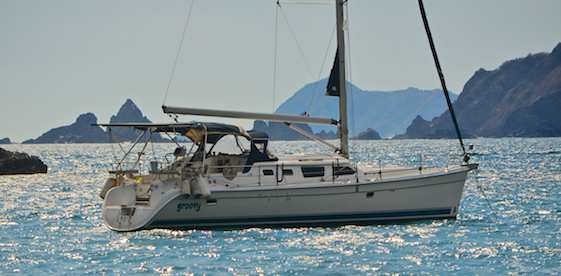
Groovy anchored at Cuastecomate Bay on Mexico’s Costalegre
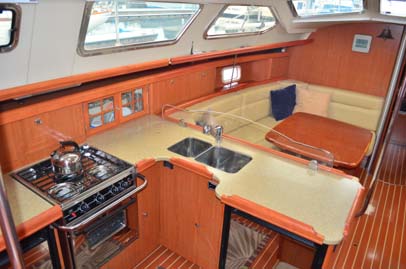
Galley and dinette on the port side.
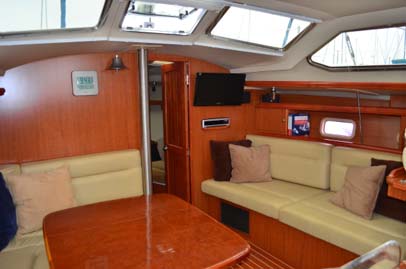
Starboard side: Bose 3-2-1 stereo/DVD and 22″ TV.
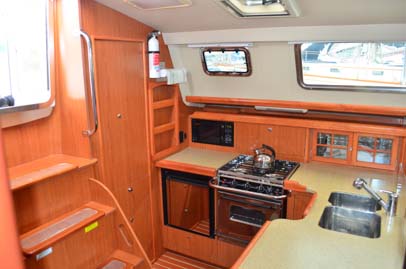
The galley has a stainless steel fridge and standalone freezer plus pantry and slide-out can storage!
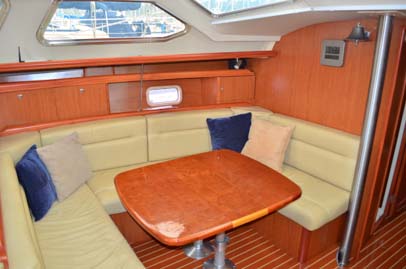
The dinette has lots of seating,
great for entertaining!

Master stateroom – queen-sized berth with custom 8″ mattress and bedding

The v-berth is very comfortable for two adults.
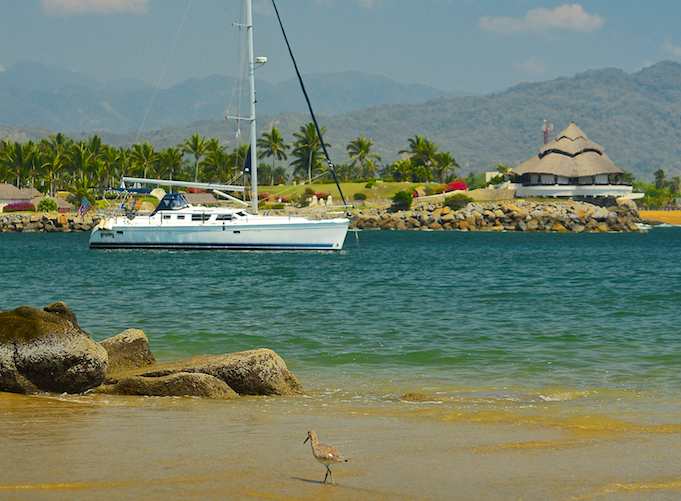
Groovy anchored at Las Hadas Resort in Manzanillo Mexico.
Here is a VIDEO WALKTHROUGH of our boat:
To help you plan your cruise and get you inspired, we created the video series, "Cruising Mexico Off the Beaten Path - Volumes 1-3," shown below. This is a fun-to-watch and easy-to-digest introduction to Mexico from a cruiser's perspective, giving you lots of valuable information that isn't covered by the cruising guides. Each video is available individually at Amazon, either as a DVD or as a download. For discount package pricing on the whole series, visit our page Cruising Mexico Video Series.Volume 1 reviews the geography, weather and seasons in Mexico and shows you what the best anchorages between Ensenada and Manzanillo are like.
Volume 2 gives detailed info that can't be found in any of the guidebooks about the glorious cruising ground between Manzanillo and the Guatemala border.
Volume 3provides all the info you need to get off the boat for an adventure-filled trip to Oaxaca.
Our Gear Store also has a boatload of ideas for your cruise!
RV Life Magazine Features Our Buggy On This Month’s Cover!!

RV Life Magazine – July 2013
Chasing Rainbows at Flaming Gorge
Cover Photo by Emily Fagan
Posted July 1, 2013
RV Life Magazine is featuring our photo on the cover of their magazine for the July, 2013 issue!
Last summer Mark and I spent a glorious week at Flaming Gorge National Recreation Area on the Utah/Wyoming border. This magnificent park is a land of red rock cliffs that plunge into aquamarine water far below, and we were blessed with a myriad of rainbows every afternoon we were there.
I took this photo while we were parked at the Greendale Overlook. We stopped to do a hike and have lunch, but in the middle of all our fun the heavens opened up and a deluge of rain poured out. All heck broke loose as everyone in the area scrambled for cover! Once the rain cleared, the most beautiful rainbow formed over our trailer.
Our story, Chasing Rainbows at Flaming Gorge, is featured inside this issue, and it tells of some of the other fun adventures we had in this gorgeous park. From photographing majestic views to enjoying intriguing encounters with very tame wildlife in the campgrounds, we loved every minute of our stay there. If you like the story, the online version has a place where you can rate it with 5 stars!!
RV Life Magazine is one of the oldest independent regional RV magazines in the US.
Over the years, we have really enjoyed our subscription to RV Life because of the high quality travel destination stories and the news stories about the current happenings in the RV industry. The print version of the magazine is available for free at Camping World stores in the western states and/or as a paid subscription. The online version is on their website.
We are also delighted that one of the other feature stories in this month’s issue is about RVing in Mexico… and it sounds like the writer had a very good time there in his truck camper…
For more on the Flaming Gorge National Recreation Area, see our blog posts from the Wyoming side of Flaming Gorge and the Utah side of Flaming Gorge.
For more from us, see our other magazine articles and/or our most recent posts!!
Escapees Features Our Article: Taking Your RV into the Mountains, Jul/Aug 2013

Taking Your RV into the Mountains
Escapees Magazine
July/August 2013
Posted June 27, 2013
Escapees Magazine is featuring our story Taking Your RV into the Mountains in their July/August 2013 issue.
The article describes some of the techniques we have found useful when driving our 36′ fifth wheel / one ton truck combo over the huge mountain passes in the west.
My favorite part of the story is Mark’s 2-page photo spread. When we were at the Sheep Creek Overlook in Flaming Gorge National Recreation Area. he scrambled up the hill behind us and got a fabulous shot of the red cliffs, blue water, and our rig overlooking it all!
Some of the tips covered in the article (and that photo) can be found here:
Driving a Big Rig in the Mountains.
Escapees is the membership magazine for the Escapees RV Club, a wonderful organization for RVers that offers its members many things, from a bi-monthly magazine to low-cost RV parks to mail forwarding services to the biggest boondocking database in existence to an extended community of RVers traveling around the beautiful lands of the US and Canada. If you are an RVer, join the fun!!
For more from us, see our other magazine articles and/or our most recent posts!!
Kyocera Solar Features Our Sailboat Groovy on their Website!!

Groovy’s solar panel installation
Kyocera, the solar panel manufacturer, took notice of our sailboat Groovy‘s solar power setup and has featured our story on the Kyocera Solar website. We were very surprised and pleased when they contacted us (out of the blue) to say they wanted to feature us.
We’ve been using Kyocera solar panels since May, 2007, when we installed a single 130 watt solar panel on our first full-time RV, a 27′ Fleetwood Lynx travel trailer. We have been living on solar power full-time in our moveable homes since then.
That first solar installation, like our first trailer, was a little small. After a year of skinny solar living, we upgraded to 490 watts of solar power on a 36′ Hitchhiker fifth wheel trailer (which included some Mitsubishi panels because the store was out of Kyoceras in the size we wanted!), and we posted a page describing the two RV solar installations. A few years later, with even more solar experience under our belts, we installed solar power on our sailboat Groovy. And of course, we keep learning. Our NEXT solar panel installation will be even snazzier!!
The gist of the story is the value of anticipating your needs before installing a system. In general, from what we’ve learned over the years, more and bigger is always the best way to go!!
To learn more about solar power on RVs and boats, see our article, RV (and Marine) Solar Power Made Simple as well as our Solar Tutorial Series:
- Solar Tutorial I – Basic Concepts
- Solar Tutorial II – A Starter Kit
- Solar Tutorial III – A Full-timer’s System
- Solar Tutorial IV – Panel Selection & Wiring
There are loads more solar power and battery charging articles on this site here:
Solar Power for RVs and Boats – Components, Design and Installation Tips
Subscribe
Never miss a post — it’s free!
Our most recent posts:
- Buckskin Mountain State Park – Fun on the Colorado River! 01/31/26
- How to Install Starlink Gen 3 in an RV? Use the Speedmount! 08/07/25
- Escape to Paradise – Rocky Mountain Magic! 08/01/25
- Is Forest River a Good RV? Well Built? Here’s Our Experience 06/20/25
- Sunset Crater Nat’l Monument – Lava & Camels at Bonito CG! 06/06/25
More of our Latest Posts are in the top MENU above.
Coast-to-Coast Magazine puts our photo on the cover!!
C2C Summer 2013 Cover Photo by Emily Fagan
Red Canyon State Park, Utah
Posted June 12, 2013
Coast-to-Coast Magazine is featuring our photo on the cover of their Summer 2013 issue!!
Inside the magazine is our six page story about the many stunning hidden gems in Utah that lie between the more famous National Parks.
This pic was taken at Red Canyon State Park, perhaps the most magnificent of these too-often-overlooked destinations. We climbed high up on one of the hiking trails and watched the endless stream of RVs parading by on the highway below us: Rental Class C RVs, truck campers, travel trailers, Class A motorhomes, fifth wheels, and popup tent trailers dominated the roads in the area, many driven by foreign visitors to America’s crown jewels.
Lots of folks go to Utah to see Bryce Canyon and Zion National Parks, and they often hit the spectacular North Rim of the Grand Canyon while they are in the neighborhood.
However, Cedar Breaks National Park and Red Canyon State Park are equally majestic, and the lava tube caves (Mammoth and the Ice Cave) and waterfall hike at Cascade Falls are sure to inspire.
We loved the historic Mormon town of Panguitch (2nd half of page) and seeing the miniscule home of Ebenezer Bryce. The small city of Kanab, Utah, is the other anchor between the great national parks, and tiny Alton Utah (2nd half of page) is one of the most unique communities we have ever visited, where the stop signs say “Whoa!” instead of “Stop.”
While in the area, we visited Best Friends Animal Sanctuary, an impressive and extraordinary multi-acre no-kill animal sanctuary that is set in a beautiful red rock canyon and caters to all of God’s creatures from bunnies to horses.
Southern Utah is absolutely ripe with possibilities for fun summertime RV travel, and I’m sure we will return many times in the future. Even though Elkhart Indiana is the official heart of the RV industry with its RV/Motorhome Hall of Fame set smack in the middle of The RV manufacturing industry and Amish Country, I would claim that this southern portion of Utah is the heart of RV travel from June to August!!
Coast to Coast Magazine is the membership magazine for Coast-to-Coast Resorts, a family of resort RV Parks that is very popular among long-term and full-time RVers. Unfortunately, the magazine does not appear on newsstands, but if you join or if you know a member, you can get a peak at our story in this season’s issue!
See all our announcements and Our most recent posts!
Mexico by Bus – Land Travel in Mexico!

ADO (OCC) Bus from Huatulco to Oaxaca
On our voyages inland from Mexico’s west coast to see the beautiful colonial cities and ancient ruins, we’ve had a blast traveling around Mexico by bus!!
Many of the most famous Mexican landmarks can be reached by bus, and it’s a safe and effortless way to get around.
For cruisers, there’s nothing like getting off the boat and seeing the rest of Mexico. Renting a car makes sense if there are enough people to share the cost (or for families). However, it can get expensive for couples.
Long distance buses in Mexico are terrific, and we’ve visited many outstanding destinations in Mexico by bus.
What to Expect on Buses in Mexico
Because there is no single company that provides all long distance bus services in Mexico, and because there is a lot of variation to the countryside and highways, buses in Mexico can be a bit unpredictable.
Some buses stop for meals, some stop at military checkpoints. Some buses offer free food or snacks, and some allow snack vendors to come on board the bus when it stops for passengers. Our Huatulco-to-Oaxaca bus stopped at a restaurant so everyone could sit down to order and eat a meal!

Tica Bus double-decker
Tapachula (Marina Chiapas) to Guatemala
Sometimes there is TSA-style inspection outside the bus before boarding, including a pat-down for the men, and sometimes a fellow comes on board with a video camera to record everyone’s faces. You never really know what will happen.
Buses that cross a border (into the US, Guatemala or Belize) will involve checking out of Mexico and into the new country (passports and tourist visas required). They also include a change in currency that is easy to forget to plan for after you’ve been sailing the Mexican coast for a few months.
In our experience, the quoted arrival times are sometimes optimistic. An 8-hour bus ride may take 10, and there is no way of knowing ahead of time. All kinds of crazy things happen on the road, and the folks at the ticket counter will simply quote the time given on the computer.
Some Tips for Mexico Bus Travel
The buses in Mexico are often heavily air-conditioned, so having an airline blanket or some extra clothes handy is helpful.
Also, although lots of the buses stop at convenience stores or at terminals where you can jump out and buy a snack, packing some munchies for a long ride can really help too.
Whenever you go on a vacation or a road trip anywhere, safety is paramount. If you’re going abroad, you get ready and get set with visas, passports and a global rechargeable eSIM, but what about going over mountain ranges? What about your safety in those situations?
Having some TP handy is not a bad idea on long trips too, as the bathroom can run out if the bus is crowded.

Primera Plus bus from Puerto Vallarta to Guanajuato.
Our favorite seats are in the front row to the right of the driver where you get more leg room and (on OCC buses) have a great view out the huge windshield. Also, we sometimes plan our seats to avoid getting trapped in the morning or afternoon sun if the trip is largely north/south.
Overall, we’ve found that long distance buses in Mexico can make for wild adventures. Our bus trip from Tapachula (Marina Chiapas) to San Cristobal de las Casas was so eventful it got its own write-up!
As one seasoned Mexico/Central American traveler once said to me, “I never get on a bus in Mexico or Central America with any expectations of when I will arrive or what will happen on the way.” That is a great way to approach the whole process — enjoy the ride.
Mexico Bus Schedules, Prices and Tickets
There are lots of long distance bus companies, and it can be confusing to figure out which Mexico buses go where. Here is an online source that lists many of the Mexican bus companies.
Following is a list of bus companies that serve the cruising spots where we have found it is easy to leave the boat and catch a bus inland. Prices are given only as guidelines and are from June 2013. In some cases there are cheaper options, but we’ve found that if we are going to sit on a bus for 6 hours or more, spending another $10 or so USD is well worth it to be comfortable.
It is possible to book and purchase tickets online, and we have done that a few times. If we don’t book online, we try to get to the terminal well ahead of time to ensure there are seats available and that we get the seats we want.
Some bus companies have websites in English, some don’t. These translations might help if you are struggling with one in Spanish:
boleto = ticket
sencillo = one-way
redondo = round-trip
mañana = morning
tarde = afternoon/evening
noche = night
madraguda = wee hours of morning
fecha de ida = date of departure
tiempo recorrido = travel time

San Carlos (Guaymas) is 8-10 hours from Phoenix by bus.
Guaymas (San Carlos) to Phoenix, Arizona – We left our boat in Marina San Carlos
The Tufesa Bus Line (this is the link for Tufesa Bus Schedules) leaves from Guaymas and goes to 27th Ave. and McDowell in Phoenix. The “Especial” bus takes 10-11 hours and stops about 8 times, including 4-5 Mexican towns, a Mexican military checkpoint, the US border crossing and Tucson. The “Ejecutivo” overnight bus is a little more money (863 pesos or $69 USD) but takes just 8-9 hours and stops in only 2 Mexican towns plus the Mexican military checkpoint, US border and Tucson.
The “Ejecutivo” buses are luxurious with just 3 seats per row, two on one side and one on the other. They are supposed to have electricity and wi-fi, but may or may not. The “Especial” buses are okay, but not as nice (and in our experience much more crowded).
The bus depot in Phoenix is in an unsafe area. If you are there at night, stay close to the terminal. Taxi cabs come to meet the buses.
If you are heading to the airport to fly to Canada or elsewhere outside the US, you will still need about $25 US dollars to pay the cabbie to get you from the bus station to the airport (we’ve known folks who forgot about that). The cabbie can drive you to an ATM machine, or stash a few US dollars on the boat ahead of time…

It is easy to get to and from the coast in Central Mexico.
Guadalajara is about halfway between PV & Guanajuato.
Puerto Vallarta to Guanajuato (or Guadalajara or San Miguel de Allende) – We left our boat in Paradise Village Marina
Several bus companies go between Puerto Vallarta and Guadalajara (about a 5-6 hour trip). Only one has an express route between Puerto Vallarta and Guanajuato (10 hours), and this is also one of the most luxurious bus lines: Primera Plus. From there it is a 1.5 hour ride (108 pesos or $8.65 USD) to San Miguel de Allende.
There are several Primera Plus bus stops around Puerto Vallarta. The main bus terminal is on the block behind the big Corona bottling plant on the way into Puerto Vallarta from Nuevo Vallarta and La Cruz and takes a few minutes of walking to get there.
When we traveled to Guanajuato, our bus was a “directo” bus, going directly from Puerto Vallarta to Guanajuato with only one stop in León (it did not stop in Guadalajara). It left from the main bus terminal. We took a local ATM bus from Paradise Village to get to the Primera Plus bus terminal.
This ten hour bus trip (755 pesos or $60) was the easiest and most pleasant long distance bus trip we’ve taken in Mexico. The road was smooth, there were no speed bumps, and the only stop, in León, was about 45 minutes before our arrival in Guanajuato. We even had wifi on the bus while traveling through the larger towns (electricity was supposed to be available but wasn’t working).
The highway is good (smooth pavement) because it is a toll road (“cuota”). If we had driven a car, the tolls would have been about 750 pesos (~$60 USD) one way, which was the same price as one bus ticket.
Another bus company that serves Puerto Vallarta and these inland colonial cities is the ETN Bus Line. We were not able to find a route with them that was as direct as Primera Plus, but they go to many destinations and have fabulously comfortable buses.
Ixtapa/Zihuatanejo to Morelia – We left our boat anchored off of Las Gatas Beach, Marina Ixtapa works too!
We were very fortunate to travel to Morelia from Zihuatanejo with friends of ours in their car. However, the trip can be made by bus (about 4-5 hours). Parhikuni premier class (455 pesos or $36 USD) is slightly more expensive than Autovias, and likely a little nicer.
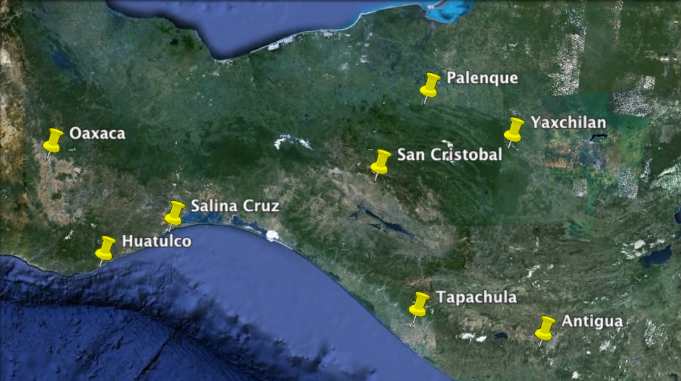
Huatulco and Tapachula (Marina Chiapas) are the best jumping off points
for west coast sailors headed inland in Southern Mexico.
Huatulco to Oaxaca (or San Cristobal de las Casas and Palenque) – We left our boat in Marina Chahué
ADO is the primary bus company in this area. Their premier brand is ADO-gl, and the overnight buses between Huatulco and Oaxaca use this service (358 pesos or $29). OCC is their second tier brand of buses, and they are the most common provider for the colonial cities in Oaxaca and Chiapas. If you can get on an ADO-gl bus for a leg of your inland trip, fabulous! Otherwise, OCC is where it’s at, and that’s the line that was going to Oaxaca when we made the trip.
The ADO bus terminal is at the far end of La Crucecita, easy walking distance or cab ride.
The trip to Oaxaca was grueling for us because of the many hours of sweeping turns on the way to Salina Cruz and then the many hours of switchbacks climbing the mountains to Oaxaca. We tried both day and night travel. It was difficult to sleep on the 8-hour overnight trip because of the motion of the bus. The 10-hour daytime trip (longer because there are more stops) was was full of beautiful views out the windows. An alternative is the six-hour “vomit comet” van ride (also a bit cheaper). Lots of people like this option.
The daytime bus stopped at a restaurant after passing Salina Cruz, and we all hopped off and ordered a meal and ate and then piled back onto the bus to continue traveling. This was a first for us! The bus also stopped for a military checkpoint where the luggage in the baggage compartment was searched.
Huatulco is a great jumping off point for a trip to San Cristobal de las Casas and from there to the Mayan ruins at Palenque. It is about the same distance by bus to get to San Cristobal de las Casas from Huatulco as it is from Tapachula (the city next to Marina Chiapas on the east side of the Tehuantepec). We made these trips from Tapachula instead of from Huatulco, so we don’t have first-hand experience on the buses into Chiapas from Huatulco.
Tapachula to San Cristobal de las Casas and on to Palenque – We left our boat in Marina Chiapas
Like Huatulco, ADO is the primary bus company in this area (here are the bus schedules and ticket info). OCC is their second tier brand and that is the line that goes to San Cristobal de las Casas. The “combi” vans to Tapachula from Marina Chiapas pass close to the ADO bus terminal. Tell the van driver you’re going to ADO, and you will be dropped off about a block from the ADO terminal. On the return trip from the ADO terminal, we always caught a cab to the “combi” terminal and boarded the van headed to Zona Naval.
The easiest trip to San Cristobal from Tapachula is via Tuxtla Guttierez (change buses there) because Tapachula-Tuxtla leg of the trip is on a highway and has no speed bumps. The 9-hour trip directly from Tapachula to San Cristobal crawls over the mountains (many lovely views and interesting small towns), and there are tons of speed bumps. The bus comes to a stop for most speed bumps and creeps over them one axel at a time. We also stopped about every 30-45 minutes during the trip either to let passengers on/off, or for military checkpoints.
Our 9-hour bus trip from Tapachula to San Cristobal (276 pesos or $22) was eventful enough to warrant a page of its own. We continued our trip by going from San Cristobal de las Casas to Palenque (312 pesos or $25). Then from Palenque to Comitán (250 pesos or $20). And finally from Comitán to Tapachula (206 pesos or $17), all on ADO (OCC) buses.
Tapachula to Antigua Guatemala – We left our boat in Marina Chiapas
Tica Bus connects southern Mexico to all of Central America. Bus schedules and ticket purchases here. It is possible to travel on their buses from Mexico City (or Tapachula) all the way to Panama City, Panama. They leave from the ADO bus terminal in Tapachula. Take a “combi” van from Marina Chiapas to Tapachula, tell the driver you are going to the ADO bus terminal and you will be dropped off a block from the terminal.
Our 8-hour bus ride ($19 USD) to Antigua was on a double decker bus. We traveled one way on the upper level (regular class) and one way on the lower level (first class). The view from the front row seats in the upper level can’t be beat (we weren’t lucky enough to get them on our trip). The first class seats on the lower level are nicer seats, and we were served a complimentary hot meal that was much like the old days of airplane travel.
The bus conductor escorted us through the entire border crossing process into Guatemala which involved getting off the bus, standing in line to check out of Mexico and then walking a ways to stand in line to check into Guatemala. There were money changers everywhere clutching wads of pesos and quetzals and hoping to change money for us. Like the Mexico side of the US/Mexico border, the Guatemala/Mexico border was a zoo-scene with vendors everywhere.
We didn’t know that we wouldn’t have a chance to change money once we got to Guatemala City, and upon arrival we hopped into a cab with only US dollars and Mexican pesos, neither of which made the cabbie very happy. He drove us to an ATM machine to get quetzals so we could pay him. Changing enough money for cab fare at the border would have made sense, despite the bad exchange rates those money changers were likely offering.
The 45 minute cab ride from Guatemala City to Antigua was about $45, more than twice as much as the day-long bus ride from Tapachula to Guatemala City (about $19).
Hopefully these tips will help you see Mexico by bus too!
If you found this helpful, you might also like:
To help you plan your cruise and get you inspired, we created the video series, "Cruising Mexico Off the Beaten Path - Volumes 1-3," shown below. This is a fun-to-watch and easy-to-digest introduction to Mexico from a cruiser's perspective, giving you lots of valuable information that isn't covered by the cruising guides. Each video is available individually at Amazon, either as a DVD or as a download. For discount package pricing on the whole series, visit our page Cruising Mexico Video Series.
Volume 1 reviews the geography, weather and seasons in Mexico and shows you what the best anchorages between Ensenada and Manzanillo are like.
Volume 2 gives detailed info that can't be found in any of the guidebooks about the glorious cruising ground between Manzanillo and the Guatemala border.
Volume 3provides all the info you need to get off the boat for an adventure-filled trip to Oaxaca.
Our Gear Store also has a boatload of ideas for your cruise!Are you Ready for An RV Trip of a Lifetime? Enter the Travel Channel Sweepstakes!
This website often brings us intriguing correspondence. We were recently contacted by the Travel Channel asking if we would let you know about a sweepstakes contest they are running. We’re always a little skeptical about these things, but we’ve gone back and forth with them quite a bit, and it is legit and sounds like fun. This is the way their website describes the prize:
“Travel Channel and Go RVing are giving away the ultimate Arizona adventure. One lucky winner and a guest will be flown to Phoenix, where they’ll climb on board a Type A Luxury RV and spend an amazing 7 days and 6 nights touring the Sedona Red Stones, Oak Creek Canyon, Bell Rock and Cathedral Rock. The highlight of the trip will be a 9-hour tour of the Grand Canyon, from Flagstaff through the Navajo Nation, and an unforgettable sunset dinner.”
Pretty awesome!! (Although most RVers, and those familiar with Arizona, may smile at the description).
We’ve never heard the phrase “Type A RV”, although we’ve seen quite a few Type A RVers on the road flying past us at breakneck speeds on the highway. The Travel Channel is surely referring to a Class A motorhome, which would be an awesome platform for a 7 day vacation.
And the last time we were in Sedona, those big red monolithic formations were locally referred to as “red rocks,” not “red stones.” But they are so glorious that it doesn’t really matter what they’re called — they are a “must see,” and what a way to see them!
All you need to do to win this cool prize is to know a bit about travel and the Travel Channel itself, as the contest involves answering multiple choice questions about travel and the Travel Channel. So, if you’re feeling lucky, click here to enter.

Arizona is an awesome area for RVing, and we have really enjoyed our travels there. Even if you don’t win this trip, it is a wonderful place to visit by whatever means. Among our favorite places are:

Grand Canyon – North Rim
The North Rim of the Grand Canyon
Only 10% of travelers to the Grand Canyon go to the jaw-dropping North Rim, because it is a 250 mile drive around the famous chasm to get there. The North Rim is stunningly beautiful. It has few tourists, fabulous hiking and great cycling.
Walking the gorgeous little paved paths that wind along the rim between the flowers will take your breath away — literally — as the rim sits at almost 9,000 feet elevation, a significant altitude 1,000 feet higher than the more famous South Rim.

Picnic area outside the Lodge
If you have a small RV, a stay at the North Rim Campground perched on the rim itself is unforgettable. The Grand Canyon view is right out your window. We were able to squeeze our 52′ truck and fifth wheel combo into the RV dump station there — just barely!!! — but we were too big to fit into any of the sites. A 30′ fifth wheel or 25′ travel trailer or 35′ or shorter motorhome would probably fit fine. Reserve your site early!
If you go there by car, the Grand Canyon Lodge — and the cute little cabins all around it — is a historic landmark unto itself. Dine indoors or out with that inspiring view as a backdrop…
Navajo Nation – Window Rock – Canyon de Chelly

Canyon de Chelly
The enormous Navajo Nation takes up the entire northeast corner of Arizona. The town of Window Rock is the tribal headquarters, and they have a wonderful memorial for the Navajo Code Talkers who played such a vital role in the Allied victory in the Pacific Theater in Word War II.

Window Rock Code Talker Memorial
Nearby is one of the most amazing canyons in the southwest: Canyon de Chelly. Full of soaring cliffs and vast flat lands that snake between them a thousand feet below, you can spot cliff dwellings tucked into these sheer walls way up in the air. Huge petroglyphs can be seen from across the canyon.

Sunset Crater National Monument
Flagstaff & Nearby National Monuments
Flagstaff is a wonderful college town that is full of history. There is no boondocking within an easy bike ride of the town, but Bonito Campground, about 18 miles north of town, is our all-time favorite campground.
Bonito Campground is on the way into Sunset Crater & Wupatki National Monument. These two jewels in the National Park System are worthy of a visit. Sunset Crater is a volcano that blew its top about 1,000 years ago, shocking the locals inhabitants of the time. What is shocking about it today is that the lake-like cinder fields and craggy lava flow looks like the volcano erupted yesterday.

Wupatki National Monument
The nearby Wupatki ruins were built by the “Sinagua” (“without water”) people a century after Sunset Crater blew its top, when they arrived in the area and discovered the thick layer of ash was good for growing crops. The collection of pueblo ruins on the 50-mile scenic drive are all fascinating, and the loop road makes a fabulous bike ride.
There is boondocking in the woods across the highway from Bonito and also in the cinders nearby. It can get dusty, though, especially from ATVs on weekends!
Escapees Magazine features our story “Pacing Your RV Travels”

Escapees Magazine
May-June 2013
Posted May 2, 2013
Escapees Magazine has featured our story Pacing Your RV Travels in their May-June 2013 issue. When we started our full-time RV travels six years ago, we hurried and hustled just like all new full-timers do. We wanted to see it all, and see it all Right Now. Since then, we have learned to slow down and immerse ourselves a little deeper in our travels, finding hobbies and a “theme” that have given greater meaning to our journey…
You can read the article here:
Escapees is a multi-faceted organization that looks after the needs of RVers. From their wonderful bi-monthly magazine to their awesome database of boondocking locations, to their Texas-based mail forwarding service, to their involvement in RV advocacy, to their many inexpensive member RV parks, to their programs for elderly RVers that have hung up their keys for good, Escapees is an excellent organization for all RVers to join…
You can join Escapees by calling 888-757-2582 or by clicking here: Join Escapees
If you mention our blog, Roads Less Traveled, when you join, the good folks at Escapees will put a little something in our tip jar. For years we recommended them without that, but we sure appreciate it!