Cruising Mexico Video Series!

Cruising Mexico Off the Beaten Path is a three-part video series to help you plan your cruise. Our goal with this series is to:

  • Introduce you to Mexico’s lesser known & prettiest anchorages
  • Teach you Mexico’s overall geography, both coastal and inland
  • Explain the general weather patterns and climate
  • Help you plan an itinerary where you see the best places at the best seasons without backtracking too much
  • Inspire you with ideas for what to see and do during your cruise
  • Ensure you get the most out of your sailing adventure.

Each video is chock full of maps, tips, insights and hints, along with vivid images of the most beautiful spots!

Cruisers often invite each other over for drinks or dinner to swap info on where they’ve been. And in that spirit, this series is our way of sharing what we learned (and that isn’t in the guidebooks) with you. It’s if we had stopped by your boat and sat down with you for a few hours to go over the charts and give you our insights and tips, suggesting where to go, what to avoid and what to look forward to.

Many people cruise Mexico, but few get to the anchorages where we stayed.

Mexico Regions

There are lots of maps in these videos.
We review the overall geography, weather patterns and climate.

This video series begins by familiarizing you with Mexico’s geography. Do you know where Huatulco is in relationship to Chamela or Chiapas?  This series will teach you.

Then we review the overall weather patterns and seasonal climate variations and how they will impact your itinerary.  Is it better to start in La Paz or La Cruz?  How’s the snorkeling in the Sea of Cortez in January?

Then we dive into the good stuff as we visit each destination and check it out.

Like most cruisers, before we left on our cruise, we were buried in the bilge as we got Groovy ready for our voyage.

Our plan was very simple:  leave San Diego, turn left, and keep going until we got warm.

Lots of first-timers tackle Mexico that way, and that’s unfortunate.  Safe passage from San Diego to Cabo San Lucas is their primary goal, and things get fuzzy after that.  The problem is, Cabo isn’t a place that is easy to stick around (it’s fun but very expensive!), so as soon as you arrive you need to be planning your departure.  But where to?  For how long?  What will you do there?  And then where?

Mexico's Southern Pacific Coast

We had no idea what was in this part of Mexico. Do you?

The invaluable cruising guides we all use and rely on are awesome for telling you how to get in and out of the anchorages and where to find provisions at each stop.  But it is very hard to get an overall understanding of what it is like to travel in Mexico by boat from these guides.

We got well off the beaten path that most Mexico cruisers follow, and I am hoping that by watching our videos you can benefit from all the research we did and all the great experiences we had once we got down there.

I also hope these videos will get you juiced up about your upcoming cruise, and give you a happy break from all the boat projects and shopping sprees that seem to be the very essence of getting ready to go cruising.

As a learning tool, these videos provide a fabulous way to study a lot of information in an easy to digest and highly visual and colorful manner. If you miss something, back up and play it over. Unlike books that you read privately, you can watch these videos with your spouse and talk over your thoughts and plans.

Grab a bag of popcorn and come have some fun with us!


Cruising Mexico DVD Volume 1

Cruising Mexico Off the Beaten Path
Ensenada & the Northern Pacific Coast
Volume 1 – Front Cover

Cruising Mexico – Off the Beaten Path – Volume 1
Ensenada and the Northern Pacific Coast
Purchase as an Instant Download

This hour-long video (327 photos) covers Mexico’s overall geography, getting you familiar with what lies where.  It presents a brief discussion of weather patterns, climate and the weather prediction tools we used for passage planning.  After a brief glance at where all the marinas are located and which ones are good for summer storage, it offers an itinerary that will get you to all the best spots in two seasons, making sure you see each area when it is at its peak.  Then it reviews the anchorages between Ensenada and Manzanillo.

This video has lots of maps!  Hopefully, after watching it, you will have a good understanding of the layout of this part of the coast, the general distances between the anchorages, and what’s where in relation to each other.


Cruising Mexico DVD Volume 2

Cruising Mexico Off the Beaten Path
The Southern Pacific Coast
Volume 2 – Front Cover

Cruising Mexico – Off the Beaten Path – Volume 2
Mexico’s Southern Pacific Coast
Purchase as an Instant Download

This nearly two hour video (380 photos) covers our favorite cruising grounds that lie between Zihuatanejo and the Guatemala border, way down at the bottom of Mexico.  Although Zihuatanejo gets a lot of cruising visitors, the areas south of there are so distant that they are little visited by Mexico cruisers unless they are in transit to or from Central America. So it is an area that is not only more exotic but much quieter than other areas to the north.

These areas are not as well documented by the cruising guides as the regions to the north, so this video fills in much of that void by showing loads of detailed maps and offering a ton of information about where to anchor, where to snorkel, and what to do, both around town and out of town.


Cruising Mexico Cover Volume 3 281

Cruising Mexico Off the Beaten Path
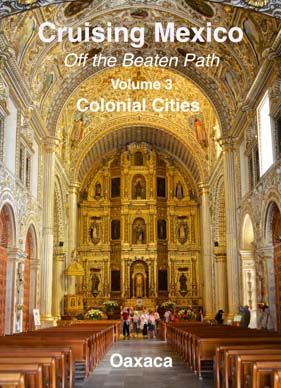
Colonial Cities – Oaxaca
Volume 3 – Front Cover

Cruising Mexico – Off the Beaten Path – Volume 3
Colonial Cities – Oaxaca
Purchase as an Instant Download

In this 40 minute video we take an inland trip to Oaxaca, one of Mexico’s most beloved colonial cities.  We explain how and where to leave the boat, different modes of transport to Oaxaca and what to see and do in this glorious city.

For many travelers, Oaxaca is their favorite destination in all of Mexico, and it is a definite “must see” for cruisers.  Boasting a lively town square and several grand churches, Oaxaca is filled with stately, centuries-old colonial architecture, yet has an engaging, energetic, youthful and artsy vibe.


These videos are available at Amazon:

TESTIMONIALS – QUOTES FROM EMAILS WE’VE RECEIVED

“My husband was enthralled. I loved it.”

“The DVD we watched last night was not only a good reminder of a wonderful season we had, but gave us MANY things to look at doing when we sail south again next season.”

“Wanted to get back to you and let you know how much we enjoyed the video’s. Your correct, they will be invaluable for future reference.”

On the cover! Coast-to-Coast Magazine!

Coast to Coast Magazine cover by Emily agan Fall 2013

Cover photo by Emily Fagan
Fall 2013 Issue

September 26, 2013

Coast-to-Coast Magazine has put our photo on their cover for the Fall 2013 issue, and our story Legends of the Fall is featured inside as well (you can read the story from that link).

Last year we visited the Fruita Colorado area, home of the fabulous Colorado National Monument (who knew there were red rock canyons in Colorado??) as well as some cool wineries!

Then we spent some time roaming around the back roads between Telluride and Ridgway.  We were both awe-struck by the beauty of the golden aspens set against the craggy mountain peaks.

This year has been a tough one in Colorado because of all the rain, but it will be on our fall agenda for future years, because it is just that gorgeous.   The peak date last year was September 22nd.  If you aren’t in southwestern Colorado to enjoy it now, mark your calendar for next year!!

Coast-to-Coast Magazine is published by Coast Resorts, a membership program for high end RV parks.  Similar to a timeshare, we’ve met full-timers who just love to travel this way.  With careful advance planning between Coast Resorts and other programs, these folks keep their overnight expenses extraordinarily low.

You may also enjoy our other published magazine articles and covers and our most recent posts.


Fall Colors on the Dallas Divide – AWESOME!!

Dallas Creek Road Colorado Fall Colors

Vibrant colors on Dallas Creek Road

Fall is an incredible time to get outside and enjoy Nature’s majesty. Last year, Mark and I had the incredible good fortune to attend a photography workshop in Ridgway, Colorado, when the fall colors peaked at the end of September.

Owl Creek Pass 281

Owl Creek Pass – Stunning!

Views from Owl Creek Pass

Views from Owl Creek Pass

This year, reminiscing about all the fun we had, I decided to write a guest blog post on the cool and informative travel site traveldudes.org about the gorgeous scenery that awaits anyone and everyone who takes a trip to Colorado’s Dallas Divide near Telluride (more pics at that link!).


Craggy mountains and aspens in Colorado

We were awestruck by the views in every direction — on every road!

As a New England native, I always thought the autumn colors in the rural parts of the northeastern states had to be the best of the best. Boy, was I in for a shock when we arrived in the midst of the golden aspen covered Rocky Mountains!!


Mountain silhouette Dallas Divide autumn leaves

Brilliant fall colors against a mountain silhouette.

We had been to the Telluride area twice before, both times in July. It is an enchanting place that grabbed our hearts instantly. Towering, craggy mountains soar into the sky and adorable little towns fill the valleys in between.

Autumn Color in Telluride Colorado

Autumn in the Rockies.

But Telluride is transformed in September (more pics at that link too!). Now the jagged grey mountain peaks jutted up through gold, red and green carpeted valleys. We were in awe as we prowled around the back roads between Ridgway and Telluride.

Road from Telluride 531

You just can’t beat autumn colors AND craggy mountains.


Owl Creek Pass, Dallas Creek Road, West Dallas Creek Road and Lost Dollar Road kept us coming back day after day. These dirt roads are easy to drive with a passenger car, and the views at every turn took our breath away.

Trailer on Road from Telluride 281

What a place to take your trailer!


Three of the scenic drives start from State Route 62 on the west side of Ridgway. The first left turn from Route 62 (onto County Route 7) is Dallas Creek Road. The next left turn from Route 62 (onto County Route 9) is West Dallas Creek Road. Both of these are dead ends: drive in, soak in the views, take lots of photos, and drive out. Ralph Lauren’s Double-L Ranch can be seen on these drives too.  (This link has a tale about that ranch).

South of Telluride - autumn color

A tapestry of color south of Telluride

The third left turn off State Route 62 doesn’t have a number but is called Lost Dollar Road. Follow this all the way until it intersects with State Route 145 where you turn left and head east into Telluride (or turn right and return to Ridgway on the highway).

The fourth scenic drive, Owl Creek Pass, is County Route 8, and it heads east from State Route 550 at Ridgway State Park, north of Ridgway. John Wayne filmed the movie True Grit in this area.  (This link has a tale about that movie!).

For a final treat, head south from Telluride on State Route 145.

Colorado Autumn

A shimmering golden aspen grove arches over Lost Dollar Road

We did not find much boondocking in the area, but Ridgway State Park is just a few miles from each of these stunning scenic drives, and they have full hookups as well as dry camping sites.

If you can take a road trip to southwestern Colorado in the next few weeks, go do some leaf peeping in this gorgeous part of the country. Last year’s peak was September 22nd! Allow a few days if you can, and let us know how your trip goes!!!

Ridgway and Telluride are in the southwestern part of Colorado

Ridgway and Telluride are in the southwestern part of Colorado

For more beautiful photos and tips about this area, visit these links:

A Visit to Dinosaur National Monument – RV Life Magazine

Dinosaur at Dinosaur National Monument

RV Life Magazine
“Dinosaurs and Much Much More”
by Emily & Mark Fagan
September 2013 issue

Posted: Sep 8, 2013

The September 2013 issue of RV Life Magazine is featuring a story by us (Emily & Mark Fagan) about Dinosaur National Monument called Dinosaurs and Much Much More.

We went to Dinosaur National Monument at the Utah/Colorado border expecting to see lots of dinosaur bones and mock-up skeletons.  What a fantastic surprise it was to get there and find that those old bones are just a small (though cool) part of the story!

Dinosaur National Monument is a gorgeous, scenic and fascinating national park.  The newly renovated visitors center houses a unique collection of dinosaur bones still in the ground!!  But it was the stunning bike rides and petroglyphs that kept us at the park for a week.

Our original two blog posts about the dinosaur bones at this park and the fabulous petroglyphs and homesteads are here, along with our RV LIfe magazine story.

RV Life Magazine is a big and informative magazine about all things RVing.  One of the oldest RV magazines in existence, it can be found at camping stores and RV parks in the west.  Even better, they post their feature stories online in their digital magazine.

For more from us here at Roads Less Traveled, check out these links:

Other Magazine Articles            Latest Posts

RV Roof Maintenace – in Trailer Life!

RV Roof Maintenance Trailer Life

Trailer Life – Sep 2013
by Emily & Mark Fagan

The September 2013 issue of Trailer Life includes a technical feature of ours about RV roof maintenance and repair. This seems like a pretty mundane topic, but we actually got quite wrapped up in it as we uncovered the many subtleties involved in keeping shelter over our heads on the road.

It turns out that RV roofs come in many flavors, from rubber roofs to fiberglass, and each has its own requirements for maintenance and repair.

Mark and I worked together on this article, and when we sent it off to Trailer Life, we thought it was finished. However, TL’s technical team had a lot more tips to add! So, in the end, this article has the input of four or five different people who have owned a wide variety of RVs (not just trailers).

A little side note: I took this fun photo of Mark working on the roof of our first full-time trailer (a 2007 27′ Fleetwood Lynx travel trailer with a non-walk-on roof) not when he was cleaning or repairing the roof, but when he was installing our first solar panel!

We were dry-camping at Westport-Union Landing State Beach campground, a fabulous campground on a bluff overlooking the ocean in northern California.  He managed to install the whole system in one day while dry-camping, and he was under the gun too, because he had to get it done before our one battery got too discharged… He’s amazing!!

Trailer Life is a monthly RVing magazine published by Good Sam Club.  It can be found on newsstands and in camping stores.

Our most recent posts:

More of our Latest Posts are in the MENU.   New to this site? Visit RVers Start Here to find where we keep all the good stuff. Also check out our COOL NEW GEAR STORE!! *** CLICK HERE *** to see it!

Escapees Magazine – Our photo is on the Sep/Oct 2013 cover!

Escapees Magazine Cover Photo by Emily Fagan Sep-Oct 2013

Escapees Magazine Cover, Sep-Oct 2013
Photo by Emily Fagan

We were fortunate enough to have one of our photos selected for this month’s cover of Escapees Magazine.

It was taken with a Nikon D5100 camera at Lucerne Valley in Flaming Gorge, Utah, where we stopped for lunch at a beautiful overlook.  While enjoying the view, the sky grew black, and suddenly a big thunderstorm swept across the valley and the rain fell in torrents.

After the storm passed and the sky cleared, we noticed a rainbow forming and we ran outside to try to catch it with the cameras.  It is always challenging to try to figure out how best to photograph these huge bows over the land, but as I dashed forward into the wet grass in front of the trailer, it began to line up perfectly, framing the trailer as it fell into the lake.

Escapees Magazine is a wonderful all-purpose RV club that provides a very wide range of services to its members, including gatherings for future and current RVers, an excellent bi-monthly magazine, access to an enormous database of boondocking locations, low cost RV parks, care for elderly RVers that have hung up their keys, a fabulous mail forwarding service, and more.

We have enjoyed our membership immensely, and we encourage all experienced RVers and future RVers to consider joining, especially if long-term travel is part of your plan…!

A neat side note: Rainbow’s End is the name of the RV park at the Escapees headquarters in Livingston, Texas.


Mexico Cruiser’s Bookshelf – Guides and Resources!

Cruisers are notorious for stocking their bookshelves to the max with books of all kinds, and Groovy has her share.  During our cruise of the west coast of Mexico we found that some of our reference books and other resources were so valuable that they were basically “essential cruising gear.” Following are descriptions of resources we would recommend every cruiser headed to Mexico consider carrying on board:

Cruising Guides

There are four major cruising guides for the west coast of Mexico, and each is wonderful in its own way:

Mexico Boating Guide by Pat Rains
Charlie’s Charts – Western Coast of Mexico & Baja by Holly Scott et al.
Pacific Mexico: A Cruiser’s Guide by Sean Breeding & Heather Bansmer
Sea of Cortez: A Cruiser’s Guide by Sean Breeding & Heather Bansmer

In recent years, the Mexico cruising guide industry has become quite competitive, which is fantastic for today’s cruisers.  Two of the guides have new editions for 2013.  Pat Rains has released the third edition of her Mexico Boating Guide, and Charlie’s Charts has been revamped by Captain Holly Scott to include the work of its original authors and that of Sea of Cortez cruising guide author Gerry Cunningham as well.

In addition, Baja Bash II is a specialty guide for sailing the outside of Baja California between Cabo San Lucas and San Diego.  Unlike the other guides that include chapters on Baja as part of an all-Mexico guide, this book focuses specifically on springtime northbound voyages.

If you buy only one guidebook, we recommend the new Mexico Boating Guide (3rd edition) by Pat Rains.  It covers the entire western coast of Mexico and has all the data needed to cruise the entire region between the California/Mexico border and Mexico/Guatemala border with confidence.

However, our own preference in our cruise was to carry all of these cruising guides on board Groovy.  In many cases, before approaching a new area, we read each guide book’s description, picking up different bits of wisdom from each author.  It might seem like carrying all these guidebooks would be redundant or might get confusing, but we found that in each area one book or another shone above the rest, and we liked the reassurance of being able to get multiple opinions about the dangers and hazards, how much swell there might be in a given anchorage, where to shop, etc.  We can think of examples for each guidebook where their description led us to an anchorage we were delighted to find — and would never have found if it weren’t for that book.

Mexico Boating Guide

Mexico Boating Guide (3rd edition) by Pat Rains

This cruising guide is the most well-rounded cruising guide for western Mexico, and the new edition is better than ever, with more photos and more mini-charts and updated info everywhere.

The two areas where we relied on this guide most were at opposite ends of Mexico:  the northernmost 800 miles during our initial cruise south from San Diego to Cabo San Lucas along the outside of Baja California and the southernmost 800 miles between Zihuatanejo and Puerto Chiapas (Puerto Madero) at Mexico’s Guatemala border.

Pat Rains describes hazards and approaches and their GPS coordinates extremely well, although the last edition had some errors in waypoints and descriptions of “east” versus “west” that I’m sure have been rectified.  Unlike the guides by Sean Breeding and Heather Bansmer below, she gives few specific waypoints for exactly where to drop the hook in each anchorage.  Instead, she offers traditional sighting methods like depths, landmarks and an anchor symbol on a mini-chart.  This book is backed by the author’s decades of boat delivery experience on this coast, and we all become more confident at anchoring — and don’t need those exact anchorage waypoints quite as much — as we drop the hook in more and more places.

Map of Mexico

For cruisers heading south of Zihuatanejo, the Mexico Boating Guide is invaluable, because it has by far the most detailed information of any of the guidebooks for cruising the Bays of Huatulco, our favorite part of Mexico.  It also gives detailed info for passages and anchorages along the extensive stretch of coast between Zihuatanejo and Puerto Chiapas (Puerto Madero) on the Guatemala border.

There is a revised chapter at the end on the new Marina Chiapas in Puerto Chiapas (Puerto Madero) including photos and mini-charts.  However, no waypoints are given for the tricky, twisty channel that leads to the marina, and there is little information for how to see the spectacular ancient Mayan ruins and colonial cities that are MUST DO inland trips from there.  So, for cruisers headed to Chiapas, we recommend having a look at our Marina Chiapas Guide, which includes waypoints, notes for provisioning and getting around as well as notes for the really magnificent sights that are a (long but worthwhile) bus ride away.


Pacific Mexico: A Cruiser's Guide

Pacific Mexico: A Cruiser’s Guide by Sean Breeding & Heather Bansmer

Besides the beautiful photography in this book, perhaps the best feature of this guide — and of its companion book Sea of Cortez: A Cruiser’s Guide — is the very well organized system of numbering and presenting the waypoints for approaches, anchorages and hazards.

The waypoints and their presentation is so good that this guide allows blind “sail-by-numbers” cruising.  Simply flip to the back of the book and enter all the logically numbered waypoints into the chartplotter and away you go.  Drop the hook on the anchorage waypoint in whatever bay you choose, and you know you are sitting where Sean and Heather anchored.

We heard from friends that it is possible to obtain the waypoints in electronic form from the authors or the publisher Blue Latitude Press and download them directly into your chartplotter if you are technically savvy.  We found it was easy enough to enter them manually, a few at a time.

We relied on this guidebook between Mazatlan and Zihuatanejo.  South of Zihuatanejo, however, we turned back to the Mexico Boating Guide by Pat Rains because the authors of Pacific Mexico did not take their boat south of Zihuatanejo.  So, while their information on the anchorages south of Zihuatanejo is generously offered, it is not backed up by first-hand experience.
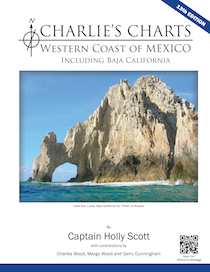
 

Charlie's Charts of Mexico

Charlie’s Charts Western Coast of Mexico & Baja by Holly Scott

This guidebook has been revamped and greatly expanded since the last edition by Capt. Holly Scott who has taken the guidebook and data that was gathered by both Charlie & Margo Wood and Gerry Cunningham and compiled it all into this one hefty tome.

It still retains the hand-drawn mini charts that set this guide apart.  It also now includes some anchorages on the outside of Baja that are not in the other guides.  In addition, much of the knowledge and wisdom accumulated by Gerry Cunningham during his decades of sailing the Sea of Cortez has been incorporated into this book.

We used the previous edition of this guide mostly while sailing the outside of Baja, headed both south and north, and for parts of the Costalegre and Sea of Cortez.  For us it was usually backup confirmation of what the other guidebooks said.  We also appreciated being able to see yet another set of mini-charts of each bay, and sometimes what was confusing in one guide’s mini-chart was easier to understand from this guide’s mini-charts (and vice versa).


Sea of Cortez: A Cruiser's Guide

Sea of Cortez: A Cruiser’s Guide by Sean Breeding & Heather Bansmer

Scanning the yummy photos in this gorgeous cruising guide makes me want to go cruising.  Each anchorage is lovingly described and documented.  The only downfall is that sometimes the descriptions are more beautiful than the anchorages themselves.

This was our primary guide in the Sea of Cortez, although we turned to both the Mexico Boating Guide and Charlie’s Charts on occasion, especially when a norther was coming and we wanted to see if the other guides described any lesser known hiding places where we could seek refuge.
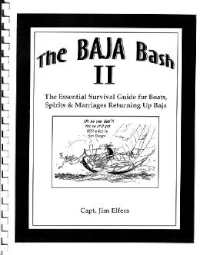
 

Baja Bash II

Baja Bash II by Jim Elfers

We read this guidebook prior to our sail south from San Diego to Cabo San Lucas.  It is extremely helpful for pointing out the nasty capes and other areas that make this coast a challenge, even if you are going in the easier southerly direction.  We used it exclusively when we did the Baja Bash three years later.

In our opinion, this guide is essential equipment for anyone doing the Bash.  It is the only guidebook that assumes you are sailing north up Baja and not south.  It lists the anchorages in that order, and it outlines a strategy for tackling each portion of the coast.  It also has little jewels like the author’s favorite anchorage in the northern Baja coast which is tucked just south of Ensenada and is not mentioned in any of the other guides.

Inland Guides, Flora and Fauna and Other Resources

In the excitement of getting ready to go cruising it is easy to forget about non-boating related things you might need.  We sailed off to Mexico with just the above cruising guides on board, thinking that that would be all we would need.  We were going cruising after all.  Why would we need any ordinary guidebooks for our voyage??

Little did we know that the image we had in our mind of cruising was just a tiny facet of what the experience would eventually be all about.  Once we figured out how to get from anchorage to anchorage safely and easily, our interests changed and we began to look more closely at the world we suddenly found ourselves inhabiting.

This is most effectively accomplished with guidebooks and reference books that explain that world.
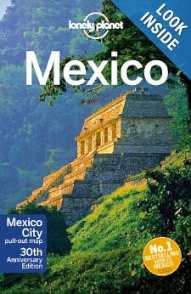
Lonely Planet Mexico

Lonely Planet Guide to Mexico

Our first season we didn’t have a general guidebook to Mexico, and what a mistake that was. Our first summer back in the US I spent two hours in the bookstore studying all the different guidebooks to Mexico, and concluded that for me, the best one is the guide from Lonely Planet.

What is helpful about this guide is that it gives an overview of what this magnificent country is all about. Up front is fifty pages or so of excellent general information. From a Top 25 list of Mexico’s best sights, to a discussion about immersion Spanish schools, to talking about how to explore the Mayan ruins, to reviewing the various regions of the country and what they are known for, this little book helps you get your hands around the very large and varied country of Mexico.

When I first got to Mexico I was baffled and overwhelmed that this entirely different world existed just miles from the city I had most recently called home (Phoenix, Arizona). Who were these people, why were they so different and where did they come from? The “Understanding Mexico” section at the end of this book goes a long way to helping figure that out. Mexico is nothing like the US, and for many people, it is nothing like they thought it would be before they got there.

Lastly, this guidebook is invaluable for venturing inland off the coast to the majestic colonial cities like Guanajuato and Oaxaca and to the evocative ancient ruins like Palenque and Monte Alban.

 

TripAdvisor

http://TripAdvisor.com

Once we started traveling inland, our first conundrum was where to stay. While the printed guidebooks have suggestions, we’ve found that TripAdvisor is an even better resource because it is a compilation of reviews from many travelers rather than from a single person. Granted, the objectivity of a professional travel writer is lost, and the comparative scale between places is gone, because travelers of all experience levels and with all kinds of tastes and budgets are writing reviews. However, in our experience, the reviews are surprisingly accurate.

Even better, many hotels respond to the reviews, giving the reviews even more depth. Complaints are addressed, compliments are thanked, and for small boutique hotels and hostels you can get a sense of what the hosts are like.

For me, after looking up a hotel in TripAdvisor, I like to go to the hotel’s website (sometimes it’s given, and sometimes you need to do a Google search), and then I email the hotel directly. We actually decided against staying at the most popular B&B in Guanajuato because the host seemed a little crabby in his TripAdvisor replies — and during our email correspondence with him, he confirmed his crabbiness in spades!

Besides lodging, TripAdvisor is very helpful for figuring out what to do when you get wherever you are going. Each city/state has a Things to Do section, and that is an excellent place to find out what you might be doing in a given place, and whether those are the kinds of things you want to be doing.

Birds of North America

National Geographic Field Guide to the Birds of North America, Sixth Edition

Sitting on the boat in various anchorages, and strolling the streets on shore, we often found ourselves staring at birds we didn’t recognize. If you enjoy exotic flora and fauna, consider bringing along some guidebooks so you can look them up. Our first season we didn’t have a bird book, and I had to resort to crazy online searches to satisfy my curiosity about what some of the birds were that we saw. That’s really hard!

I’ve hunted for an outstanding book specifically about Mexico’s birds and haven’t found one yet. However, this book on North American birds has been around for decades and proved pretty darn good. The only drawback is that the authors don’t seem to realize that all of Mexico is in North America. For some inane reason, they think that only the northern half of the country is on the North American continent.

Geographical confusion aside, many birds of northern Mexico (and the US and Canada) also live in southern Mexico, and only a few truly tropical birds that we saw way down south seemed to be missing. For the most part, the birds we saw were all in this book, and for us, it’s really nice to put a name to a bird and to read a little about its range and its habits.

Fishes of the Pacific

Fishes of the Pacific Coast by Gar Goodson

Lots of cruisers try their hand at fishing, and some become really good at it. For us, the hardest thing about fishing was recognizing what we’d caught and knowing whether it made for good eating or was better returned to the sea unharmed (some of the easiest fish to catch taste really terrible!).

This little book — which sadly appears to be out of print (hopefully just for the moment) but is still readily available used — was a godsend for us after a preliminary season of laboriously gutting, filleting and marinating fish only to serve them and have us both pinch our noses and say “Yuck!”

Not only does it have good color images which simplify the identification process, it also describes them in detail, including all the forms from young fish to gender differences to adult fish in various seasons. It lists the range of each fish — very helpful if you think you’ve identified your fish only to find out it lives 1,000 miles south of where you are. Most important, it lists the edibility. Wouldn’t it be great if the next edition included a recipe for each yummy one!

Reef Fish

Reef Fish Identification: Baja to Panama by Paul Humann and Ned Deloach

We did not do nearly as much snorkeling in Mexico as we had thought we would before we began our cruise. The water in the Sea of Cortez is cold in the winter and spring, and the water is murky and often full of red tide on the mainland during the winter. However, when we did find great snorkeling — in summer in the Sea of Cortez and in winter in Huatulco — we sure wished we knew what we were looking at.

We did not have a reef fish guidebook onboard Groovy. However, we have heard that this book is the one to get. If we were returning, it would be on our bookshelf. One of the photos in this book was taken by veteran Mexico (and Caribbean) cruiser Geoff Schultz on the Freedom 40 Blue Jacket.

Without a guidebook, it was frustrating to come back into the cockpit breathless with excitement and start talking to each other about the fish we’d seen, and be reduced to saying, “Did you see the ones with the yellow tails?” “The big ones, or the little ones?” “I don’t know, they were kind of medium sized…” Or to have a cruiser anchored nearby say, “Have you noticed all the damsels swimming around our boats?” What? This sent Mark flying to get his binoculars to check out the babes, but of course these damsels were blue and had fins…
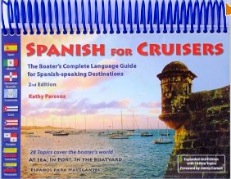
Spanish for Cruisers

Spanish for Cruisers by Kathy Parsons

I have written a post about the books and resources we used for improving our Spanish beyond the typical cruiser’s starting point of “cerveza” beer and “baño” bathroom.  I highly recommend reading that post if you are going to Mexico and want to maximize your experience.

If you don’t have the time or interest in taking a conversational Spanish course, either in the US before leaving or in Mexico once you get there, this little book covers an awful lot of ground.  Besides being a fabulous glossary for all those technical boat terms like “bow” proa, “hull” casco, and “stainless steel” acero inoxidable, it will help when you carry a little broken part into a ferretería and need help repairing or replacing it.

One of the features we found most helpful was the chapter on sentence starters.  Sometimes just getting going with the Spanish that you already know is a bit daunting.  Having a few pat phrases to get those first words out of your mouth really helps.

Of course, most Mexicans who assist boaters speak good English, or can grab a friend nearby who does.  But the smiles, raised eyebrows, and genuine appreciation we get when we muddle through a few words of Spanish is priceless, and often forges a special bond between us and these good people who have taken the time themselves to learn a lot of our language and are more than willing to speak it on their own soil.

Mexico Travel Road Map

Mexico Road Map

When we first got to Mexico, the only maps we had were in the cruising guides and whatever we could find online. Yikes!! It’s a huge country with lots of states, and it was much easier to get a feel for where things were once we got a proper map aboard Groovy.
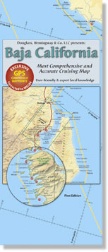
Baja California Cruising Map

This was especially true when we started traveling inland. Google Earth is great for getting quickie distances, but I also liked being able to pinpoint where each destination was on a large map I could spread out in the cabin. Call me old fashioned…

Baja California Cruising Map

This cruiser-specific map has waypoints and lots of boating oriented details for Baja California. We relied on the chartplotter for passage-making, obviously, but it sure was nice to open up this very large paper map on the floor of the cabin and get a feel for what was where…

Google Earth

We used Google Earth a lot to estimate passage-making distances between ports and also between coastal locations and hot spots inland.  For some reason, even in nautical miles, we found the estimates were always just a hair longer than our chartplotter showed.  No matter, it was still very useful for planning purposes.

We also used Google Earth to estimate waypoints in anchorages where there were none given in the guidebooks.  This was especially helpful when cruising the Bays of Huatulco and other less well documented points down south.


Steinbeck Sea of Cortez

Log from the Sea of Cortez by John Steinbeck

This book is absolute MUST READ if you are heading to the Sea of Cortez.  It is a light-hearted and hilarious account of a voyage John Steinbeck made from Monterrey, California, to the Sea of Cortez aboard a chartered shrimper during March and April of 1940.

Besides making any cruiser laugh out loud at his descriptions of the ship’s cantankerous dinghy and outboard and the hapless crew member who refused to take his turn washing dishes, Steinbeck paints a vivid picture of Mexico, the outside of Baja and the Sea of Cortez as it was nearly 75 years ago.

Things have changed dramatically — and yet they haven’t changed at all — both in the Sea and aboard cruising boats, and many cruisers find they can’t put this book down.  One warning: there is a bizarre chapter in the middle that goes off on a philosophical tangent that has nothing to do with the Sea or Mexico or Steinbeck’s voyage.  That chapter was written by a friend of his, and he included it as a favor.  You’ll know it when you get there.  Just skip to the next chapter…

Conquest of New Spain

The Conquest of New Spain by Bernal Diaz

This riveting book is a first-hand account of the beginnings of the Spanish conquest of Mexico. Written by one of the men that was there on the scene when it happened, it puts you right in the middle of the action as Hernán Cortés barnstorms his way across Mexico in 1519, after sailing from Cuba to Veracruz on Mexico’s Caribbean shore.

I never really understood how radically different the arrivals of the Spanish and the English were in the New World, and reading this book gave me a much deeper understanding of who the Mexicans and other Latin Americans are today and where they come from.

Hernán Cortés was as smooth and wily and ruthless and volatile as the Sea that bears his name, and the political tactics and extraordinary savvy he used to decimate the Aztecs is truly astounding. Arriving from Cuba with just a few men, by the time he reached Tenochtitlán (now Mexico City), home of the Aztec emperor Montezuma, he commanded an army of thousands, few of them Spanish.

Perhaps even more astonishing is to consider what those Spaniards must have thought when they first laid eyes on the intricate and cleverly engineered city in which the Aztecs lived. Built on a lake and incorporating canals, land bridges and extensive water travel, the population was some 200,000, while the biggest European cities of the time were a mere 50,000. It’s no wonder that by the time their tales of this incredible city reached home, the streets were said to be lined with gold.
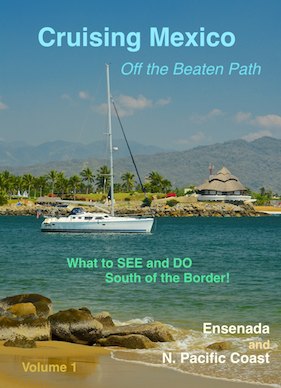
 

Cruising Mexico DVD Volume 1

Cruising Mexico DVD Series

Cruising Mexico Off the Beaten Path DVD Series

Even with all these wonderful guides and books, it can still be hard to get a visual picture of what cruising Mexico will be like.  What do the anchorages look like?  What do the towns look like?  Where are the best beaches and snorkeling? Even if you have sailed the US west coast extensively or done a lot of charters in the Caribbean, a cruise in Mexico is a completely different kind of experience.

To help folks get a better visual sense of what Mexico will be like, we have put together a DVD series.  Chock full of maps, charts, and inspirational images, this series is presented as cruiser-to-cruiser.  It’s as if you are sitting down with a cruiser who has been there and done that and hearing about what it was like.  We share all the tips and hints we would have loved to have seen before we untied the dock lines and sailed south.

__________________________________________

I hope these books and maps find a place on your boat’s bookshelf and that they are as useful in your cruise as they were in ours!!  For your convenience, this page gives product links for all these great resources.

To help you plan your cruise and get you inspired, we created the video series, "Cruising Mexico Off the Beaten Path - Volumes 1-3," shown below. This is a fun-to-watch and easy-to-digest introduction to Mexico from a cruiser's perspective, giving you lots of valuable information that isn't covered by the cruising guides. Each video is available individually at Amazon, either as a DVD or as a download. For discount package pricing on the whole series, visit our page Cruising Mexico Video Series.

Volume 1 reviews the geography, weather and seasons in Mexico and shows you what the best anchorages between Ensenada and Manzanillo are like.

Volume 2 gives detailed info that can't be found in any of the guidebooks about the glorious cruising ground between Manzanillo and the Guatemala border.

Volume 3provides all the info you need to get off the boat for an adventure-filled trip to Oaxaca.

Our Gear Store also has a boatload of ideas for your cruise!

If you are planning a cruise to Mexico, you might also enjoy:

More Tips for Cruising Mexico         Upgrades & Product Reviews


Nikon D5100 Closeouts – Smokin’ Deals!!

Barn Owl Baby

This baby barn owl seemed bewildered to
find himself outside his nest!

We have always loved photography, and our traveling lifestyle has made it possible for us to study and improve our skills. Scanning this website always makes us chuckle, because we have come such a long way since we started!

This past weekend, while staying with our friends, a baby barn owl fledged and hung out in a tree near the patio, screeching plaintively long into the night. Mark took this wonderful image with his Nikon D5100 with a 55-200mm lens.

Our hosts were really surprised he could get the camera to focus on the owl in the pitch dark and that he was able to capture this image.

They had been thinking about getting a nice new camera for a long time, so we hopped online to see what the latest prices were. Lo and behold, Nikon has discounted these cameras A LOT to make way for the replacement model, the Nikon D5200. They are bundling the cameras in all kinds of ways, with different types of lenses, tripods, memory cards and other things.

If you have been in the market for a “good” camera for a while, this might be a great time to get one. Obviously, Nikon makes all kinds of models, both higher and lower priced, but we have found that this model is ideal for our skills and what we do. I have had mine for two years and Mark has had his for a year, and they are still going strong with 40-50 thousand photos on each one.

Why the Nikon D5100?

There are tons of great cameras out there, but we have loved the Nikon D5100 for these features:

  • Wonderful overall image quality and colors.
  • The articulating screen – you can set the camera on the ground or hold it overhead and still see the image on the back.
  • In-camera HDR – the camera takes two photos at different camera settings and merges them, creating awesome effects.
  • Bracketing – the camera takes three photos at different settings so you either choose your favorite one or pump all three through a software package that will merge them… for cool HDR effects!
  • The fun in-camera “color sketch” and “outlne sketch” photo converters – these turn a photo into a sketch or colored drawing.
  • The modest file sizes coming off the camera. JPG files are up to ~8MB and raw files are up to ~17mb.

Here are a few of the bundles we found at Amazon. The basic gear I purchased two years ago is the second kit in the second row, but I paid 60% more!! Mark got (essentially) the first kit in the second row for 50% more last summer. The basic camera without a kit is the first item — so you can see what a smokin’ deal the bundles are!!

These deals just seemed to good not to share. Obviously, there are lots of other models and options, but I wanted to let you know about these in particular because we have enjoyed our Nikon D5100’s so much, even landing a few magazine cover photos with them.

And of course, if you end up making a purchase (of anything!) after clicking through any of these links, please let us know so we can personally say “thank you” — and so Mark can give you any pointers you might need, and most importantly so we can stay in touch and find out how much you love your new camera!

Trailer Life Magazine Features Our Story About Flaming Gorge

Trailer Life Flaming Gorge Aug 2013

Trailer Life Magazine – August 2013
Story: “Flaming Gorge” by Emily Fagan
Photos by Emily & Mark Fagan

Posted July 22, 2013

On newsstands now!! The August 2013 issue of Trailer Life Magazine features our story about our travels to the exquisite Flaming Gorge National Recreation Area.

Situated between Utah and Wyoming, Flaming Gorge is a beautiful red rock canyon that rises steeply in shades of crimson that contrast vividly with the rich blues and greens of the Green River far below.

We visited this area last summer and were treated to majestic rainbows following intense summer thunderstorms. We also wandered among a herd of nearly tame pronghorn antelope that were in residence at the Lucerne Valley Campground on the Wyoming side of Flaming Gorge, and then mingled with an equally tame herd of bighorn sheep at the Canyon Rim Campground on the Utah side.

Trailer Life is a popular magazine from the good folks at Good Sam Club, and it covers everything to do with trailers and towable RVs. It is available as a print magazine subscription or as a Kindle subscription, and can also be found on newsstands.  Covering lots of technical issues as well as many great RVing destinations, it’s a magazine we have always enjoyed.


Is Mexico Safe?

Dancer at Paradise Village

Dancer at Paradise Village

When folks find out we’ve been living and traveling in Mexico for a few years, we are frequently asked:  Is Mexico safe??

Mexico has been in the headlines a lot recently as the country has engaged in its infamous drug wars. Tragically, tens of thousands of people have died.  So we’re not surprised to hear this question so often.

Girls in Oaxaca Zocalo

All dressed up in the Zócalo in Oaxaca.

However, we have felt as safe or even safer in Mexico than we have at home in the US.

More important, we have discovered our southern neighbor is full of friendly people, really fun towns and has a fascinating history, from both ancient times when step pyramids were in vogue and more recent times since the Spanish arrived.

Cheerleader with flag

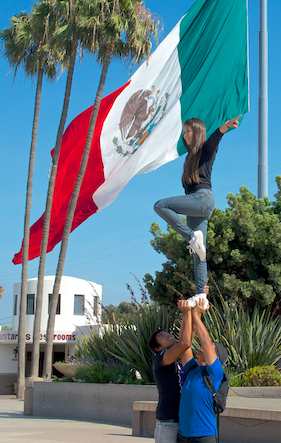
Dancers practice their moves in the main plaza in Ensenada.

It is always easy to be frightened of a place we’ve never seen in person.  Reading the news coming out of our own hometowns lately — Boston for me and Detroit for Mark — we might think twice before going to either city if we hadn’t already been there, done that, and lived to tell the tale.  Both cities have made headlines in the last six months, one for gruesome attacks on innocent people and the other for taking a trip down the road of corruption to bankruptcy.

Kids in the train Ensenada

Kids wave at their parents from a train in Ensenada


Wait a minute!  Isn’t Mexico the place that is known for gory crime and corruption, and not the US?

Bakery in Huatulco

All kinds of yummy goodies come out of this
Italian Bakery in Huatulco

Bobbing around at anchor in a sailboat on the Mexican coast while reading these disturbing headlines about these frightening American cities, we have the same reaction as folks do up north when they are kicked back in their cozy living rooms in friendly American and Canadian communities, reading about the freaky goings-on south of the border.

For all of us, our first reaction is naturally, “Thank God I’m not there!” The second really should be, “Is that the only thing that’s happening there?  Is there really no one living a normal life in that place?”

Family on motorcycle

A family on a motorcycle in Huatulco.

Whenever we open up Google News to see what’s going on in the world, we are always horrified by the daily muggings, robberies, murders and general mayhem that is happening in our adopted hometown, Scottsdale, Arizona.  Scottsdale is a chic vacation destination for lots of snowbirds, and it’s a city that considers itself quite swank and rather trendy.  But good grief, they have stabbings in the bars and murders in the streets there!  Stay away!!

The media loves to shock us and they do a really good job.

It is hard to measure the “safety” of a community in precise terms.  Crime is a very black and white matter — either you are the victim of a crime or you slide by unscathed.  You aren’t “kinda” mugged or “sorta” killed.  So, looking at crime statistics is rather bizarre.  If the murder rate for a city is 40 per 100,000, or perhaps 380 per year, what does that really mean to the average tourist that arrives on that city’s streets?  Will you be attacked while toting your suitcase to your first hotel or will it happen after a month or a year or a decade?

Contrary to the terrifying news stories splashed across the US media, the US government’s current travel advisory for Mexico opens with the following very benign assessment of the situation for Americans traveling to Mexico:

Horse and buggy Ensenada

A horse and buggy trots by in Ensenada

“Millions of U.S. citizens safely visit Mexico each year for study, tourism, and business, including more than 150,000 who cross the border every day. More than 20 million U.S. citizens visited Mexico in 2012. The Mexican government makes a considerable effort to protect U.S. citizens and other visitors to major tourist destinations, and there is no evidence that Transnational Criminal Organizations (TCOs) have targeted U.S. visitors and residents based on their nationality. Resort areas and tourist destinations in Mexico generally do not see the levels of drug-related violence and crime that is reported in the border region and in areas along major trafficking routes.”

So, in a nutshell, almost 7% of the US population visited Mexico last year.  If that’s true, it can’t be all that dangerous, can it?

Callejoneada in Guanajuato

Singing in the streets in Guanajuato

A statistic that is not mentioned in this report but that I have read elsewhere is that a million Americans and Canadians make their homes in Mexico.  Many have long term residence visas, and quite a few have had access to the free public health care system, us included.  Now that’s a twist, isn’t it?

Girls in San Cristóbal de las Casa

San Cristóbal de las Casas

I think that when reading headlines and stories about the dangers in Mexico, it is worthwhile to take a look in the mirror and think about the dangers of living at home, wherever home is.

The NY Times published an article recently stating that in 2012 Detroit had 386 murders (more than one a day) and Indianapolis had 101 (one every 3-4 days).

Class Trip to Monte Alban

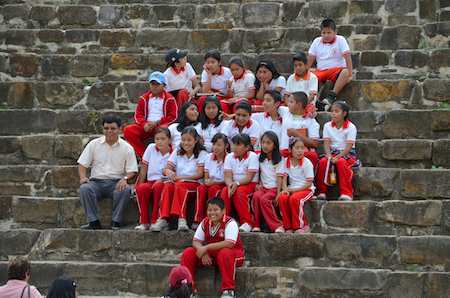
A school class on a field trip to the ancient
Monte Alban ruins gets a class picture on a pyramid.

Meanwhile, ABC News published a story about the worst neighborhoods in the US, and found that in certain parts of Atlanta, Georgia, your chance of being the victim of a violent crime is 1 in 12, while in Nashville, Tennessee, it is 1 in 14 and in Tulsa, Oklahoma it is 1 in 15.

I’m not sure how to interpret those statistics.  It sounds like out of twelve people walking down certain streets in Atlanta, one will fall prey to a violent crime!!  Holy cow!!  Run away!!  However, thousands of people live and work in Atlanta, Nashville and Tulsa very happily every day.  Statistics tell only part of the story.

Lovers in Comitan

Lovers on a park bench in Comitán

Perhaps more important is that crime everywhere is localized and focused in specific areas.  We all tend to brush off the stories of violence that happen around us in our home towns, because they happen “over there” somewhere, whether “over there” is a few miles away downtown or a few streets away where the neighborhood starts to get iffy.  The thing is, at home, we know where the dangerous places are, and we don’t go there, or at least we don’t go there late at night and alone.

Girls in Tangolunda Bay

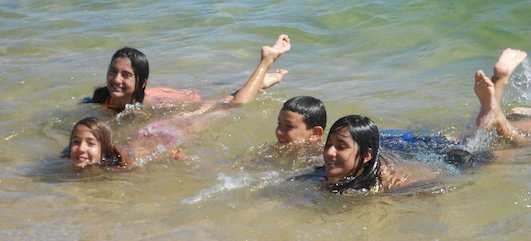
Kids play in the waves in Tangolunda Bay, Huatulco


The same is true traveling in Mexico, or anywhere for that matter.  Mark and I have stuck to the tourist trail — after all, those are the places that we want to see, just like everyone else — and we have done our wanderings in the daytime and early evening.  The precautions we would take if we were to venture to the more dangerous parts of Phoenix, Arizona, are the same precautions we have taken in Mexico.  Of course!

Dinghy valet in ZIhuatanejo

Locals help Mark launch the dinghy in Zihuanatnejo

Whereas in San Diego we locked our dinghy and outboard to the public dinghy dock with a thick chain and padlock because we had heard stories from other boaters of rampant dinghy and outboard thefts there, when we were in Zihuatanejo and Huatulco Mexico, we happily left the dinghy unattended and unlocked all day every day for weeks on end. We never had a problem.

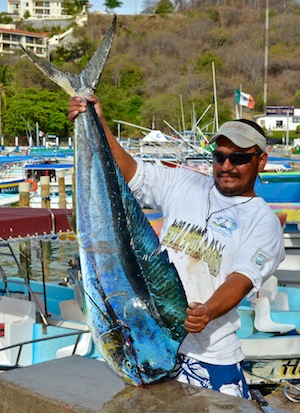
Catch of the day - Huatulco

Catch of the day – Huatulco


Of course crime does exist in Mexico, as it does everywhere, but it is localized, just as it is elsewhere. And the most violent and grisly stuff we all see in the news is not targeted against tourists and takes place far from the tourist destinations.

Friends of ours had their outboard stolen while anchored in Mantechen Bay, an area in Mexico well known among boaters for outboard thievery. We were also particularly cautious in parts of Acapulco and Mazatlan, cities known to be more dangerous than other places in the country.

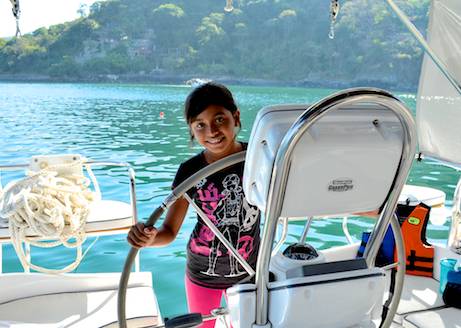
Guest helmswoman aboard Groovy

Groovy enjoys a guest helmswoman


To me, however, it is much more frightening to think of a life lived without leaving home and seeing some of the world than it is to face the fear of traveling, even to a place that has made headlines for violence.

If fear keeps you from venturing out, and you let the terrifying headlines fence you in, you will miss out on some of the most beautiful experiences life has to offer.


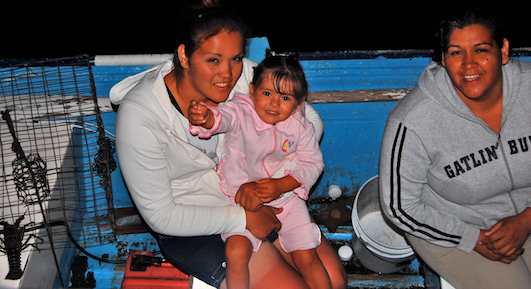
Family in Boat in San Evaristo

A family comes up in a panga to sell fish
to the Groovy Boat in San Evaristo (Sea of Cortez)

The Mexicans we have met have taught us the true meaning of graciousness and kindness to strangers.  It is a lesson we hope to take home with us.

From the guy on the street who turned around 180 degrees and walked with us for four blocks to make sure we got where we wanted to go, to the guy that drove us 30 miles, in his own truck, to a mechanic who could rebuild our alternator and who stayed with us all day until we had the fully repaired alternator in hand, we have learned the precious value of watching out for your fellow man, not for personal gain, but just to be nice — because we’re all living this life together.

Couple with dog in La Boacana Huatulco

A couple from Mexico City enjoys some beach time at La Bocana in Huatulco


The kindness, generosity and warmth we have found in Mexico is exceptional, and it is virtually universal.  Our lives have been immeasurably enriched by our travels here.

If you have the opportunity to visit Mexico but have held back because you think it might be dangerous, all I can say is:  GO FOR IT!!  You’ll be so glad you did.


Anchored in Careyes Mexico

Anchored in Careyes

Travel Tips – Visiting Mexico by Sailboat and RV

Our travels in Mexico so far have been by sailboat along the Pacific coast and Sea of Cortez, and by long distance bus inland from the coast.  We have several posts on this site with tips for traveling this way:

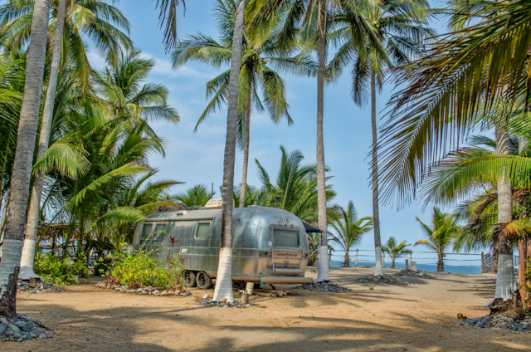
Camping on the beach in Mexico

Camping on the beach on the Costalegre

We have not traveled in Mexico by RV, but lots of people do.  Two useful resources for planning an RV adventure in Mexico are:

  • Mexican Camping – by Mike and Terri Church, long-time veterans of RVing in Mexico
  • On the Road In – Comprehensive info about Mexico, including RV Park reviews & seminars.


For another perspective on safety in Mexico, check out this outstanding essay from the keyboards of the Lonely Planet Team: 
Are Americans safer in Mexico than at home?  I hope you take a trip to Mexico, and I hope you have as much fun and learn as much as we have!!