Fall Colors on the Dallas Divide – AWESOME!!

Dallas Creek Road Colorado Fall Colors

Vibrant colors on Dallas Creek Road

Fall is an incredible time to get outside and enjoy Nature’s majesty. Last year, Mark and I had the incredible good fortune to attend a photography workshop in Ridgway, Colorado, when the fall colors peaked at the end of September.

Owl Creek Pass 281

Owl Creek Pass – Stunning!

Views from Owl Creek Pass

Views from Owl Creek Pass

This year, reminiscing about all the fun we had, I decided to write a guest blog post on the cool and informative travel site traveldudes.org about the gorgeous scenery that awaits anyone and everyone who takes a trip to Colorado’s Dallas Divide near Telluride (more pics at that link!).


Craggy mountains and aspens in Colorado

We were awestruck by the views in every direction — on every road!

As a New England native, I always thought the autumn colors in the rural parts of the northeastern states had to be the best of the best. Boy, was I in for a shock when we arrived in the midst of the golden aspen covered Rocky Mountains!!


Mountain silhouette Dallas Divide autumn leaves

Brilliant fall colors against a mountain silhouette.

We had been to the Telluride area twice before, both times in July. It is an enchanting place that grabbed our hearts instantly. Towering, craggy mountains soar into the sky and adorable little towns fill the valleys in between.

Autumn Color in Telluride Colorado

Autumn in the Rockies.

But Telluride is transformed in September (more pics at that link too!). Now the jagged grey mountain peaks jutted up through gold, red and green carpeted valleys. We were in awe as we prowled around the back roads between Ridgway and Telluride.

Road from Telluride 531

You just can’t beat autumn colors AND craggy mountains.


Owl Creek Pass, Dallas Creek Road, West Dallas Creek Road and Lost Dollar Road kept us coming back day after day. These dirt roads are easy to drive with a passenger car, and the views at every turn took our breath away.

Trailer on Road from Telluride 281

What a place to take your trailer!


Three of the scenic drives start from State Route 62 on the west side of Ridgway. The first left turn from Route 62 (onto County Route 7) is Dallas Creek Road. The next left turn from Route 62 (onto County Route 9) is West Dallas Creek Road. Both of these are dead ends: drive in, soak in the views, take lots of photos, and drive out. Ralph Lauren’s Double-L Ranch can be seen on these drives too.  (This link has a tale about that ranch).

South of Telluride - autumn color

A tapestry of color south of Telluride

The third left turn off State Route 62 doesn’t have a number but is called Lost Dollar Road. Follow this all the way until it intersects with State Route 145 where you turn left and head east into Telluride (or turn right and return to Ridgway on the highway).

The fourth scenic drive, Owl Creek Pass, is County Route 8, and it heads east from State Route 550 at Ridgway State Park, north of Ridgway. John Wayne filmed the movie True Grit in this area.  (This link has a tale about that movie!).

For a final treat, head south from Telluride on State Route 145.

Colorado Autumn

A shimmering golden aspen grove arches over Lost Dollar Road

We did not find much boondocking in the area, but Ridgway State Park is just a few miles from each of these stunning scenic drives, and they have full hookups as well as dry camping sites.

If you can take a road trip to southwestern Colorado in the next few weeks, go do some leaf peeping in this gorgeous part of the country. Last year’s peak was September 22nd! Allow a few days if you can, and let us know how your trip goes!!!

Ridgway and Telluride are in the southwestern part of Colorado

Ridgway and Telluride are in the southwestern part of Colorado

For more beautiful photos and tips about this area, visit these links:

A Visit to Dinosaur National Monument – RV Life Magazine

Dinosaur at Dinosaur National Monument

RV Life Magazine
“Dinosaurs and Much Much More”
by Emily & Mark Fagan
September 2013 issue

Posted: Sep 8, 2013

The September 2013 issue of RV Life Magazine is featuring a story by us (Emily & Mark Fagan) about Dinosaur National Monument called Dinosaurs and Much Much More.

We went to Dinosaur National Monument at the Utah/Colorado border expecting to see lots of dinosaur bones and mock-up skeletons.  What a fantastic surprise it was to get there and find that those old bones are just a small (though cool) part of the story!

Dinosaur National Monument is a gorgeous, scenic and fascinating national park.  The newly renovated visitors center houses a unique collection of dinosaur bones still in the ground!!  But it was the stunning bike rides and petroglyphs that kept us at the park for a week.

Our original two blog posts about the dinosaur bones at this park and the fabulous petroglyphs and homesteads are here, along with our RV LIfe magazine story.

RV Life Magazine is a big and informative magazine about all things RVing.  One of the oldest RV magazines in existence, it can be found at camping stores and RV parks in the west.  Even better, they post their feature stories online in their digital magazine.

For more from us here at Roads Less Traveled, check out these links:

Other Magazine Articles            Latest Posts

RV Roof Maintenace – in Trailer Life!

RV Roof Maintenance Trailer Life

Trailer Life – Sep 2013
by Emily & Mark Fagan

The September 2013 issue of Trailer Life includes a technical feature of ours about RV roof maintenance and repair. This seems like a pretty mundane topic, but we actually got quite wrapped up in it as we uncovered the many subtleties involved in keeping shelter over our heads on the road.

It turns out that RV roofs come in many flavors, from rubber roofs to fiberglass, and each has its own requirements for maintenance and repair.

Mark and I worked together on this article, and when we sent it off to Trailer Life, we thought it was finished. However, TL’s technical team had a lot more tips to add! So, in the end, this article has the input of four or five different people who have owned a wide variety of RVs (not just trailers).

A little side note: I took this fun photo of Mark working on the roof of our first full-time trailer (a 2007 27′ Fleetwood Lynx travel trailer with a non-walk-on roof) not when he was cleaning or repairing the roof, but when he was installing our first solar panel!

We were dry-camping at Westport-Union Landing State Beach campground, a fabulous campground on a bluff overlooking the ocean in northern California.  He managed to install the whole system in one day while dry-camping, and he was under the gun too, because he had to get it done before our one battery got too discharged… He’s amazing!!

Trailer Life is a monthly RVing magazine published by Good Sam Club.  It can be found on newsstands and in camping stores.

Our most recent posts:

More of our Latest Posts are in the MENU.   New to this site? Visit RVers Start Here to find where we keep all the good stuff. Also check out our COOL NEW GEAR STORE!! *** CLICK HERE *** to see it!

Baja Bash (2) – Chased by a Hurricane!

This is the second part of our story of doing the Baja Bash. The first part is here: Baja Bash (1).

Early July, 2013 – I slowly became aware of my surroundings aboard our sailboat Groovy as I woke up after just two hours of sleep. For the past two days we had been sailing non-stop from Puerto Vallarta to Cabo San Lucas, and it felt luxurious to be lying in bed at anchor in Cabo without having to worry if we were still on course or if we were about to hit something in the dark.

I was thinking dreamily of how beautiful and crystal clear the water had been in Cabo San Lucas when we had first arrived here in November 2010. It had been the clearest water we ever saw during our cruise of Mexico.

Cabo San Lucas

View from the Cabo San Lucas anchorage. Dozens of resorts line the bay.

The water had been a brisk 70 degrees then, however. In contrast, a few hours ago when we arrived in Cabo in the predawn light, the temperature gauge had said the water was 80 degrees. This wasn’t quite the 89 degrees we had left behind us in Puerto Vallarta, but I sure looked forward to relaxing for a few days and enjoying some swimming and snorkeling, not to mention catching up on much needed sleep.

I rolled over and thought about how well the precursor to the Baja Bash had gone for us. I really liked this business of taking advantage of the hurricanes. Today was Friday, July 5th, and if we waited for the hurricane coming up behind us, we could catch it on Monday, and then ride its outer southerly winds right up the outside of Baja. How perfect!

Groovy in Cabo

Groovy in Cabo when we first arrived three years prior.

Hang on… Say that again?? If we waited in an exposed anchorage until a hurricane arrived, we would do what??!! My eyes flew open. Was I nuts??

The image of the hurricane rolling off Mexico’s mainland coast that I’d seen on the weather charts the night before suddenly filled my mind. How close was it going to come to Cabo?

In one motion, I was out of bed and onto the computer, bringing up the latest weather data.

Rubbing the sleep out of my eyes, I stared in horror. It didn’t look anything like it did three hours ago. I thought the hurricane was supposed to approach Cabo and then veer off to the west like all the others before it had done. Now they were predicting it would head up into the Sea of Cortez. What??

Suddenly my heart was in my throat. I flipped back and forth between the weather charts, frantically trying to make sense of what was going on. The anchorage we were in was going to be blasted by high winds on Sunday if we stuck around, and even though it didn’t look like a great time to go up the coast, we had to get out of here. Now!!

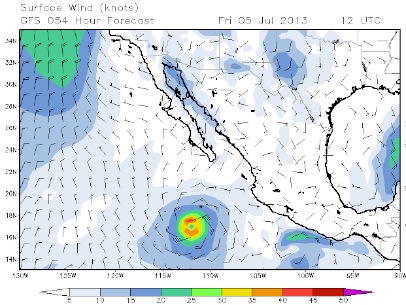
Hurricane Erick goes West

The forecast for Sun Jul 7 at 12 Greenwich Mean Time (UTC),
downloaded when we first arrived in Cabo at 7:00 a.m.
Hurricane Erick will head west and bring a southerly flow to Baja on Monday and Tuesday.

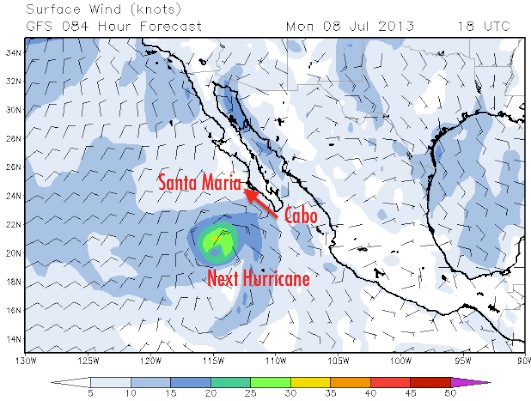
Hurricane Erick goes into the Sea

3 hours later I downloaded a drastically different forecast for
that same time. Now Erick is predicted to head to Baja
and up the Sea of Cortez. Time to get out of Cabo!!
Who knows WHAT will happen there Monday and Tuesday!!


Cabo Falso Cabo San Lucas Map

Cabo Falso is just an hour from the
Cabo San Lucas anchorage, but it is worlds away
in terms sea state and wind.

Problem was, the bottom west end of Baja California, called Cabo Falso, is a little cape with a big and terribly mean temper. It is one of the two most treacherous points in the whole 800 mile trip north from Cabo to San Diego. It was only an hour (6 miles) from where we were sitting right now, but for the next 30 miles after that (five to eight hours), we could face howling winds and snarling seas. Cabo Falso was a place where sailors were regularly crushed and sent packing back to Cabo San Lucas to lick their wounds.

The wise author of our guide book, Baja Bash II, said to try to reach Cabo Falso when the conditions were calmest, right at dawn, and never to attempt to get around it later in the day or if you could see white caps on the open ocean while still in the anchorage. Arghh. It was already nearly 10:00 in the morning. The sun had been up for hours. There were no whitecaps in the distance right now, but the wind was building.
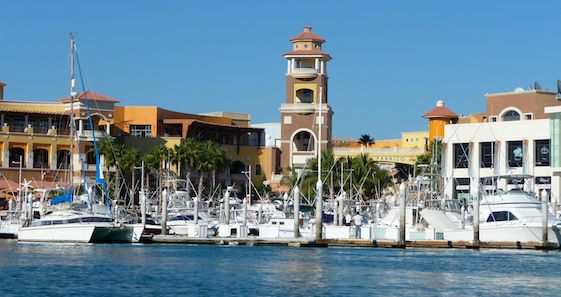
Cabo San Lucas Inner Harbor

Cabo San Lucas Inner Harbor

Mark appeared in the doorway, bleary eyed and squinting.

“We have to leave right now.” I said, my voice shaking.

“Now?” He said, scratching his head slowly. “I thought you wanted to stay…”

“I was wrong. We’ve gotta go. Right this minute.” I was already flipping on the instruments in the cabin and flying up into the cockpit and turning the key in the ignition. The engine roared to life.

As Mark climbed around me and out on deck to the anchor locker, I heard him mutter: “I was wondering why you wanted to stay. We should have tied up at the fuel dock when we came in…”

He was right. We needed fuel, and the prudent thing would have been to be at the fuel dock when it opened at 8:00 in the morning. At least then we could have been at Cabo Falso by 9:00. But we didn’t have time for regrets now! I shoved the throttle to its max and we charged over to the fuel dock, weaving between the traffic jam of boats at 7.5 knots.

The guy at the fuel dock confirmed that Hurricane Erick seemed to be headed towards Baja, and he got us fueled up in record time. He glanced at his watch and then shoved us off, saying, “It’s only 9:15, you have time…”

Cabo San Lucas Arches

We bid goodbye to the arches at Cabo San Lucas

I did a double take and ducked my head into the cabin to look at our big clock on the wall. It said 10:15. Oh, that’s right, we had changed time zones! Our clocks were still on Puerto Vallarta time!

I heaved a huge sigh of relief. The witching hour of noon when the wind really begins to pick up was still three hours off.

The wind was already beginning to build in the bay, however, and we both stood anxiously in the cockpit as the boat barreled around the famous Los Arcos rock formations. We strained through the binoculars to see if there were white caps on the open water. It didn’t seem so. At least not yet.
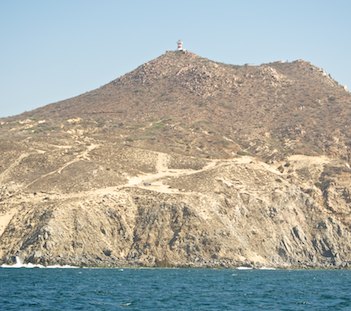
Cabo Falso Lighthouse

The Cabo Falso Lighthouse is waaaay up there!

Watching the magic of Cabo slip away behind us, my only consolation was that the entire bay was filled with red tide. We weren’t missing any snorkeling or swimming this time!

Ahead of us, the apparent wind, that is, the wind we felt on our faces, which was a combination of the wind in the air and the wind generated by our own forward motion, quickly increased to 15 knots, then 18, then 20. The water rippled and began peaking in little wavelets. Soon whitecaps surrounded us. But the waves were blessedly small.

Cabo Falso Lighthouse

Cabo Falso smiles on us!!

Suddenly the Cabo Falso lighthouse came into view, high up on a hillside.

We stared at each other in disbelief. “This is it? We’re rounding Cabo Falso and we’re not fighting for our lives?!”

So it seemed. It wasn’t like there was a sharp corner. It was an almost imperceptible turn. The lighthouse slipped by, and as we continued, the conditions remained the same. What a relief!! Could any two people be so lucky?

As a lark, I checked the laptop to see if we could get on the internet. We could!! I quickly jotted off a note on Facebook. How fabulous and bizarre to be rounding the dreaded Cabo Falso and reporting about it on Facebook in real time. What would the sailors of old think of that??
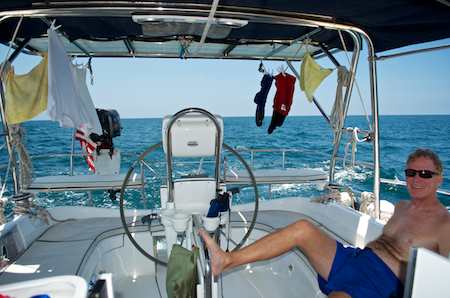
Laundry flaps in the breeze aboard Groovy

We settle down and do some ordinary things like laundry!

We settled down and began to relax into some routine activities. We did some laundry and hung it out to dry.

Brushing past the table in the cabin, I noticed Mark’s to do list intended for our time in Cabo. He had wanted to dive under the boat and check the prop, and also check the engine and transmission oil and the fuel filters, among other things. Oh well.  Hopefully it was all okay!
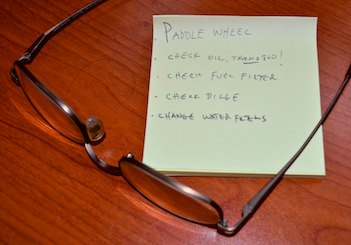
To Do List for Cabo

Mark had a list of things he wanted to do in Cabo…


At least we’d gotten two hours of sleep at anchor! Now we were in for another overnight 180 mile run before we would stop again, this time in Bahía Santa Maria. Hopefully we’d get a day of rest there.


Baja Bash - main stops

The plan for our major stops. There are
lots of hiding places in between¡

In the meantime, I studied our situation on the computer. I had written up all the possible scenarios for this coast, the distances between all the major and minor anchorages and notorious “bad spots” we’d encounter, how long it might take us to get between each one, and what times of the day were best for arriving at each location.

Our overall plan was to make two stops — one in Bahia Santa Maria and one in Turtle Bay — before ending in Ensenada, with each of the three legs taking 30-40+ hours. But who knew what the weather gods and boat gods might have in store for us.

Before we lost the internet for good, I downloaded the weather charts one last time and reviewed them yet again. Now that we were past Cabo Falso, everything looked good for getting to our first stop, Bahía Santa Maria in about 24 more hours.

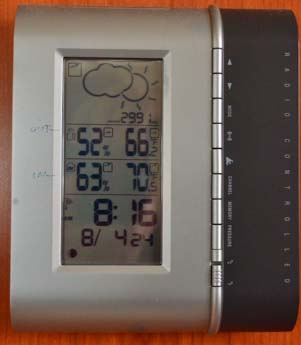
Atomic clock with wrong date

Our atomic clock suddenly resets
itself to 5 days ago!

I glanced up at the atomic clock on the wall and did another double take. It said the date was July 1st. Huh? I looked at the computer. It said July 6th. What the heck? Goofy electronics. A satellite must have given out bad data when the clock beamed up. Good grief.

I went into the head and discovered the liquid hand soap had fallen over in the medicine chest and made a big mess. Oh well, those little shelves had needed to be cleaned and tidied up anyway. At least nothing big had gone wrong.

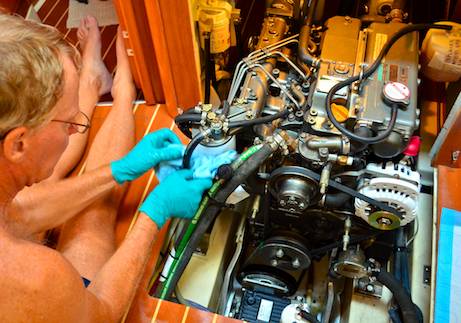
Yanmar 4JH4E echotech watermaker

A fitting on the high pressure hose attached
to the watermaker pump suddenly started
spraying water everywhere.

Casting about for things to do to keep busy, Mark decided to make water for a while. He flipped the switch on our engine-driven watermaker, and suddenly we heard a horrible noise in the engine compartment. He instantly turned it off, pulled the stairs off the engine to see what was going on, and tried again. Yikes! Fountains of water were spraying everywhere all over our clean and sparkling engine. My heart stopped at the sight.

We had never had engine problems in 8,000 miles or so of cruising. And now we had 750 miles of motoring ahead of us! It is impossible to sail north on this coast because of the huge headwinds. And a hurricane was getting in position to block our passage to the south.

Mark flew through the cabin grabbing tools and a flashlight while I ran through scenarios in my head. If we turned around right now, we could sail downwind to Cabo in a few hours. Puerto Los Cabos Marina was 20 miles further downwind from there, and we could hide from Hurricane Erick there…

Suddenly the noise stopped, and Mark was grinning at me. I looked at him hopefully.

“No problem!” He said easily. “The fitting on the high pressure hose had worked its way loose from the vibration…”

Wow. My hero. Mark can fix anything. He is the ultimate troubleshooter. He knows how everything works. We moved the stairs back over the engine and I took a deep breath. One crisis averted!

We settled down again and took in our surroundings. The wind was a steady 15-18 knots on the nose as we barreled along at 6.5 knots, but the seas were flat. The water temperature had dropped to 75 degrees and it had become a vivid, rich green. What a startling contrast to the bright blue color of the water yesterday in the Sea of Cortez.
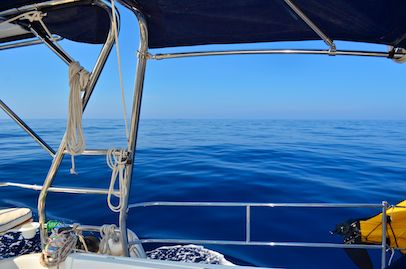
Vivid blue water in the Sea of Cortez

The water in the Sea of Cortez was brilliant blue

Cold water on Pacific Baja is rich green

The much colder water outside Baja is suddenly a rich green


Swirling clouds, haze and towering mountains greet us as we approach Bahia Santa Maria.

Swirling clouds, haze and towering mountains greet us
as we approach Bahía Santa Maria.

The afternoon slipped into evening. There was no sunset, but at 9:00 p.m. the wind suddenly picked up. The seas became steep and choppy and the wind blew a steady 20+ knots on the nose.

The boat began flying off the wave crests and crashing into the troughs, bringing the boat to an abrupt halt each time and threatening to shatter everything on board. We slowed the boat to 4 knots, climbing up and over each wave rather then leaping between them. Ahhh… much better.
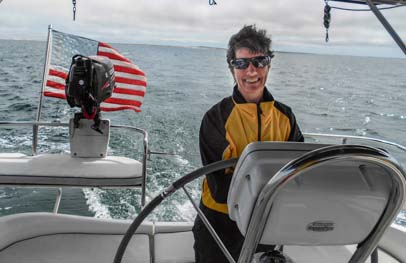
 

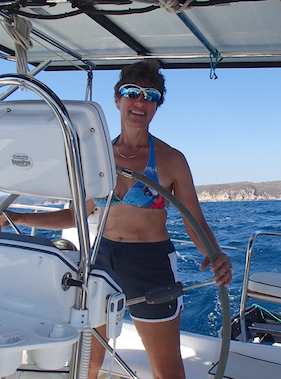
Emily at the wheel of Groovy in jacket and long pants

No more bathing suit sailing. Now it’s jackets and pants!

When dawn finally came, it snuck in the back door surrounded by mist instead of announcing itself with a brilliant sunrise. The stark hills of Bahía Santa Maria appeared, and we saw fishermen out on their daily rounds.

Sea lion in Baja California

Sea lions bark and play around us.


If the cooler water temps and changed color of the ocean weren’t enough to let us know we had left the tropics in our wake, the arrival of a group of sea lions confirmed it. They played and jumped around each other, barking non-stop.
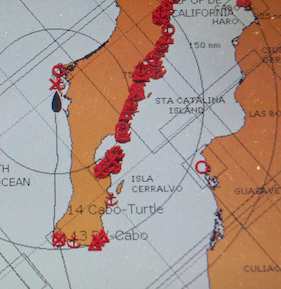
The dozens of anchorages in the Sea of Cortez are filled with cruisers trying to stay cool while we shiver sailing up the Pacific side.

The dozens of anchorages in the Sea of Cortez are filled with cruisers trying to stay cool while we shiver on the Pacific side.

As we shivered in the damp, grey morning air in our jackets and pants, it was strange to know that on the opposite side of Baja California, in the Sea of Cortez, dozens of cruisers were sweltering in 100 degree heat. They were all swimming morning, noon and night to stay cool, and sailing between the crush of red waypoints we saw on our chartplotter.
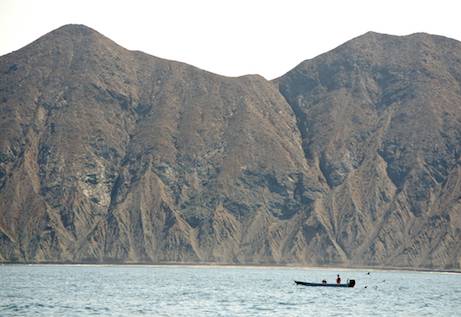
Fishermen in Baja California

Fishermen work outside Magdalena Bay and Santa Maria Bay.


When we pulled into wide and sweeping Santa Maria Bay, it was noon on Saturday, and we got a fabulous internet signal on the laptop for a few minutes while we motored around.

We downloaded a weather update to get the whereabouts of Hurricane Erick and figure out our next move. A quick glance showed that Erick was weakening and still heading into the Sea of Cortez and that our best option for our next 40 hour jaunt to Turtle Bay would be to hang out here on Sunday and wait until Monday morning to leave.
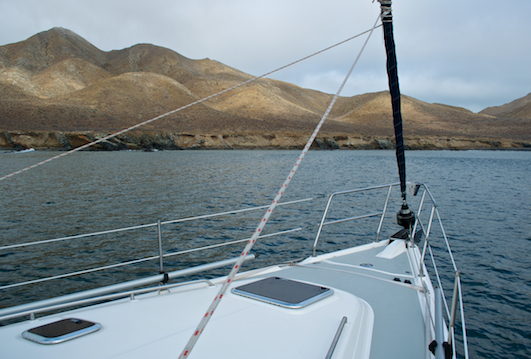
Anchored in Bahia Santa Maria Baja California

The soft curves of the hills fill our view in Bahia Santa Maria.

We picked out a well protected spot in the corner behind the mountains, away from the half-dozen anchored shrimpers, and when we discovered we couldn’t get an internet signal from there, we didn’t care.

It was a heavenly place to rest our weary bones for a few days. Mark poured our 20 spare gallons of diesel into the fuel tanks, and all seemed right with the world until he came down below with a big frown on his face.

“The fuel didn’t look right.” He said. “It was grey. Normally the diesel we get in Mexico is pink or yellow.” I looked at him quizzically. He went on, “I think maybe there was stuff growing on the inside of our jerry jugs and it mixed into the fuel we got in La Cruz and turned it grey.”

He looked truly despondent. Diesel becomes contaminated with bacteria in the tropics so easily. “I didn’t check the insides of the jugs before we filled them.” He continued glumly. “Man, I always check things like that. Why didn’t I do it in La Cruz?”

He slumped on the settee, completely frustrated. How could I console him? It was an easy oversight. We wouldn’t know if we had bad fuel until the filters clogged and the engine quit running. And that could happen at any time.

I sighed heavily. We had two spare fuel filters. But if bad fuel clogged one, it would probably clog the second fairly soon too. Oh, if only we could have found another spare fuel filter or two in Puerto Vallarta!
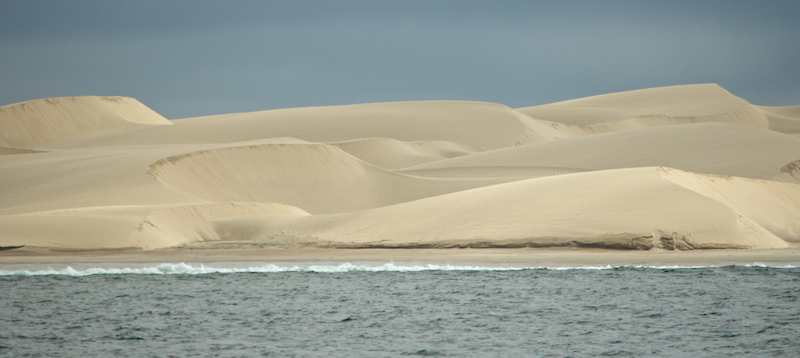
Sand dunes in Bahia Santa Maria near Magdalena Bay in Baja California

In the morning, we moved across the bay and anchored next to these beautiful sand dunes.

We tried to think happier thoughts and put this new wrinkle out of our minds while we enjoyed our time off in this wonderful bay. Bahia Santa Maria is like a huge lake. It is extremely well protected from the swell, and we slept like babies on a quiet boat. Ahhh… imagine if all of Mexico’s anchorages were like this!! The wind sang in the rigging, but it was a lullaby for our tired souls. We slept clear through from Saturday afternoon until Sunday morning.

When we finally awoke, we were both eager to get another weather forecast. We motored across the bay closer to town and dropped the hook near some gorgeous sand dunes. After lazily taking some photos and watching the huge rollers breaking onto the beach, I eventually downloaded the weather. What I saw struck terror in my heart! No longer weakening and moving up the Sea of Cortez, Hurricane Erick was now predicted not only to remain strong but to hightail it straight up the outside of Baja, from Cabo to this very bay!
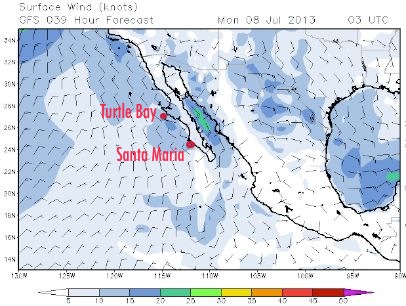
When we first arrive in Santa Maria:  Erick will head into the Sea of Cortez

The first forecast we downloaded in Santa Maria showed
Erick going into the Sea on Mon Jul 8 at 3 GMT (UTC)

Hurricane Erick heads to Cabo

Downloaded 24 hours later: Now Erick heads to Baja
at that time and then up the outside!!


Oh NO!! Would my heart ever stop pounding on this voyage? That panicky knot of fear seemed permanently lodged in my stomach. We had been at this for five days now and still had six hundred miles of uphill battles to go.

We grimaced at each other. Our sweet plans to hang out by these sand dunes, play on the internet and relax for another 24 hours crashed on the beach along with the rolling waves. Under misty skies, we hauled the anchor and shot out of Bahia Santa Maria with our bow aimed at Turtle Bay 230 miles away. The forecast ahead was grim, with 6-9 foot seas predicted at 9 second intervals — meaning that we would be driving into walls of water stacked in front of us — but it beat the heck out of meeting up with Erick here.

Mark naps in the cabin

Mark catches a snooze while I make a meal. Note the rubber mat that keeps everything from sliding off the countertop!

As we were leaving, we saw another sailboat on the distant horizon. This was the first boat we had seen since leaving Cabo, and it was headed south! What the heck?

We hailed it on the radio. It was a 30 foot sailboat with a 13 hp outboard engine, and the couple on board had been beating their heads against a brick wall for two days trying to get to Turtle Bay.

They had made it only halfway across. The steep seas and high winds had finally defeated them and they were returning to protection at Magdalena bay around the corner from Bahia Santa Maria. “It was horrible out there,” the man said.


Young seagull flying

A young seagull flies alongside Groovy.

On this portion of the coast, the land pulls back from the sea. Cutting straight across the huge bay gets it over quicker, but you end up 50 miles from shore at one point.

We aimed straight for Turtle Bay and gritted our teeth, watching the winds and seas build all day long. Just as predicted, the walls of water were waiting for us. And just like all the other nights, at sunset the wind and waves picked up even more and remained elevated until 4:00 in the morning. Our ride eased until 2:00 pm the second afternoon, but then the gods of the sea put us back on the bucking bronco and left us there for another fourteen hours.

In the worst of it on the second day, we could travel at only 2.5 to 3 knots, or we would get launched off the top of each wave only to fall onto the next one with a resounding crash. By inching along, we were able to stop the violent slamming, but traveling at the pace of a window shopper was painfully slow.  Here is a little video clip of what it was like in the late afternoon.

Sunset at sea off Baja California

A beautiful sunset at sea between Bahia Santa Maria and Turtle Bay.

As darkness fell the second night, our fuel gauge was getting perilously close to empty. Whether or not the fuel was bad, we might not have enough anyway! I was way too wound up from all this to sleep, so I took a long night watch while Mark rested.

When I finally bedded down around 3:00 a.m., I had been asleep for just an hour when I felt his hand shaking my shoulder, “Sweety, I need you to look at something.” I sat up. “It looks like there’s land on our port side… It may be boats, but it looks like a row of houses…” I flew into the cockpit. Land? There should be nothing but open ocean on our port side!


23 Approaching Turtle Bay - Lights 281

I didn’t have my camera when Mark brought me on deck, but this sprinkling of shrimpers gives an idea…

Sure enough there was a scary looking string of lights off the port bow. I checked the chartplotter. We were on course, but there was a row of dots to our left. After studying the dots, we agreed it had to be a fleet of shrimpers. For all the world, though, through the binoculars it looked like a neighborhood of twinkling house lights.

You can never be too cautious in the strange world of the sea at night, and we were both glad to check out these lights together. I crawled back under the covers and fell into a restless slumber only to be woken again an hour later. “Sweety, I hate to get you up again…” I groaned and then heard him say, “The fuel gauge is now on E…”

Oh no. I tried to shut out the images that suddenly filled my mind of trying to get a tow in this forlorn, misty, cold, damp, remote place. What a horrible scenario. Maybe we should have spent that $50 to buy a spare 5 gallon plastic jug in Puerto Vallarta…

“We’re only 15 miles from Turtle Bay,” Mark went on, “I think there’s enough wind, and it’s at a good angle to sail.”

Really??!! I stepped into the cockpit and felt a light breeze coming over the beam. What luck! This was the first time we’d had a favorable wind since leaving Puerto Vallarta six days ago. What perfect timing. We put up the sails, and as we did, the breeze picked up even more. For the next two hours we sailed at 7 to 8 knots until we arrived in the heart of Turtle Bay. It was drizzling, but we didn’t care. We had just enough fumes in the tank to turn on the engine and putter the last few hundred yards to drop the hook.
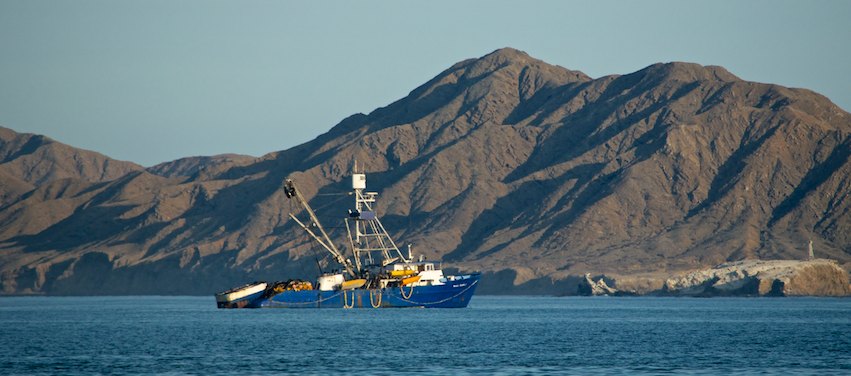
Shrimper at Turtle Bay

A shrimper anchored in Turtle Bay.

Oh my. Another leg completed, Bahia Santa Maria to Turtle Bay. 236 miles in 43.5 hours. We’d had a few scares and some discomfort, but everything was ticking along like clockwork.  With any luck, the weather gods would let us stay in Turtle Bay for two nights to recover a bit and regain our sanity.

But what was Erick up to? In no time we had our answer: it was blasting Bahia Santa Maria, the bay we had just left. We wondered how the 30′ sailboat we had talked to on the radio was faring.

For us, rest was still a few chores away. Turtle Bay is not particularly yacht friendly, and the method for obtaining fuel there is always changing. On our trip south three years prior, a fuel boat had come out to Groovy and pumped fuel directly into our tanks.

Turtle Bay

Turtle Bay.

After trying to hail the old fuel provider Enrique a few times on the radio, one of the handful of sailboats that was anchored in Turtle Bay hailed us to explain that the method now was to take your boat to the fuel dock.

What a crazy setup this turned out to be! This ultra rickety “dock” was seemingly made of castoff wooden pallets that were strung together and stuffed with styrofoam. The surge was massive, and Groovy’s weight kept yanking the dock this way and that.
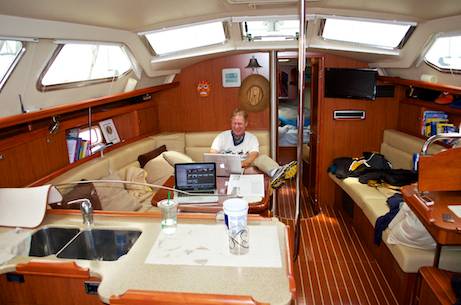
Keeping busy on passage during the Baja Bash

Playing on the computer and keeping busy on the Baja Bash.

After filling Groovy’s fuel tank, Mark lined up our fuel jugs on this makeshift dock to fill them too. A man handed him the fuel pump and went up the ramp to flip the switch.

Mark had just gotten one jug filled when the whole dock tipped, nearly throwing us both into the drink. He caught his balance just in time to save the four jerry jugs from sliding off into the water too. Good lord, what an absurd place.

Back on the boat, we studied the weather charts once again. Our last 290 mile (45 hour) leg to Ensenada would begin with a major hurdle: rounding Cedros Island. The north end of Cedros Island and Cabo Falso down south are the two places on Baja that give sailors the most trouble.
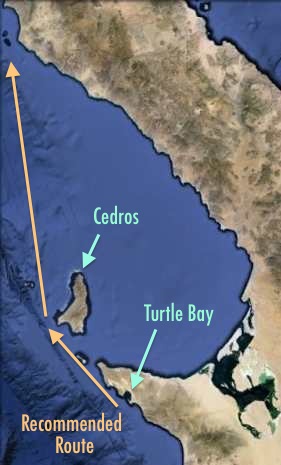
Cedros Island Map

The northeast end of Cedros Island can
be very treacherous. Giving it a wide berth
sometimes helps!

The north end of Cedros is 40 miles from Turtle Bay, and it is best to pass it well before the afternoon winds kick up. Our guide book recommended going outside the island, rather than taking the more popular route inside. Doing this avoids the worst of the nasty winds and waves that Cedros likes to whip sailors with at its northeast corner.

The forecast looked perfect for leaving twelve hours from now, that is, Tuesday night at midnight. The whole week after that looked truly miserable with big winds and big seas! So much for staying here and resting up for a few days!! When the weather gods offer to let you pass Cedros Island toll-free, you go for it!!

The boats anchored around us all filed out within the next hour, but we waited another twelve hours until midnight, and when we pulled out in the pitch black after a few hours of sleep, it seemed the predictions were right on target.

A brisk wind came directly over our starboard beam, and we flew along, motorsailing at 8 knots, listening to seals barking on the invisible pitch black shore nearby. The faster we got past the top of Cedros 40 miles away, the better.
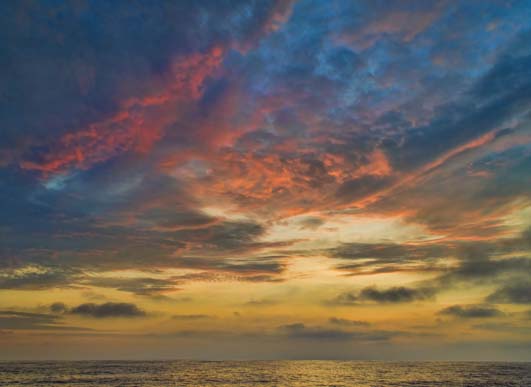
Sunset at sea

Our last night at sea we are given a brief but beautiful sunset.


As the sky lightened and we rounded the south end of Cedros, the winds died down. A few hours later, we passed the feared north end of Cedros Island without a hitch.

Unbelievably, the weather gods continued to give us their blessing, and for the next twenty-four hours the wind was virtually non-existent and the ocean swell was slow and languid. The motion of the boat was like being in a big old rocking chair.


Final calm for the Baja Bash

We sail on an undulating sea that mirrors the grey skies.

As a parting gift, our final sunset at sea on this voyage was a stunner. After a peaceful night of long, easy, good-sleeping watches, the next morning we found ourselves living in a world of misty gray.

The water was like an undulating glass mirror, and the horizon was obscured where the water melted into the hazy sky.

A few storms formed ahead of us, and they appeared on the radar as massive, ever-changing pink blobs. We sailed into them and found ourselves being spritzed with rain.


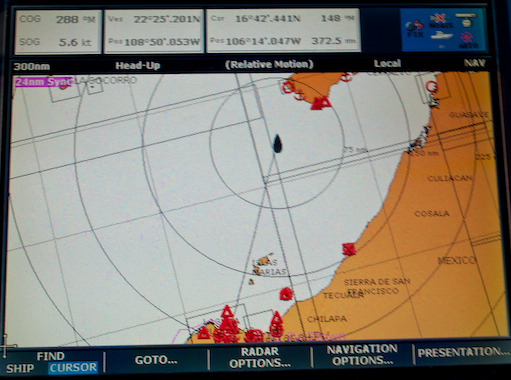
Chartplotter image on Baja Bash shows storms at sea

Rain squalls show up as big, constantly shifting pink blobs.

Checking the water temp gauge, it said the water was now 65 degrees. Ouch!

As we made our final turn into Ensenada Bay, a huge whale surfaced just meters from the boat.

Wow!! Minutes later, he surfaced a second time and then dove deep, showing us his tail before disappearing into the depths.

It was now Thursday afternoon, July 11th, and when we tied up at Cruiseport Village Marina, we were astonished to find that this last 291 mile passage from Turtle Bay had been our fastest ever at an average of 7 knots.


Calm conditions for the Baja Bash

We aren’t bashing now!

We had made the 1,000 mile journey from Puerto Vallarta to Ensenada in just 8 days and 7 hours, stopping for a total of just over 41 hours and averaging our usual passage-making speed under power of 6.4 knots.

Never mind those statistics, though, what we really wanted was a happy walk on dry land, our first steps on terra firma (besides two fuel docks) in over a week.

Walking around the docks arm in arm, we were elated.  We had actually done the Baja Bash! What a total thrill!


Sunset in Cruiseport Village Marina

Mission accomplished! The sun sets off Groovy’s bow in Ensenada.

We had chased Hurricane Dalila across the Sea of Cortez and been chased by Hurricane Erick up Baja’s Pacific coast. Yowza!

We had dreaded and feared the Baja Bash for over a year. We had heard so many terrible tales about this frightening voyage, and now it was finally behind us. Phew!!!!

We were dizzy with excitement and with lack of sleep.

As the sun set in beautiful shades off our bow, we hugged each other. We felt a million emotions coursing through our souls, from total exhilaration to incredible relief. But more than anything else, we felt utterly triumphant. What a voyage!!


<- Previous                                                                                                                                                                                       Next->

Our beloved Groovy is For Sale

Escapees Magazine – Our photo is on the Sep/Oct 2013 cover!

Escapees Magazine Cover Photo by Emily Fagan Sep-Oct 2013

Escapees Magazine Cover, Sep-Oct 2013
Photo by Emily Fagan

We were fortunate enough to have one of our photos selected for this month’s cover of Escapees Magazine.

It was taken with a Nikon D5100 camera at Lucerne Valley in Flaming Gorge, Utah, where we stopped for lunch at a beautiful overlook.  While enjoying the view, the sky grew black, and suddenly a big thunderstorm swept across the valley and the rain fell in torrents.

After the storm passed and the sky cleared, we noticed a rainbow forming and we ran outside to try to catch it with the cameras.  It is always challenging to try to figure out how best to photograph these huge bows over the land, but as I dashed forward into the wet grass in front of the trailer, it began to line up perfectly, framing the trailer as it fell into the lake.

Escapees Magazine is a wonderful all-purpose RV club that provides a very wide range of services to its members, including gatherings for future and current RVers, an excellent bi-monthly magazine, access to an enormous database of boondocking locations, low cost RV parks, care for elderly RVers that have hung up their keys, a fabulous mail forwarding service, and more.

We have enjoyed our membership immensely, and we encourage all experienced RVers and future RVers to consider joining, especially if long-term travel is part of your plan…!

A neat side note: Rainbow’s End is the name of the RV park at the Escapees headquarters in Livingston, Texas.


Finding Treasure at a San Diego Farmer’s Market

The Bahati Mamas are reaping a bountiful harvest in California

The Bahati Mamas are reaping a bountiful harvest from all that they’ve sown.

We love going to farmer’s markets, and we’ve made a point to go to the one held each Sunday on Shelter Island while we’ve been staying here in San Diego.

It’s a small market, taking up just a short side street, and they have the usual assortment of home-made honeys, jams, beautiful veggies and fruit juices with a good mix of made-to-order Mexican tacos thrown in for good measure.

But what caught our attention the first week we went was the bright red dress and matching head kerchief worn by a an African woman.

She was sitting behind a table that was piled high with bright green leafy veggies, and the colors lured us over.  We smiled at her and came a little closer.  She was busy tying the leaves into little bundles, but she looked up and smiled back.

These were the most lush and crisp looking greens in the whole market, and I said so to her.  “Yes.”  She replied softly.

I noticed a large sign nearby and began to read it, and quickly became absorbed.  It turned out she was one of a group of 11 women farmers called the “Bahati Mamas.”  Bantu refugees from the war in Somalia, these women had been gifted with a second chance at a new life here in America where they had been taught sustainable farming techniques and farm business management.

I looked back at her — a big, jovial and very dark woman dressed in vividly joyous red.  I asked her about the farm and the produce, but when she quietly answered “Yes” a few times in a row, I realized she was probably struggling with learning English the same way I have been with Spanish these past three years in Mexico.

The sign said that “Bahati” means “Lucky” in her native language of Kizigua, and that this group of women had been fortunate enough to come into this farming opportunity after nearly 17 years of living in refugee camps.  Many of them were single moms, as their husbands had died in the conflict.

Their produce is all sown and grown by hand organically, but because of the high cost of obtaining a USDA Organic Certification, it doesn’t carry that official stamp of approval.  They lease their land from the farm where they were taught, in the Pauma Valley at the foot of Mt. Palomar outside Escondido.

I found all this very moving.  The other California farmers at the market all had lovely things to sell too, but this woman had an amazing history.  I just wished that she and I shared the same words so I could hear the rest of her story, as she would tell it.

The following week we returned to the farmer’s market, and this time a different vendor caught our eye.  We had hustled through the market fairly late in the day, and many booths were shutting down.  But at the far end there was a booth with what looked like a painting of a bird on a stand out front.

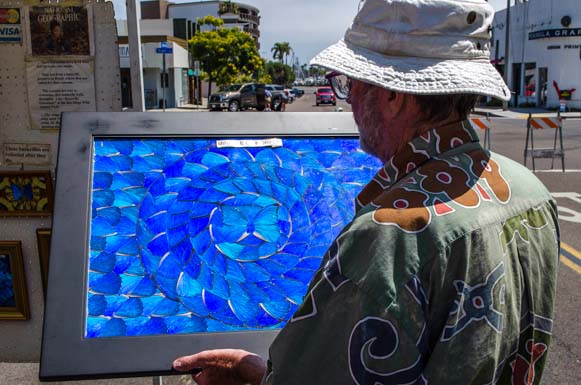
Butterfly artist Martin Highton shows us his work

Butterfly artist Martin Highton shows us his work

We drew in a little closer and saw that this beautiful “painting” of an owl was actually made of something very feathery.

I looked up and saw another “painting.”  It was labeled “The Miracle of Morpho” and was an abstract series of circles of the most brilliant, iridescent blue.

An old man approached us and said, “Those are all butterfly wings.  They come from Morpho butterflies in Brazil.”

We did a double-take and stared at the painting closer. Each wing was easily discernible, but the patterns had been so meticulously matched that they seemed to melt together.

“The butterflies are raised in a sanctuary and the wings are discarded when they die.” He continued. “So I collect them.  I’ve been doing it for 40 years.  I thought that by creating artwork from the wings I might help the local people and perhaps help stop the deforestation there.”

We stared at this small man in astonishment.  Butterflies? Brazil? Deforestation? Art?  It was an impossible mix.  He pointed to a photo of an enlarged newspaper clipping on his wall.  “Johnny Cash was a big collector of my art.”  Sure enough, there were Johnny Cash and June Carter standing with a much younger version of this man, holding an artwork similar to the pieces in this booth.  “Brenda Lee was another collector.”  We moved closer to read the various newspaper clippings that hung on the wall.

The only blue butterflies I’ve ever heard of are from Australia, and I mentioned something about that.  “Oh yes, I’m from Australia, but these are Brazilian Morphos”  He said.  We hadn’t detected that he had an accent, but as he continued we found out he was raised in England and served as an engineering officer in the British Navy, sailing up and down the east coast of the Americas many times.

He had had a fascination with butterflies from an early age, and when he saw an opportunity to make use of the wings that were otherwise discarded, and possibly help the local people at the same time, he leaped on it.

We studied his other pieces.  Each was so delicately rendered, with the wings placed perfectly to form a mosaic of intricate colors and patterns that melded into abstract images, and owls and macaws.  It was beautiful.

“I’m retiring now.”  He said simply.  “Everything you see here is the last of my work.  Once it’s sold, I’m done.”  I asked what would happen to the wings now and if anyone was following in his footsteps.  “I don’t know.  I was the only butterfly artist that I know of.”

We studied each of his beautiful pieces, caught up in many many thoughts.  As we moved to leave, he had become busy with another customer, and I realized I had forgotten to ask his name.  But I did notice a sign on his wall saying, “M. Highton.”

We left with our hearts elevated and soaring. When we got home I hopped on the internet and found only a tiny bit of information on this very unusual artist.  How amazing it was to see that in April 2000 the PBS TV show Antiques Road Show valued one of his pieces at $10,000.  He was selling identical looking work at this farmer’s market for $998, the same price the person on the TV show had paid for his piece.

How fun to find such jewels on the back streets of San Diego.  In a scant two weeks, this little farmer’s market has given us two very uplifting and unique experiences that went far beyond mere vegetables. We will definitely be back!  I wonder what kinds of special people we will meet selling their wares next time?


Mexico Cruiser’s Bookshelf – Guides and Resources!

Cruisers are notorious for stocking their bookshelves to the max with books of all kinds, and Groovy has her share.  During our cruise of the west coast of Mexico we found that some of our reference books and other resources were so valuable that they were basically “essential cruising gear.” Following are descriptions of resources we would recommend every cruiser headed to Mexico consider carrying on board:

Cruising Guides

There are four major cruising guides for the west coast of Mexico, and each is wonderful in its own way:

Mexico Boating Guide by Pat Rains
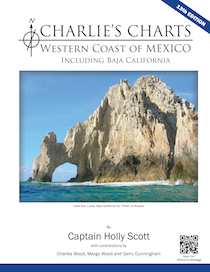
Charlie’s Charts – Western Coast of Mexico & Baja by Holly Scott et al.
Pacific Mexico: A Cruiser’s Guide by Sean Breeding & Heather Bansmer
Sea of Cortez: A Cruiser’s Guide by Sean Breeding & Heather Bansmer

In recent years, the Mexico cruising guide industry has become quite competitive, which is fantastic for today’s cruisers.  Two of the guides have new editions for 2013.  Pat Rains has released the third edition of her Mexico Boating Guide, and Charlie’s Charts has been revamped by Captain Holly Scott to include the work of its original authors and that of Sea of Cortez cruising guide author Gerry Cunningham as well.

In addition, Baja Bash II is a specialty guide for sailing the outside of Baja California between Cabo San Lucas and San Diego.  Unlike the other guides that include chapters on Baja as part of an all-Mexico guide, this book focuses specifically on springtime northbound voyages.

If you buy only one guidebook, we recommend the new Mexico Boating Guide (3rd edition) by Pat Rains.  It covers the entire western coast of Mexico and has all the data needed to cruise the entire region between the California/Mexico border and Mexico/Guatemala border with confidence.

However, our own preference in our cruise was to carry all of these cruising guides on board Groovy.  In many cases, before approaching a new area, we read each guide book’s description, picking up different bits of wisdom from each author.  It might seem like carrying all these guidebooks would be redundant or might get confusing, but we found that in each area one book or another shone above the rest, and we liked the reassurance of being able to get multiple opinions about the dangers and hazards, how much swell there might be in a given anchorage, where to shop, etc.  We can think of examples for each guidebook where their description led us to an anchorage we were delighted to find — and would never have found if it weren’t for that book.

Mexico Boating Guide

Mexico Boating Guide (3rd edition) by Pat Rains

This cruising guide is the most well-rounded cruising guide for western Mexico, and the new edition is better than ever, with more photos and more mini-charts and updated info everywhere.

The two areas where we relied on this guide most were at opposite ends of Mexico:  the northernmost 800 miles during our initial cruise south from San Diego to Cabo San Lucas along the outside of Baja California and the southernmost 800 miles between Zihuatanejo and Puerto Chiapas (Puerto Madero) at Mexico’s Guatemala border.

Pat Rains describes hazards and approaches and their GPS coordinates extremely well, although the last edition had some errors in waypoints and descriptions of “east” versus “west” that I’m sure have been rectified.  Unlike the guides by Sean Breeding and Heather Bansmer below, she gives few specific waypoints for exactly where to drop the hook in each anchorage.  Instead, she offers traditional sighting methods like depths, landmarks and an anchor symbol on a mini-chart.  This book is backed by the author’s decades of boat delivery experience on this coast, and we all become more confident at anchoring — and don’t need those exact anchorage waypoints quite as much — as we drop the hook in more and more places.

Map of Mexico

For cruisers heading south of Zihuatanejo, the Mexico Boating Guide is invaluable, because it has by far the most detailed information of any of the guidebooks for cruising the Bays of Huatulco, our favorite part of Mexico.  It also gives detailed info for passages and anchorages along the extensive stretch of coast between Zihuatanejo and Puerto Chiapas (Puerto Madero) on the Guatemala border.

There is a revised chapter at the end on the new Marina Chiapas in Puerto Chiapas (Puerto Madero) including photos and mini-charts.  However, no waypoints are given for the tricky, twisty channel that leads to the marina, and there is little information for how to see the spectacular ancient Mayan ruins and colonial cities that are MUST DO inland trips from there.  So, for cruisers headed to Chiapas, we recommend having a look at our Marina Chiapas Guide, which includes waypoints, notes for provisioning and getting around as well as notes for the really magnificent sights that are a (long but worthwhile) bus ride away.


Pacific Mexico: A Cruiser's Guide

Pacific Mexico: A Cruiser’s Guide by Sean Breeding & Heather Bansmer

Besides the beautiful photography in this book, perhaps the best feature of this guide — and of its companion book Sea of Cortez: A Cruiser’s Guide — is the very well organized system of numbering and presenting the waypoints for approaches, anchorages and hazards.

The waypoints and their presentation is so good that this guide allows blind “sail-by-numbers” cruising.  Simply flip to the back of the book and enter all the logically numbered waypoints into the chartplotter and away you go.  Drop the hook on the anchorage waypoint in whatever bay you choose, and you know you are sitting where Sean and Heather anchored.

We heard from friends that it is possible to obtain the waypoints in electronic form from the authors or the publisher Blue Latitude Press and download them directly into your chartplotter if you are technically savvy.  We found it was easy enough to enter them manually, a few at a time.

We relied on this guidebook between Mazatlan and Zihuatanejo.  South of Zihuatanejo, however, we turned back to the Mexico Boating Guide by Pat Rains because the authors of Pacific Mexico did not take their boat south of Zihuatanejo.  So, while their information on the anchorages south of Zihuatanejo is generously offered, it is not backed up by first-hand experience.


Charlie's Charts of Mexico

Charlie’s Charts Western Coast of Mexico & Baja by Holly Scott

This guidebook has been revamped and greatly expanded since the last edition by Capt. Holly Scott who has taken the guidebook and data that was gathered by both Charlie & Margo Wood and Gerry Cunningham and compiled it all into this one hefty tome.

It still retains the hand-drawn mini charts that set this guide apart.  It also now includes some anchorages on the outside of Baja that are not in the other guides.  In addition, much of the knowledge and wisdom accumulated by Gerry Cunningham during his decades of sailing the Sea of Cortez has been incorporated into this book.

We used the previous edition of this guide mostly while sailing the outside of Baja, headed both south and north, and for parts of the Costalegre and Sea of Cortez.  For us it was usually backup confirmation of what the other guidebooks said.  We also appreciated being able to see yet another set of mini-charts of each bay, and sometimes what was confusing in one guide’s mini-chart was easier to understand from this guide’s mini-charts (and vice versa).


Sea of Cortez: A Cruiser's Guide

Sea of Cortez: A Cruiser’s Guide by Sean Breeding & Heather Bansmer

Scanning the yummy photos in this gorgeous cruising guide makes me want to go cruising.  Each anchorage is lovingly described and documented.  The only downfall is that sometimes the descriptions are more beautiful than the anchorages themselves.

This was our primary guide in the Sea of Cortez, although we turned to both the Mexico Boating Guide and Charlie’s Charts on occasion, especially when a norther was coming and we wanted to see if the other guides described any lesser known hiding places where we could seek refuge.


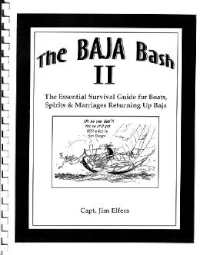
Baja Bash II

Baja Bash II by Jim Elfers

We read this guidebook prior to our sail south from San Diego to Cabo San Lucas.  It is extremely helpful for pointing out the nasty capes and other areas that make this coast a challenge, even if you are going in the easier southerly direction.  We used it exclusively when we did the Baja Bash three years later.

In our opinion, this guide is essential equipment for anyone doing the Bash.  It is the only guidebook that assumes you are sailing north up Baja and not south.  It lists the anchorages in that order, and it outlines a strategy for tackling each portion of the coast.  It also has little jewels like the author’s favorite anchorage in the northern Baja coast which is tucked just south of Ensenada and is not mentioned in any of the other guides.

Inland Guides, Flora and Fauna and Other Resources

In the excitement of getting ready to go cruising it is easy to forget about non-boating related things you might need.  We sailed off to Mexico with just the above cruising guides on board, thinking that that would be all we would need.  We were going cruising after all.  Why would we need any ordinary guidebooks for our voyage??

Little did we know that the image we had in our mind of cruising was just a tiny facet of what the experience would eventually be all about.  Once we figured out how to get from anchorage to anchorage safely and easily, our interests changed and we began to look more closely at the world we suddenly found ourselves inhabiting.

This is most effectively accomplished with guidebooks and reference books that explain that world.

Lonely Planet Mexico

Lonely Planet Guide to Mexico

Our first season we didn’t have a general guidebook to Mexico, and what a mistake that was. Our first summer back in the US I spent two hours in the bookstore studying all the different guidebooks to Mexico, and concluded that for me, the best one is the guide from Lonely Planet.

What is helpful about this guide is that it gives an overview of what this magnificent country is all about. Up front is fifty pages or so of excellent general information. From a Top 25 list of Mexico’s best sights, to a discussion about immersion Spanish schools, to talking about how to explore the Mayan ruins, to reviewing the various regions of the country and what they are known for, this little book helps you get your hands around the very large and varied country of Mexico.

When I first got to Mexico I was baffled and overwhelmed that this entirely different world existed just miles from the city I had most recently called home (Phoenix, Arizona). Who were these people, why were they so different and where did they come from? The “Understanding Mexico” section at the end of this book goes a long way to helping figure that out. Mexico is nothing like the US, and for many people, it is nothing like they thought it would be before they got there.

Lastly, this guidebook is invaluable for venturing inland off the coast to the majestic colonial cities like Guanajuato and Oaxaca and to the evocative ancient ruins like Palenque and Monte Alban.


TripAdvisor

http://TripAdvisor.com

Once we started traveling inland, our first conundrum was where to stay. While the printed guidebooks have suggestions, we’ve found that TripAdvisor is an even better resource because it is a compilation of reviews from many travelers rather than from a single person. Granted, the objectivity of a professional travel writer is lost, and the comparative scale between places is gone, because travelers of all experience levels and with all kinds of tastes and budgets are writing reviews. However, in our experience, the reviews are surprisingly accurate.

Even better, many hotels respond to the reviews, giving the reviews even more depth. Complaints are addressed, compliments are thanked, and for small boutique hotels and hostels you can get a sense of what the hosts are like.

For me, after looking up a hotel in TripAdvisor, I like to go to the hotel’s website (sometimes it’s given, and sometimes you need to do a Google search), and then I email the hotel directly. We actually decided against staying at the most popular B&B in Guanajuato because the host seemed a little crabby in his TripAdvisor replies — and during our email correspondence with him, he confirmed his crabbiness in spades!
Besides lodging, TripAdvisor is very helpful for figuring out what to do when you get wherever you are going. Each city/state has a Things to Do section, and that is an excellent place to find out what you might be doing in a given place, and whether those are the kinds of things you want to be doing.

Birds of North America

National Geographic Field Guide to the Birds of North America, Sixth Edition

Sitting on the boat in various anchorages, and strolling the streets on shore, we often found ourselves staring at birds we didn’t recognize. If you enjoy exotic flora and fauna, consider bringing along some guidebooks so you can look them up. Our first season we didn’t have a bird book, and I had to resort to crazy online searches to satisfy my curiosity about what some of the birds were that we saw. That’s really hard!

I’ve hunted for an outstanding book specifically about Mexico’s birds and haven’t found one yet. However, this book on North American birds has been around for decades and proved pretty darn good. The only drawback is that the authors don’t seem to realize that all of Mexico is in North America. For some inane reason, they think that only the northern half of the country is on the North American continent.

Geographical confusion aside, many birds of northern Mexico (and the US and Canada) also live in southern Mexico, and only a few truly tropical birds that we saw way down south seemed to be missing. For the most part, the birds we saw were all in this book, and for us, it’s really nice to put a name to a bird and to read a little about its range and its habits.

Fishes of the Pacific

Fishes of the Pacific Coast by Gar Goodson

Lots of cruisers try their hand at fishing, and some become really good at it. For us, the hardest thing about fishing was recognizing what we’d caught and knowing whether it made for good eating or was better returned to the sea unharmed (some of the easiest fish to catch taste really terrible!).

This little book — which sadly appears to be out of print (hopefully just for the moment) but is still readily available used — was a godsend for us after a preliminary season of laboriously gutting, filleting and marinating fish only to serve them and have us both pinch our noses and say “Yuck!”

Not only does it have good color images which simplify the identification process, it also describes them in detail, including all the forms from young fish to gender differences to adult fish in various seasons. It lists the range of each fish — very helpful if you think you’ve identified your fish only to find out it lives 1,000 miles south of where you are. Most important, it lists the edibility. Wouldn’t it be great if the next edition included a recipe for each yummy one!

Reef Fish

Reef Fish Identification: Baja to Panama by Paul Humann and Ned Deloach

We did not do nearly as much snorkeling in Mexico as we had thought we would before we began our cruise. The water in the Sea of Cortez is cold in the winter and spring, and the water is murky and often full of red tide on the mainland during the winter. However, when we did find great snorkeling — in summer in the Sea of Cortez and in winter in Huatulco — we sure wished we knew what we were looking at.

We did not have a reef fish guidebook onboard Groovy. However, we have heard that this book is the one to get. If we were returning, it would be on our bookshelf. One of the photos in this book was taken by veteran Mexico (and Caribbean) cruiser Geoff Schultz on the Freedom 40 Blue Jacket.

Without a guidebook, it was frustrating to come back into the cockpit breathless with excitement and start talking to each other about the fish we’d seen, and be reduced to saying, “Did you see the ones with the yellow tails?” “The big ones, or the little ones?” “I don’t know, they were kind of medium sized…” Or to have a cruiser anchored nearby say, “Have you noticed all the damsels swimming around our boats?” What? This sent Mark flying to get his binoculars to check out the babes, but of course these damsels were blue and had fins…

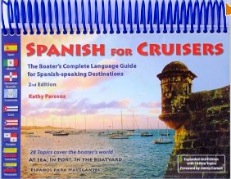
Spanish for Cruisers

Spanish for Cruisers by Kathy Parsons

I have written a post about the books and resources we used for improving our Spanish beyond the typical cruiser’s starting point of “cerveza” beer and “baño” bathroom.  I highly recommend reading that post if you are going to Mexico and want to maximize your experience.

If you don’t have the time or interest in taking a conversational Spanish course, either in the US before leaving or in Mexico once you get there, this little book covers an awful lot of ground.  Besides being a fabulous glossary for all those technical boat terms like “bow” proa, “hull” casco, and “stainless steel” acero inoxidable, it will help when you carry a little broken part into a ferretería and need help repairing or replacing it.

One of the features we found most helpful was the chapter on sentence starters.  Sometimes just getting going with the Spanish that you already know is a bit daunting.  Having a few pat phrases to get those first words out of your mouth really helps.

Of course, most Mexicans who assist boaters speak good English, or can grab a friend nearby who does.  But the smiles, raised eyebrows, and genuine appreciation we get when we muddle through a few words of Spanish is priceless, and often forges a special bond between us and these good people who have taken the time themselves to learn a lot of our language and are more than willing to speak it on their own soil.

Mexico Travel Road Map

Mexico Road Map

When we first got to Mexico, the only maps we had were in the cruising guides and whatever we could find online. Yikes!! It’s a huge country with lots of states, and it was much easier to get a feel for where things were once we got a proper map aboard Groovy.

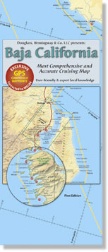
Baja California Cruising Map

This was especially true when we started traveling inland. Google Earth is great for getting quickie distances, but I also liked being able to pinpoint where each destination was on a large map I could spread out in the cabin. Call me old fashioned…

Baja California Cruising Map

This cruiser-specific map has waypoints and lots of boating oriented details for Baja California. We relied on the chartplotter for passage-making, obviously, but it sure was nice to open up this very large paper map on the floor of the cabin and get a feel for what was where…

Google Earth

We used Google Earth a lot to estimate passage-making distances between ports and also between coastal locations and hot spots inland.  For some reason, even in nautical miles, we found the estimates were always just a hair longer than our chartplotter showed.  No matter, it was still very useful for planning purposes.

We also used Google Earth to estimate waypoints in anchorages where there were none given in the guidebooks.  This was especially helpful when cruising the Bays of Huatulco and other less well documented points down south.


Steinbeck Sea of Cortez

Log from the Sea of Cortez by John Steinbeck

This book is absolute MUST READ if you are heading to the Sea of Cortez.  It is a light-hearted and hilarious account of a voyage John Steinbeck made from Monterrey, California, to the Sea of Cortez aboard a chartered shrimper during March and April of 1940.

Besides making any cruiser laugh out loud at his descriptions of the ship’s cantankerous dinghy and outboard and the hapless crew member who refused to take his turn washing dishes, Steinbeck paints a vivid picture of Mexico, the outside of Baja and the Sea of Cortez as it was nearly 75 years ago.

Things have changed dramatically — and yet they haven’t changed at all — both in the Sea and aboard cruising boats, and many cruisers find they can’t put this book down.  One warning: there is a bizarre chapter in the middle that goes off on a philosophical tangent that has nothing to do with the Sea or Mexico or Steinbeck’s voyage.  That chapter was written by a friend of his, and he included it as a favor.  You’ll know it when you get there.  Just skip to the next chapter…

Conquest of New Spain

The Conquest of New Spain by Bernal Diaz

This riveting book is a first-hand account of the beginnings of the Spanish conquest of Mexico. Written by one of the men that was there on the scene when it happened, it puts you right in the middle of the action as Hernán Cortés barnstorms his way across Mexico in 1519, after sailing from Cuba to Veracruz on Mexico’s Caribbean shore.

I never really understood how radically different the arrivals of the Spanish and the English were in the New World, and reading this book gave me a much deeper understanding of who the Mexicans and other Latin Americans are today and where they come from.

Hernán Cortés was as smooth and wily and ruthless and volatile as the Sea that bears his name, and the political tactics and extraordinary savvy he used to decimate the Aztecs is truly astounding. Arriving from Cuba with just a few men, by the time he reached Tenochtitlán (now Mexico City), home of the Aztec emperor Montezuma, he commanded an army of thousands, few of them Spanish.

Perhaps even more astonishing is to consider what those Spaniards must have thought when they first laid eyes on the intricate and cleverly engineered city in which the Aztecs lived. Built on a lake and incorporating canals, land bridges and extensive water travel, the population was some 200,000, while the biggest European cities of the time were a mere 50,000. It’s no wonder that by the time their tales of this incredible city reached home, the streets were said to be lined with gold.


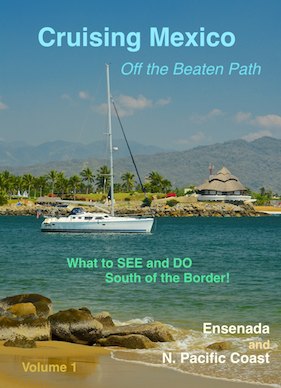
Cruising Mexico DVD Volume 1

Cruising Mexico DVD Series

Cruising Mexico Off the Beaten Path DVD Series

Even with all these wonderful guides and books, it can still be hard to get a visual picture of what cruising Mexico will be like.  What do the anchorages look like?  What do the towns look like?  Where are the best beaches and snorkeling? Even if you have sailed the US west coast extensively or done a lot of charters in the Caribbean, a cruise in Mexico is a completely different kind of experience.

To help folks get a better visual sense of what Mexico will be like, we have put together a DVD series.  Chock full of maps, charts, and inspirational images, this series is presented as cruiser-to-cruiser.  It’s as if you are sitting down with a cruiser who has been there and done that and hearing about what it was like.  We share all the tips and hints we would have loved to have seen before we untied the dock lines and sailed south.

__________________________________________

I hope these books and maps find a place on your boat’s bookshelf and that they are as useful in your cruise as they were in ours!!  For your convenience, this page gives product links for all these great resources.

To help you plan your cruise and get you inspired, we created the video series, "Cruising Mexico Off the Beaten Path - Volumes 1-3," shown below. This is a fun-to-watch and easy-to-digest introduction to Mexico from a cruiser's perspective, giving you lots of valuable information that isn't covered by the cruising guides. Each video is available individually at Amazon, either as a DVD or as a download. For discount package pricing on the whole series, visit our page Cruising Mexico Video Series.

Volume 1 reviews the geography, weather and seasons in Mexico and shows you what the best anchorages between Ensenada and Manzanillo are like.

Volume 2 gives detailed info that can't be found in any of the guidebooks about the glorious cruising ground between Manzanillo and the Guatemala border.

Volume 3provides all the info you need to get off the boat for an adventure-filled trip to Oaxaca.

Our Gear Store also has a boatload of ideas for your cruise!

If you are planning a cruise to Mexico, you might also enjoy:

More Tips for Cruising Mexico         Upgrades & Product Reviews


Baja Bash (1) – Sailing on the Coattails of a Hurricane!

SailFlow Hurricane Cosme

Hurricane Cosme — YIKES!!! — Time to get back to the boat!

Early July, 2013 – Our wonderful week off the boat in the pretty beachside bungalows at Casa Maguey in La Manzanilla finally drew to a close.

Our gracious hosts invited us to stay longer, but we needed to begin getting ourselves and our boat Groovy ready for the long 1,100 mile voyage from Puerto Vallarta to San Diego.

Hurricane season had officially started, and the hurricanes had begun their steady march up Mexico’s southern coast.

A doozy storm was on its way towards Puerto Vallarta, and the skies were already darkening when we took the bus from La Manzanilla back to Puerto Vallarta. As our bus wound along the edge of Banderas Bay, the cliffs were filled with dramatic waterfalls from the recent rains.


Paradise Village Lush Vegetation

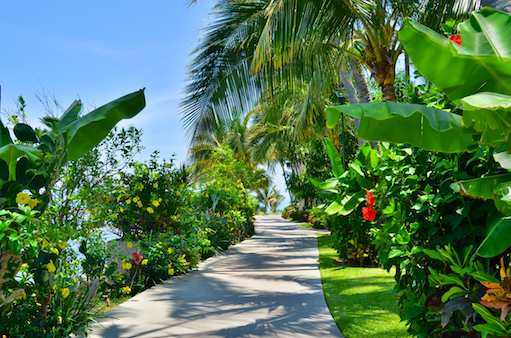
Lush vegetation at Paradise Village Marina in Puerto Vallarta.

This was Hurricane “Cosme” and it looked truly frightening on the weather prediction charts. Fortunately, Paradise Village Marina is tucked into an estuary, and we weren’t threatened.

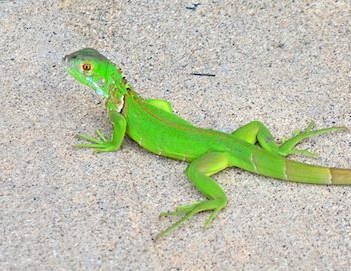
Eventually, Cosme passed on, and the skies cleared to give us some spectacular days. The iguanas had been busy laying eggs, and suddenly a huge crop of vibrant green baby iguanas showed up everywhere.

The heat was intense, and the best way to beat the heat was to get in the water. We played in the waves, relishing our last days in the tropics.

Baby iguana

Baby iguanas sprouted everywhere!

Splashing around, it was impossible to imagine that once we started up the outside of Baja California, we would have to start wearing long sleeves, long pants and jackets.

Playing in the waves

Goofing off in the waves on the beach,
we were loving our last days in the tropics.

Mark in the waves

Watch out behind you!

The voyage from Cabo San Lucas to San Diego is known as the “Baja Bash,” and it is a passage most sailors dread. The wind howls out of the north non-stop, and the waves build to a frenzy, leaving the struggling sailor pounding relentlessly into fierce headwinds and steep seas for 800 miles. Traveling at four to seven mph, the suffering goes on for days!

We both read and re-read the bible on the subject, The The Baja Bash II, written by a captain who has made the trip dozens of times in all kinds of boats. It is a fabulous book that explains exactly how to tackle the trip.

Like many sailors, after reading it the first time three years ago, I vowed never to do The Bash! The vivid descriptions of misery and woe that sailors experience are enough to make any sensible person ditch the boat and fly home instead.

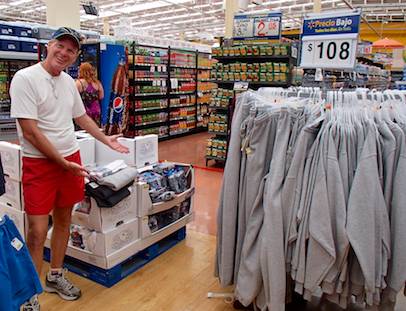
Buying warm clothes at Walmart

We found sweat pants and other warm clothes at Walmart.

Besides ferocious winds and nasty seas, the real kicker is that as soon as you begin the Baja Bash in Cabo, you leave the tropics in your wake.

Rather than easing through a transition from warmth to coolness as you sail north, you begin to shiver in the face of a cold, mean wind as soon as you turn the corner at the bottom of Baja.

Looking around Groovy, we realized that we had off-loaded almost every scrap of warm clothing we owned. So we dashed to Walmart to get some sweats and other goodies. What luck that they had some!

The Baja Bash II also advises doing The Bash in either July or November. Unfortunately, most people make the trip between March and June, because it gets them out of Mexico’s blistering summer heat and back to California in time for the summer sailing season.

Hurricanes on Mexico's Pacific coast

The hurricanes rolled off the coast like bowling balls

However, that is the very worst time to go. The horror stories we’d heard from friends doing these springtime voyages were truly hair-raising!

In July, on the other hand, the outside of Baja actually calms down once in a while, because the south winds blowing up from the frequent tropical storms temporarily negate the prevailing north winds.

Sailing with hurricanes brewing nearby doesn’t sound like a great idea, but in July the tropical storms tend not to make landfall on the Baja peninsula as they do later in the season. Instead, most move west, passing well south of Baja and dissipating out at sea.

We watched in amazement as the hurricanes rolled up the coast like bowling balls and then tumbled out to sea, all with precision regularity. For a few days after each storm, periods of tranquility swept up the Baja. It was like watching a train go by and the dust settle afterwards. Our trick was to find an opening, jump aboard, and ride the train.

What the forecast map looked like for our noontime sail out of Banderas Bay (Puerto Vallarta).  Ride that train!!

What the weather map looked like for our departure from
Banderas Bay (Puerto Vallarta). Ride that train!!

The hurricane we chose to ride was Dalila, and we wanted to time our departure for about 48 hours after it left our coast.

By then the seas would be back to their normal easy roll, and the winds would be quiet. All we would need to do is stay ahead of the next hurricane coming up behind Dalila.

Sounds easy. But hurricanes aren’t all that predictable! What’s worse, Cabo is an awkward place to hang around.

At $175 USD/night for a slip, most folks anchor in the bay that is wide open to the south instead — fine in November’s north wind but dicey when it sometimes turns south in July.

So our hope was to find an opening in the weather long enough to travel 290 miles across the Sea of Cortez to Cabo and then go another 180 miles up the Baja coast to Bahia Santa Maria, stopping in Cabo just long enough to get fuel. To do that we needed a 72 hour window. Good luck!! Weather windows were more like 24-36 hours, if they existed at all.

I had a nail-biting few days while I looked at Passage Weather and Sail Flow morning, noon and night. Each site offers about 30 weather charts covering a week’s worth of forecasts that are updated every three hours. That is a TON of constantly changing data!!

To make things really tricky, the two sites didn’t always agree on their predictions!

Adding to the confusion, Sail Flow’s charts are given in local time, but Passage Weather uses Greenwich Mean Time, which was six hours ahead of our local time. So on their charts, 00 hours Tuesday was really 18 hours (6pm) Monday. Good grief!

Paradise Village Marina Sunset

Paradise Village Marina treated us to some gorgeous sunsets.

While I got bleary eyed staring at the computer, my palms sweating and brain frying, Mark got the engine ready.

Due to the constant headwinds, this voyage is almost always done exclusively under power, and the engine needed to be in tip top shape.

Oil changes, filter changes, etc., were on his “to do” list, and he meticulously worked his way down his list.

Because the fuel in the tanks gets a really good sloshing underway on this trip, as the boat bashes through the waves, whatever debris may be lurking in the corners of the tanks gets mixed into the fuel.

Many boats end up replacing their fuel filters several times before they get to California. We know of one that went through 10 fuel filters before the engine died one final time outside Ensenada where they got a tow.

Changing fuel filters on a Yanmar engine

Mark changes the engine’s fuel filter.

We had only two spare fuel filters and wanted a third. But there were none to be found anywhere in Puerto Vallarta. The big “chandlery” Zaragoza had fuel filters for huge sport fishing boat engines, but none for smaller cruising boats.

The little boating goods store at our marina had some filters, but not our model. The chandlery in La Cruz was an expensive cab ride or long bus ride away, with no guarantee they had one either. Egads! We hoped two would do.

We also wanted more plastic jerry jugs for fuel. We carry 86 gallons: 66 gallons in the tank and another 20 in plastic jerry jugs. Under normal conditions, this is enough to travel about 600 miles. On this trip, our longest run without an easy fuel stop would be 400 miles between Cabo and Turtle Bay. However, it would not be under normal conditions!

We expected to travel much more slowly and to consume much more fuel as we fought the wind and waves. However, when we saw the $50 USD price tag for each 5 gallon plastic jerry jug, our jaws dropped. I gave Mark a shaky grimace, “We should to be able to go 400 miles with what we have, shouldn’t we????” He made a face. “Sure…” he drawled.

Emily on s/v Groovy

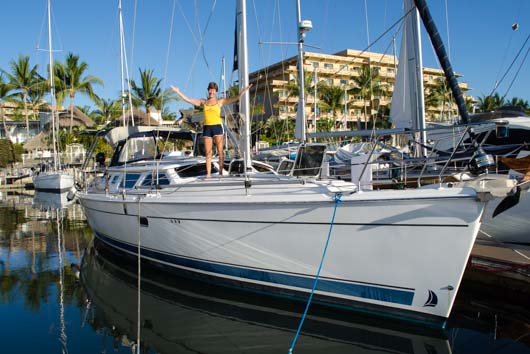
Life in Paradise!

These are the crazy decisions boaters face with difficult passages. In an ideal world we would tow a barge carrying all the spares and tools we could ever possibly need. We might even tow an identical boat as a “hanger queen” we could rob for parts. But this was reality.

As the tension about these technical aspects of our departure built, I wrote a blog post explaining our decision to end our cruise so we could pursue other tropical travel lifestyles.

To my utter astonishment, the post took off like wildfire, and we received the most unexpected outpouring of support and affection from our readers.

This rocked our little world. Sharing our pics and stories has become a passion for us, but suddenly feeling so much heartfelt warmth from our friends and followers made our decision to take a new path for our travel adventures that much more poignant.

Puerto Vallarta yachts in dark clouds

Every afternoon, Puerto Vallarta erupted in a blast of thunder and lightning.

Heightening our emotional roller coaster ride, every afternoon the skies became black, the lightning show started and the torrential summer rains fell.

Surrounded by rolling thunder, flashing lightning and pouring rain that pummeled our little boat in its slip, the Baja Bash loomed huge and intimidating before us. During those dockside storms the upcoming voyage felt truly life threatening.

As I examined the hurricane-filled weather charts and wrote about why we were leaving this lifestyle, Mark massaged the engine and lubed everything in sight, and we told each other with bug eyes and pounding hearts, “It’s going to be a great trip.”

Emily at the helm of Groovy

Our morning for departure finally came, and we snuck out of the marina before we were fully awake. The knot in the pit of my stomach only grew larger as we said goodbye to our dock mates and rounded the bend towards the open ocean.

By the time we reached the channel to the bay, I was beginning to choke up. Standing at the helm in a bathing suit, I suddenly realized just how much I loved this boat and this life, difficult as it was at times. Tears slid down my face.

Cruising is a beautiful way to live and travel, and it is worth every effort to pursue. But it is not easy.

This bittersweet moment as we were leaving Paradise Village Marina channel said it all: surrounded by tropical beauty, the warm, soft air brushing my tears dry, and the rolling blue waves soothing my soul, my stomach churned in sheer terror at the prospect of our upcoming voyage.

Three years earlier in Cabo, Katrina and husband Rob dived off their boat.

Three years earlier in Cabo, Katrina and her husband Rob
(the splash!) dived off their boat to celebrate their arrival.

This was it. We were leaving Mexico. We were leaving the sultry tropics and would soon be leaving our boat. Mark gave me a long, loving hug, and I realized that I was actually okay with it all, gut-wrenching as it was.

Before we could really get going, though, we needed to stop for fuel at La Cruz, 8 miles away. When we pulled in, we were greeted at the fuel dock by Katrina Liana, a phenomenal professional captain and friend to all cruisers. Three years earlier, her boat had been anchored next to ours for several weeks in San Diego Bay as we both prepared to sail south.

Katrina Liana Cabo

Katrina grins after arriving in Cabo 3 years ago.

We had sailed down the Baja coast at the same time that fall. The last time we had seen her, she and her husband Rob were diving off the bow of their boat in Cabo, happy to have completed the voyage.

As we caught up on three years of news with her now, she told us she had sailed up and down the outside of Baja at least 20 times over the years. She reassured us that we were making the trek at the very best time of year and that all would be okay.

Dolphins swim to Groovy

Dolphins swim over to say “hello”

Her cheery smile, warm spirit and calm confidence made us feel much better, and our fears began to subside.

We left La Cruz under blazing, hot sunny skies, and our hearts suddenly felt free and full of anticipation. We were going to have a beautiful sail to Cabo, and we settled in to enjoy it.

As if to confirm our good feelings, a pair of dolphins suddenly bounded over the waves towards the boat.

Mysterious clouds leaving Puerto Vallarta

A mysterious orange cloud floats overhead.

As the mainland slipped away in our wake, puffy clouds formed in the sky. Oddly, we suddenly noticed that one cloud was orange.

It was early afternoon, many hours before sunset. How could one cloud be orange? We decided it had to be a good omen.

Then the clouds got darker and darker, and the water began to take on fascinating patterns of ripples and mirrors, as if slicks of oil were spreading out in ribbons across a gravel surface.


Dark clouds over Groovy

Dark clouds loom over Groovy.

The clouds turned black above us. Growing heavy and thick, they spritzed us for a while and then moved off behind us.

Mysterious water leaving Puerto Vallarta

The water separates into wonderful inky patterns.

A lightning show started off our transom. It was far in the distance over the land behind us, and we knew it was the gods’ nightly high voltage power display we had been witnessing back in Puerto Vallarta.

Storm clouds overhead

The clouds turn black above us.

Groovy at Sunset

The sun sets around us.

In no time the sun began to set, and we got ourselves ready to swap watches overnight.

The wind stayed below 10 knots apparent, on the nose, and we continued to motor peacefully all night under the Milky Way.

Sunset first night

Sunset on our first night at sea.


In the morning — the 4th of July — the mist was thick and it obscured the sunrise, but as the day progressed the sun came out and the water became bluer than blue.

The sea was silky smooth all around us, undulating in a continuous, voluptuous motion. We were on our own magic carpet that stretched in a perfect circle all around us, clear to the horizon.


Calm sea from cockpit

In the morning all is still calm.

Blue blue water

The water all around is vivid blue.

Calm Sea of Cortez & Mark

Could this preliminary part of the Baja Bash be any more tranquil???


The ocean had been 89 degrees F when we left Puerto Vallarta, and when we looked now it had slipped to 85.

A big pod of dolphins approached us. They were headed somewhere in a bobbing, lumpy group.

They stopped for a few minutes by Groovy to leap out of the water and check out our deck layout and our choice of gear in the cockpit.

A group of them swam to the bow and played just in front of us. They zig-zagged back and forth for a while, seeming to love zooming along while the bow of a big sailboat plunged up and down in the waves just behind them. Then they were off.

Dolphin Leaping

Dolphins leap around Groovy.

Dolphin Nose In

It is so heartwarming when dolphins come to visit the boat
in the middle of the ocean.


Taking photos of dolphins off the bow

I loved photographing these guys
at our bow.

The hours began to run into each other as we made our way across this widest part of the Sea of Cortez, and eventually we found ourselves 150 miles from shore.

Dolphins play off Groovy's bow

They played just in front of our bow, never touching each other
or getting hit by the huge boat behind them.


The conditions were so totally calm, it was impossible to imagine that a hurricane was raging a few hundred miles south of us. We traded napping for reading and playing on the computer, and we took turns keeping watch and sleeping.

Sitting on the Groovy Boat

The Baja Bash was off to a great start – knock on wood!

The thread connecting all our activities was simply, “Are we there yet?” With every passing hour we were another 6.5 nautical miles closer to our goal. It was a great vast nothingness out there and there was absolutely nothing going on in it.

Calm sea off the bow

Ahhh… the calm before the storm.

As the sun began to fall from the sky our second night, the wind picked up. Within an hour we went from a sleepy 8 knots of apparent headwind to 22 knots and spray. The seas kicked up and they frothed and foamed around us.

The sun set, but we were suddenly too busy trying to keep our balance to mess with taking photos. The boat flew off a few waves and landed with a resounding crash, shaking everything on board to its core.

Chartplotter Puerto Vallarta to Cabo San Lucas Mexico

Are we there yet?


Yikes!

This wind had been predicted for the last 6-9 hours of this leg of our trip, but that didn’t make it any easier to accept its arrival. We battened everything down and got ready for a long night.

A few more flying leaps off the crests of waves persuaded us to slow the boat speed to 4-5 knots. Climbing up and over each wave, alternately pointing at the sky and then at Davy Jones’ Locker was far preferable to those brutal crash landings!

We each tried our best to sleep while off watch, but it’s hard to fall asleep when your body is being thrown around like a volleyball and the boat is creaking and complaining loudly about the circumstances.

Finally, around 5:00 a.m. Puerto Vallarta time, the boat stopped mimicking a bucking bronco. Two hours later, we dropped the hook in the pitch dark in Cabo San Lucas, feeling our way around the anchorage by memory and radar. Whew! Leg One of our trip was done. 291 miles in 44 hours, from Wednesday July 3rd to Friday July 5th, averaging 6.6 knots. Just 800 miles to go. Woo hoo!!!

Expected arrival in Cabo

The forecast for our arrival that we had gotten 2 days earlier.

Actual Arrival in Cabo

The way things stood when we actually arrived 48 hours later.

After two days of no weather forecasts, we quickly got online for a sleepy one-eyed look at what was going on. Things had changed! Hurricane Dalila had died down more than expected to the southwest, but another hurricane was forming behind her. It looked like we could ride this next hurricane up the coast of Baja if we waited around until Monday. We would have a nice strong southerly wind to push us north!

Hurricane Erick off Cabo San Lucas Mexico

How cool! We’ll wait 3 days and catch a southerly from this next hurricane!!
(but wait, isn’t that playing with fire??)

Fabulous!! How easy is this Baja Bash stuff?! We could catch a few winks, go to the fuel dock when it opened in the morning, and then enjoy three days of rest anchored in Cabo San Lucas. We’d be protected from the predicted north winds while we waited to hitch a ride on the next hurricane’s south wind. Very nice. Easy peasy.

I announced these plans to Mark and he raised an eyebrow. “Really?” He said, looking more astonished than seemed reasonable. “You want to stay here?”

“Absolutely!” I said yawning and closing my laptop with certainty. “We’ll relax here and then catch that next hurricane.”

He said nothing. But something about his doubtful expression lurked uneasily around the edges of my mind as I fell asleep…   Continued…

<- Previous                                                                                                                                                                                       Next->
 

Leaky Batteries = Ruined Gear… Arghhh!!!!

Kirkland AA Batteries

Before we left to go cruising, we stocked up on AA, AAA and 9v batteries.  We have lots of electronic gear that relies on these batteries, and we wanted to be sure to have plenty of spares.

So when we were in Costco and saw the huge packs of batteries, it was a no-brainer to throw a few packs in the cart and keep moving.  Little did we know that these batteries would eventually cause us all kinds of grief.

Electronic weather station 301

After suffering battery leaks, the outdoor sensor on this weather station stopped communicating reliably…


As many cruisers eventually do, we left our boat Groovy in the tropics for the hurricane season.  For seven months, we traveled around the mountains in the western US while Groovy was tied up at the dock in Marina Chiapas, Mexico, in sweltering humidity.  How hot and humid was it?  It made Houston in July seem cool and dry!!

When we returned, the boat was in tip-top shape.  We were amazed.  Both the exterior and the interior of the boat looked like we had just gotten off it the day before.  However, our little portable electronic devices were hiding something…

The first thing we noticed was that the outdoor sensor on our electronic indoor-outdoor weather station was no longer communicating with the indoor display.  Mark took it all apart and discovered the AA batteries had leaked all over the interior of the unit.  He cleaned it up as best he could, and got it working, but it failed again and again over the following ten months of our cruise.

More frustrating was that his favorite high-end and expensive LED flashlight couldn’t turn on.  Opening the battery compartment, he found that the AA batteries had leaked all over the interior and were stuck fast inside.  There was no way to pry the batteries out.  This fabulous flashlight that had been used just a few times went in the trash.

Sangean AT-909 ssb radio provisioning

This Sangean AT-909 portable SSB radio had leaky batteries, but was not damaged — thank goodness!!

Mark quickly hunted down every piece of battery operated gear we could find on the boat and checked out the batteries.  All the batteries were leaking.

Many items were salvageable by swabbing the battery compartment with rubbing alcohol and replacing the batteries.  We had stored our spare batteries in a ziploc bag, and they were not leaking in the bag.  But a few other pieces of electronic gear were lost to these leaky batteries.

Part of the problem may be that the cheap Kirkland alkaline batteries aren’t made all that well.  We recently discovered the website https://batteriesandbutter.com which looks to be a great place to buy batteries in bulk.

We were intrigued to see that they list where each battery brand and model they sell is manufactured.  Even with name-brand batteries like Duracell, it turns out you can buy cheaper Chinese-made Duracell batteries or USA-made Duracell batteries for a slightly higher price.  Who knew?

The other problem is that we should not have left the boat for so long with the batteries sitting inside of any piece of gear.  This is common knowledge, but in the excitement of packing up, stowing things, and wiping down every surface with vinegar to prevent mold from growing, it was easy to forget to remove the batteries from everything, including the clock on the wall and the flashlight in the ditch bag.

I hope our mistake will help you avoid this problem on your cruise!!

Nikon D5100 Closeouts – Smokin’ Deals!!

Barn Owl Baby

This baby barn owl seemed bewildered to
find himself outside his nest!

We have always loved photography, and our traveling lifestyle has made it possible for us to study and improve our skills. Scanning this website always makes us chuckle, because we have come such a long way since we started!

This past weekend, while staying with our friends, a baby barn owl fledged and hung out in a tree near the patio, screeching plaintively long into the night. Mark took this wonderful image with his Nikon D5100 with a 55-200mm lens.

Our hosts were really surprised he could get the camera to focus on the owl in the pitch dark and that he was able to capture this image.

They had been thinking about getting a nice new camera for a long time, so we hopped online to see what the latest prices were. Lo and behold, Nikon has discounted these cameras A LOT to make way for the replacement model, the Nikon D5200. They are bundling the cameras in all kinds of ways, with different types of lenses, tripods, memory cards and other things.

If you have been in the market for a “good” camera for a while, this might be a great time to get one. Obviously, Nikon makes all kinds of models, both higher and lower priced, but we have found that this model is ideal for our skills and what we do. I have had mine for two years and Mark has had his for a year, and they are still going strong with 40-50 thousand photos on each one.

Why the Nikon D5100?

There are tons of great cameras out there, but we have loved the Nikon D5100 for these features:

  • Wonderful overall image quality and colors.
  • The articulating screen – you can set the camera on the ground or hold it overhead and still see the image on the back.
  • In-camera HDR – the camera takes two photos at different camera settings and merges them, creating awesome effects.
  • Bracketing – the camera takes three photos at different settings so you either choose your favorite one or pump all three through a software package that will merge them… for cool HDR effects!
  • The fun in-camera “color sketch” and “outlne sketch” photo converters – these turn a photo into a sketch or colored drawing.
  • The modest file sizes coming off the camera. JPG files are up to ~8MB and raw files are up to ~17mb.

Here are a few of the bundles we found at Amazon. The basic gear I purchased two years ago is the second kit in the second row, but I paid 60% more!! Mark got (essentially) the first kit in the second row for 50% more last summer. The basic camera without a kit is the first item — so you can see what a smokin’ deal the bundles are!!

These deals just seemed to good not to share. Obviously, there are lots of other models and options, but I wanted to let you know about these in particular because we have enjoyed our Nikon D5100’s so much, even landing a few magazine cover photos with them.

And of course, if you end up making a purchase (of anything!) after clicking through any of these links, please let us know so we can personally say “thank you” — and so Mark can give you any pointers you might need, and most importantly so we can stay in touch and find out how much you love your new camera!