




Why Do It ?
Why on earth would we give up the security of hearth and home, get rid of all
our stuff, and run away on a traveling adventure?
To go places.
To see new things.
To be together.
To be free.
At 47 and 53, we had reached a point in our lives where certain chapters had
closed, and a new chapter needed to be opened. We had each left the
corporate world fairly recently and were doing a lot of soul searching as we
considered different possible lifestyles. We each worked part-time. We had
cut our expenses way back and learned to live very frugally. Mark operated
a boutique bicycle shop from our home, and I was a personal trainer at a
small studio. The arrival of two adorable grandkids and the departure of Mark's son for the Navy planted us in a new position in the
circle of life. As we contemplated this new phase of life, many memories bubbled up from our pasts. At the same time, we
watched our parents settling into their late 70's, and realized that in a few short years we would be there ourselves.
Looking back on my life, my most thrilling memories were my childhood summers on the north shore of Massachusetts, travels
through Europe at age twenty-three, a few months in Australia at thirty-one, and the four years I lived on a sailboat in Boston
Harbor in my late thirties. As one sailor wrote after completing a six-year sail around the world: "Those memories are in
technicolor. The rest of my life is in black and white." His words rang true for me. Mark's experience is much the same. He feels
about the woods the way I feel about the sea, and he spent many happy childhood hours in the forest. Whenever he is in the
woods he comes alive. He took a motorcycle trip with a friend when he was twenty, going from Detroit through the Upper
Peninsula of Michigan, out west through the Canadian Rockies to Vancouver Island, down the Pacific coast to Tijuana, Mexico and
back to Detroit. It was five weeks of his life that I heard about many many times. There were lots of places along that route he
wanted to show me, and I had seen very little of that whole part of the country. As we kept discussing those happy memories from
years ago, we kept wondering: what was it about those few weeks and months of our lives that made them stand out with such
vivid brilliance? How was it that whole decades of our lives seemed to merge into indistinguishable years spent working in cubicles,
commuting in traffic and submitting timesheets? What, exactly, made those other times so special?
Part of it was the excitement of seeing new places and experiencing new things. Part of it was
meeting new people that weren't from our small circle of friends and family. Part of it was the
adventures that we stumbled upon. But those were just the icing on the cake. As we thought
about and talked about the exhilaration of those memories, it became clear to both of us that the
real joy of those times was the total independence we had, the utter freedom we felt. There was
nothing in this world quite as satisfying as living without a schedule.
Life in our culture today doesn't allow much freedom. Too often the focus of our lives seems to be the passage of money through
our fingers. We try very hard to cup our hands so we don't lose too much, and some have better luck at this than others. We build
our lives by acquiring things and stashing them around us. Some people have a huge stash that towers over them and their
friends. Some don't have a stash at all. Almost everyone, however, is frantically busy. Every minute of every day is committed.
Spontaneity is a lost art. There is no time to think. No time to be.
The only way to get some time to yourself is to leave your life -- take a vacation, or even a
long weekend. But too often a shadow hangs over the whole experience. I left on a Saturday
for a 9-day Caribbean sailing vacation once. I remember the incredible sadness I felt on the
following Thursday. I had just started to get into the rhythm of the tropics -- and I was leaving
in three days.
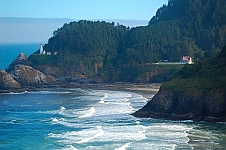
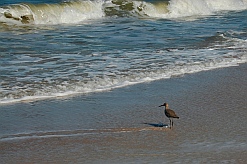
As a child I was blessed to live on a beach in the summertime. My mom would open the door
in the morning to let me out -- like a cat -- and tell me: "Don't come in unless it's raining." I
don't remember any rainy days! It must have rained. Massachusetts gets a lot of rain in the
summer. In fact, I remember distinctly that as soon as I started working full-time as an adult,
it rained all weekend every weekend between Memorial Day and Labor Day. But during those precious years on the beach it never
rained. My friend and I played all day long, building things in the sand, splashing in the water until our lips turned blue, and lying on
the hot granite boulders we lovingly called "hot rocks." The tide gave our days their shape and form. At high tide there was no
beach, just massive boulders. As the ocean rolled outwards, a fresh palette of sand laid before us with endless wonders waiting in
the tide pools. Our rumbling stomachs marked the passage of time. Lunch drew us home when the fire station whistle blew at
noon, and we went in for dinner when we grew cold from the lengthening shadows on the beach.
Those were days of pure freedom. I never knew when I woke up in the morning what I would do that day. But every
day was delicious and fun. The important things in those days were very tactile: the warmth of the sun drying the
salt water off my cheeks while hot trickles of water dripped down the rocks I laid on; the sound of the kids' voices on
the more distant beaches, a kind of dim, high-pitched roar; the taste of the salt water on my fingers. We would
watch the tiny red bugs, no bigger than a grain of sand, that crawled over the rocks, creeping in and out of the
granite crevices. We would lie on those rocks for hours, feeling the sun slip across our bodies as it moved across
the sky. We didn't do anything useful. We didn't do anything productive. But we were infinitely happy.
I found that kind of open-ended freedom just twice again in my life: when I went to Europe for three months and
when I went to Australia for three months. During my travels I woke up not knowing what I would do that day, and I
went to bed savoring the memory of whatever had come my way. Those months of travel were all about freedom. There was an
overarching structure that held the days together and propelled me from one locale to the next; I planned my course as I heard
about interesting places to visit, and I followed the seasons along north-south routes. However, my days were unscheduled. If I
liked a place and wanted to stay an extra few days, I did. If I looked out the window and didn't like what I saw, I kept going.
Now, in the middle of middle-age, I found myself yearning for that kind of freedom once again. I had always longed for it, but it
wasn't possible. I was busy building a stash of stuff around me. It was what adults in our
culture do. But now I looked at my stash -- a very small one -- and I realized that it was all
replaceable. I could buy any of it again. Very little was unique. Just my photo albums and a
few mementos. The rest was meaningless, manufactured and aging.
Mark and I discussed possible scenarios for our lives at great length. We made up lists of
adventures we wanted to have, researched the logistics online, subscribed to magazines and
talked endlessly. I found logs of people out adventuring, both online and at the library. It was
amazing how many people were living really exciting lives, full of travel and independence.
They all shared some common themes. They found a mode of transportation and housing that they liked and could afford; they
painted the plans for future travels in broad brush strokes with bright colors; and they left the details to be discovered as they went
along. Some traveled by bicycle, some by sailboat, and some by RV.
These intrepid souls shared something even more fundamental in their new chosen lifestyles: they had given up
their stash of stuff.
We outlined all kinds of adventures we wanted to have. We wanted to ride our bikes along the Mediterranean
coast from Italy through France to Spain. We wanted to take our pop-up tent trailer on a tour of the western states
and National Parks. We wanted to take our bikes from the northern tip of the North Island of New Zealand to the
southern tip of the South Island. We wanted to spend a few years sailing up and down the Caribbean island chain.
We wanted to sail the great circle route of the Pacific Ocean.
But each of those journeys would take many months, at the very least. What would happen to our stash of stuff
while we were gone? The more we got excited about embarking on a new life filled with travel and independence,
the more it seemed in conflict with our stuff. We were looking for something intangible: a life of freedom. Our stash of stuff, small
as it was, was tying us down.
As we sat in our little garden that we had lovingly transformed from a barren gravel lot to a
lush flowering arbor, we longed to get away. I wanted to wake up when my body decided it
was time. I wanted to read when an easy chair and a good book beckoned. I wanted what
I had wished for in my journal twenty years ago, "mornings filled with quiet cups of coffee."
I didn't want to wake up to an alarm clock. I didn't want to answer a phone. I didn't want to
drive in rush hour traffic. But I knew that even if I eliminated the alarm clock, the phone and
the traffic, as long as I lived in a community surrounded by people engaged in today's
frantic lifestyle, I would feel their pressure. True freedom lay out there somewhere, on the
road, away from the push and pull of modern life.
As I read, and thought, and stared at my stuff around me, I slowly realized a simple truth. The amount of freedom in my life was
inversely proportional to the amount of stuff I had.
My friends who left their home on their bicycles in 2002--and were still out on the road today--unquestionably lived the most freely.
All their worldly possessions fit into the panniers on their bikes. To date, they have ridden from Arizona through Central America to
the bottom of South America, through China, around Australia and New Zealand. After six years on the road they are just getting
started. They anticipate traveling the world by bike for twenty years or longer.
The sailors I have followed in their wanderings around the world are also very free, though not quite as free as the
cyclists because they have a boat and a dinghy to care for. The most unique might be Lin and Larry Pardee who
have spent the past forty years in a 37' sailboat with no engine. They have visited over 80 countries. Living without
an engine gives them more space in a small boat and requires no maintenance.
RV travel offers incredible freedom as well. Unable to cross oceans easily, RVs are essentially restricted to one
continent or another. But the basic elements of living without a schedule, having all your possessions within arm's
reach, and wandering from place to place on a whim, are the same.
I have always been intrigued by people who live independently. I was a teenager during the homesteading movement of the
1970's, and the ideas of subsistence farming and living off the land or the sea have always been deeply appealing to me. I was
raised in the city and always lived near cities. I became an engineer and worked in high tech for twenty years. Those simpler
lifestyles attracted me, but I had never made the opportunity to live that way. I was an armchair homesteader with dreams of a
small cottage by the sea, or a cabin in the woods, or a sailboat bobbing at anchor in the tropics. Yet in my current life I had none of
those.
At the same time we felt very restless. Our travels around Arizona, Colorado, New Mexico and California with the popup had
whetted our appetites. Whether we took a 12 hour drive to some faraway place for a week-long vacation or dashed 30 minutes to
the campground at the edge of town for a weekend, we always had an adventure and we never wanted to come home. In our first
two years with the popup we spent 157 nights in it. And we had barely scratched the surface of the southwest.
Our dream slowly and gradually took shape. We wanted to be on the move, we wanted to
live simply, and we didn't want to be tied to a schedule. These little desires burned in our
souls, just a small flame at first, and then a roaring fire. We bought digital cameras with the
idea that we would be taking photographs as we traveled. We bought a laptop so we could
communicate with friends and send those pictures to them. We tossed around ideas of
buying a boat, but couldn't decide which coast to start on and couldn't come up with a good
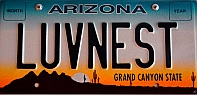
name for it. That seemed like an omen, as the popup had taken the name "Luvnest" so
easily. We toyed with the idea of taking the popup on a summertime jaunt and coming home
in the winter to deal with our stuff. That darned stuff. It was a real nuisance. Cars, furniture,
house, bikes, rental house. It would take money to maintain it all while we were gone -- and
for what?
Suddenly at the end of April, 2007, Mark put his foot down. He is a very mild mannered person, and is not one to force his opinion
on anyone. "I'm tired of scenario building!" He said. "I'm putting a sign in the yard tomorrow." I came home from work to find two
signs in the yard -- "Yard Sale" and "For Sale By Owner." At 6:00 the next morning the garage door flew open and garage salers
from all over town poured in. By the end of the weekend we had sold the car, the popup, half our stuff, the house was in escrow,
and we had put a deposit on a trailer -- sight unseen -- in Dallas, 1,000 miles away. Twenty days later we had sold or given away
just about everything we owned, put the remaining things in a shed in our friends' yard, and found tenants for the house after it fell
out of escrow. We drove to Dallas with everything we would need in our new lives packed into the bed of our pickup.
Since then we have lived our dream. Every day is an adventure. I never know what any
day will bring when I wake up. Some days it's a beautiful new place; some days it's an
interesting new person; some days we stay in bed until noon talking about our childhoods.
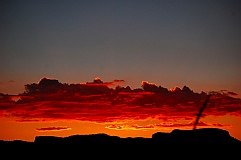
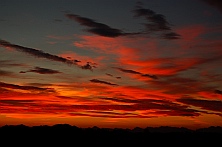
I truly feel like a child again. Sometimes I lie back and watch the clouds. We take endless
photographs of flowers and sunsets. Mark bakes wonderful things in the oven. I haven't
answered a phone since we left in May, 2007. Every day, at least once a day, one or the
other of us spontaneously blurts out, "what a great life!" We live largely on public lands,
boondocking in secluded places away from the fray. Our solar panels provide all the
electricity we could ever need, and we get water in our jerry jugs whenever we find a spigot
in town.
I haven't missed my stash of stuff for one minute. Ironically, we have photographs of all our stuff because we sold most of it on
Craigslist. Sometimes I bump into those photos and I feel as if I still own it all. It's at home, of course, in the house we live in,
right? This is just an extended vacation, a very wonderful and very long one, isn't it? And since I still feel like all my stuff is back
there in my old house, what difference does it make that it isn't really? Afterall, memories and dreams live and flourish in the same
place -- the imagination.
Our story is hardly unique. Lots of people are out adventuring. Most are propelled by
something profound in their lives. Our motivation was a deep undercurrent of desire that
had flowed in our souls since childhood. And we wanted to start before time ran out. It
was hardly a financially prudent move. Most of our friends are building up significantly
larger retirements and will enjoy far more security in old age. But I fear that for each year
a dream is postponed, the risk of it never happening jumps exponentially. We have met
too many people who wanted to go out traveling but waited too long and either traveled
for just a year or two or never made it out at all. On the opposite side is a couple we met
who started their RV travels because his stressful job had damaged his heart so badly
the doctor gave him just one year to live. She worried about becoming a widow on the
road, but the doctor said, "either you can stay home and wring your hands while you watch him die, or you can get out there
together and live your dream as long as he lasts." That was twelve years ago, and he is far healthier today than when they started.
Perhaps the hardest thing is figuring out exactly what your dream is. Unless it is far more appealing than whatever your life holds
now, why change? Whenever we drive by beautiful homes in beautiful settings, I wonder if I ever could have left such a place if it
were mine. Possibly not. Most people we meet on the road are traveling part-time, three to nine months a year. In each case they
say that they love their homes too much to give them up for fulltime RV travel. If we had been able to have our dream home and
have dreamy part-time travels too, then we would probably be among their ranks. However, without the means to pull that off, it
just took a leap of faith and a bit of soul searching to decide that it was worthwhile to give up the security and familiarity of life at
home for the unknown thrills waiting for us on the road.
Note: I wrote this after our first 14 months of full-time RV travel, in July, 2008
--Emily
Subscribe
Never miss a post — it’s free!
More essays and musings about life on the road as our experiences and reactions to them evolved:
- What’s It Like to RV Full-time? – A Snapshot of Pure Joy (as the banking world collapsed) 01/03/09
- Living, Loving and Perfecting “The Dream” 06/29/13
- On the Road to your Dreams, Stay the Course! 10/14/13
- What Is Your Dream? 12/31/14
- What Does It Take to Live The Dream? 01/02/16
- 9th Anniversary of Full-time Travel by RV and Sailboat – Reflections! 05/22/16
- 10 Years of Full-time RVing and Sailing!! – The Early Years… 05/24/17
- 10 Years of Life on the Road by RV and Sailboat – The 2nd Half! 05/28/17
- Kay Peterson: Full-time RV Pioneer & Escapees RV Club Co-Founder 06/13/17
- Camping World Video Shoot — RVing is for Everyone! 04/06/18
- Lessons Learned in the Full-time RV Lifestyle: Tips & Ideas! 05/25/18
- Merry Christmas and Thank You for a Great Year! 12/22/18
Below are some of our most POPULAR POSTS (also in the MENUS above)
Buddy - A Journey in Spirit - The story of an event that changed our lives forever. ARTICLE INDEXES- RV Tech Tips Articles - A one page index of links to all our RV Tech Tips, RV Upgrades & RV Maintenance articles.
- RV Lifestyle Tip Articles - An index of links to all our RV Lifestyle Tips (finances, boondocking, major repairs, work/jobs, etc.)
- Solar Power Articles - Overview and tutorial articles for how to design and install solar power on an RV or boat
- Product Reviews - An index of links to all of our Product Reviews
- Basic RV Tool Kit - What tools do RVers need? Here's a list of essentials, from tire changing to electricity, plumbing & more
- RVing Tips & Tricks - Tips and tricks to make RVing easy
- Reese Goose Box - Reclaim your TRUCK BED with air ride smooth towing + How to hitch and unhitch!
- RV Heater Installation - Step-by-step guide for how to select and install a vent-free propane heater
- CargoBuckle Ratchet Straps - These retractable straps make it a CINCH to tie down a side-by-side, motorcycle or ATV
- How to change a dually truck's inner rear tire - Tips for changing the inner rear tire on a dually truck.
- EASY SOLAR POWER UPGRADE - We TRIPLED our factory installed solar power output for CHEAP
- B&W Fifth Wheel Hitch - Why we chose this hitch for our fiver plus an easy 5th Wheel Hitch Installation Guide.
- Demco 21k Recon Fifth Wheel Hitch - This fifth wheel hitch mounts on a gooseneck ball in the truck bed!
- Increase Your RV Storage Space - Add precious storage space at the RV dinette with storage benches!
- Buying a Truck - Which options turn an ordinary diesel pickup into a massive TOWING MACHINE?
- Battery Charging Primer - The low-down on RV and marine batteries and how to charge them effectively.
- Which Solar Panels are Best? - Which is better: FLEXIBLE or RIGID?? 12 or 24 volt?? monocrystalline or polycrystalline???
- RV Solar Power Made Simple - An overview of how solar power works on an RV
- Trailer Disc Brake Conversion - Massively improve trailer stopping power with electric over hydraulic disc brakes
- Truck Engine Upgrade - How we improved performance, towing power and fuel economy with an engine tuner
- How to Defrost an RV Refrigerator in 20 Minutes - It is actually a cinch to defrost an RV fridge!
- Solar Charge Controllers - Understand and OPTIMIZE your RV / marine battery solar charging
- Wet Cell vs. AGM Batteries - Which is better, why we upgraded, PLUS wiring tips to optimize battery life
- Suspension Overhaul on a 5th Wheel - A Total Re-design for our Suspension: Hangers, springs, shocks & more!
- Can you run SOLAR POWER and SHORE POWER together? - What happens when you're on solar and you plug in?
- Converters, Inverter/Chargers and Engine Alternators - How do these battery charging systems REALLY work?
- RV Budget, Costs and Expenses - A detailed analysis of RVing expenses over 7 years of RVing full-time
- RV Extended Warranties - Is an RV warranty a good investment or a waste of money? Our personal case history.
- Working and Living on the Road - How do you make money on the road and who lives this nomadic lifestyle?
- Sell or Lease the House? - Is it better to SELL or LEASE your house when you start a life on the road?
- Mexican Dentists - Are the Dentists in Mexico any good? Just how cheap are they? Here are our PERSONAL experiences.
- How An RV Warranty Saved Our Bacon - Literally! - One repair on our RV practically paid for our RV Extended Warranty
- Still Smiling After 3 Days at the RV Repair Shop - Why? Our RV Warranty put us $2,000 ahead of the game!
- 5th Wheel Suspension Replacement - When our trailer's suspension failed, we $aved $$$ Thousands getting it replaced.
- RV Toilet Replacement - Our RV toilet quit flushing (ugh!) but our RV warranty saved us again. Now we're $6,700 ahead!
- RV Boondocking - Tips for how to live in an RV off the grid
- Which RV Is Best for Full-Time Living? - Transitioning from a house to an RV - Which RV makes the best home?
- Truck Camper Pros and Cons - The GOOD, the BAD and the UGLY!
- Full-time RV Lifestyle Tips - Full-time RVing Logistics - Mail, Domicile, Insurance, Warranties, Saving Money at RV Parks
- Toy Hauler Life - What's it like to live in an OPEN BOX Toy Hauler?
- What are the MOST IMPORTANT FEATURES in a Full-time Fifth Wheel? - For anyone planning to live in an RV!
- Internet & Phone Access for RVers - An inexpensive, minimalist solution for internet access on the road
- RV Dump Stations & Composting Toilets - How to do the dirty deed at the RV dump PLUS RV Composting Toilet tips
- Choosing a Trailer for Full-time RVing - Why the payload capacity is so important
- Learn RVing the Fun Way!! - Go Cheap, Go Small, Go NOW and have a blast in little RV!
- Free RV Campsites - Resources for locating campsites for boondocking
- Glimpses of the Full-time RV Life - Anecdotes from the road and essays about living the RV dream.
- Travel Photography Tips! - All the cameras, gear, books, blogs and tools we used to learn to take great pics!
- Gear Store - A list of the goodies, equipment and gear we've found useful in our RV lifestyle!
Our most recent posts:
- Buckskin Mountain State Park – Fun on the Colorado River! 01/31/26
- How to Install Starlink Gen 3 in an RV? Use the Speedmount! 08/07/25
- Escape to Paradise – Rocky Mountain Magic! 08/01/25
- Is Forest River a Good RV? Well Built? Here’s Our Experience 06/20/25
- Sunset Crater Nat’l Monument – Lava & Camels at Bonito CG! 06/06/25