RV Refrigerator Replacement – How an RV Warranty Saved Our Bacon!

We’ve been reporting on whether or not an RV warranty is a good investment for RVers, and this page — the second of four installments — presents our latest findings.
(Hint: the answer is a resounding YES!)

Ten days ago, after a fabulous two weeks in Maysville, Kentucky, and a long day of driving, we set up camp, grabbed a beer, and kicked back to enjoy a cold one. But to our dismay, the beer was kinda warm. We ratcheted the RV refrigerator up a notch and went about our business. After dinner and a movie in our RV, we decided to have a bowl of ice cream. When Mark lifted the lid on the Haagen Dazs, what he found inside could only be described as cool chocolate soup.

Oh no! Our 8 year old RV refrigerator had died.
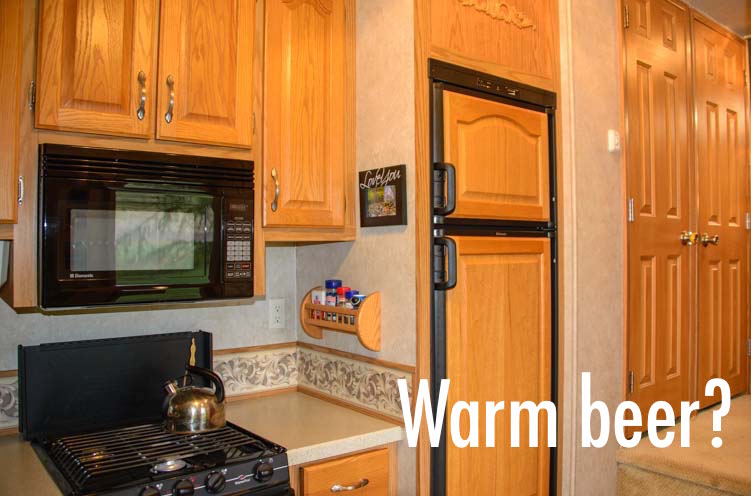
RV extended warranty repair RV refrigerator replacement

Do something quick! We’re going to lose everything in the fridge and freezer!!

As the clock neared midnight, we began a frantic search for RV repair shops in the area. We put together a list of them, went to bed quite distressed, and first thing the next morning we started making phone calls. Mark threw bags of ice in the fridge and freezer and we didn’t dare open either door after that. We lamented sadly that all our frozen meats — all those nice burgers and steaks, and even our bacon, darn it — were quickly defrosting.

After about 15 phone calls, we were still nowhere. Everyone told us it would be a two week wait to get a fridge and that it would probably cost upwards of $1,500. Finally, we called Camping World just south of Indianapolis. They had an identical unit in stock and they could squeeze us in for service the next morning. They told us they always try to make an extra effort for desperate travelers passing through.

Well, we weren’t exactly passing through. We were in Kentucky driving west towards Tennessee, and they were 150 miles to the north in the totally wrong direction. But what can you do? We were absolutely thrilled to find an RV repair facility that had an RV refrigerator in stock and could install it quickly, so a 150 mile detour was not a problem!

This would be our second major repair in just over a month. We had just had our 36′ fifth wheel trailer axle replaced. What’s worse, we were actually on our way to an RV repair appointment in Kansas to fix a leak in our fresh water tank. What kind of luck was that?

As it turns out, Lady Luck was following us very closely. Our RV extended warranty had covered the bulk of the trailer axle repair, and we were pretty sure it would cover this one too.

Where we stood on our trailer warranty at this point was the following:


We were 11 months into a 4 year RV extended warranty
Cost of RV warranty: $1,904
Reimbursements (less deductibles) to date: $1,036
Remaining Reimbursements to Break Even: $868

You can see the current status of our warranty HERE.

It looked like this RV warranty repair would not only bring our total reimbursements to the point of covering the original cost of the RV extended warranty but would go well beyond that.

18 hours after we’d discovered our fridge was dead, Camping World service manager Rick Helvey was in our trailer examining its hulking carcass. He told us that propane RV refrigerators typically last only 10 years.

What??!!

It was no surprise to him that our 8 year old unit had kicked the bucket. He opened the fridge vent on the outside of the trailer and showed us the telltale signs of a dying RV refrigerator: greenish or yellowish dust.

The presence of this dust meant the ammonia was leaking out and the cooling unit had given up the ghost. The crazy thing is that the price of a cooling unit is nearly the same as the price of a new RV refrigerator — Not Cheap!

RV warranty repair on a refrigerator - inside the vent

Yellowish dust in the fridge vent area is proof positive that the fridge is dying.

RV warranty repair RV refrigerator installation

Here is a closer look at the greenish – yellowish dust.

He called our warranty provider, Portfolio Protection, to get approval to proceed with the repair the next morning. To his astonishment (and ours), they said they wouldn’t reimburse us for a replacement refrigerator. They would reimburse us only for the replacement of the cooling unit to save themselves a little money. Here’s the breakdown:

Install New RV Refrigerator Parts: $1,389.99
Labor: $267.00
Tax: $97.00
Total: $1,753.99
Replace Cooling Unit Only Parts: $1,049.00
Labor: $356.00
Tax: $73.43
Shipping: $100.00
Total: $1,578.43

DIFFERENCE IN OVERALL COST: $175.56

This was a problem — for us and for Camping World!!

If we got our refrigerator replaced, we would be in and out of Camping World in 3 hours the next morning and they could go back to business as usual with their local customers. If we had to have the cooling unit replaced, we would have to wait a week or two for the part to come in and Camping World would have to reshuffle their appointments the next morning, once again, because our appointment was already on the books. We had all assumed the approval of a replacement refrigerator would be a slam-dunk.

New RV fridge ready for installation

Our new refrigerator is ready and waiting — all we need is approval to install it!

What to do?

Well, here’s one reason we are becoming more and more enamored of our RV extended warranty through Wholesale Warranties. Unlike most warranty brokers who wash their hands of the deal once you’ve purchased the contract and signed on the dotted line, they are willing to go to bat for you if the warranty reimbursement process isn’t going as smoothly as it should.

We called Wholesale Warranties and told them what was going on. The difference in cost between repairing and replacing was not astronomical. Couldn’t the warranty company allow us to go ahead with the refrigerator replacement?

Within an hour they had called our warranty company, Portfolio Protection, explained to them why it made more sense for everyone involved to install the new fridge Camping World had in stock and, magically, our refrigerator replacement had been approved. We were floored that Wholesale Warranties would do this and that they could be such effective facilitators. Yet it turns out that making these calls is business-as-usual and is routine customer support for them.

Early the next morning we parked the fifth wheel in front of Camping World, and service technician Raymond and his assistant José got started on it right away. Unfortunately, our old refrigerator was 1/4″ too wide and could not fit through our front door. RV refrigerators are installed at the factory before the doors and windows are in place!

RV warranty repair Removing RV refrigerator from fifth wheel trailer

Good heavens, the old fridge can’t go out the front door!

So, the dining room window had to come out!

RV extended warranty Removing an RV window from fifth wheel trailer

The dining room window has to be removed
so the refrigerators can be hoisted in and out.

RV extended warranty repair RV window removed

It would have been so much easier if the refrigerators could have gone through the door!

RV warranty refrigerator replacement gets through window

The new fridge is ready for some strong person to pick it up!

A forklift was used to remove the old fridge and hoist up the new one. It was at this point that I realized just what a challenging DIY project this would have been for Mark!

RV warranty refrigerator replacement New RV fridge on forklift

Thank goodness for fork lifts! This is not an easy DIY installation for one guy!

Then the new RV refrigerator was put in place.

RV warranty repair New RV refrigerator installed in fifth wheel trailer

Raymond settles the new refrigerator into place.

The pretty oak panels from our old refrigerator were slipped into place on the new door.

Under warranty Oak panel installed on RV refrigerator door

Our oak panels from the old fridge slide neatly into place.

Then Raymond ran around back to hook everything up in the refrigerator vent.

RV extended warranty repair new RV refrigerator installation

The back of the new fridge is exposed in the vent area where Raymond hooks it all up.

Meanwhile, his assistant José removed the silicone remnants from the wall around the window opening using a scraper and wiping the wall down with Acrysol

Removing silicone seal on RV window

José scrapes the old silicone sealant off the outside wall
around the window opening.

Removing silicone from RV window

The wall has to be completely clean for a good seal on the window.

Raymond lifted the window into place, and he and José screwed it in place.

RV warranty refrigerator replacement Installing RV window

Raymond puts the window back in place.

Installing RV window on fifth wheel trailer

The guys work together to get the window screwed into place.

Then they remounted the window valence and reinstalled the day-night shades.
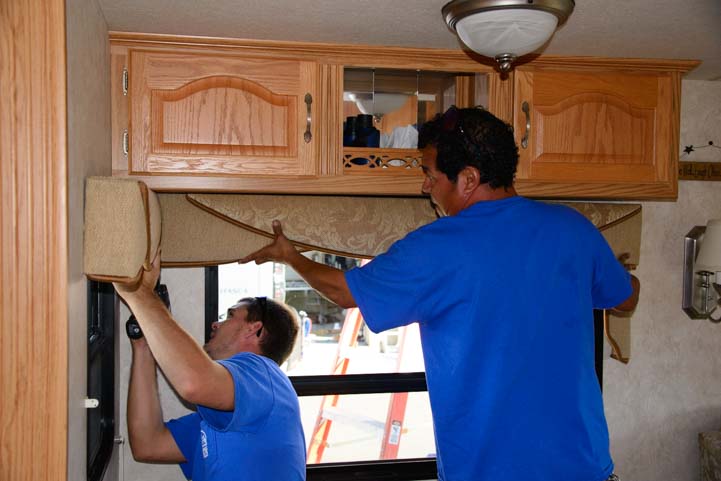
Installing valence on RV window

The window valences are reinstalled over the windows.
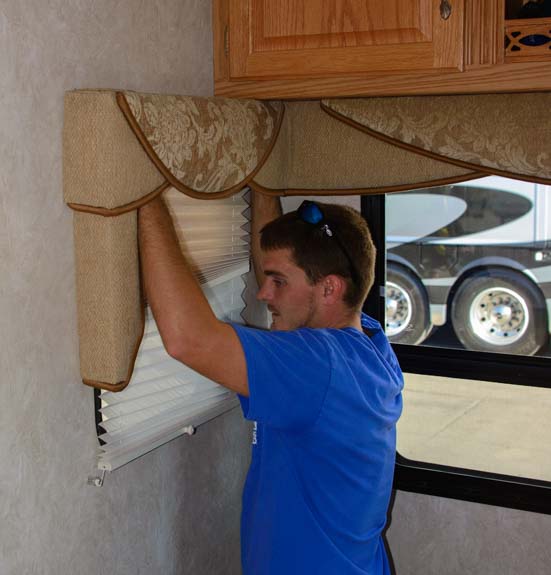
Installing day-night shades on RV window

The day-night shades are reinstalled on both windows.

Raymond gave us instructions not to put a bead of silicone around the window frame for about a week because he had used caulk tape that would ooze a little for the next few days.

We were impressed with how quickly these guys worked and got the job done, and we were really grateful to Rick for making an opening for us. In just 36 hours from the time we had soup for ice cream, we had a brand new RV refrigerator up and running. Now we just had to wait for it to cool down (about 9 hours).

In the meantime, our frozen meats had fully defrosted but were still cold. We couldn’t re-freeze any of them when the refrigerator finally cooled down. Arghhh!

As we hitched up the fifth wheel, I noticed Mark had a twinkle in his eye as he drove it around to the back lot. He hopped out and instantly set up the barbecue, right there in the Camping World parking lot. He happily began grilling burgers, hot dogs, steaks, chicken and brats.

“We can’t let all this good meat go to waste!” He said to me as he handed me the bacon and sent me inside to fry it up.

It turned out he’d invited the service guys to come on over to our place for a barbecue lunch, and when the yummy smells from our grill began to waft across the Camping World parking lot, they quickly showed up in a golf cart and began chowing down.

The crew enjoys a barbecue lunch

The Camping World service team stops by for an impromptu barbecue. Thank you guys for a super job!

At last it was time to settle up the bill with the service manager, Rick. Our RV warranty deductible was $100. Indiana charges sales tax on deductibles, so our total out of pocket cost for this phenomenal repair was only $107. Wow!!

Our RV warranty (less our $107 deductible + tax) covered $1,647 on this one repair alone — that is nearly the cost of the entire four year RV extended warranty itself!

Shockingly, this RV refrigerator replacement was just one of a slew of major repairs our trailer needed in a four month period in 2015:

Here's a summary of what our four year RV warranty through Wholesale Warranties cost, what our repairs WOULD HAVE cost, and what our warranty reimbursements have been to date:

Cost of Warranty $1,904
Total Cost of Repairs we've had done $7,834
Total Out of Pocket Costs for those repairs $1,145
Repair Reimbursements:
Trailer Axle Replacement $1,036
RV Refrigerator Replacement $1,647
Plumbing Issues & Window Leak $1,142
Suspension Replacement $2,550
RV Toilet Replacement $314
Total Repair Reimbursements $6,689

Our trailer warranty has paid for itself 3.5 times over!
Confused about the nitty gritty fine print buried in RV Extended Warranties? Here's an excellent detailed explanation!!

Are we happy with our extended trailer warranty? OMG Yes!!

Having suffered four major repairs in four months, we have come to the conclusion that anyone with an RV older than four or five years should seriously consider getting an RV extended warranty, especially if they don’t like unexpected financial surprises.

What a shock it was to find out that RV refrigerators are expected to fail by their tenth year of service. All you need is that one repair plus another one or two (air conditioner, water heater, furnace, slide-out mechanism, hydraulic leveling system, etc.) to cover the cost of a four year warranty and even wind up ahead.

Do I sound enthusiastic and excited about our trailer warranty? I am!! I was hugely skeptical about RV warranties before our trailer axle and RV refrigerator replacements, and all I can say is that this has been an amazing process!!

If you want to find out what a warranty would cost for your rig, Wholesale Warranties is offering a $50 discount to our readers. Call our contact, Missi Emmett at (800) 939-2806 or email her at missi@wholesalewarranties.com. Or go to this link:

Wholesale Warranties Quote Form

The discount comes off of the quoted price at the time of purchase — just be sure to ask!

To learn how RV warranties work and how they differ from RV insurance, see this article:

What Is An RV Warranty and Is It A Good Investment?

If propane RV refrigerators are so prone to failure, why don’t we have a residential refrigerator? — It takes a huge solar panel array and big (heavy) battery bank to power a residential refrigerator along with everything else in an RV. See the following:

Can a Residential Refrigerator Run on Solar Power in an RV?

Subscribe
Never miss a post — it’s free!

The Full Case History of our RV Extended Warranty:

Below are some of our most POPULAR POSTS (also in the MENUS above)

Buddy - A Journey in Spirit - The story of an event that changed our lives forever.

ARTICLE INDEXES
  • RV Tech Tips Articles - A one page index of links to all our RV Tech Tips, RV Upgrades & RV Maintenance articles.
  • RV Lifestyle Tip Articles - An index of links to all our RV Lifestyle Tips (finances, boondocking, major repairs, work/jobs, etc.)
  • Solar Power Articles - Overview and tutorial articles for how to design and install solar power on an RV or boat
  • Product Reviews - An index of links to all of our Product Reviews
RV UPGRADES, SYSTEMS & TIPS MONEY FULL-TIME RV LIFESTYLE GEAR STORE
  • Gear Store - A list of the goodies, equipment and gear we've found useful in our RV lifestyle!
 

Our most recent posts:

More of our Latest Posts are in the MENU.   New to this site? Visit RVers Start Here to find where we keep all the good stuff. Also check out our COOL NEW GEAR STORE!! *** CLICK HERE *** to see it!

Canada RV Travel Tips – RVing Nova Scotia & the Canadian Rockies!

Taking an RV into Canada to explore the Canadian Rockies or the Atlantic Maritime provinces of New Brunswick and Nova Scotia is very easy, but there are a few fun and funky things we thought fellow RVers would appreciate knowing about.

TRAVEL TIPS FOR RVers THAT ARE PLANNING A TRIP TO CANADA:

For starters, you need a passport to cross the border into Canada. If you don’t have a passport, Visa Express can help you obtain one easily.

The border agent in the booth at the Calais border crossing in downeast Maine asked us a bunch of questions about where we were going and how long we’d be staying. He did not look inside our trailer. It was very easy. Likewise, crossing the border north of Eureka, Montana, at Roosville, British Columbia was a quick affair, and our trailer was not checked.

Coming back over the border the US border in Calais, Maine, the agent wanted to check our fridge for fruits and veggies. The only thing in our veggie drawer was a peach, and he took it. Crossing into the US at Chief Mountain, Montana, the border agent took the keys to our trailer and opened it up and inspected it himself (we offered to get out of the truck and accompany him, but he refused). This time we had no fruits or veggies in the fridge, and nothing was confiscated. Checking things over later, we assume he also looked in the basement compartment of our fifth wheel trailer, as we found it was unlocked when we arrived where we were going, and we’re sure we’d locked it when we’d packed up to leave Canada.

Credit and Debit Cards

To avoid having our cards declined at stores in Canada, we called our credit card companies and banks before we crossed the border to let them know we’d be traveling in Canada.

Because every transaction on a credit card or debit card involves exchanging money between Canadian dollars and US dollars, most credit cards and banks charge a 3% fee for making the exchange, no matter where you use the card (i.e., at an ATM or restaurant or gift shop). This 3% charge on every transaction quickly adds up!

Some credit card companies and banks list the 3% fee as line item on their statement. Others may not.

If you will be spending a long time in Canada, or plan to do many repeat visits, consider getting a credit card and checking account with Capital One. They do not charge a currency exchange fee on their credit and debit cards.

Getting Cash

On each visit to Canada, we were in Canada for three to six weeks and we used only $20-$50 in cash (to do laundry). If you need cash, you can get it without paying an ATM fee by asking for cash over on a small debit card purchase at a big supermarket like the popular supermarket chain Sobeys.

We also had clerks in tiny mom-and-pop stores change a US $20 bill for us so we could either make a purchase from them or could get some coins to finish drying our laundry next door.

By the way, $1 coins are called “Loonies” for the cute loon on the back of the coin and $2 coins are “Toonies” to rhyme with Loonies.

Data / Phone Plans

Your best bet for internet access is to install Starlink on your RV. We installed Starlink on our trailer and it was a total game changer in our traveling lives. See our detailed post about our permanent RV rooftop installation here.

Verizon MiFi Jetpack in Canada

Verizon MiFi Jetpack shows “GSM” for Global Service in Canada.

Contact your cell phone provider and mobile internet data provider to see what happens when you take their phone or internet device into Canada. Technology is changing rapidly, and these companies are modifying their plans all the time.

If you don’t like the company’s plans and restrictions for taking your devices to Canada for some reason, you may be able to suspend the account for a period of time and reinstate it once you get back. Find out if there is a disconnect or reconnect fee for doing this.

It also may be possible to swap out the SIM card in a smartphone for one from a Canadian carrier, but from what we saw, it is brand and model dependent. Some can and some can’t. Canada has a lot of cell phone providers.

Internet Access via Public WiFi

There is ample free and open (no password) internet access in both the Canadian Rockies and Nova Scotia via WiFi at town halls, visitors centers, big box stores like Walmart, restaurants and coffee shops.

Unlike the US where almost all WiFi signals are password protected, there is usually a free signal available in the more populated areas. However, they aren’t always all that fast and, of course, they aren’t secure.

Currency Conversion

The following links give the current currency conversion between US and Canadian dollars:

Canadian Dollars to US Dollars
US Dollars to Canadian Dollars

Gas and Diesel prices New Brunswick Canada

1.10 $C / liter = $3.30 $US / gallon
Note: diesel is cheaper than gas!

Fuel Costs – Converting Canadian $ per Liter to US $ per Gallon

Contrary to many crazy rumors we’d heard before we got there, fuel prices in Canada were about 20% higher than fuel prices in the US. That’s it.

The easiest way to get from Canadian $/liter to US $/gallon is to bundle it all into one conversion factor taking two things into account:

— There are 3.79 liters in a gallon.
— The current exchange rate (it was 0.8 $C to 1.0 $US when we went)

Converting from $C / liter to $US / gallon uses this conversion factor:

$US / gallon = (3.79) x (exchange rate) for the price you see advertised for fuel

During our visit the conversion factor was: 3.79 * 0.8 = 3.03 or approximately 3.

So, we multiplied the advertised gas price (or other liquid liter price) by 3 to get the equivalent US dollars per gallon.

For instance, the sign says diesel is 1.097 (Canadian) per liter (call it 1.10 Canadian). Multiply that by 3 and it’s around $3.30 (US) per gallon, or a little over.

We also found that New Brunswick was slightly higher (averaging around $1.25 per liter) than Nova Scotia (averaging around $1.10 per liter).

Sales Tax

If you see a great sale on something because the price is low and the conversion math in your head makes it seem like a steal, don’t forget that there is a much larger sales tax than in most American states.

During our visits, the sales tax in New Brunswick was 13%, the sales tax in Nova Scotia was 15% and the sales tax in British Columbia was 12%. Alcohol is taxed a little extra and other goods are taxed a little less.

Comparative Cost of Groceries and Beer

We found that groceries were just slightly more expensive than the eastern states and New England where we had been traveling prior to visiting Nova Scotia. Groceries were perhaps 5% to 10% higher for identical items. The same proved true in the Canadian Rockies as compared to Idaho and Montana.

Beer and cigarettes are heavily taxed, and we found the typical cost of a six pack of darker beer was around US $10-$12.

In the National Parks in the Canadian Rockies, everything is priced a little higher simply because these are heavily visited tourist destinations.

Microbrew Beer

For lovers of dark ales, porters and stouts, the selection in Nova Scotia is almost non-existent. After trying every “dark” ale we could find, and discovering that they were all just a shade darker than Bud Light, we discovered a wonderful brew called Propeller Porter.

Propeller Porter Beer in Nova Scotia Canada

We really liked Propeller Porter.

In the Canadian Rockies we had much better luck with finding good darker microbrew beers.

Parks Canada Discovery Pass

Parks Canada (similar to the National Park Service in America) offers various ways to pay the entrance fees at the national parks. There are day rates but there is also an annual pass called the Discovery Pass.

The easiest way to get the Discovery Pass is when you arrive at the entrance gate to a National Park. The fee when we got ours in 2016 was C$136.40 per couple/family group.

Because Canada is celebrating its 150th year of confederation in 2017, all the National Parks entrance fees will be waived in 2017. So, the ranger happily informed us that our 2016 pass would be effective for two years, which is another way of looking at it.

There is more info here: Parks Canada Discovery Pass Info

Entering Kootenay National Park British Columbia Canada

Knowing we’d be in Canada’s National Parks for a while, we bought a Discovery Pass as we drove into Kootenay National Park near Radium Hot Springs

Navigating the Web

The first time you do a Google search in Canada, you may be surprised to see that rather than www.google.com you end up on www.google.ca. The search results are quite different, because the search is done primarily on Canadian websites.

This is a wonderful chance to see how cyberspace looks from another vantage point, and we truly enjoyed browsing the internet with a Canadian slant.

However, if you get lonely for the Google that you know, simply enter the following:

http://www.google.com/ncr

The “/ncr” will go away the next time you visit Google.

Time Zone

New Brunswick and Nova Scotia are in the Atlantic Time Zone which is one hour earlier than Eastern Standard Time, so you will need to set your clocks forward when you cross the border.

We have atomic clocks in our RV that beam up to satellites every so often to get the current time of day according to the time zone they think they are in (we tell them what time zone they are in via buttons on the back of the clock).

Unfortunately, these are American clocks that don’t have a setting for Atlantic Time. So, we spent three weeks in Nova Scotia not really knowing the correct time. The manual override on the bedroom clock worked okay, but the living room clock insisted on beaming up despite being set on manual, and unfortunately the satellite it got its time from was four hours off.

Oh well! The computers had the right time, and who really cared what time it was anyway?

Canadian Tire

There are lots of great boutique stores and wondrous shopping experiences to be found in the Canadian Maritimes, and Walmart and all the other big box stores have a strong presence in urban parts of New Brunswick (less so in Nova Scotia). One incredible store that is well worth a visit is Canadian Tire. It is a combination of Walmart, Home Depot, Ace Hardware and Target all rolled into one. They also sell tires.

Weather

Nova Scotia was having a cool summer during our visit in June and July, but more important than that was the variability of the weather. In general, we found the coast could often be foggy or rainy, so we tried to make hay when the sun was shining.

Here’s a classic eight day forecast for the pretty twon of Lunenburg on the South Shore:

Lunenburg weather 10 day

What’s the forecast? A little bit of everything!

We visited the Canadian Rockies ahead of the main tourist season in May. We saw high temps ranging from as low as the 40’s to as high as the 80’s (Fahrenheit). We saw low temps get as low as the 20’s. We saw beautiful sunny days, snow, sleet and rain. Be prepared for anything and everything!

Later in the season, the Canadian Rockies is much warmer, but can still throw a cold day at you. The trade-off is that the number of tourists skyrockets as the Rockies warm up.

Medical Care

We didn’t need medical care during any of our visits. However, if you are concerned about needing emergency assistance while traveling, you might consider getting a fall emergency call button that has a built-in GPS and can send emergency services to you anywhere in Canada.


DECIPHERING THE ROAD SIGNS IN NOVA SCOTIA

Striking off on the highway in New Brunswick was ordinary enough until we noticed some of the highway signs flying by. Canada’s official languages are both English and French, so the road signs are written in both languages. What a cool truck scale sign!

Truck scale sign New Brunswick Canada

We’d never seen a truck scale sign like this before!

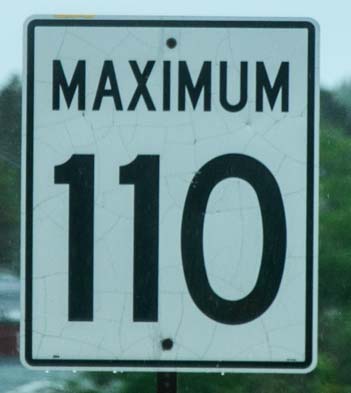
Then we were reminded that Canada uses the metric system for all units of measurement, including speed.

Speed limit 110 km-hour road sign

WOW!!
Oh, wait, that’s kilometers per hour. Darn!

This includes not just kilometers per hour for speed but Celsius for temperature too.

Bridge Freezes Road Sign Canada

Bridge may be icy

Including both English and French words on a small sign can get crowded, so lots of the highway signs in Canada use creative imagery instead. It was really fun to look at the signs and try to figure them out.

Highway entrance ramp roadsign

Eye catchers on the side of the highway

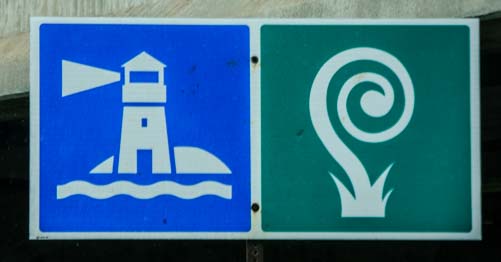
Did a lighthouse picture mean there was a lighthouse somewhere? What about that snail vine looking thing?

Lighthouse and snail roadsign_

What???

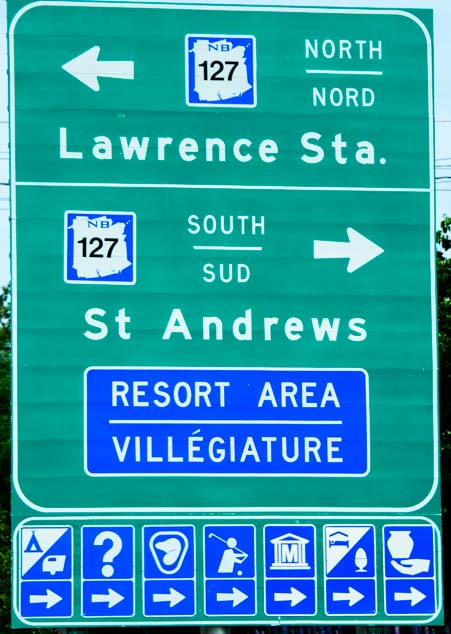
We got an eye full when we pulled off the highway and had to decide which way to go.

Road sign New Brunswick Canada

That’s a lot to take in all at once!

Wait a minute — can we see that again up close?

Road sign up close New Brunswick_

Oh my goodness. What are all those things?

The traffic piled up behind us as we studied the icons and tried to guess their meaning. Our route was to the left, despite all the wonderfully artistic imagery that tried to lure us off to the right.

We got back on the highway only to pass an exit that made it very clear we were now traveling in a foreign country. English might be spoken here, but then again, maybe not!

Confusing road sign New Brunswick Canada

Where are we, exactly?

The icons are really imaginitive, and at first glance, going by at 60 mph, it was impossible to know what they all referred to.

Exit road sign with icons New Brunswick Canada

Some of these are obvious, but some…what the heck are they??

Icons on highway road sign in New Brunswick Canada

.

Was the “@” sign something with email? Was the flower and barn a nursery? Were the masks a theater?

There was a key icon — we sure could use a key to unlock the other icons!

It became a fantastic game to spot these signs whipping past us and to try to remember all the icons we saw and to guess what they represented.

Egg spinning wheel and vase road sign New Brunswick Canada

.

International road sign Canada

.

Icons on international road sign Canada

.

Icons on road sign New Brunswick Canada

.

We stopped at a visitors center, and the hosts shed some light on a few that they knew. The egg in an egg cup was a bed and breakfast. The wrapped gift was a gift shop.

They had never noticed the barn with the people in it waving, so they weren’t sure what that was. We had seen several — one had a silo and another was under water with a fish swimming above… who knows!

There was a seahorse and there was a father and son looking off to sea with a spyglass and pointing. There was a tulip in a house and a vase on a hand. Just wonderful, but utterly baffling!

Inventing meanings for these signs sure beat the old alphabet game we used to play as kids in the back of the family station wagon!

We learned later that some were icons for designated scenic drives, and the hosts at the visitors center told us that one time a fellow came in and was very irate because he had followed all the lighthouse signs to the end of the road and had never seen a lighthouse. They’d had to explain to him that the lighthouse icon stands for a scenic drive that has lighthouses along the route, but you have to get off the route to see them!

Cuttlefish road sign

Mystifying

Another mysterious icon for a scenic drive had triangles and stripes that looked to me like a fish skeleton. I don’t know what that indicated, but when we saw the beer stein icon we knew for sure that a brewery was nearby.

Brewery Sign Nova Scotia Canada

Ahhh… follow that sign!!

Some signs were very familiar and very obvious.

Moose Sign New Brunswick Canada

This one we know…

Others were familiar but had a special twist. McDonald’s puts the Canadian maple leaf in the middle of their logo, and we later noticed that many online retailers like Amazon put the red maple leaf on their websites too (along with the “.ca” extension rather than “.com”).

McDonalds Road Sign Maple Leaf New Brunswick Canada

…and this one too, but it has a special maple leaf twist~

Within a few days, though, the novelty of these exotic road signs wore off and we felt very much at home.


That’s about it. Going to Canada to do some RV travel is pretty darn easy. I hope these little tips and insights are useful to you, and have fun RVing the Canadian Maritimes!!

Our RV travel posts from the Canadian Rockies:

Our RV travel posts from Nova Scotia:

Subscribe
Never miss a post — it’s free!

Our most recent posts:

More of our Latest Posts are in the top MENU above.

Driving an RV in the Eastern states – It’s a Wild Ride!

June, 2015 – After a wonderful four weeks in the lush green mountain forests of North Carolina and Virginia, we looked at the map to find a route into the northeast and panicked. There’s a reason that many RVers stick to the big wide open western states, and looking at the map confirmed why: FEAR.

Both Mark and I grew up in the east and drove many thousands of miles there, but zipping around in a small car is a lot different than driving a tall, wide and excessively long RV on those narrow, congested and fast moving roads.

Many interstates in the northeast are poor condition, especially in the right lane, and are overloaded with truckers on tight schedules who whip past at 75 mph or more. So, I plotted a course through the spider’s web of secondary roads from Virginia through Pennsylvania and New York that would land us on the western edge of Massachusetts and see us up and over the Green and White Mountains in Vermont and New Hampshire to arrive, breathless, on the western side of Maine.

Off we went!

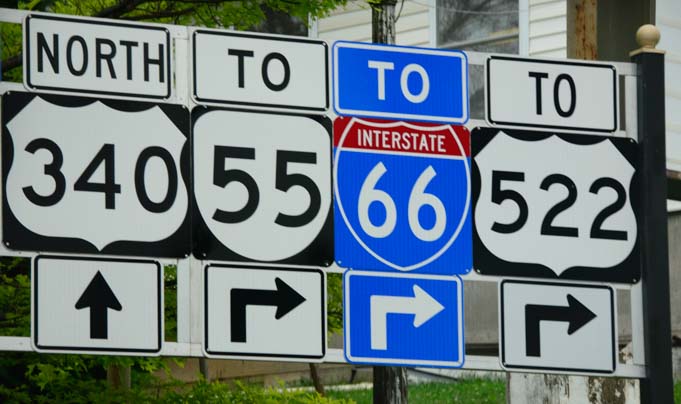
Roadsigns on the eastern state highways

Where are we going again?

Yikes!

I forgot that in the eastern states the roads change names and change numbers without warning. And roads merge and intersect and become friends and part ways without ever letting the driver know. We were continually sent off on wild goose chases for route numbers that had vanished 20 or 50 miles back.

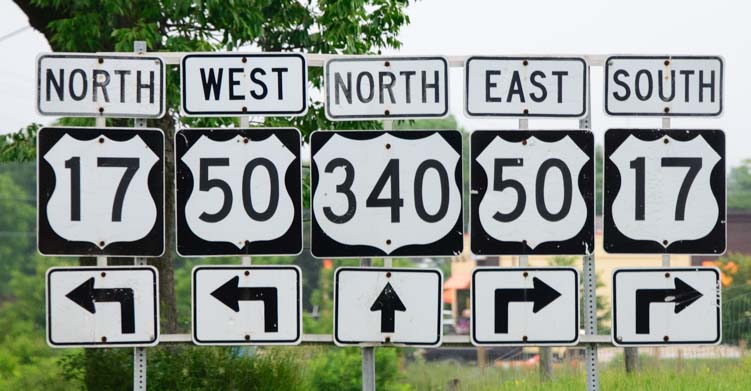
Which way do you want to go?

Did you get that?

The road signs come up so fast and with such a myriad of numbers that we were repeatedly left staring out the windshield in a daze, trying to remember what it was we just saw.

“Did you see Route 21 in all those numbers?” I’d ask Mark.

“Hell if I know!” he’d say.

“Well, we want 21 North — or maybe East — umm….wait a minute…” And I’d be buried in Google Maps again, trying to figure out exactly where we were going, only to find out that 21 North was now 18 East — at least for a little while.

Drive on any road in New York state

Truly dizzying. But look, it’s a palindrome! Almost.

The roadsigns were just a blur of numbers, with all the routes going in different directions all over the place. Sometimes the numbers formed patterns, and one was even a palindrome. Almost. Sometimes the roads just went to the devil, literally.

Route 666 Devil's Highway road signs

We’re going to hell in a handbasket.

Meanwhile the cars stacked up behind us, riding so close they were invisible in the rear view mirror. The semi tractor trailers passed us at every opportunity, pushing us out of the way as they zoomed by us on the descents, and then slowing down to a crawl in front of us as they crept up the climbs.

Traffic behind a fifth wheel trailer RV in the northeastern states

Impatient drivers pile up behind a fifth wheel.

At least in New York they call a spade a spade, though, and we got a laugh when we saw a sign written for dazed RVers from the western states:

Beware of Agressive Drivers

Indeed!

You’ve gotta love New York. Not only do they know the temperament of their drivers, they know their habits too. New Yorkers are so plugged in they aren’t given just a plain old Rest Area on the highway. They get a Text Stop!

Text stop rest area road sign in New York

For the modern traveler…

Most of these secondary roads were in really rough shape, especially crossing the Catskill Mountains in New York. We’d forgotten about the dangers of potholes, since they are a rarity out west. A deluge of ungodly blizzards pummeled the northeast this past winter, keeping the plows busy chewing up the roads, and we found ourselves doing a zig-zag dance down the highways to avoid all the endless man-eating, car-eating and RV-eating potholes.

Luckily, the powers that be have set about fixing the roads. However, that made the driving even more scary. Orange signs popped up out of nowhere and cones and equipment crowded the roads for miles at a time.

Roadsign detour in Pennsylvania

The road was small already… and now it’s filled with construction signs and crews!

Oh, and did I mention that these states are NOT flat? The mountains in the west climb straight into the heavens, going up for miles on end, but the hills in the east are like a roller coaster. They go up and down like waves on the ocean. We had installed our new brakes and engine tuner with this trip in mind, and we were now really glad we’d had the foresight to do those upgrades before coming here.

It seemed almost every hour Mark had to slam on the brakes for a red light at the bottom of a blind descent, or jump on the brakes when someone cut us off. Each time he’d mutter under his breath how great those new brakes were.

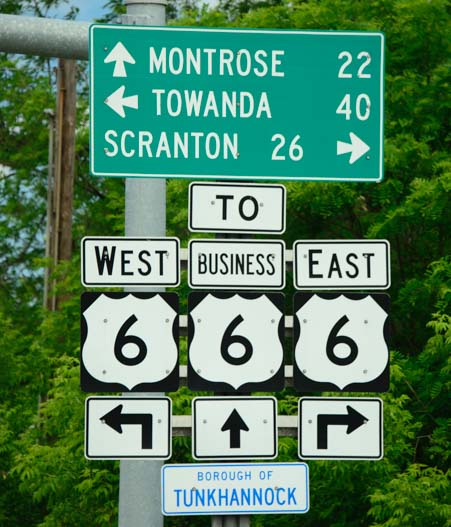
Roadsigns in every direction New York

Got it?

And did the buggy get stuck? Oh yes indeed. Several times.

In the hilly back streets of Boone, Virginia, there’s a long, deep scrape in the asphalt that is the signature left by our trailer’s bumper hitch. Confusion about road construction on the highway had sent us into this miniature town, and when we got there the only place to turn around had a massive dip in the road that was too much for our wheel base.

And in southwestern Massachusetts I played Twister with a maple tree sapling as I tried to keep its branches out of our bike wheels while Mark did a miraculous turn at the edge of someone’s farm on a steep hill. Once the maple tree released me, I watched in horror as Mark drove off over a lip down a hill that is meant for winter sledding. The fifth wheel overhang almost crushed the tailgate of our truck!

Tractor roadsign

Share the road!

It was a truly wild ride taking our RV from Virginia into the northeast. But in the end, the scars and scrapes on our rig and ourselves were a small price to pay for the great times that lay ahead!

Subscribe
Never miss a post — it’s free!

Our most recent posts:

More of our Latest Posts are in the top MENU above.

This was a crazy trip, but the scenery was lovely — have a look:

Life on the Hook in Mexico – What do you do all day when you’re cruising in the tropics?

cruising, sailing, living aboard in Mexico

Mark makes music on Groovy

Sailing off into the sunset is a dream a lot of people share, and some even get the crazy idea to go ahead and actually do it.  What’s it like?  Here’s a glimpse of some of the things we do each day in our cruising lifestyle — kind of a behind-the-scenes look at our life of leisure aboard a sailboat in the tropics.

snorkeling huatulco mexico cruising and living aboard

We have fun above and below water.

When we decided to cruise Mexico, we planned to anchor out pretty much 100% of the time.  That way we could put more of our budget into a comfortable, newer boat, while keeping the day-to-day expenses to a minimum.  Marinas in Pacific Mexico typically cost anywhere from $30-$50 a night or $600-$900 a month for a boat our size, so living “on the hook” at anchor can mean big savings.

But living on the hook has its ups and downs.  Literally!!  The Pacific swell keeps the boat in constant motion, frequently lurching it from side to side for hours, or even days, on end.  Also, the beautiful ocean is often held hostage by red tide — or algae blooms — that cloak it in an unpleasant color and odor, and fill it with debris, making swimming impossible and dropping the water temps as much as 10-15 degrees Fahrenheit.

87 degree water in Huatulco Mexico

Ahh… warm water!!!

For the past week, however, we have had one ideal day after another (November, 2012, in Huatulco).  The water has been turquoise and clear and in the high 80’s.  The air has been sunny and warm, and the swell has been modest, jolting us awake with a jerk only once or twice a night, if at all.  Our days have been spent swimming til our skin is wrinkled, kayaking in the bay, and walking the beach where the waves caress our feet with the warmest of sun-heated ripples.

Mexico cruising clear turquoise water

The water in Huatulco is gorgeous

Life on the hook, even during these heavenly days, is not exclusively about umbrella drinks in the cockpit, however.  Each day we have a few hours of work that needs to be done.  Mark keeps us on track with this stuff, making lists and making sure we stick to them.

I always find my interest in these things wandering quite a bit, though.  Left to my own devices, I’m afraid the list would soon be lost, and after a few weeks we’d be living in true squalor.

swimming in Huatulco Mexico (Tangolunda Bay) living aboard a sailboat

Who wants to quit swimming to do a bunch of boat chores??

Back when I lured Mark into this cruising lifestyle (well, let’s see, I think I dragged him into it by the ear!), we divvied up the responsibilities according to skill, inclination and interest, rather than going straight “pink” and “blue.”

Since I’ve worked with computers all my life and had cruised before, the chartplotter was easy for me to learn, and I became navigator and skipper while underway.

Cruising Mexico - living aboard a sailboat To Do List

Mark keeps us on track with our boat chores. Notice: “clean bilge” is not yet crossed off…

In our RVing life I never tow the trailer and rarely drive the truck.  Last time I tried parking the rig, I put us exactly perpendicular to the spot I was aiming for.  Mark’s last docking experience with the boat went just about as well.  So this division of labor has been a happy one.

I love technical things and understand the theory of many things on the boat, and I got a huge kick out of researching and specifying the boat’s major system upgrades.  But when it comes to holding a wrench I am still flustered by which end is which.  Mark was a professional service engineer for Xerox’s high speed (room sized) printers and grew up working on cars.  He is a master when it comes to electro-mechanical troubleshooting and installation.

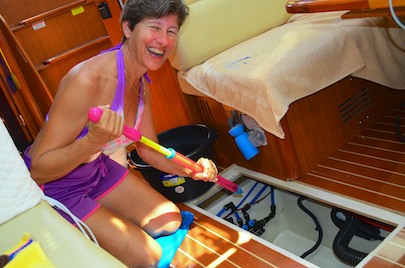
Mexico cruising living aboard a sailboat and cleaning the bilge

I like using a kid’s bazooka water gun to clean the bilge!

So, in exchange for putting all the responsibility for all the boat’s systems squarely in his lap, I volunteered to keep the bilge clean.

Having a clean bilge makes it is easier to notice when something isn’t right.  Water in the bilge must be coming from somewhere.  Is it salt water or fresh water?  Guess who gets to find out!  Hopefully if a chemical is leaking into the bilge it isn’t lethal!!

In our earliest days in Huatulco, “clean bilge” went on the to-do list (our engine’s packing gland material is getting old, so it drips now).  Mark had the luxury of taking a snooze next to the open bilge compartment when he finished his items on the To Do list!  I dawdled as long as I could.

Cruising Mexico living aboard a sailboat

Boat work done? Take a snooze!

I’ve found the easiest way to get water out of the bilge is to use a kid’s bazooka water gun.  Ours has a pointy end that can get into the crevices, and it soaks up a good bit of water that can then be squirted in a pail.  Doing a final squeegee pull with fresh water before putting the toy away has kept it in good working order.

cruising mexico sailing mexico living aboard clean bilge

There, it’s done, and we have a clean bilge once again.

Living on the hook means that going ashore requires either a swim or a boat ride.  So taking out the trash requires loading it in the dinghy first, and then finding a trash barrel on shore somewhere to throw it away.

The kayak works for this task too.  The cool thing is that after the trash is gone you’re free to go exploring either on foot ashore or in the kayak.

cruising mexico living aboard a sailboat taking out the trash

Time to take out the trash!

Getting the laundry done also means loading it up in the dinghy and then lugging it to a laundromat — that is, if there is a laundromat somewhere nearby!  In most Mexican ports laundry service isn’t hard to find.

cruising life aboard a sailboat hand washing laundry

Everyday we wash yesterday’s clothes in the sink. We wear light clothing around here and it’s an easy task.

Here in Huatulco the laundromat is a cab ride away — in addition to the dinghy ride to shore.  Once you get there a woman washes and folds it for you (for 15 pesos per kilo, or about $4-$5 USD per load).  But you don’t get it back til the next day!!  (Ahem — that means another combo dinghy ride / cab ride to pick the laundry bags up…).  If you splurge and stay at the marina, you can have your laundry picked up and delivered back to the boat for 20 pesos a kilo…

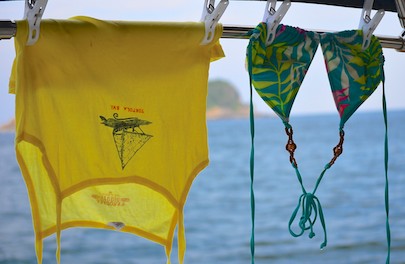
liveaboard cruising mexico drying clothes in the rigging

Luckily there are lots of places to hang the laundry out to dry

So, to avoid the laundry hassle while living on the hook, we’ve found it’s easiest just to wash out yesterday’s clothes in the sink each morning and hang ’em out to dry.  Luckily our clothes down here consist of bathing suits, running shorts and light shirts. We haven’t worn shoes and socks since we got here.

I’ve learned that what gives our clothes that “clean” smell from a washer/dryer is the fact that they don’t get fully rinsed out.  So we always rinse our clothes to a point — but leave enough soap in them so they smell nice after hanging on the line.  Sheets and towels have to wait for real laundry service, however…

living aboard a sailboat cruising mexico changing zincs

Mark gets ready to install new zincs

cruising mexico living on a sailboat bottom cleaning

Tools for the bottom: scraper, new zincs, scotch brite pad…


We both keep the bottom of the hull as clean as possible.  In some places (like Zihuatanejo), the barnacles grow so fast you have to scrape the bottom with scrapers every few days.  In other places (like the Sea of Cortez and Huatulco), you can merely wipe the bottom with a towel to get the algae slime off.  It takes a lot of breath to get to the bottom of the keel, though, and Mark is much better at that than I am.  So I do the hull and he gets the keel and scrapes the prop.

Electrolysis in the water, especially at marinas, can eat a prop down to nothing in no time.  So we put sacrificial “zincs” on the prop and shaft that are made of that softer metal.

Living aboard cruising Mexico changing zincs

Screwdriver and zinc in hand, you gotta get down there and get it attached all in one breath.

Cruising on a sailboat in Mexico new zincs

A new zinc is installed on the prop shaft

Over time, these zincs get eaten away by the electrolysis instead, sparing the prop shaft and blades’ slightly harder metal.

However, the zincs are not that easy to install.  Mark makes it look like a piece of cake, completing the task in just a few free dives.  I would be spluttering and drowning and would probably drop the screw driver or the zinc in the sand deep below the boat, never to be found again…

Bountiful fresh water is critical to a comfortable life aboard, and we get our fresh water from a “watermaker” that converts ocean water into drinking water.

Cruising mexico making water with the watermaker underway

We go out to clean deep water to “make water”

This is a rather miraculous system, and our watermaker is enormous by cruising standards, converting 60 gallons of water an hour by pushing it through a strainer first (to remove the fish and sea creatures) then through two filters (to remove the algae) then through two 4′ long high pressure membranes (to remove the salt, bacteria and viruses).

Cruising mexico there is frequent red tide

Wow – clean water!! Such a special treat. Red tide is an unfortunate fact of life on Mexico’s Pacific coast.

The system is rated for 38 gallons an hour, but after the two membranes failed in our first season, the manufacturer (EchoTec) kindly replaced them with high capacity membranes, so now we fill a gallon jug in 63 seconds.  It’s quite thrilling to watch.  Shower water, toilet water and deck cleaning water all go into our holding tanks (140 gallons), but we keep our drinking water in gallon jugs as a habit held over from living in our trailer.

Mark hated the watermaker the first year.  It was a bear to install due to inaccurate manuals, incomplete parts shipped to us, and difficult positions for the various parts in the boat.  Plus, installation required fabricating a bracket to hang the high pressure pump from the engine.

To top it all off, the first membranes we received were dead on arrival.  Then the replacement set failed after four months!  Now, however, with great, working membranes, the watermaker is his pride and joy (“I want to keep it even if we sell the boat someday!” he joked recently).  It is his favorite part of the boat.

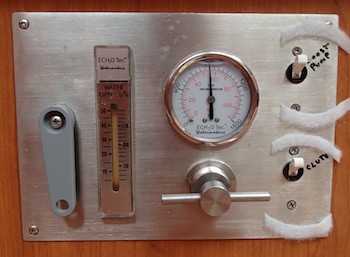
cruising mexico in a sailboat EchoTech watermaker

EchoTec’s main watermaker panel. At 800 psi the system pegs at 60 gph.

sailing mexico watermaker installation

Mark runs a hose to the deck to wash it down as we make water

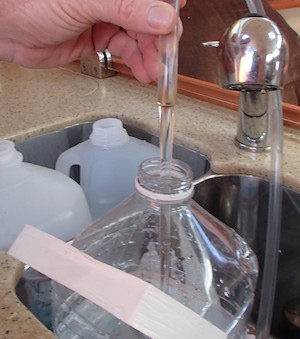
The purity of the water is measured by a TDS meter (“total dissolved solids”), and we found the San Diego water supply at our son’s apartment got readings of 350, and the FDA limit is 500.  Our watermaker usually gives us readings between 75 and 95.

Most boats our size have systems that convert 6-13 gallons an hour.  However, we’ve found the 60-gallon-an-hour flow is fast enough to be able to wash the deck and cockpit with a hose run out a hatch.  This is a real boon at the end of a salty crossing or after sitting in a dusty area for a while.  So, making water and/or washing the cockpit/deck is often on our day’s to-do list.

sailing mexico watermaker 60 gph

60 gallons per hour gives a good flow

Then there’s food.  We are simple eaters, so our diet is pretty plain by most standards.  In Mexico we’ve discovered many familiar foods can be found on store shelves, even if the packaging is in Spanish.

The most common bread available in Mexico is “Bimbo Bread,” which is equivalent to our Wonder Bread.  But it turns out that Mexico’s Bimbo Bakeries actually owns the US brands Oroweat, Arnold, Thomas’s English Muffins and many others.

ex-pat living in mexico buying bread

Oroweat Bread is owned by Mexico’s Bimbo Bakeries

We’ve found Oroweat breads in most supermarkets in Mexico, and the price of around $3 to $3.50 USD is comparable to home.

Mexico cruising ex-pat living cereal

“Azucaradas” sounds & looks like kids’ sugar cereal

mexico cruising sailing blog living aboard quaker cereal


It helps to learn some of the basic food terms in Spanish: “avena” (oatmeal), “integral” (whole wheat), “grano entero” (whole grain), “pasas” (raisins) and “azucar” (sugar) are a few.  So when you see a cereal called “Azucaradas” with a crazy, wild zebra on it, you can tell it’s probably a sugar cereal for kids!

In this age of jet-setting food, we’re used to seeing tomatoes from Mexico in the supermarkets in the US, but what a surprise to find Washington apples here in Mexico as well as organically grown California spinach.


California organic Spinach is imported into Mexico

Did this spinach bring a passport?

This spinach was a bit wilted (it’s a long flight for a little leaf!), and the price was $6 USD a box. But it’s available.

Bean burritos are a common dinner aboard Groovy.  They’re yummy, easy to make and don’t take a lot of ingredients.  But I was amused when I asked our friend Andrés from southern Mexico if he’d like a bean burrito, and he responded, “Is that an American dish or a Mexican one?”  What we always thought of as being so very Mexican isn’t really…

cruising mexico sailing blog living aboard movies

Matt Damon & Scarlett Johansson – We’ll take it!

At night we often settle in with a movie.  TV reception is non-existent on the boat, but the bootleg DVD industry is alive and well in Mexico.  DVD’s are sold on the street for 20 to 30 pesos apiece ($1.60-$2.40 USD).  The titles often have no resemblance to the English titles, so you go by the actors’ names and hope for the best.  Who knows what this one is, but with Matt Damon and Scarlett Johansson, it oughtta be okay!

Mexico cruising living aboard a sailboat in Huatulco Mexico

Groovy is happily anchored off a lovely resort in Tangolunda Bay, Huatulco


So we live rather simply, floating in a tub on the ocean and washing our clothes in the sink!  It’s a crazy life, but lately it has been fabulous.


Subscribe
Never miss a post — it’s free!

Other blog posts that give a glimpse of what it’s like to live on a sailboat:

More funny stories from our Mexico cruise + Tips for planning your own sailing cruise

Our most recent posts:

More of our Latest Posts are in the MENU above.

World Cruising Done Right – Paid to Visit the World’s Most Exotic Ports!

Fixing the boat alternator Mexico cruising blog

Mark fixes our boat in an exotic place

April 2014 – Sailors often say with a sigh that, “Cruising is fixing your boat in exotic places.”  While this sounds funny and always elicits a laugh, it is unfortunately a very true statement.

When you cast off the dock lines to go cruising, you are signing up to spend long hours working on your boat.

Paradise Village Marina Sunset

Paradise Village Marina at sunset — dreamy!

The further afield you go, Continue reading

Finding the Fountain of Youth!

Marcel on his mountain bike

Our new friend Marcel is a great inspiration

We meet a lot of interesting people in this crazy full-time traveling lifestyle, and they often give us great inspiration.

While we were camped on the eastern fringes of Phoenix Arizona recently, we found ourselves surrounded by mountain bikers.

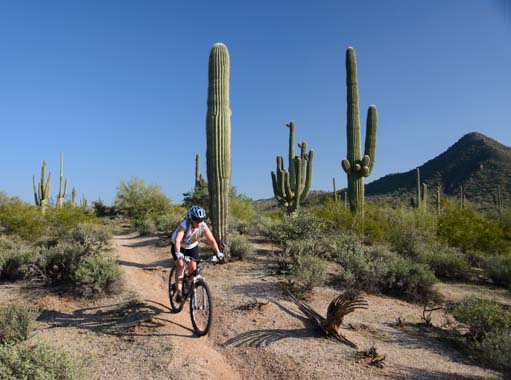
Mountain biking gal with cactus

Mountain biking in the desert is exhilarating

These guys would hop on their bikes every morning and hit the trails with vim and vigor. They would return later in the afternoon, worn out and very happy.

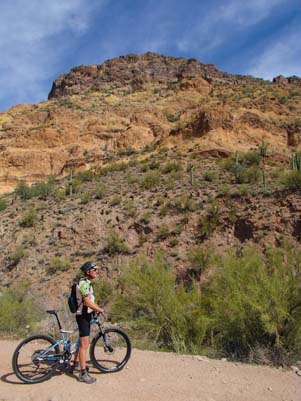
Mark on his mountain bike

The scenery out on the trails is breathtaking

Mark has always had a passion for mountain biking, a passion I didn’t share with him at all. Since high school, I have been an avowed roadie!

He started chatting with these guys about their bikes, the trails nearby and whatever else mountain bikers talk about.

One fellow among them sported a white goatie, a few craggy lines on his face, and a foreign accent, and we soon discovered his name was Marcel and he originally hailed from Switzerland.

Marcel checks out the components on my bike

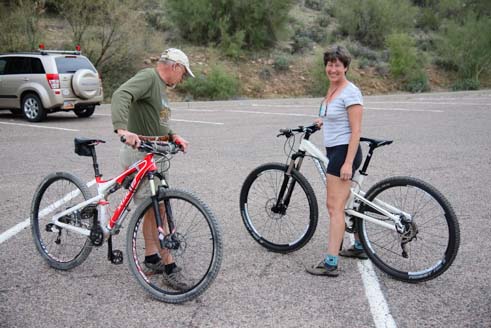
Marcel checks out my new wheels

Marcel was a compact build and very fit. Every time we saw him, he was wearing a t-shirt that said something like, “Grand Canyon Rim-to-Rim” (a grueling hike between the north and south rims of the Grand Canyon) or “Rock ‘n Roll Half Marathon.”

Mark and his new mountain bike

Mark is beside himself getting a new bike on a rainy day!!

When we asked him about these shirts, we found out he was quite an athlete.

Now 76 years old, he had been a runner until recently, and he had a wonderfully competitive spirit.

At age 74, he had noticed that one particular fellow kept winning a certain 7 mile running race in the 70+ age group, so he set his sights on that prize.

He trained and trained, entered the race and beat the defending champion to claim the title for himself. He told us that he then hung up his running shoes, on that very high note, with pride.

But he still puts on his mountain biking shoes and helmet almost every day, and we watched in amazement as he faithfully went out for one vigorous ride after another.

Mountain biking in the Superstition Mountains

The Superstition Mountains in Phoenix Arizona make a spectacular backdrop to a mountain bike ride

Mark and Marcel

Marcel shares his passion with Mark

Mark was so inspired by Marcel that he began scanning Craigslist for used mountain bikes, and before I knew it, we were driving out into the Phoenix neighborhoods and picking up his-and-hers mountain bikes.

In turn, our trusty cyclocross bikes that had been with us in our trailer since we started our adventures nearly seven years ago ended up on Craigslist themselves.

Ebikes have become really popular with RVers, and for older riders, the top e-trikes for seniors are worth checking out!

Mountain biking in the Arizona desert

I look back and see Mark happily riding in this stunning scenery

Unfortunately, my personal history with mountain biking is not good. The last time I rode one was a decade ago on the notorious Bootleg Canyon trail outside Las Vegas. We were at the bicycle industry’s big Interbike trade show where bike shop owners and employees can test new bikes.

Out on the trails, I had flown off over the handlebars of my test bike on some kind of wacky double jump that was way beyond my skill level, and I’d knocked myself out cold. The next thing I knew, an EMT was asking me if I remembered my name as he gingerly lifted me onto a stretcher.

Mountain biking in Phoenix Arizona

Happiness is a new bike

But bikes, in general, have come a very long way in the last 10 years, and these new models, like the ones from QuintanaRooTri.com, are unbelievable. Sticking to trails I can handle, I have been having a blast. I never would have thought it could happen, but I’m hooked.

Marcel sent us off to practice on a beautiful trail called Wild Horse, and after a week of exhilarating rides together, Marcel took his motorhome down to Tucson to ride with some buddies down there. When he returned, we went out as a three-some to tackle Wild Horse all together.

Wild Horse mountain biking trail

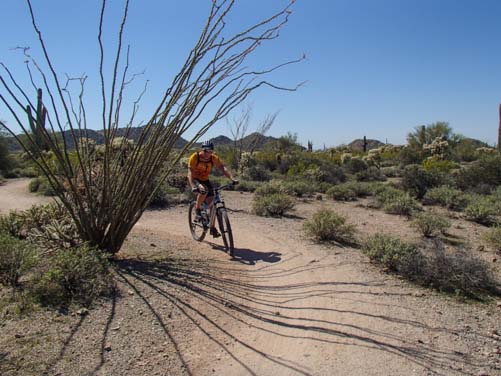
Mark squeezes between an ocotillo cactus and its shadow

What a ride!! Mark and I were thrilled to get through it without putting a foot down for the very first time, but while we high-fived each other, we noticed Marcel was kind of shrugging. For him, cruising through the gnarly bits on this trail was routine.

Gosh. I had admired his racing stories and watching him zip between our rigs on his mountain bike before, but seeing him in action was truly awe inspiring.

Marcel on his mountain bike

Marcel has showed us the fountain of youth!

What was even more fun was to discover that he has been RVing since 1970 when he built a Class C motorhome for his family. Class C’s were new to the market back then, and he saw his first one at an RV show.

Sweet mountain bike ride in the desert

Sweet ride in the desert

He crawled all through the thing with a tape measure, took copious notes, and went home and built one onto his one ton truck.

His wife Charlotte laughs that they took their three kids everywhere in that homemade rig and never spent a weekend at home after that.

For the past twelve years, the two of them have been wintering in the southwestern states in a Class A. One of the highlights for them each season has been connecting with their kids, grandkids and great-grandkids.

Marcel has passed on his passion for fitness, and not long ago his whole family entered a running event together — four generations pounded the pavement side by side.

Mountain biking in the Superstition Mountains in Phoenix Arizona

We feel blessed everyday to be living this quirky life, and certainly one of the best things about it has been meeting inspiring people that we never would have encountered if we hadn’t gone traveling.

Thank you, Marcel, for showing us your unique fountain of youth!

Subscribe
Never miss a post — it’s free!

For more inspiration to kick up your heels at any age, check out this article:

80 Year Old Woman Sets Half-Marathon Record

Our most recent posts:

More of our Latest Posts are in the MENU above.

New to this site? Become a subscriber!  And check out these other anecdotes about living in an RV full-time.

Divorced Eggs…?!

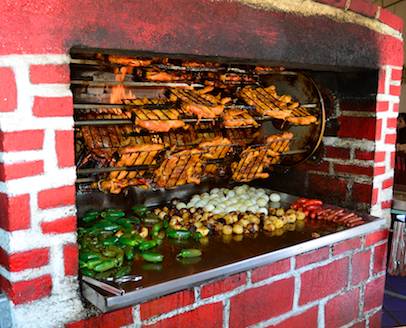
Pollo Asado on the street

This pollo asado stand is very popular in La Manzanilla!

One of the things many travelers love about Mexico is the delicious food.  For us, the street food is the most fun.  We have enjoyed many a meal of fish tacos or carne asada (grilled beef) tacos from a street cart.

Sometimes we’re lucky and find a fabulous pollo asado (grilled chicken) dinner made right in front of us on the sidewalk over coals in a metal half-barrel turned on its side.

This kind of food is pretty low risk in terms of knowing what we’re getting.  If there is a large crowd of local patrons eating enthusiastically, and a long line of eager customers waiting to be served, the food has to be good.  Even better, we can see what the meal is before it lands on our plates!

Roasted chicken pollo rostisado

It’s nice to know what will be on your plate!

Going to a sit-down restaurant and ordering off the menu is a whole different story, though.  If the restaurant caters strictly to the locals, we’ve found the menu is often indecipherable without a Spanish/English dictionary.

There is an awful lot of unfamiliar vocabulary packed into Mexican restaurant menus!  To make things even harder, many dishes have names that don’t show up in a standard dictionary.

Carne Asada Tacos from Las Brisas in Ensenada

Tasty carne asada tacos.

Usually we end up ordering something recommended by the waiter, and we find out what it really is only after it arrives at the table.

In the restaurants in the tourist areas, however, there is usually an English version of the menu, or at least an English translation appearing near each item.  Thank goodness!

Once in a while, though, there is something on the menu — on the English side — that sounds just a little funky in translation.

The first few times we went out for a big breakfast at a nice place, I found myself scratching my head when I reviewed the various options for eggs.

Everything was okay at the top of the menu where there were descriptions of fried eggs, scrambled eggs and omelets.

Divorced Eggs or Huevos Divorciados

Two fried eggs split by the the color of sauce they wear (plus beans)!

But lower down they had this strange sounding one:  “Divorced Eggs.”

Checking the Spanish side of the menu didn’t help:  “Huevos Divorciados.”

Divorced eggs???  I didn’t know eggs got married!!!

It turns out that this very popular dish consists of two fried eggs, each covered with a different hot sauce: a green sauce on one egg and a red sauce on the other.

Aha!  So this is what eggs do when they decide they have irreconcilable differences.  If only human divorce were so easy!


huevos divorciados or divorced eggs

Have these eggs filed for Divorce due to “Irreconcilable Differences”
or is it just a Trial Separation so they can think things over?

I looked up the word “divorciado” in my Spanish/English dictionary and found that its meaning is slightly closer to the word “separated.”

Hmmm.  So it appears these unfortunate eggs may actually be undergoing something that is more like a Trial Separation.

Perhaps they are not Divorced at all. Perhaps they just want a little space and some time apart to think things over!

Whatever the exact marital status of the eggs happens to be, the dish is very flavorful, and it is usually complemented with a big serving of delicious refried beans and some tortillas.

It is very Mexican and it is muy rico (very yummy).


Quinceañera – Sailboat “Groovy” Helps Celebrate a Mexican 15th Birthday

13-07-13 Quinceanero-4407

July 13, 2013 – This afternoon, Mark was busy in our sailboat Groovy‘s cockpit here at the marina in Ensenada, Mexico, when he noticed a well dressed man in an elegant suit walking on the docks.

The man seemed to be eyeing up our boat Groovy, and he walked back and forth in front of it a few times.  Mark called out a greeting, and suddenly the man stopped and said in English, “My daughter is celebrating her 15th birthday today.  Do you think we could take some photos of her on your boat?”

Mark looked around and thought for a moment.  But of course!

13-07-13 Quinceanero-4370

Within a few minutes a crowd of young teenagers showed up, all dressed to the nines in suits and fancy dresses and stiletto heels.  They were giggling and chatting among themselves as they shuffled down the dock.  Mark flew into the cabin and told me to grab my camera, quick!

friends


Quincenaera aboard Groovy

The birthday girl poses on Groovy’s bow.

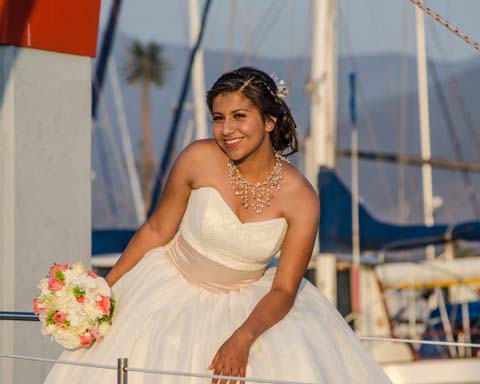
As I came into the cockpit, the birthday girl appeared at the top of the dock ramp.  She was wearing a beautiful fluffy white dress and had pearls around her neck.

For girls in Mexico, the quniceañera — 15th birthday — is a very special day.  The celebration is something like a coming out party, and it is an occasion for donning a prom dress, wearing makeup, posing for lots of photos, and having a big party with a live band that lasts long into the night.

This birthday girl was obviously relishing every second of her moment in the spotlight.


Paparazzi crowd around the birthday girl!

Paparazzi crowd around the birthday girl!

Her proud dad, Carlos, hung back while a professional photographer and videographer posed her all around the boat.  What total fun!

Mark and I ran around behind the scenes, trying to catch her poses as best we could.

Meanwhile her friends all giggled and fidgeted as they stood on the finger pier next to us, jumping up and down, and looking very cute in their dressy clothes.

Suddenly a few boxes of pizza appeared out of nowhere, and the teenagers got busy scarfing the slices down in an instant.

friends

After a little pizza, her friends are ready to party!

A very special day to remember!!

A very special day to remember!!

Once the photo shoot was finished and the sun had set, Carlos invited us to come up and join the party that was in full swing under the tents next to the office.  What an invitation!!

When we got up there, we walked through a few lighted arches onto a dance floor that was surrounded by tables and chars.  Everything was decorated in pink.

Carlos showed us to the family’s head table and introduced us to everyone sitting there — grandma, aunts, godparents and little brothers and sisters.


13-07-13 Quinceanera Helm

Several family members had flown in from far-flung parts of Mexico to take part in the celebration.

We’ve been lucky enough to see several quinceañera photo shoots from a distance — the girls are always so lovely in their big bouffant dresses — but this was the first time we had been invited to be a part of the action at the party itself. We were loving it!

As we sat chatting with the family at the head table, explaining to everyone who we were, where we had sailed from, and how we had unintentionally crashed their party after the impromptu photo shoot aboard Groovy, they happily swept us up in the festivities.

Everything around the dance floor was decorated in pink.

Everything around the dance floor was decorated in pink.


The man on my left, Alfredo, fondly told us how he had held the birthday girl at her baptism fourteen years earlier when she was just a baby, and we could feel his pride at being her godfather.

Everyone whipped out pocket cameras, cell phone cameras and iPads to get pics of the party, and suddenly we found ourselves being posed into the group shots too.  We were just the boat people from down on the docks, but that didn’t seem to matter — we were welcomed right into the heart of the family!


birthday cake

A birthday cake fit for a princess and
decorated with icing starfish!

When we finally stood up to go — wanting to let this jovial group enjoy their special moment together — the grandma didn’t want to let us go.  “Sit down, sit down!” she insisted, patting the chair next to her where Mark had been sitting.  “No, no… thank you, thank you!”  Mark said as we tip-toed out backward and bid them all goodbye.  This was their party, but they had been so kind to invite us to join them so we could get a glimpse of a true quinceañera celebration.

Back on the boat, we crawled into bed and listened for a long time as the band got rowdier and rowdier and the heavy bass thumped a steady beat through the hull of the boat.  What a fantastic tradition this 15th birthday party is, and what a great way to bring together the whole family to celebrate the arrival of a young girl on the threshold of adulthood.  Most of all, what a lucky day it had been for us!


It’s Not About the Hair!

Getting a haircut in Mexico

Lorena gives me a hairstyle called
“cola del pato” (tail of the duck)

June 16, 2013 – One of our favorite things about traveling is all the little encounters we have that make us stop in our tracks, scratch our heads, and say, “Wow, this is so different than home.”  After living strictly within our own comfort zone for so many years, focused on our workaday lives, we now find ourselves refreshed, over and over, as the folks we meet here in Mexico, so far from our backyard, show us that there are other ways to live.

I’ve been wanting to get a haircut for a while, and as a full-time traveler this is always a great opportunity to have a long conversation with someone from wherever we are visiting.  More important than finding a top quality salon, I’m always hoping to find someone that will tell us a little about the community we’re in or share something about themselves.

Yesterday, as we wandered the quiet, dusty streets of a small Costalegre coastal village between Tenacatita and Barra de Navidad taking photographs, we asked a few people where to get a haircut.  They all said to go to “Lorena” and they gave us directions. In our usual lazy way, we didn’t wind up on her street until dusk.  A group of people sitting on the sidewalk around a folding table with fruit laid out for sale pointed us towards her shop.

Unfortunately, it was now so late in the day that her shop was closed.  We shrugged.  Oh well.  Tomorrow!

“No, we’ll find her for you!”  One of the guys by the fruit stand said to us.  He asked his friends if they knew where she was and then yelled her name a few times.  A few minutes later, she appeared at the far end of the block, hustling towards us and waving.  The fruit guys grinned.

“Come in, come in.”  She said as she opened the door to her shop.  She began clearing some things from around her work area to make a place for me to sit down.  The room was about 9′ x 9′ and stacked with manicure equipment, brushes, combs, a few random cups, a chair and other stuff piled up.

After asking about my hair (I’ve learned my hair style is called “cola del pato” or “tail of the duck”), we began to have a lively conversation in Spanish about life in America and life in Mexico and the close similarities and vast differences between these two worlds.

She had grown up on a ranch far out in the countryside, one of twelve kids — ten girls and two boys — along with lots of horses, cows, burros and fruit trees.  Despite having no electricity, the family found plenty of diversions among themselves, always sitting around in the same configuration at night, mother here, father there, and kids circled around in between.  Outside, there were a bunch of tree stumps, and they would all sit together on the stumps and sing songs under the stars.

Her mother and grandmother had always worn traditional, colorful dresses, long sleeved and well below the knee, and her father was very strict with the kids.  He died when she was a teenager, and when he died her world changed forever.  The family moved to the city and she was shocked by the stress of urban life and the different interests of her peers at school.  She missed the fresh fruits from the garden and fresh meat and milk from the cows.

Lorena's hair salon in Mexico

Lorena shared her life experiences and cultural insights
with us as she gave us haircuts in her shop.

As I listened to her tale, I could just imagine the adjustments she had to make as she moved first to Mexico City then to Ensenada and Tijuana, and eventually to California.

“It was all wonderful.”  She said warmly.  “I learned so much.  About people.  About cultures…  And I learned what I liked.  In California I made a lot of money, I wore fancy clothes and makeup.  I had lots of beautiful shoes.  Now I just wear flip-flops.  I like to live in a small town where life is calm and quiet.”

By now Mark had decided to get a trim too, and her sheers snipped around his ears as she went on.  “America and Mexico are very different,” she said.  “In Mexico, out in the rural countryside, it is a man’s world.  The man is everything.  Girls are told they don’t need an education because their husband will provide.”

And then she said something about women and keeping a rifle in the corner of the house, and she laughed. Oh how I wished I understood better. She was on a roll, and I didn’t want to ask her to repeat. She had said either that women in the country kept a rifle in the corner so they could hold their own with the men, or that women who lived alone kept a rifle for protection. Gosh, I don’t know, and now I so wish I had had her explain further…

“But in America, In my neighborhood in California, I didn’t know my neighbors,” She continued.  “We waved and said “hello” every day but that was all.  We didn’t know each other like we do here. And in the US, when a store is closed, it’s closed!  Neighbors don’t go yelling for a shop owner to come open it up for customers after hours.”

So true.  Here we were in her shop because of the fruit sellers in the street.  Not so at Great Clips and Supercuts back home.  I usually end up reading a few magazine articles while I wait for a stylist to become available.  The stylists at home all commute to work, and who knows where any of them live. Certainly not in the rooms behind Great Clips!

As she finished Mark’s hair, she invited us to go camping in the mountains with her.  “I’ll show you some beautiful places.  We can sleep in tents close to nature.  We’ll make tortillas over a fire and you can meet my horses.” What a great invitation!

As she swept up all our locks on the floor, she said the haircuts were 40 pesos each (about $3.20 USD). For us, the experience was priceless.

See more about Life in Mexico and check out Our Most Recent Posts!!

Oh, That’s Just Swell! – Life on a Boat that ROLLS At Anchor!!

A container ship rolls in the swell in Manzanillo Mexico

The container ship rolled slower than this, but I can only imagine what it felt and sounded like inside!!
Notice that there are no visible waves!!

It is rare — no, it’s nearly impossible — on Mexico’s Pacific coast to find an anchorage where the boat stays flat. The direction of the wind, the tides and the ocean swell conspire to keep the boat in constant motion, endlessly pitching and rolling and ignoring all pleas from the crew to “Please Stop and Let Me Get Off!!”

It’s not that big a big deal during the day.  If we’re on the boat, we’re busy doing things.  Of course, sometimes we get caught off guard in the middle of something that requires coordination — like pouring a hot cup of coffee, standing on one foot while putting on a bathing suit, or walking up the companionway stairs carrying his-and-hers lunch plates in both hands.  The boat will suddenly lurch to one side and the coffee will spill all over the floor, or I’ll topple over with one foot stuck in my bathing suit, flailing helplessly as I go down, or the lunch plates will fly off in all directions as I try my best not to get too many bruises bouncing down the stairs to the floor.

At night, however, it’s another story.  The offshore winds at night in Pacific Mexico almost always turn the boat so it is beam to the sea, and it seems to me that the swell always picks up too.  So, even if during the day the swell was mild and the boat was taking the rolls on the nose, gently pitching from front to back, at night (like clockwork after the sun goes down) the boat turns and the side-to-side rolling begins.  Finding a comfortable sleeping position can be a good challenge.  On my side, I find myself rocking forward and backward, over and over.  A better position is either on my back or my front, arms and legs stretched wide on either side for stabilization.  The starfish position!  Get two people doing this in one bunk and… well, it’s a little like the game of Twister.

On more tumultuous nights, the doors, bulkheads and stairs creak with every roll. Sometimes an errant flashlight or coke can begins to roll back and forth on a shelf or in the fridge, banging at either end of its path. Thud, thud, thud.  What the heck is that noise?  Our ears perk up, listening for each thud as our bodies rock around around in bed.  Then we’ll find ourselves doing an hour’s worth of cat-and-mouse hunting, as we try to figure out what’s making the noise and squelch it. Sometimes the sound is in a cockpit locker, making for a naked dash outside to repack the locker so everything stays put.

Sometimes the boat plays games with us at night.  As it swings at anchor it faces beam to the sea for a while and then swings to face bow to the sea, moving in a slow 90 degree arc back and forth all night long.  When the boat finally turns all the way so the swell is on the bow, the side to side motion suddenly stops.  Ahh… such sweet relief!  We sink back into delicious oblivion and sleep steels over us.  For a few seconds.  Then the boat gradually swings back on its arc to put the beam towards the sea, and the noise and motion begin once again.

Anchoring all over the west coast of Mexico, we’ve become apprentices in the fine art of taking a shower on board, which can be an adventure unto itself, as well as landing a dinghy on the beach, which is frequently a true water sport of the wettest kind!

When we visited friends in the Las Hadas Resort Anchorage and stood on their balcony enjoying the view of Manzanillo Bay, we suddenly noticed a container ship leaning way over on its side.  Wow!  We watched for a few seconds and it slowly rolled all the way over to the other side.  Holy Mackerel!  What was it like to be on that ship, and what did all those containers sound like as the boat moved?  I don’t know, but it sure makes a great animation to watch from a solid foundation on sweet Terra Firma.

Subscribe
Never miss a post — it’s free!

Other blog posts that give a glimpse of what it’s like to live on a sailboat:

What Is It Like to go Cruising on a Sailboat in Mexico?! – Insights for planning a sailing cruise of Mexico

Our most recent posts:

More of our Latest Posts are in the MENU above.